




Antique Chinese Desk Light
An antique chinese desk light brings texture and colour to a workspace, typically taking the form of a converted vase or lacquered stand.
Antique Chinese Desk Light
When you search for an antique chinese desk light, you encounter table lamps and lantern stands adapted from earlier vessels and furniture. The selection on this page largely spans the nineteenth century through to the 1930s, encompassing both imported pieces and European interpretations.
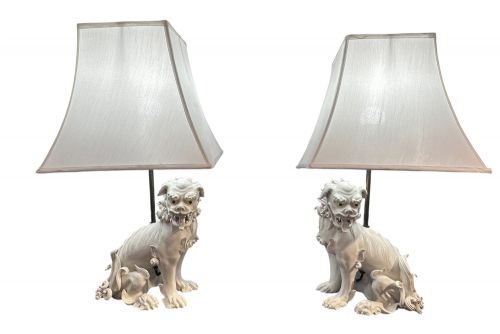
The ceramic options frequently utilise nineteenth-century porcelain bodies such as blue and white ginger jars, celadon vessels, and famille verte or famille rose vases. Alongside these ceramics appear carved root wood, hardwood lantern stands, lacquered wood, and bronze oriental forms.
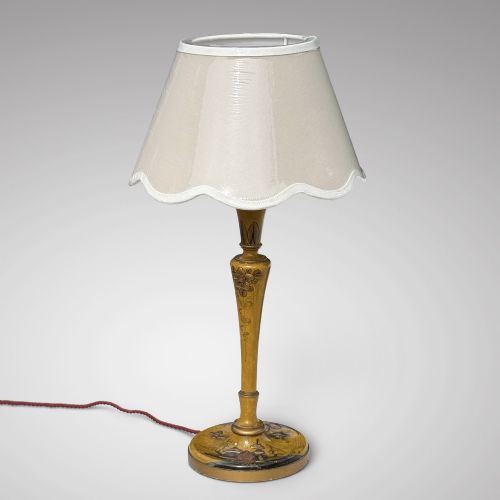
Stylistic descriptors range from Qing dynasty influences and Chinese export designs to Edwardian chinoiserie and French white metal objects created in the Chinese taste. These items bridge traditional Far Eastern craftsmanship and domestic British lighting needs.
How they were made
Ceramic lamps are typically constructed from porcelain or pottery bodies decorated with hand-painted glazes, crackleware finishes, or cloisonné enamel work. These vessels were originally created as vases or tea canisters before later conversion into lighting fixtures.
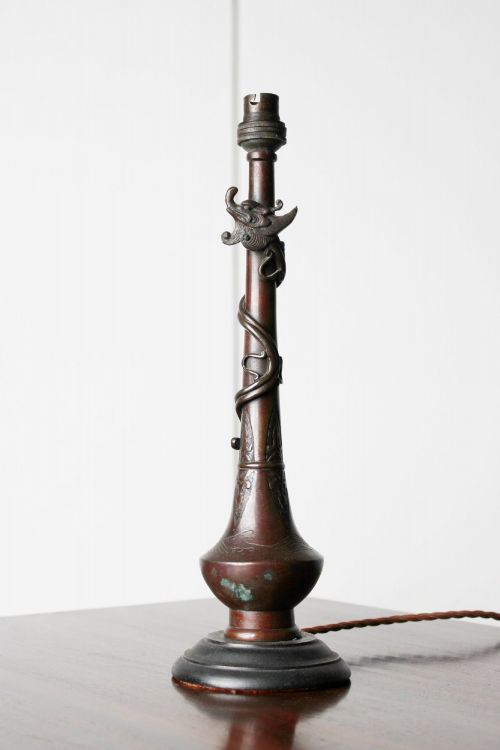
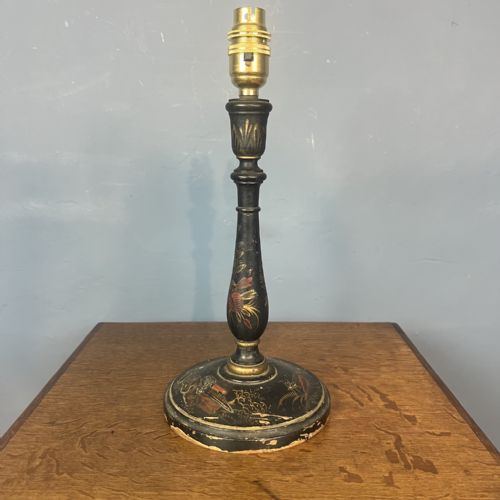
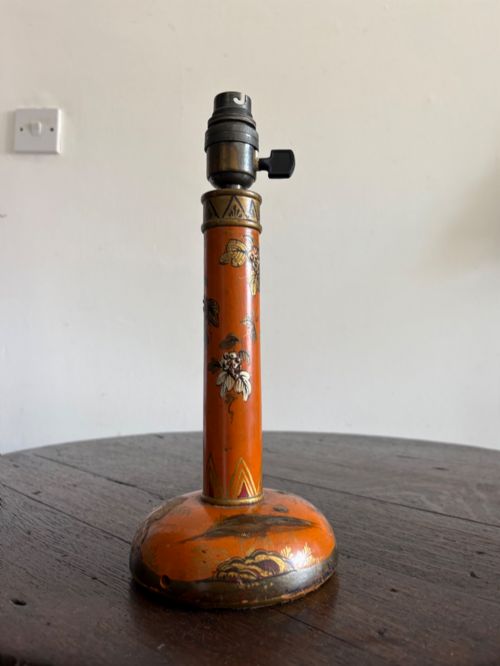
Wooden examples rely on carved root wood, elm, and hardwood shaped into lantern stands or table lamps, often finished with ochre lacquer or hand painting. Bronze, brass, or ormolu mounts frequently secure and elevate these organic and ceramic forms.
Materials across these listings include porcelain, bronze, fabric, wood, silk, hardwood, lacquer, brass, and bronze.
What varies in quality
Quality reveals itself in the crispness of hand-painted ceramic details, the depth of turquoise, famille rose, or blue and white glazes, and the precision of cloisonné wirework. Superior carved root wood and hardwood pieces display deliberate control in their organic contours rather than loose execution.
The integration of metal mounts, ormolu, and subsequent electrical adaptations also distinguishes the range. Well-executed conversions preserve the integrity of the original nineteenth-century or early twentieth-century vessel while providing stable support for daily use.
The Antique Chinese Desk Light Glossary
- Famille Rose
- A palette of opaque enamel colours dominated by pink, introduced to Chinese porcelain during the Qing dynasty. This palette permits subtle shading and detailed floral or figural motifs.
- Cloisonné
- An enamel technique where metal wire is soldered to a bronze or copper base to form compartments filled with coloured paste and fired. The resulting surface shows distinct decorative outlines.
- Crackleware
- A ceramic glaze characterised by a network of fine intentional cracks across the surface. This effect occurs due to differential cooling rates between the body and the glaze.
- Root Wood
- Furniture or decorative objects fashioned from the gnarled underground roots of trees. Artisans follow the natural twists of the wood to create sculptural stands and lamp bases.
- Chinoiserie
- European artistic style reflecting Chinese motifs and techniques, popular during the Victorian and Edwardian periods. It appears on lacquered and painted wooden lamps.
Antique Chinese Desk Light: Frequently Asked Questions
How do I choose the right size?
Consider the scale of your workspace and the height of surrounding furniture before selecting a lamp. Many ceramic and root wood examples measure substantial heights, requiring adequate clearance.
Ensure the proportions complement your desk surface without overwhelming the room. Taller ginger jar or figural lamps demand sturdier tables to balance their visual weight.
Were these originally made as lamps?
Almost all nineteenth-century and early twentieth-century examples began life as vases, ginger jars, tea canisters, or furniture stands. They were subsequently adapted for electrical lighting during or after their period of manufacture.
This conversion process preserves the decorative artistry of Qing dynasty and export ceramics for modern domestic interiors. The original function of the vessel determines its silhouette on the desk.
How do I care for lacquered wood?
Dust lacquered surfaces gently with a soft, dry cloth to prevent the accumulation of grit. Avoid harsh chemical cleaners or excessive moisture that might compromise the finish.
Keep the lamp away from direct sunlight and strong heat sources to protect the painted details and wooden structure. Regular, gentle maintenance preserves the original patina.
What distinguishes Edwardian chinoiserie from 19th-century pieces?
Edwardian chinoiserie reflects British interior tastes of the early twentieth century, applying lacquer and hand-painted motifs directly to domestic furniture forms. These pieces often align with specific dates like 1910 or 1920.
Nineteenth-century items more frequently utilise actual imported Chinese porcelain vessels, such as blue and white or famille verte vases, mounted for European use.