




Antique Chiming Wall Clock
An antique chiming wall clock brings architectural presence and mechanical rhythm to a room, driven by brass movements and housed in rich timber cases.
Antique Chiming Wall Clock
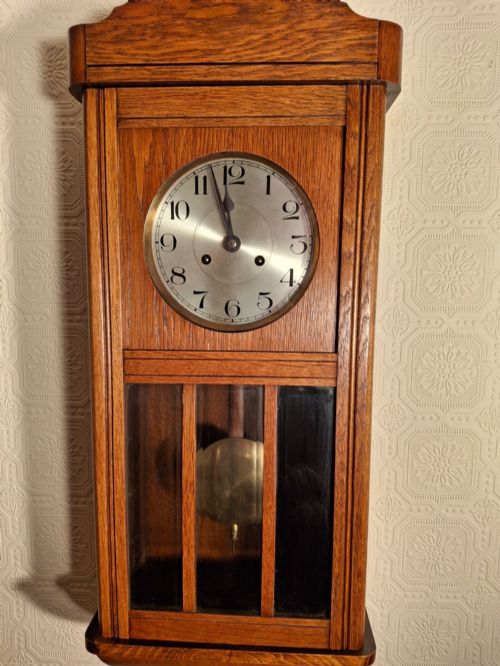
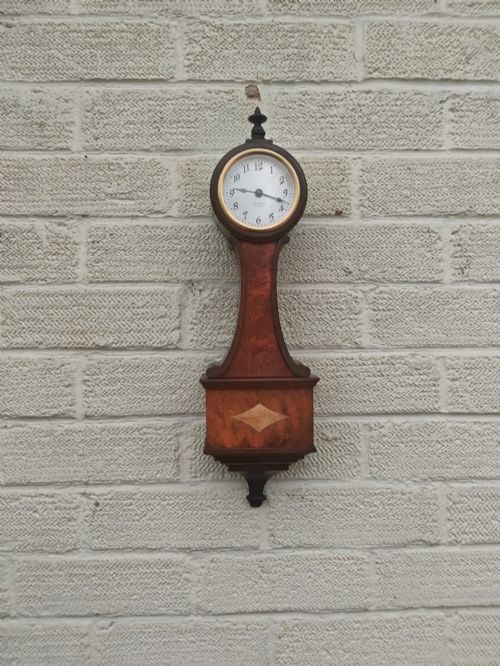
When you search for an antique chiming wall clock, you encounter timepieces designed to mount directly onto domestic and public walls while sounding the hours and quarters. The pieces on this page span the nineteenth century, the Victorian era, the Edwardian period, and the mid-twentieth century.
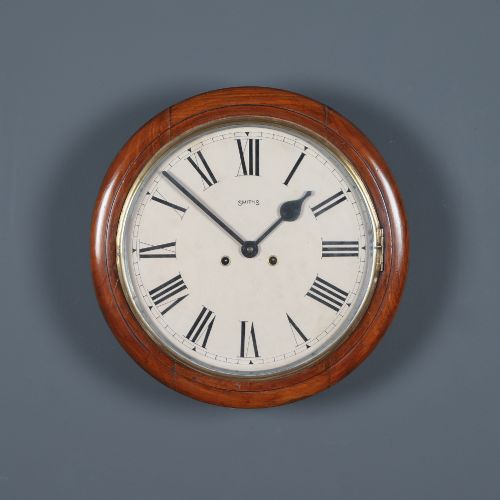
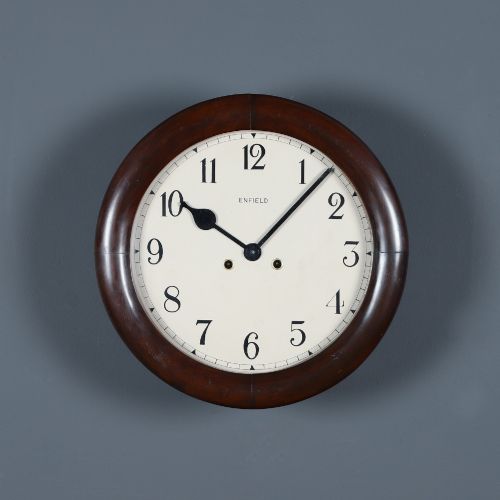
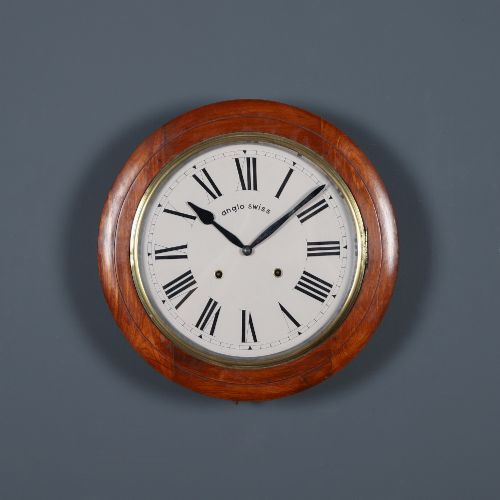
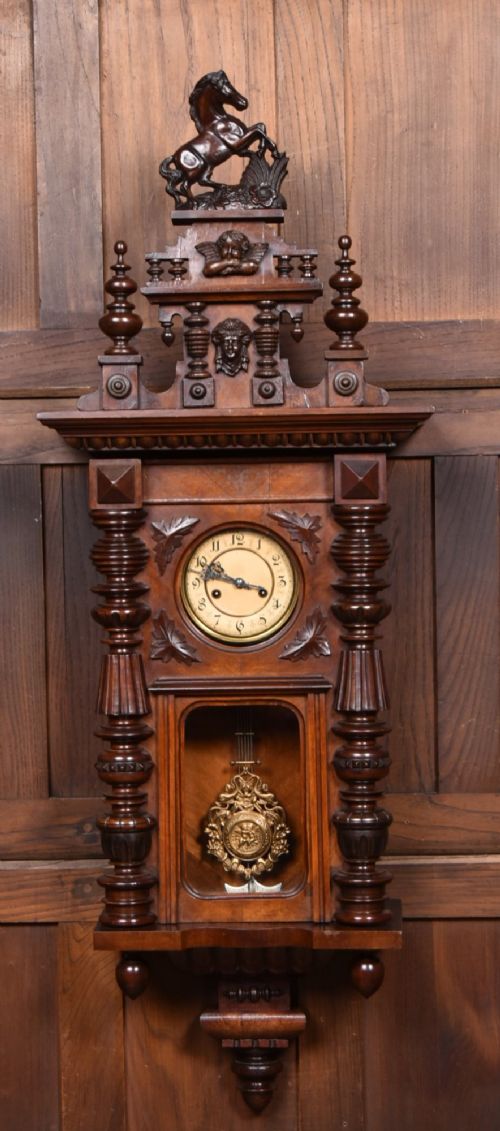
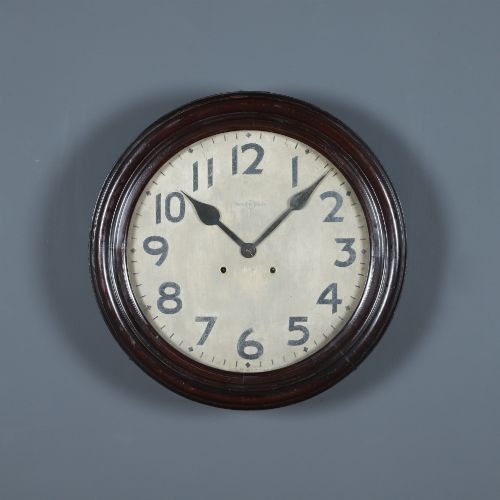
The selection ranges from round school and railway station dials in mahogany and oak to elaborate walnut Vienna regulators and French Art Deco carillon models. You also find Arts and Crafts oak designs alongside Georgian bracket clocks adapted for wall hanging.
Dial formats vary from simple painted enamel faces with bold numerals to intricate brass bezels behind glass doors. Many examples incorporate striking and chiming mechanisms, including Westminster carillon movements and Grande Sonnerie systems.
Materials and construction
Cases rely heavily on solid timber veneers over robust carcases, predominantly utilising walnut, mahogany, and golden oak. Glass panels protect the dial and pendulum window, whilst brass forms the gears, bezels, and pendulum bobs.
Dial faces combine metal backplates with applied numerals or enamel surfaces, often covered by heavy curved or flat glass doors. Iron and steel components govern the internal weight-driven or spring-driven gear trains.
Listings feature walnut, mahogany, and oak cases enclosing brass movements across Victorian, Art Deco, and Georgian periods.
Judging execution and finish
Quality rests in the precision of the mechanical movement and the depth of the timber finishing. Finer examples feature intricate carvings, matched wood veneers, and signed movements from established makers.
The clarity of the chime tone and the robustness of the brass framing distinguish superior pieces from standard production clocks. Attention to detail in the dial numerals and the weight of the cast brass bezels signal higher grade production.
Smiths·Enfield·Seth Thomas·Odo·Vedette·Girod·Gustav Becker·Lenzkirch·Cording of London
The Antique Chiming Wall Clock Glossary
- Vienna Regulator
- A high-precision pendulum clock originating in nineteenth-century Austria, known for its long glazed case and weight-driven movement.
- Carillon
- A mechanism that plays a sequence of musical notes on multiple gongs or bells before striking the hour.
- Grande Sonnerie
- A complex striking train that chimes both the hours and the quarters automatically on every quarter hour.
- Bracket Clock
- A portable clock originally designed to sit on a wall bracket or table, frequently adapted for hanging.
- Bezel
- The metal ring that holds the glass protecting the clock face in place.
Antique Chiming Wall Clock: Frequently Asked Questions
How do I wind my clock?
Most spring-driven models require a matching key inserted into winding holes on the dial face to tension the mainsprings.
Weight-driven systems use a crank or pull chains to raise the heavy iron weights back towards the top of the case.
Why does the chime sound slow?
The mechanical governor or air brake inside the striking train may require adjustment or cleaning to regulate the speed of the gear train.
Changes in room temperature and humidity can also affect the tension of the springs and the swing of the pendulum.
Can I hang these on plaster walls?
Due to the substantial weight of solid timber cases, brass movements, and heavy glass doors, secure mounting into wall studs or masonry is essential.
Using appropriate fixings prevents the clock from shifting, which can cause the pendulum to go out of beat and stop the mechanism.