
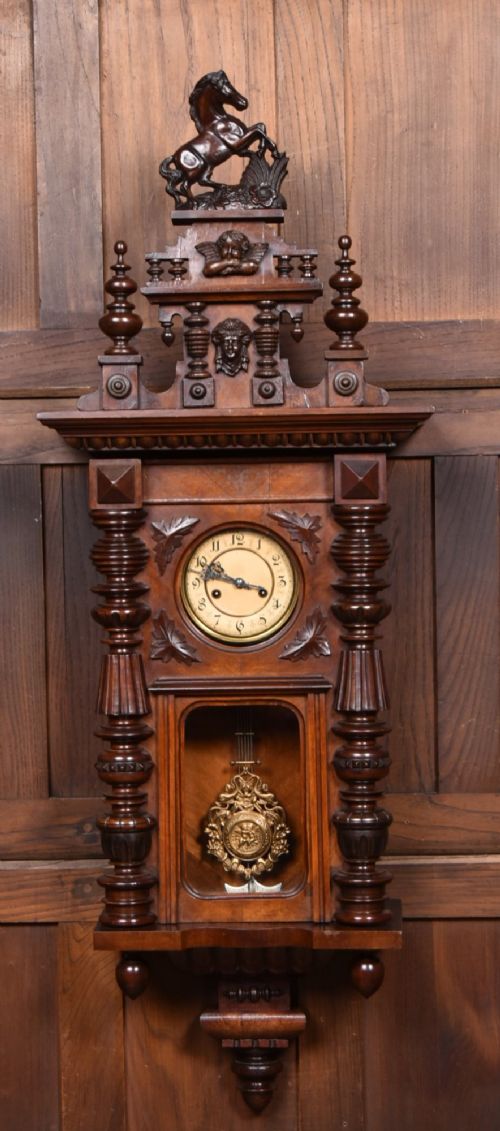


19th Century Vienna Clock
A 19th century vienna clock brings precise movement and elegant wooden cabinetry to a wall, offering traditional timekeeping for a room.
19th Century Vienna Clock
A 19th century vienna clock is fundamentally a wall clock designed for accurate timekeeping, commonly found in styles such as Biedermeier and Vienna Regulator. These pieces mostly date across the Victorian era, spanning decades from eighteen fifty to eighteen ninety.
Buyers seeking a 19th century vienna clock typically encounter wall mounted timepieces housed in wooden cases. These instruments range from single and double weight mechanisms to complex triple weight and month duration movements.
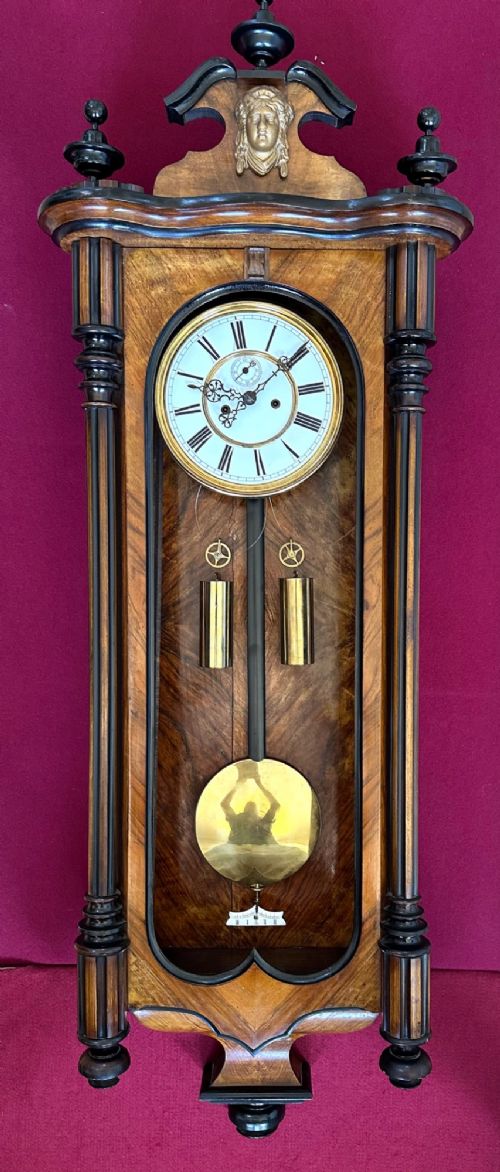
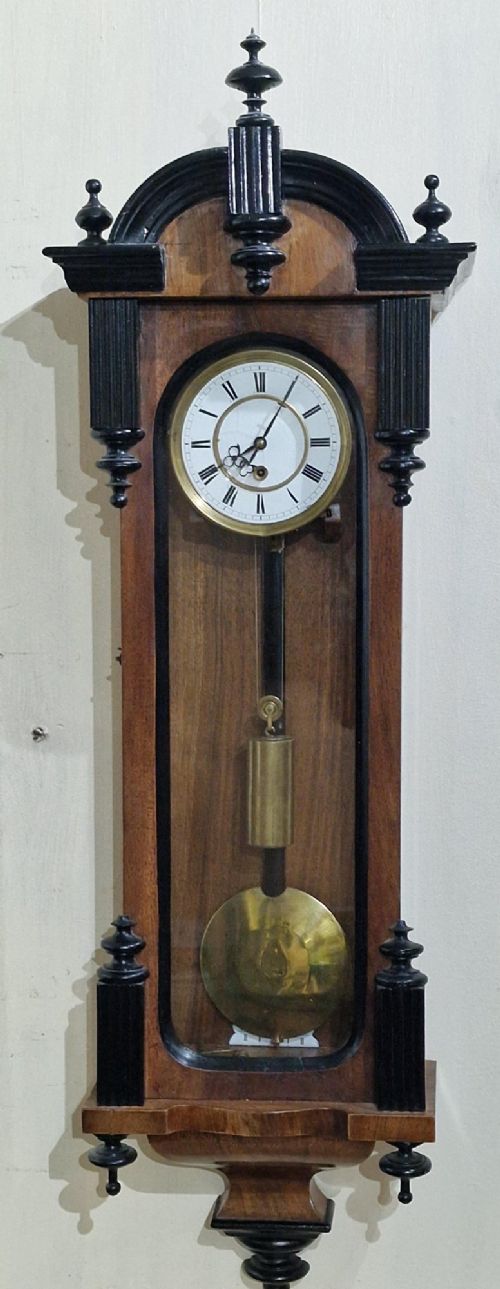
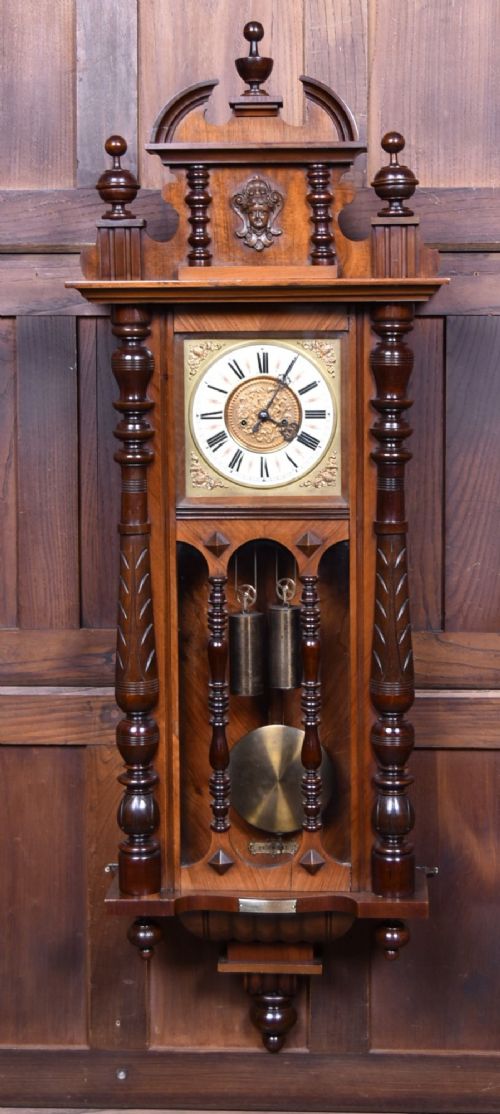
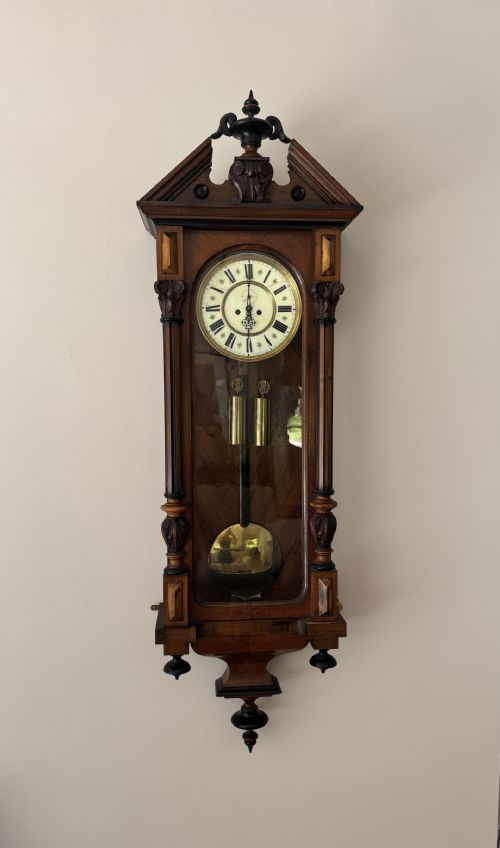
The form is defined by long glass panelled doors that display the swinging pendulum and weights. Wall clocks dominate the selection, though variations include mantel clocks, table cabinets and porcelain boudoir pieces.
Materials and construction
Cases of a 19th century vienna clock are constructed primarily from walnut and mahogany, occasionally utilising ebonised wood for darker finishes. Skilled cabinetmakers shaped and carved these timbers to house the delicate internal mechanisms securely.
Movements incorporate brass gears and components, powered by brass weights or springs. Enamel dials feature alongside glass panels, while decorative elements employ copper and gilt bronze.
Some models hide grand sonnerie chimes behind delicate enamel dials, quietly counting the quarters while guests admire the swinging pendulum.
Assessing craftsmanship and execution
The sophistication of the movement largely dictates the standard of a 19th century vienna clock. Month duration pieces and complex grand sonnerie striking mechanisms stand apart from standard eight day timepieces.
Cabinet work separates ordinary production from superior examples. Finely carved walnut cases with substantial double or triple weight systems indicate a higher grade of manufacture than simpler single weight models.
AG Lenzkirch·Gustav Becker
The 19th Century Vienna Clock Glossary
- Vienna Regulator
- A precision wall clock developed in Austria, known for its accurate movement and clear glass door displaying the pendulum. These clocks were designed for strict timekeeping.
- Biedermeier
- A central European style emphasising clean lines and utilitarian comfort over excessive ornamentation. Furniture and clock cases from this period focus on the natural grain of woods like walnut.
- Grande Sonnerie
- A complex clock striking mechanism that chimes both the hours and the quarters automatically. It represents an advanced level of horological engineering.
- Enamel
- A glassy substance fused to a metal dial face to provide a smooth, durable surface for painted numerals. These dials offer a crisp white background for the clock hands.
- Ebonised Wood
- Timber treated to resemble ebony, achieving a deep black finish. This technique was frequently utilised on Victorian clock cases for contrast.
19th Century Vienna Clock: Frequently Asked Questions
How do I wind a Vienna clock?
Most models require a key inserted into the dial holes to lift the internal weights or tension the springs. Care must be taken not to overwind the mechanism.
Consult the specific weight duration, whether eight day or month long, to establish the correct winding schedule for your timepiece.
Where should I hang a wall clock?
Mount the clock on a sturdy interior wall away from direct sunlight, dampness and heavy vibrations. A stable surface ensures the pendulum swings evenly.
Ensure the case hangs completely plumb so the tick remains regular and the weights descend without obstruction inside the wooden housing.
What is a double weight clock?
A double weight movement uses two suspended brass weights to power separate trains for timekeeping and striking. This setup supports an eight day duration between windings.
The visible weights descend slowly down the glass panelled case as the week progresses, serving as both power source and visual feature.
How do I identify a Biedermeier style?
Biedermeier pieces display restrained elegance with unadorned walnut surfaces that highlight the natural wood grain. The aesthetic favours functional clarity over heavy Victorian carving.
Cases from this mid nineteenth century period maintain balanced proportions and simple architectural lines.