
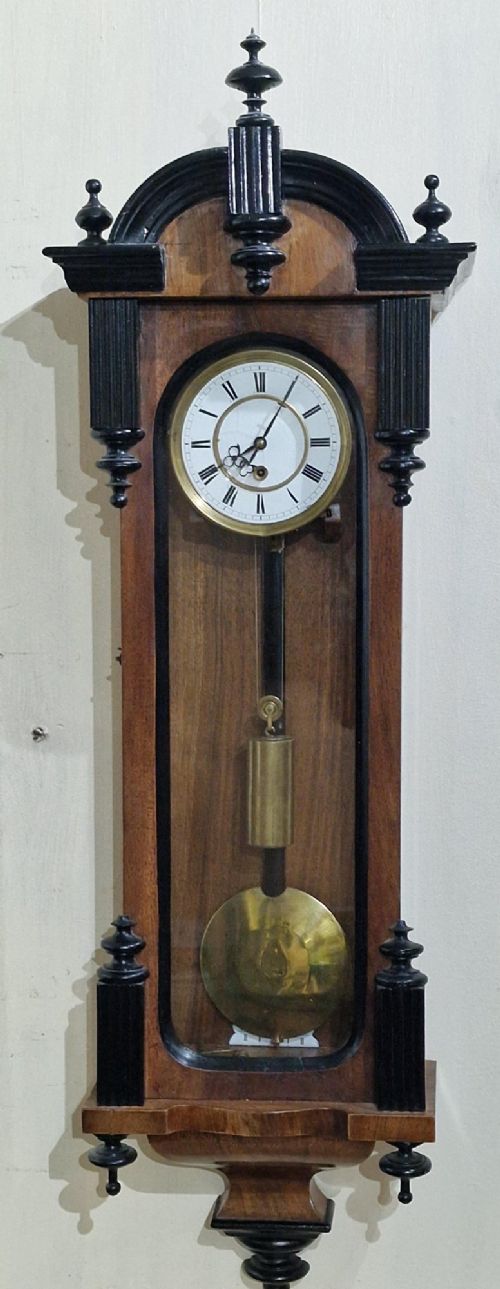


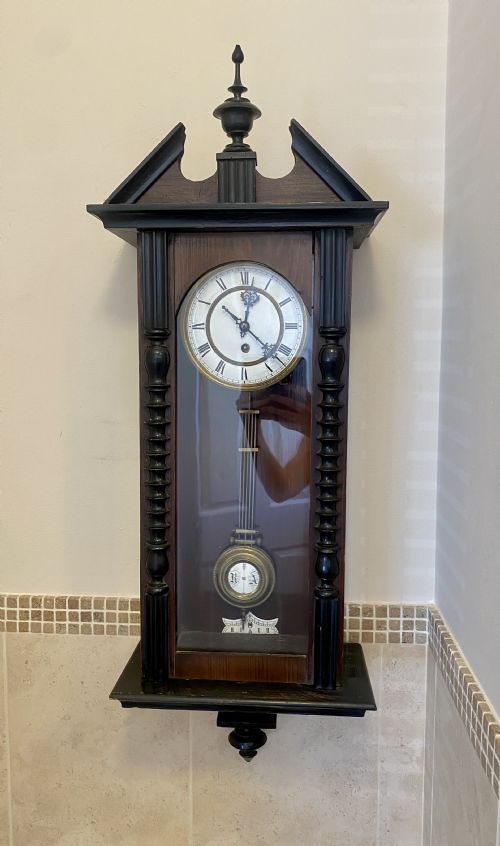

Victorian Glazed Wall Clock
These Victorian glazed wall clock examples combine precision timekeeping with striking timber cases, offering dependable mechanical elegance for the home.
Victorian Glazed Wall Clock
A victorian glazed wall clock serves as both a reliable timepiece and an architectural wall feature, combining glass panels with timber cases. These pieces include Vienna regulators and striking wall clocks from the nineteenth century.
How they were made
Cases are constructed from walnut, mahogany, and ebonised wood, frequently showcasing carved details and polished wood surfaces. These timber structures house complex mechanical movements driven by brass weights.
Dial faces utilise crisp enamel paired with delicate brass hands, protected beneath glazed doors that allow clear viewing of the swinging pendulum.
Listings feature walnut and mahogany timbers paired with brass and enamel components across the Victorian era.
What varies in quality
The refinement of the movement distinguishes standard timepieces from month duration Vienna regulators and double weight mechanisms. Superior examples display meticulous carved woodwork and balanced proportions.
Dial legibility and the crispness of the enamel face contribute to the overall standard of the piece, alongside the richness of the walnut case veneer.
AG Lenzkirch·Gustav Becker
The Victorian Glazed Wall Clock Glossary
- Vienna Regulator
- A precision pendulum wall clock developed in Austria during the nineteenth century, known for accurate timekeeping and long glazed door panels. These movements often feature month duration or double weight systems.
- Double Weight
- A mechanical clock system utilising two suspended weights to power the going train and the striking train separately. This setup allows the clock to run for longer periods between winding.
- Fusee
- A conical pulley used within clock movements to equalise the declining power of the mainspring as it unwinds. This mechanism ensures consistent torque reaches the escapement.
- Enamel Dial
- A face formed by fusing powdered glass to a metal substrate at high temperature, creating a smooth and durable surface for painted numerals. These dials provide a classic crisp white finish.
Victorian Glazed Wall Clock: Frequently Asked Questions
How do I wind a wall clock?
Use the provided winding key to turn the arbors on the enamel dial face until resistance is felt. Ensure you do not overwind the mechanism.
For double weight clocks, carefully pull the chains or raise the brass weights using the winding loop according to the specific movement design.
Where should I hang my clock?
Mount the clock securely onto a solid wall stud using appropriate fixings to support the weight of the timber case and movement. Avoid damp areas and spaces subject to direct sunlight or dramatic temperature shifts.
Ensure the wall is entirely vertical so the pendulum hangs plumb and the beat remains even.
Why does the clock lose time?
Variations in temperature and the settling of the wall case can affect the swing of the pendulum. Adjust the regulating nut on the pendulum bob up or down to correct the speed.
Ensure the clock is firmly fixed against the backboard so the beat sounds in a regular, even rhythm.
How do I identify a Vienna regulator?
Look for a long rectangular glazed door that reveals the entire length of the pendulum rod and brass bob. The dial is typically white enamel with subsidiary seconds and Roman numerals.
Most examples from this tradition feature walnut cases and high grade mechanical movements designed for exceptional accuracy.