

Antique Chest Wardrobe
An antique chest wardrobe combines generous hanging space with deep drawer storage, offering a practical solution for traditional bedroom organisation.
Antique Chest Wardrobe
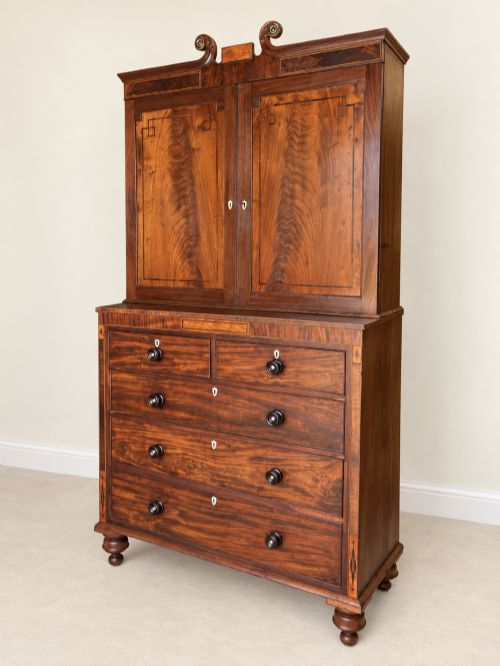
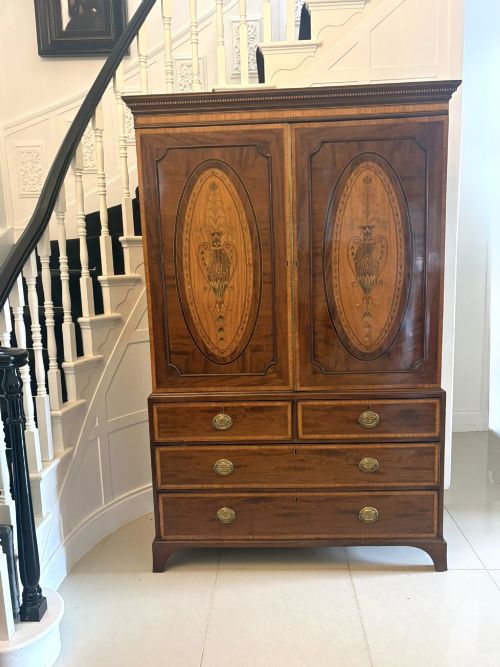
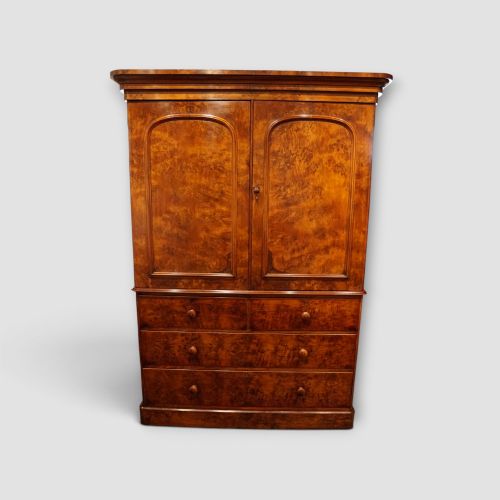
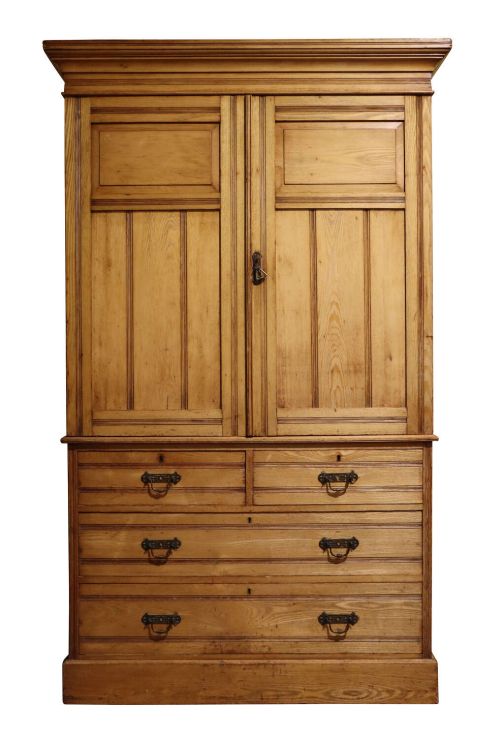
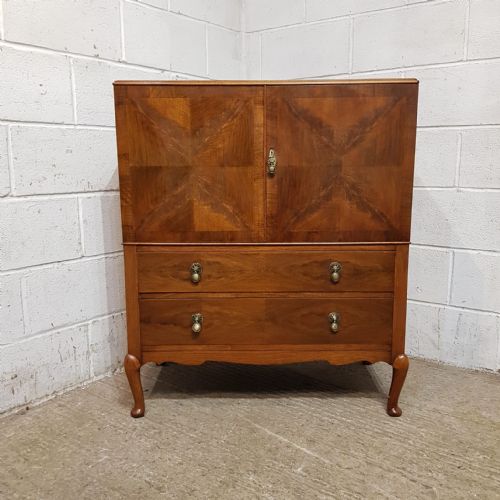
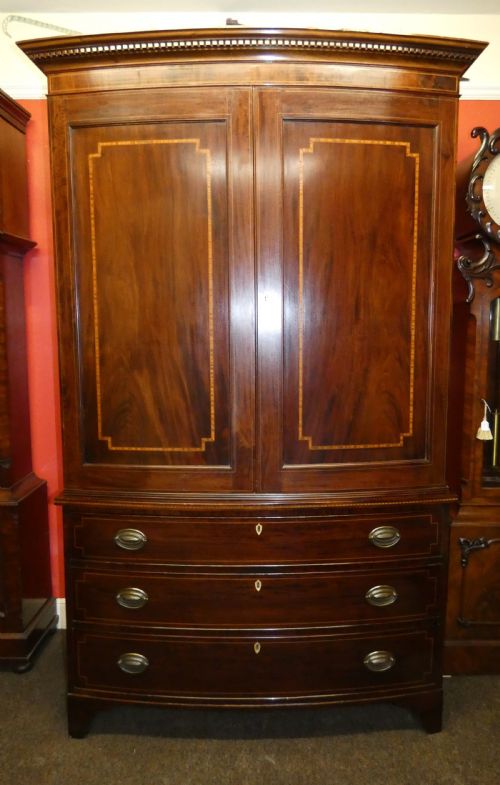
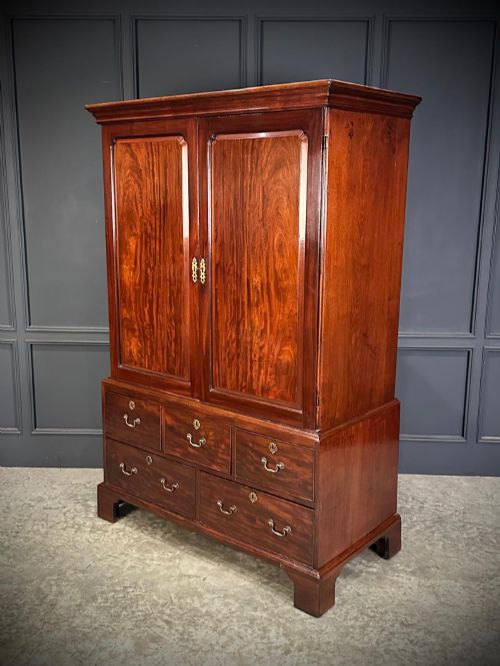
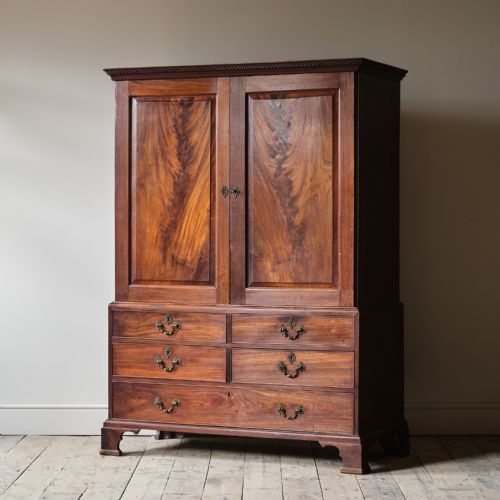
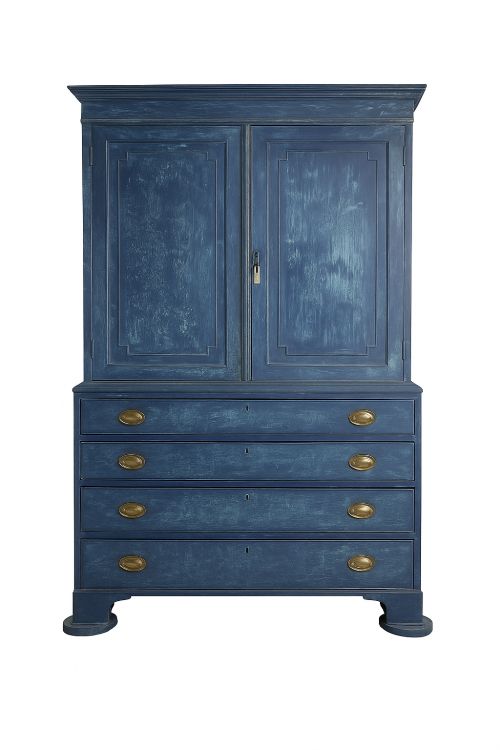
The term antique chest wardrobe encompasses tallboys, linen presses, and compactum cabinets that merge vertical clothes hanging compartments with horizontal chest of drawers storage. These hybrid pieces evolved from simple press cupboards into sophisticated bedroom furniture designed to house diverse garments in a single unit.
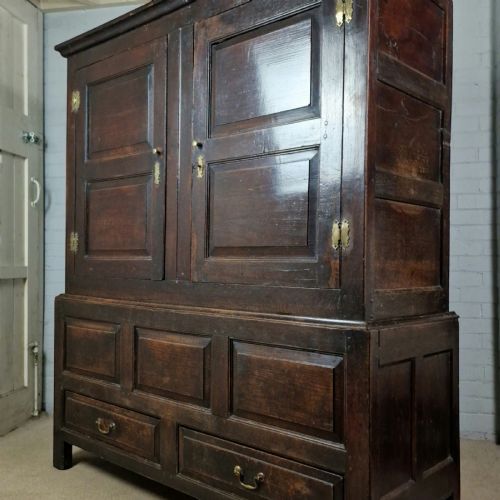
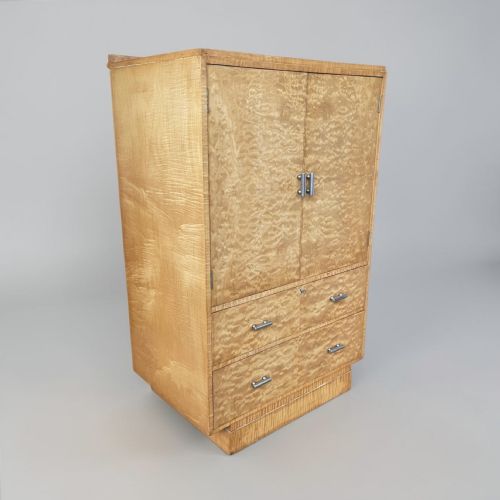
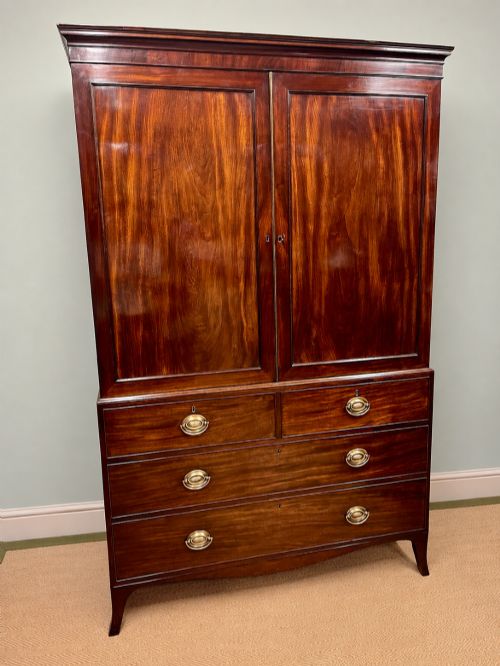
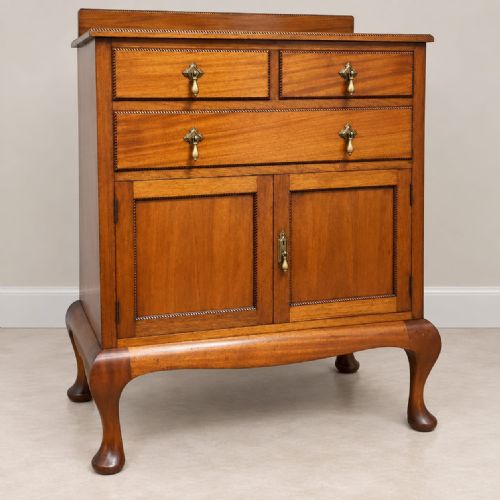
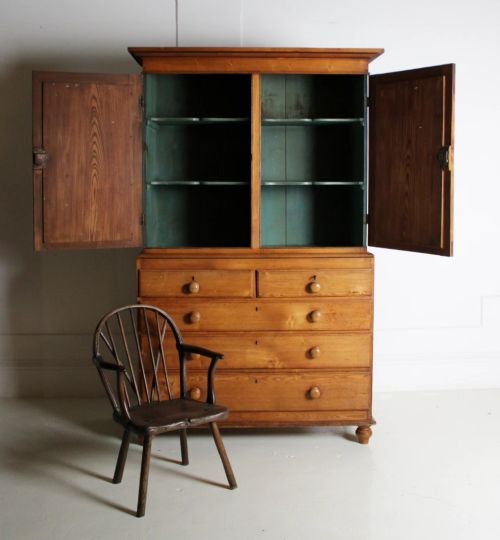
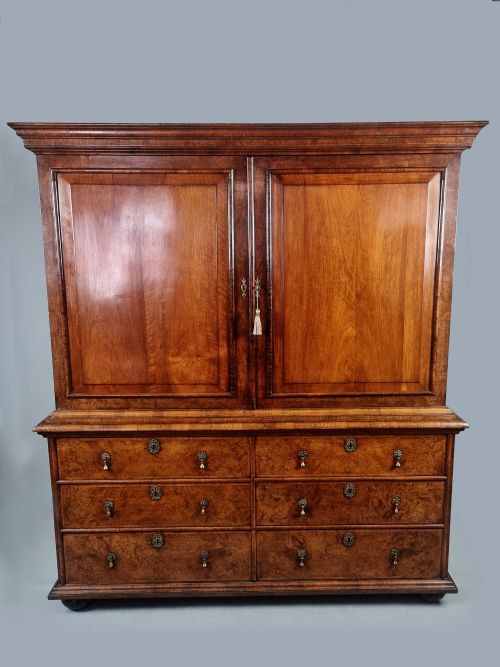
Georgian and Victorian examples dominate the selection, alongside Edwardian and Art Deco variations. Pieces range from formal mahogany George III linen presses to rustic pine chifferobes and Dutch walnut marquetry cabinets.
The combination of upper cupboard doors enclosing sliding trays or hanging space above a base of graduating drawers defines the standard layout met on this page.
Materials and Construction
Cabinetmakers utilised dense hardwoods like mahogany, oak, and walnut, often selecting figured veneers such as flame mahogany or burr walnut for primary visual impact. Secondary timbers like pine and ash appear in internal drawer construction and carcase backs.
Joinery methods involved traditional dovetailing for drawer boxes and frame and panel construction for large doors to accommodate seasonal wood movement. Brass hardware, including drop handles, escutcheons, and hinges, secures operational longevity.
Inlaid decoration incorporates contrasting satinwood stringing and marquetry floral motifs, while carved details emphasise architectural cornices and bracket feet.
Listings feature periods spanning from the 18th century through to 1930, utilising mahogany, oak, walnut, and ash.
Determinants of Quality
The choice of veneer grain matching across drawer fronts and door panels distinguishes high-tier commissions from standard production pieces. Figured timbers demand careful bookmatching to create symmetrical patterns that elevate the visual presence of the cabinet.
Internal engineering, such as smooth-running sliding linen trays and hand-dovetailed drawer boxes with solid linings, reflects the original maker's standard of work. Superior examples retain original brass locks, working keys, and sound structural joints without excessive timber replacement.
Proportion and scale dictate the success of the piece, with well-balanced cornices and feet complementing the heavy mass of the upper wardrobe section.
Maple & Co.·Gillows·Frank Taylor & Co.·Druce & Co.·Ambrose Heal
The Antique Chest Wardrobe Glossary
- Linen Press
- A tall storage piece comprising upper cupboard doors enclosing sliding trays for folded textiles, mounted over a chest of base drawers. These items were originally built to store household linens before modern wardrobes became standard.
- Tallboy
- A tall chest of drawers standing on a further chest or base cabinet, creating an elevated vertical storage unit. Georgian and later makers produced these in walnut, oak, and mahogany.
- Compactum
- A fitted wardrobe featuring internal divisions, drawers, and hanging space organised for maximum utility within a single footprint. These multifunctional pieces gained popularity during the Victorian and Edwardian periods.
- Marquetry
- The art of applying decorative veneer pieces in wood, metal, or shell to form pictorial or geometric patterns on a carcase. Dutch and Georgian cabinetmakers utilised this technique extensively on cabinet doors.
- Satinwood
- A lustrous, fine-grained yellow timber native to India and Ceylon, frequently employed for contrasting stringing and inlay on mahogany furniture.
Antique Chest Wardrobe: Frequently Asked Questions
What is an antique chest wardrobe?
An antique chest wardrobe is a hybrid storage item combining vertical cupboard space for hanging or shelves with a chest of drawers built into the lower section.
These pieces developed to satisfy comprehensive bedroom storage requirements before fitted closets became common.
How do I use a linen press today?
The interior sliding trays accommodate folded garments, jumpers, and bedding, while the lower drawers provide space for smaller items.
Removing internal trays in some models allows the upper section to function as standard hanging space for modern clothing.
How do I date an antique wardrobe?
Construction traits, handle styles, timber choice, and secondary woods offer clear chronological indicators for these cabinets.
Hand-cut dovetails, pegged joints, and characteristic mouldings help distinguish Georgian pieces from later Victorian and Edwardian examples.
Will a large wardrobe dismantle for moving?
Many tallboys and linen presses separate into upper and lower sections to facilitate transport and placement in rooms with low ceilings.
Combination wardrobes often break down further into individual side modules, cornices, and base plinths.