
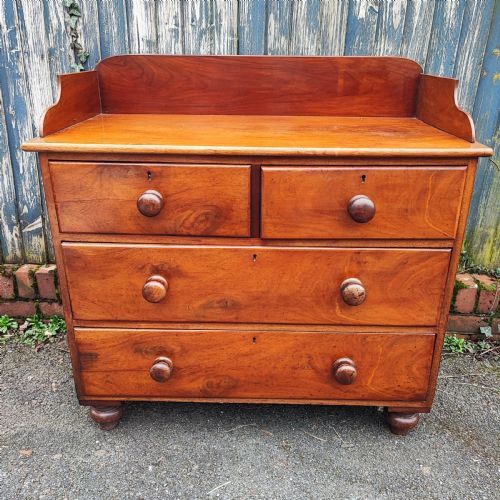


Antique Chest Drawers Gallery
An antique chest drawers gallery brings together functional storage and period craftsmanship, offering everything from modest pine country pieces to refined mahogany designs.
Antique Chest Drawers Gallery
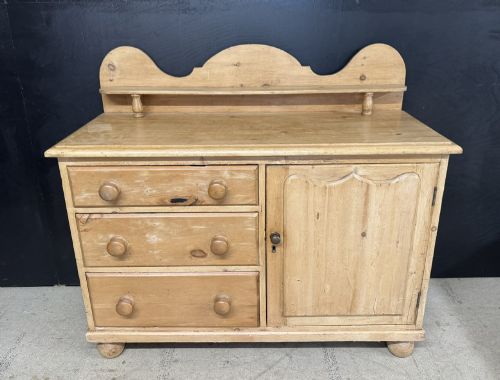
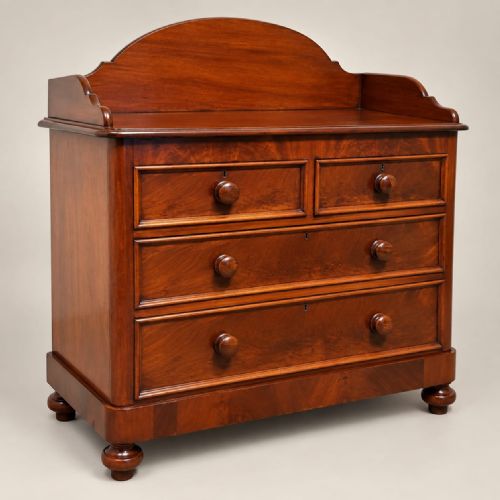
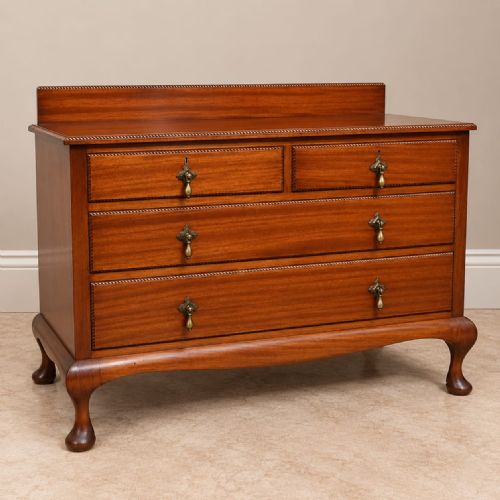
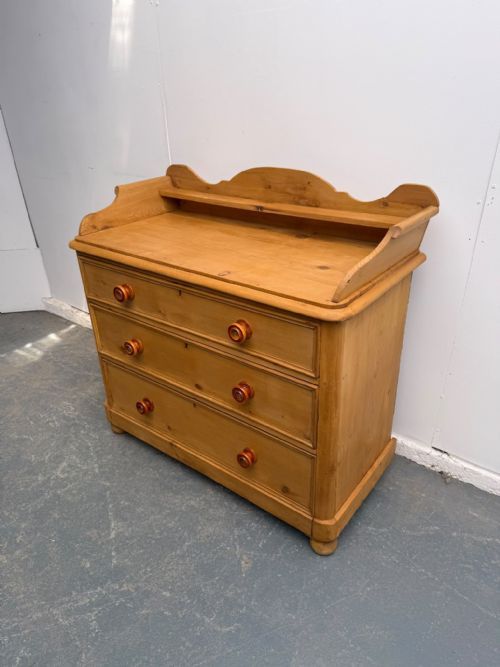
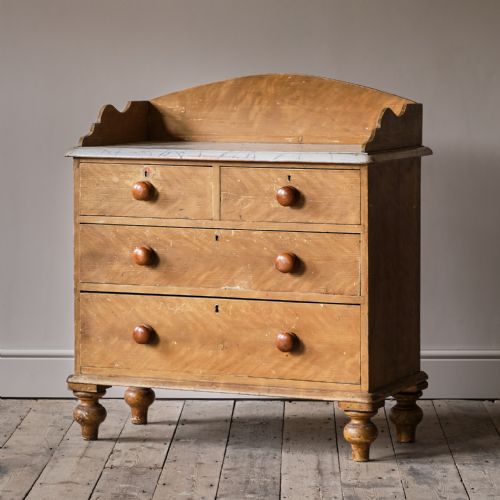
An antique chest drawers gallery unites practical storage furniture featuring raised back or side structures, known as galleries, designed to keep items secure on the surface top. You will encounter pieces spanning the Georgian, Victorian, and Edwardian periods, reflecting the shifting domestic tastes of British and continental households.
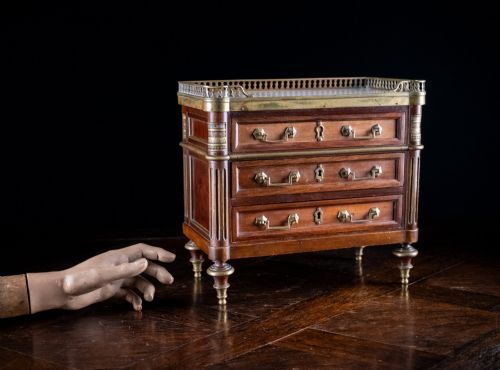
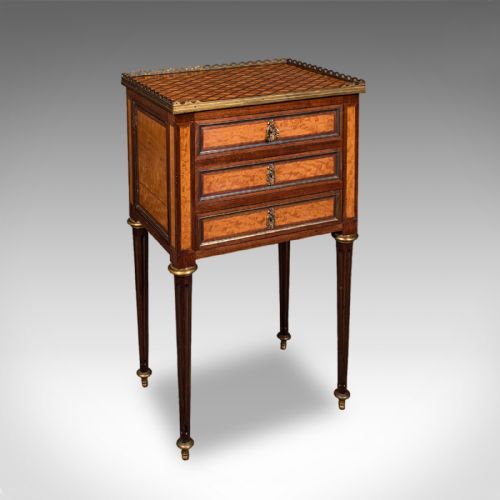
The selections on this page range from robust country pine washstands and dressers to polished mahogany and satin birch chamber chests. Regional variations such as Welsh country pine commodes and French revival bedside cabinets sit alongside utilitarian campaign furniture bound in brass.
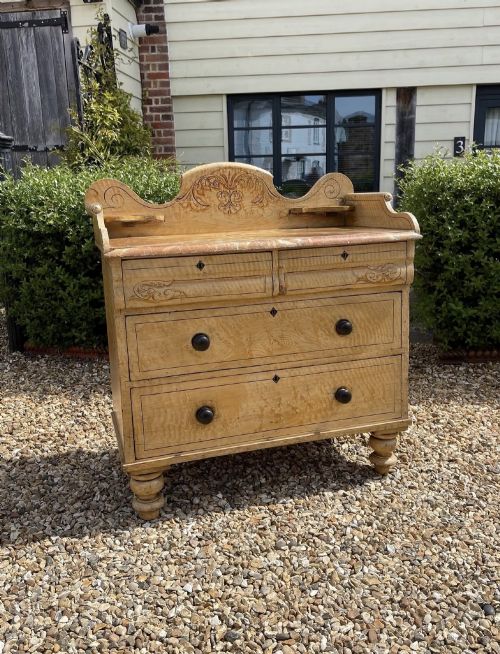
Forms extend beyond standard sleeping chamber storage into specialised pieces, including collectors' cabinets with numerous small drawers, music cabinets, and galleried sideboards. Pine versions frequently display original paint finishes or waxed surfaces, whilst hardwood examples emphasise rich natural grains.
Materials and construction methods
Cabinet makers utilised a mix of native and imported timbers, relying heavily on durable pine for country furniture and dense hardwoods like mahogany, walnut, and satinwood for formal urban pieces. Specialised items incorporate exotic woods such as kingwood and camphor, often paired with brass hardware for campaign or revival pieces.
Surface treatment defines much of the visual character, encompassing clear wax finishes, decorative marquetry, and surviving original paint. Raised gallery backs were integrated directly into the upper framing or attached as separate decorative superstructures to retain washbasins, books, or small ornaments.
Distinctions in quality and execution
The hierarchy of quality rests upon the selection of timber and the precision of the joinery rather than mere age alone. Superior examples feature carefully matched wood veneers, finely cut dovetail joints on the drawer construction, and intact original hardware.
Condition and originality dictate desirability, particularly the survival of original painted surfaces, gallery rails, and backboards. Finer execution is also evident in specialised multi-drawer configurations, such as large collectors' cabinets, where internal fitting requires meticulous carpentry.
The Antique Chest Drawers Gallery Glossary
- Gallery
- A raised wooden rail or superstructure positioned along the back and sides of a chest top. It prevents objects from sliding off and adds a decorative architectural profile.
- Commode
- A European term for a low chest of drawers or cabinet. In period contexts, these often feature decorative marquetry or painted finishes.
- Campaign chest
- A portable chest of drawers built in sections with recessed brass carrying handles and corner braces. Designed for easy dismantling and transport by military officers.
- Marquetry
- The art of applying thin pieces of wood veneer to a structural surface to create pictorial or geometric patterns. It is frequently seen on French revival furniture.
- Dovetail
- A traditional interlocking joint used to connect drawer sides to drawer fronts. Finely spaced pins indicate skilled hand craftsmanship.
Antique Chest Drawers Gallery: Frequently Asked Questions
What is a gallery back?
A gallery back is an elevated barrier attached to the rear and sometimes sides of a furniture top. It serves both a practical purpose to stop items from falling and a decorative role in defining the style.
You will find gallery backs on various 19th-century pine washstands and mahogany dressing chests designed for everyday household use.
How do I date an antique chest?
Dating relies on observing a combination of timber usage, construction techniques, hardware, and prevailing stylistic influences. Georgian pieces often show different proportions and joint structures compared to later Victorian or Edwardian items.
Examining the drawer construction and secondary woods inside the piece helps confirm the likely period of manufacture.
Are painted pine chests original?
Many pine chests of drawers and washstands retain their original painted surfaces applied during the 19th century. Country workshops frequently finished utility furniture in simple lead-based or decorative paints.
Paint finishes vary from plain utilitarian coats to decorative schemes found on Welsh and continental vernacular furniture.
Where were campaign chests used?
Campaign chests were built in modular sections for British military officers on active service overseas. Their robust construction and brass bindings allowed them to withstand frequent travel.
Woods like camphor and mahogany were chosen for their durability and resistance to warping in changing climates.