
Original Paint Chest Drawers
Original paint chest drawers combine vernacular utility with surviving historic colour, offering domestic storage carrying decades or centuries of untouched surface character.
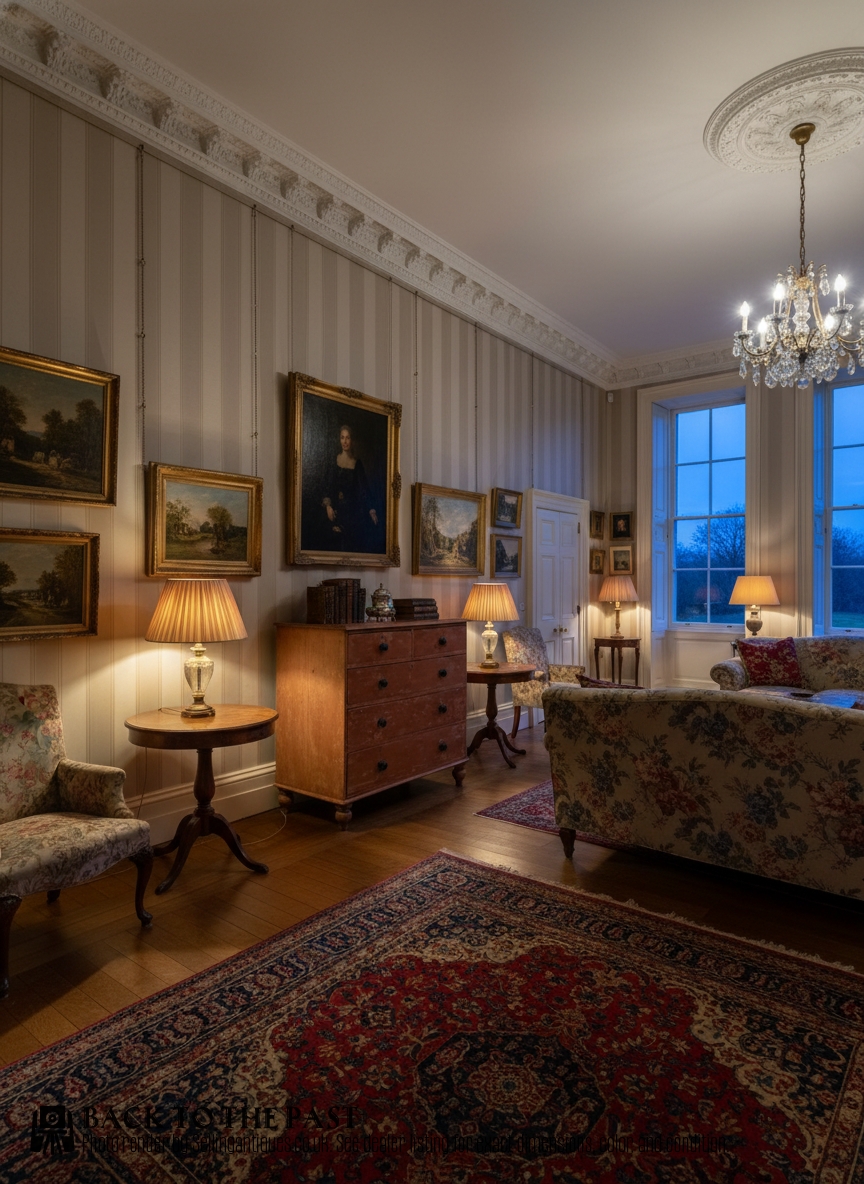
Original Paint Chest Drawers
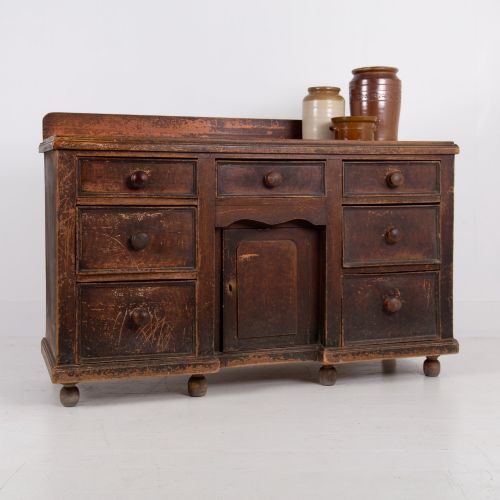
When exploring original paint chest drawers, buyers encounter substantial case furniture primarily constructed from pine and painted during periods spanning the eighteenth, nineteenth, and early twentieth centuries. These pieces originate from regional workshops across Britain, continental Europe, and Scandinavia, reflecting diverse folk traditions through distinct regional forms.
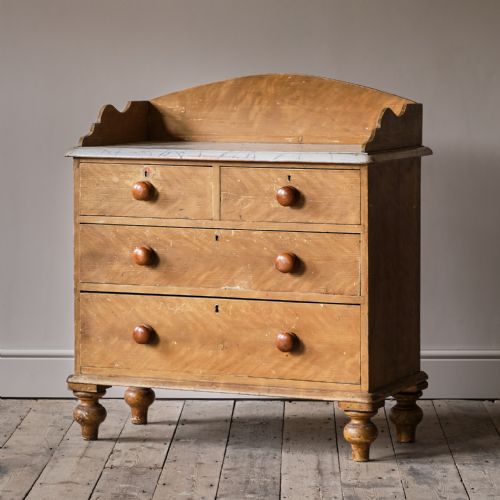
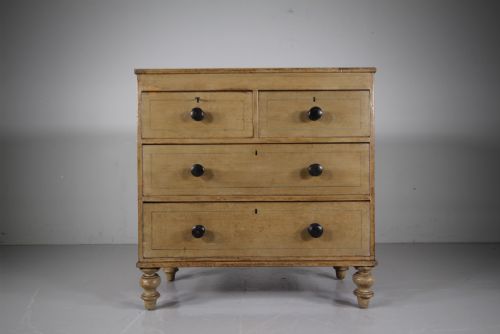
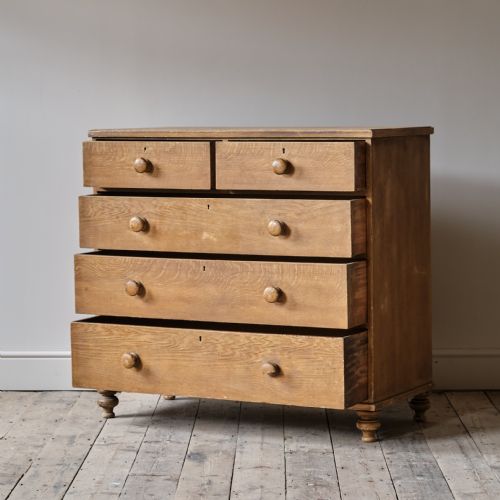
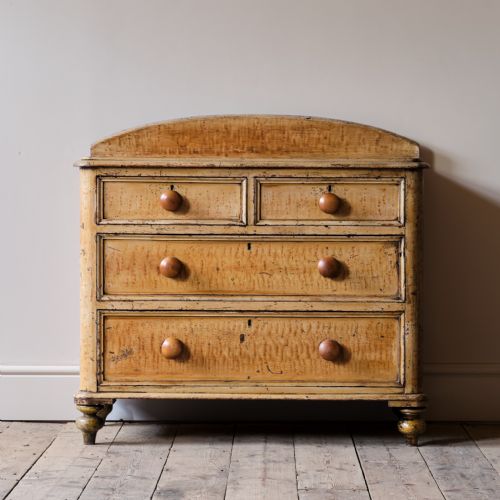
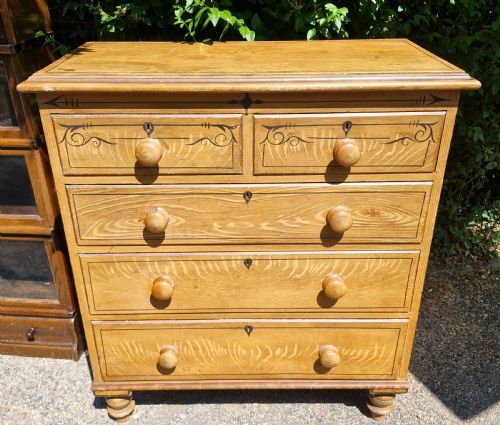
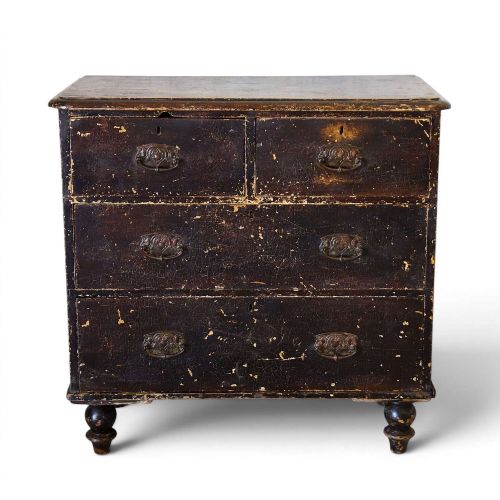
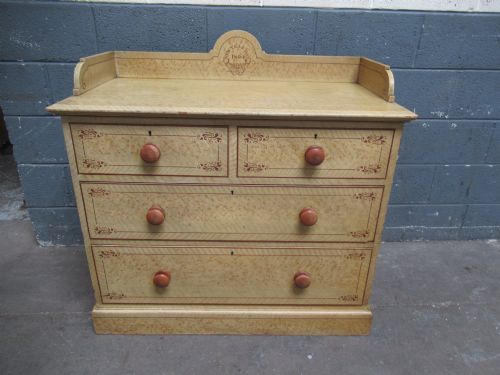
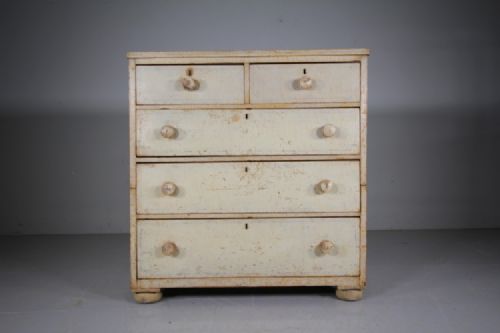
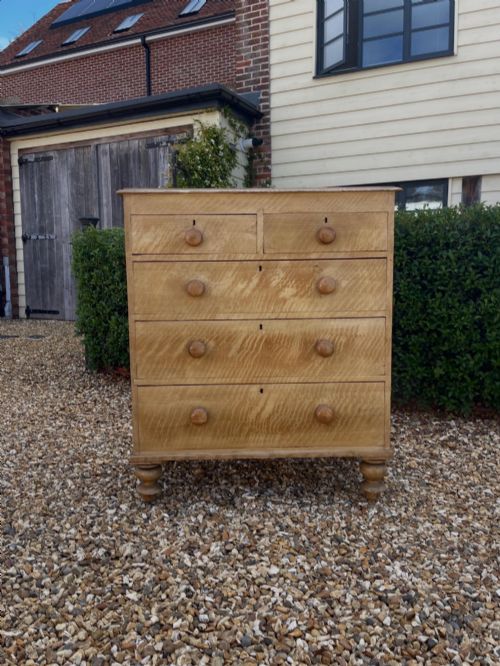
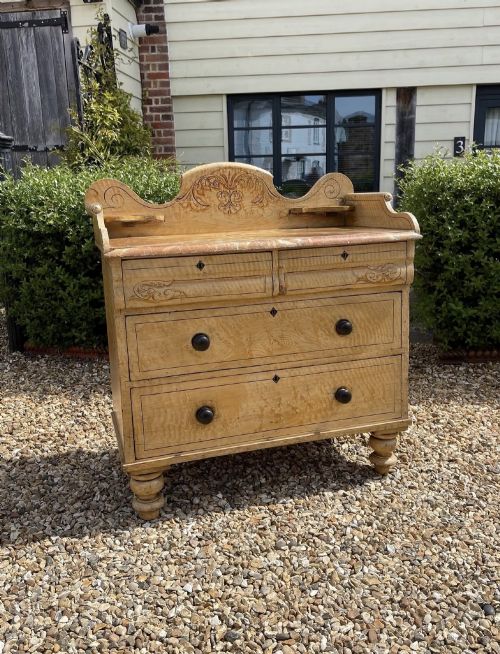
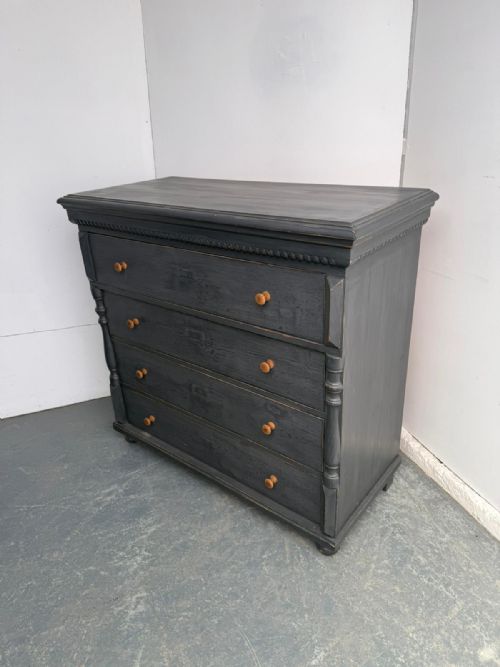
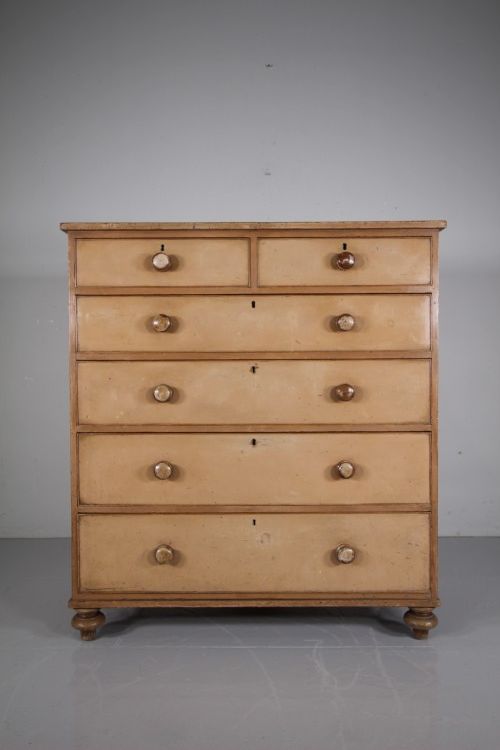
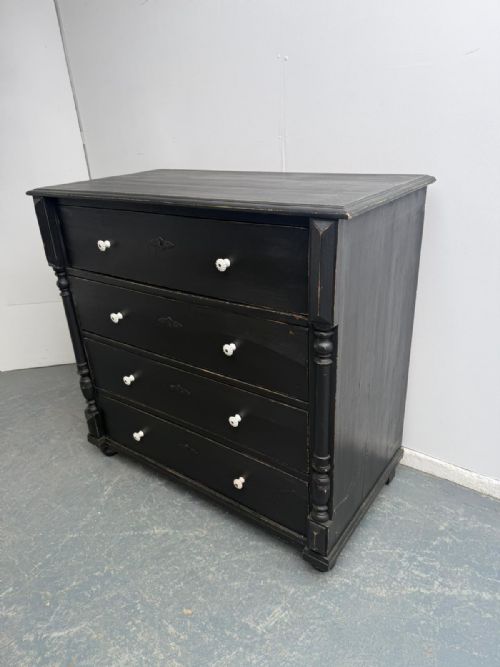
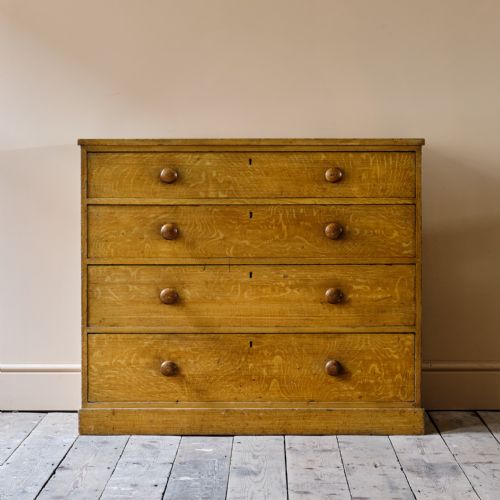
The most common examples on this page are nineteenth century pine chests finished in coloured, scumbled, or faux-grained paint surfaces, often arranged in standard drawer configurations like two short drawers over three long ones. Alongside traditional chests, related forms such as commodes, washstands, and linen presses appear, all united by retaining their initial decorative coatings rather than later stripped or repainted surfaces.
Materials and construction methods
Construction relies heavily on solid timber frameworks, predominantly pine, assembled using traditional joinery techniques such as dovetailed drawer boxes and panelled backs suited for domestic storage. Metal hardware like iron or brass pulls, drop handles, and ceramic knobs secure the drawers while providing functional contrast to the wooden carcases.
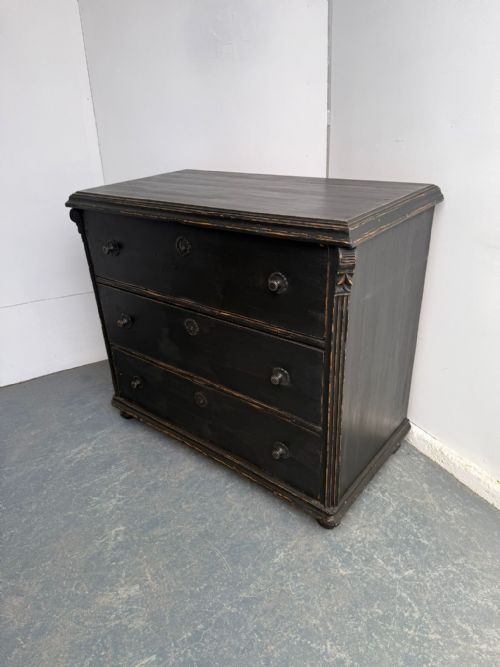
Surface finishes applied over the wood include various historic paint formulations, decorative scumble glazes designed to simulate richer timbers like oak or birch, and hand-applied pigments in shades of blue, green, black, or cream. These initial coatings bond directly with the underlying wood over generations, creating a stable patina that distinguishes authentic untouched surfaces from modern interventions.
Some chests retain hidden compartments behind secret panels, designed long ago to guard family currency or love letters from curious housemaids.
Factors determining quality
Quality in these pieces rests primarily on the integrity and survival state of the historic surface, where undisturbed layers of original pigment or graining hold significantly more character than worn or heavily retouched examples. The balance between utilitarian robustness and decorative refinement also separates standard workshop output from finer country house or continental commodes.
Proportional harmony and structural completeness further define the upper tier of pieces, particularly when drawers retain their original brass or iron hardware and move smoothly within clean carcases. Pieces displaying sophisticated faux finishes, such as simulated bamboo or complex scumble work, demonstrate a higher level of decorative ambition by contemporary makers.
The Original Paint Chest Drawers Glossary
- Scumble
- A translucent or semi-opaque glaze applied over a lighter base coat and manipulated with combs, rags, or brushes to simulate the grain pattern of more expensive woods. This technique was widely utilised during the Victorian era on pine furniture.
- Commode
- A low decorative chest of drawers or cabinet originating from continental traditions, often featuring shaped fronts and sophisticated painted or polished finishes. These pieces frequently date to the eighteenth and nineteenth centuries.
- Washstand
- A specialised piece of bedroom furniture designed to hold washbowls and pitchers, frequently incorporating drawer storage below the top surface. They are commonly constructed from pine and finished with protective paint layers.
- Faux bamboo
- A decorative treatment where wood is carved, turned, and painted to imitate the appearance of natural bamboo stalks. This style gained popularity during the Regency and Victorian periods.
- Wellington chest
- A tall, narrow chest of drawers secured by a hinged vertical locking stile on one side that fastens with a key. This form is occasionally encountered with original country house scumble paint.
Original Paint Chest Drawers: Frequently Asked Questions
How do I clean an original painted surface?
Maintenance requires only gentle dusting with a dry, soft cloth to prevent particulate accumulation without disturbing the historic pigment layers.
Moisture and chemical cleaners should be strictly avoided, as modern solvents will strip or dissolve centuries-old paint and scumble glazes.
Are these chests suitable for daily bedroom use?
These pieces function reliably for clothing storage when drawers slide properly and internal wooden runners remain structurally sound.
Placing them away from direct sunlight and excessive humidity protects the underlying timber and prevents the old paint from cracking or flaking.
What indicates an untouched paint finish?
Authentic surfaces exhibit natural wear patterns, minor craquelure, and consistent ageing across both the main carcase and drawer fronts.
Under magnification or glancing light, the lack of modern primer layers or contemporary brushstrokes confirms the historic integrity of the coating.
How do regional styles differ?
British country pieces tend to display utilitarian pine construction with straightforward painted or grained finishes suited to domestic settings.
Continental and Scandinavian examples often feature bolder pigments, distinctive commode proportions, or folk art detailing characteristic of European workshops.