


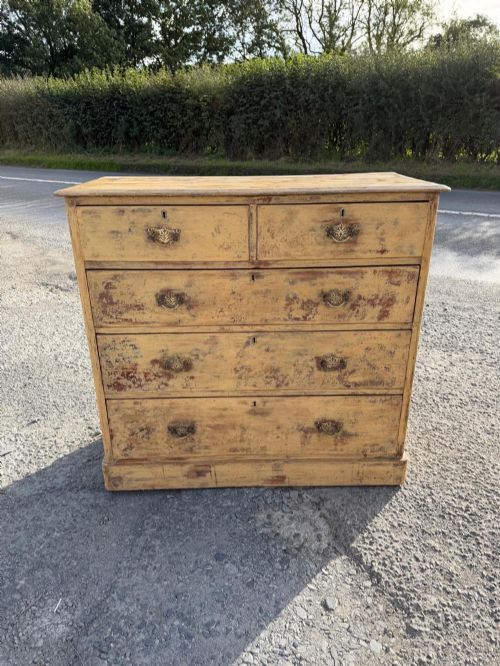

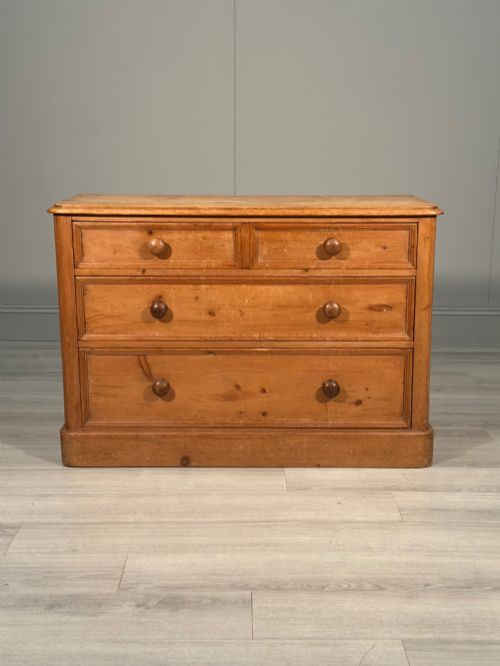
Country Pine Chest of Drawers
A country pine chest of drawers brings honest utility and warm domestic history into a room.
Country Pine Chest of Drawers
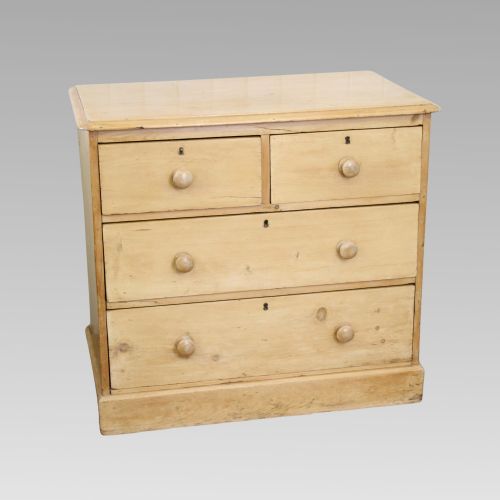
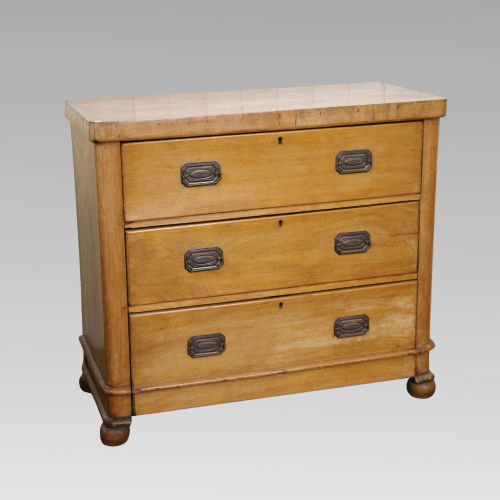
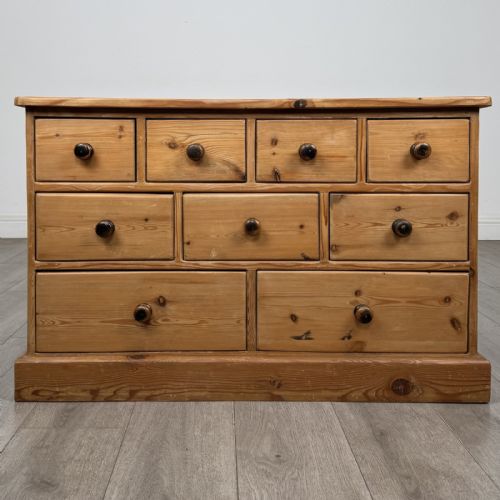
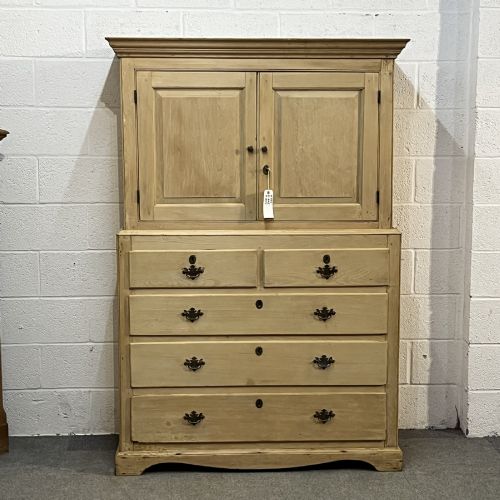
A country pine chest of drawers is a practical storage piece built from softwood timber, often finished with wax, scrubbed surfaces, or traditional paint treatments. These items range from modest domestic storage units to larger provincial examples designed for everyday use in bedrooms, kitchens, and hallways.
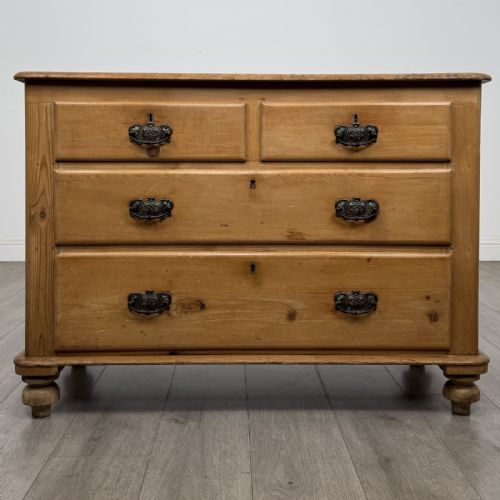
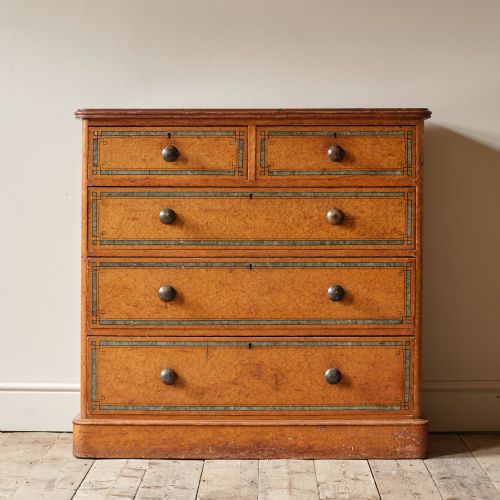
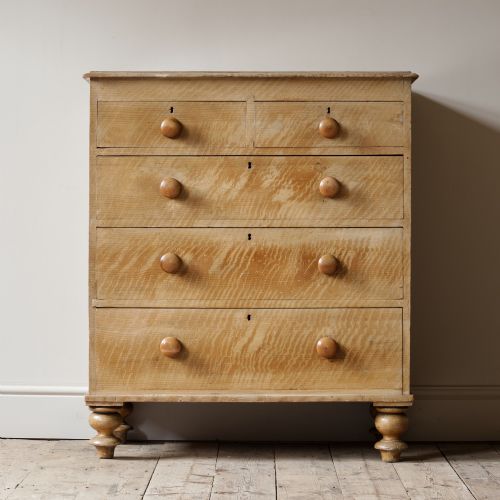
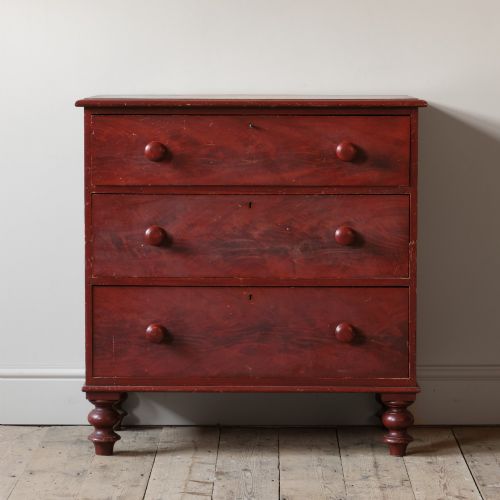
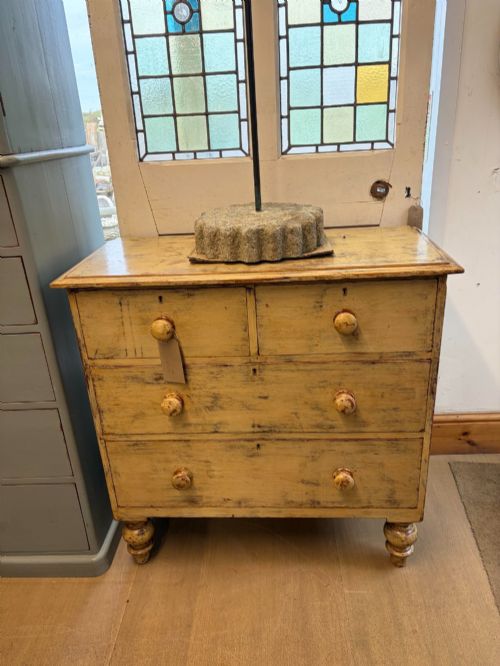
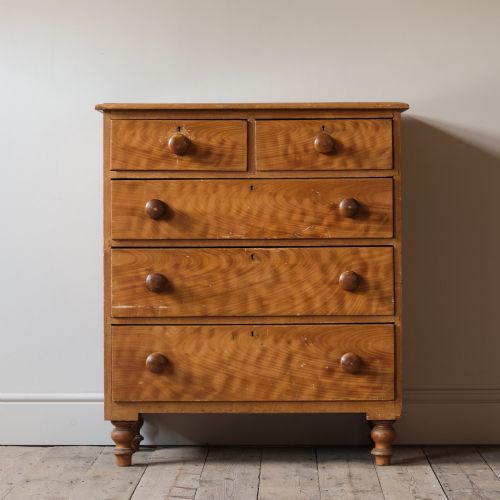
The versions most frequently met on this page belong to the Victorian era and the broader nineteenth century, reflecting regional English, Welsh, Irish, and continental workshops. They appear in configurations such as low wide proportions, two-over-three drawer arrangements, and occasional pieces featuring original paint or scumbling.
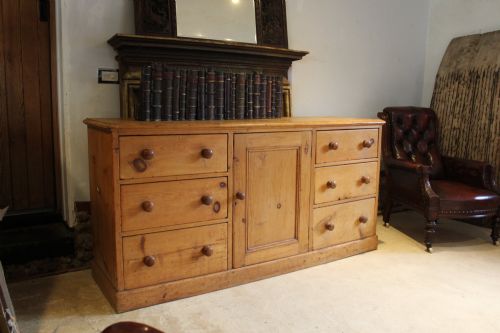
Beyond standard drawer layouts, the selection encompasses related vernacular forms including mule chests, washstands, and occasional painted commodes. These pieces share a straightforward aesthetic rooted in regional carpentry traditions rather than courtly design.
How they were made
Carpenters constructed these pieces primarily using solid pine, pitch pine, or oregon pine, relying on sturdy timber boards for carcass construction and drawer linings. Joinery techniques typically included dovetail joints for drawer construction and pegged frames, ensuring durability under daily domestic service.
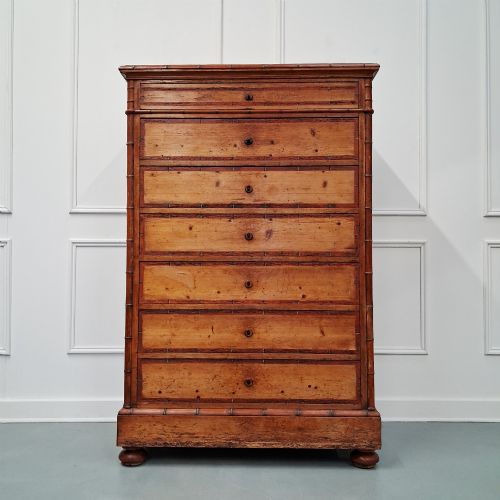
Surfaces received various treatments depending on regional taste and period convention, moving between stripped and waxed finishes, scrubbed natural pine, and applied coats of paint, scumble, or faux bamboo detail. Hardware frequently comprised simple brass pulls, wooden bun handles, or cast iron fittings.
Country Pine Chest of Drawers Retail Price Guide 2026
Typical asking prices for country pine chest of drawers among the pieces listed under this phrase on Sellingantiques today, from the lower quarter to the upper quarter. They describe what is for sale here now, not the wider market.
Apprentice pieces allowed young woodworkers to demonstrate mastery by crafting tiny, fully functioning chests of drawers for master craftsmen.
What varies in quality
Quality in these domestic chests rests on the integrity of the original construction and the survival of surface finishes such as early paint, scumble, or honest wax patination. Pieces retaining their initial drawer configurations, backboards, and feet hold greater documentary interest than heavily altered examples.
Proportion and regional character also distinguish finer examples from standard utility items, with well-balanced dimensions and untouched provincial details elevating a piece. The presence of original hardware and undisturbed timber surfaces marks the upper tier of surviving examples.
The Country Pine Chest of Drawers Glossary
- Scumble
- A decorative painting technique involving a translucent glaze dragged over an opaque base coat to simulate finer wood grains or create patterned textures. This finish was widely applied in the nineteenth century to elevate modest pine furniture.
- Scrubbed pine
- A descriptor for timber surfaces cleaned repeatedly with water and stone, leaving a pale, matte texture devoid of varnish or wax. This finish is typical of utilitarian kitchen furniture.
- Pitch pine
- A dense, resinous softwood variety used for nineteenth-century cabinetry that yields a pronounced grain pattern and robust structure. It offers greater weight and durability than standard white pine.
- Mule chest
- A storage form combining a blanket box with one or more lower drawers built into the base. These pieces bridge the transition between traditional chests and modern drawer units.
- Commode
- A European term for a decorative chest of drawers, often applied to continental painted pieces such as Gustavian or diamond-point examples.
Country Pine Chest of Drawers: Frequently Asked Questions
How do I date a pine chest?
Dating relies on construction methods, handle types, and surface treatments visible across the piece. Hand-cut dovetails and original painted finishes help anchor pieces to specific nineteenth-century decades.
Secondary woods used in drawer linings and backboards also provide clues to manufacturing origins and periods.
What is stripped pine?
Stripped pine refers to furniture that has had later coats of paint or dark varnish chemically or mechanically removed to expose the raw timber underneath. This process leaves the wood ready for traditional waxing.
Many Victorian pieces found today were stripped during twentieth-century interior revival trends.
Are painted finishes original?
Original painted surfaces show uniform wear, appropriate crackleur, and integration with the underlying timber construction. Traces of early scumble or decorative brushwork indicate factory or regional workshop application.
Later overpainting can often be identified by examining edges and interior surfaces for hidden layers.
Where were these chests made?
These pieces originated in regional workshops across England, Wales, Ireland, and continental countries like Sweden and France. Local vernacular styles reflected the preferences and available timber of each specific area.
West Country and northern English pieces often display distinct construction traits and regional proportions.