
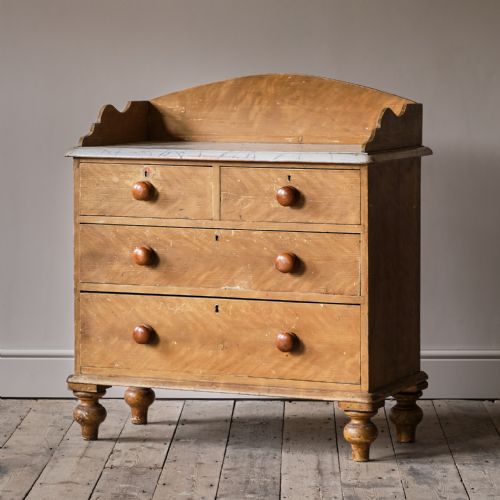
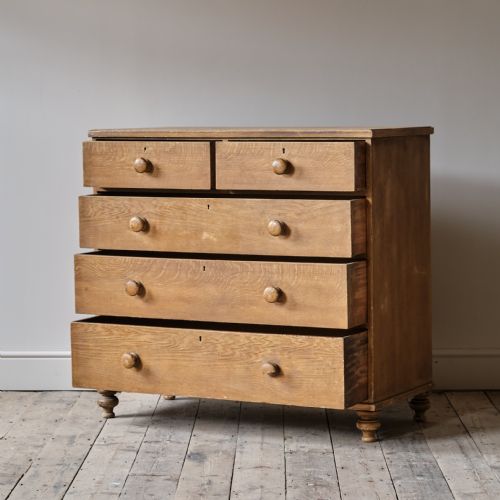
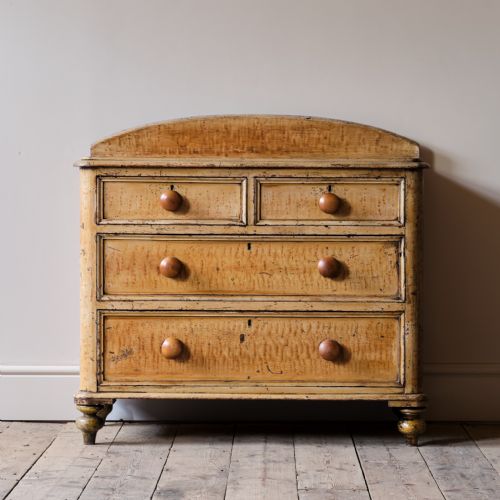
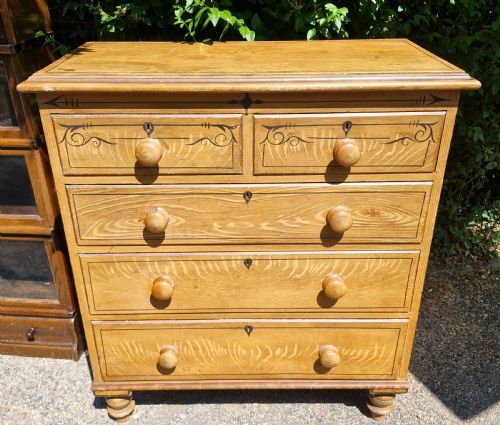


Scumbled Pine Chest Drawers
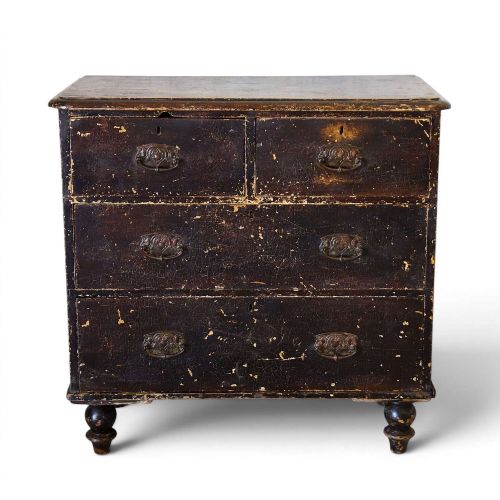
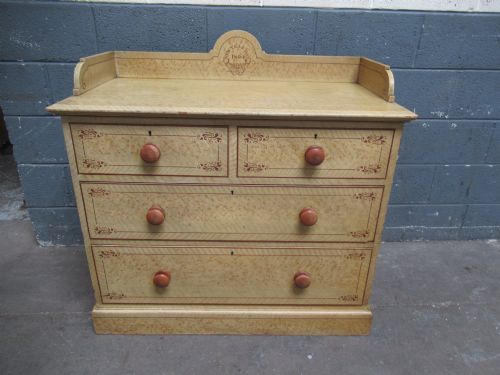
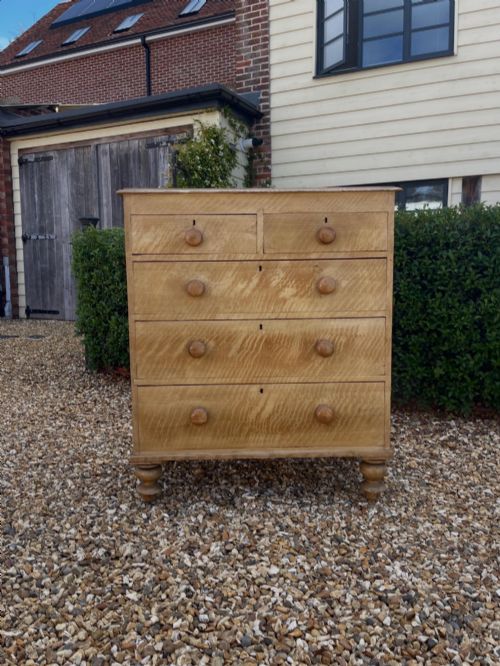
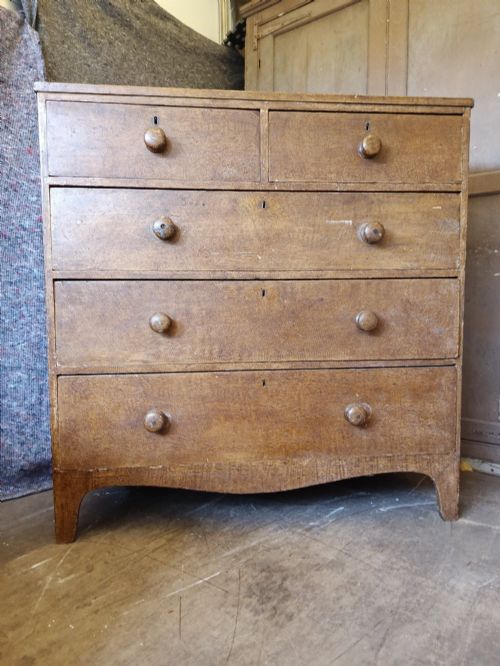
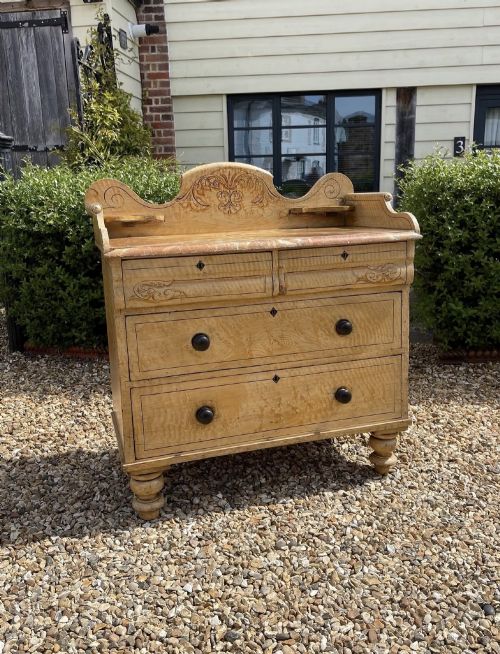
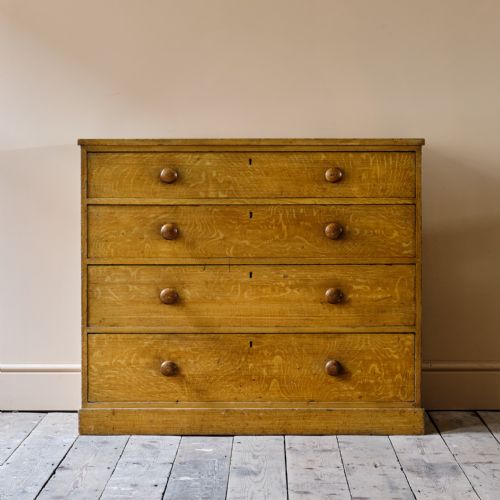
These scumbled pine chest drawers bring tactile depth and rich surface texture to a room, offering practical storage wrapped in folk art character.
Scumbled Pine Chest Drawers
When you search for scumbled pine chest drawers, you encounter solid timber case pieces finished with decorative glazing and dragging techniques that imitate rarer grain patterns. Most examples on this page date from the nineteenth century, including Victorian country house pieces and provincial utility forms.
The selection ranges from standard chests of drawers and dressing chests to mule chests and washstand combinations. These storage items served utilitarian roles in bedrooms and sculleries, carrying layers of historic paint that survived generations of domestic use.
How they were made
Local joiners constructed these chests from native softwood pine, utilising straightforward carcase framing and dovetailed drawer boxes. Hardware typically includes brass, ceramic, glass, or iron fittings chosen for daily service.
The defining finish relies on applying a translucent topcoat over a lighter ground, then dragging combs, feathers, or brushes through the wet medium to simulate oak, walnut, or exotic veneers. This scumbled paint layer cured into a hard, protective skin that patinated with handling.
Materials recorded across the inventory include pine, paint, wood, brass, ceramic, glass, and iron.
What varies in quality
The distinction between ordinary and exceptional pieces lies in the preservation and ambition of the surface decoration. Superior examples display complex, controlled graining patterns that retain their original sheen and depth across the entire carcase.
Proportion and construction integrity also separate standard provincial boxes from finer country house commissions. Tighter drawer tolerances, intact original ironmongery, and untouched historic finishes elevate certain chests above utilitarian counterparts.
The Scumbled Pine Chest Drawers Glossary
- Scumble
- A translucent or semi-opaque glaze applied over a lighter base coat to create decorative surface effects and faux wood graining. It was worked with combs and brushes while wet.
- Pine
- A soft coniferous wood utilised extensively for British country furniture due to its availability and ease of working. It forms the structural base for these painted pieces.
- Mule chest
- A storage chest fitted with one or two drawers in the base beneath a hinged lid compartment. This hybrid form bridges the traditional blanket chest and the modern drawer unit.
- Wellington chest
- A tall, narrow chest of drawers secured by a hinged side locking bar that fastens with a key. Examples appear here finished in country house scumble paint.
- Drag
- A decorative painting tool or technique involving a comb pulled through wet glaze to reveal the contrasting ground colour underneath. It creates the characteristic striped figuring.
Scumbled Pine Chest Drawers: Frequently Asked Questions
How do I clean a scumbled surface?
Dust the exterior gently with a dry, soft cloth to remove surface grit without disturbing the aged paint film. Avoid modern chemical solvents or abrasive cleaners that soften historic oil glazes.
Test any mild moisture on a concealed underside if sticky residue requires attention. Preservation relies on keeping the dry patina intact rather than restoring a glossy factory shine.
Can I use these chests for everyday storage?
Pine carcases and dovetailed drawers handle daily clothing storage quite well if the timber remains stable and dry. Lining drawers with acid-free tissue protects delicate textiles from historic roughness.
Keep them away from direct heat sources and damp walls to prevent wood movement that binds the drawers. Gentle, regular use helps maintain the sliding action of the runners.
What colours do scumbled chests come in?
Traditional finishes lean towards warm brown tones that imitate oak and walnut figures popular in polite households. Green and red variations also occur, reflecting regional folk art preferences.
Over decades, oil-based scumble glazes darken and amber, shifting original hues into deeper tonal ranges. The resulting patina records the changing light exposure of domestic interiors.
How do I date a painted pine chest?
Examine the construction methods of the internal drawer boxes, noting hand-cut dovetails and timber thickness. Machine-sawn elements and standardised fixings point towards later nineteenth or twentieth-century production.
Paint analysis and surface crackle patterns offer clues, alongside any dated inscriptions left by makers. Stylistic details like Art Nouveau curves or Regency proportions further narrow the timeframe.