




Antique Chess Top Table
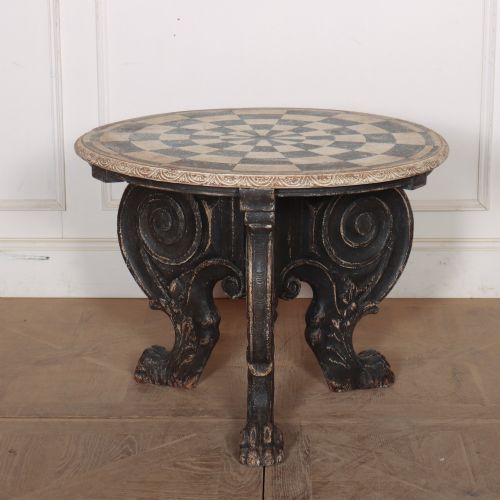
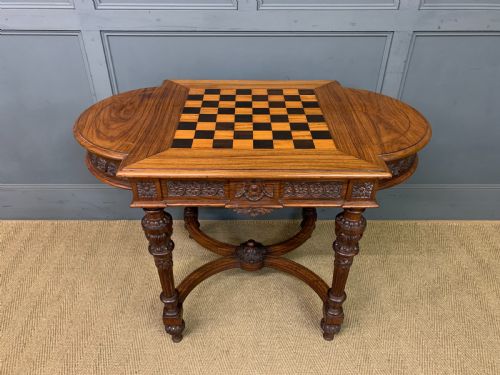
An antique chess top table brings a traditional board straight into the drawing room surface, combining everyday utility with a permanent invitation to play.
Antique Chess Top Table
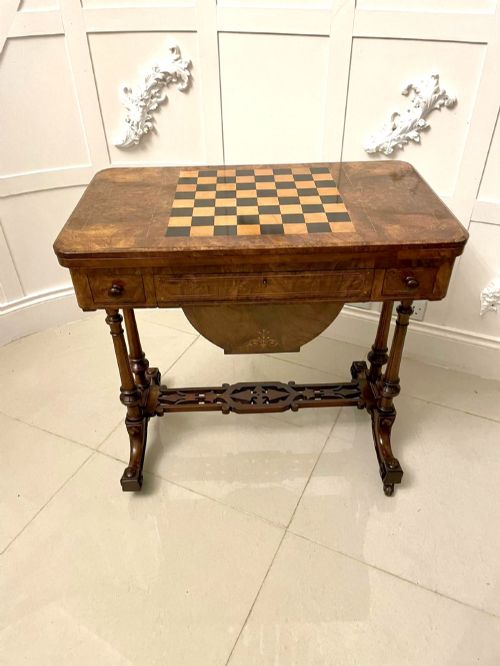
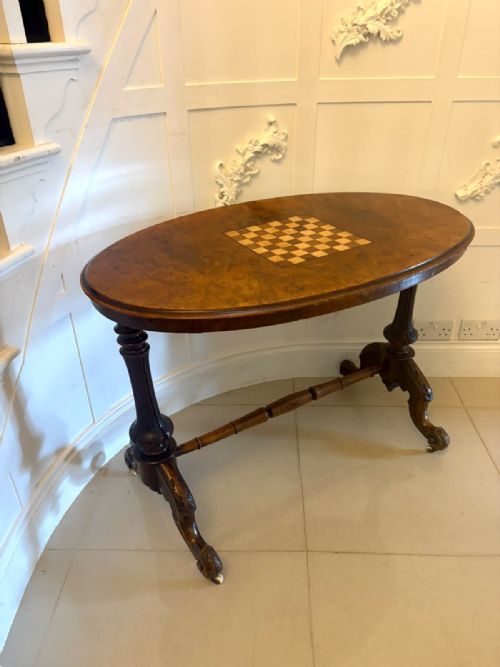
An antique chess top table serves multiple purposes, functioning as an occasional piece, a sewing stand or a centre table while carrying an inlaid or painted playing surface. When you search for an antique chess top table, you meet surfaces rendered in walnut, rosewood and mahogany, often dating from the Regency and Victorian periods.
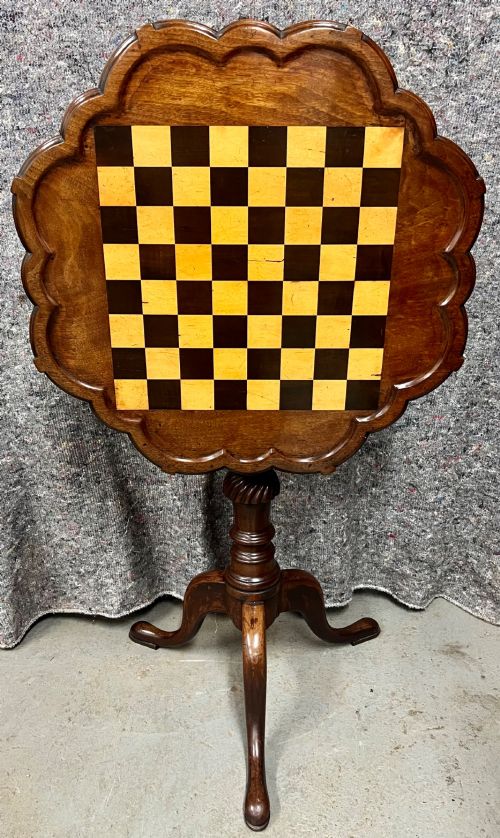
The board itself appears either permanently inlaid into the top, revealed beneath a swivel leaf, or incorporated into a tripod table designed for easy movement beside a chair. Victorian burr walnut examples and Regency rosewood models form the core of what you find here, alongside occasional pieces featuring Sorrento or floral marquetry.
Some variants include drawers for pieces or stitching equipment, while others take the form of lamp tables or small side tables. The integration of the chequerboard allows the furniture to remain decorative when not in use.
How they were made
Cabinet makers utilised dense hardwoods such as mahogany, rosewood and walnut for the primary frames and carcases, often selecting burr or figured veneers for the main surface areas. Satinwood, boxwood and various darker woods provided the contrasting squares for the chequerboard inlay.
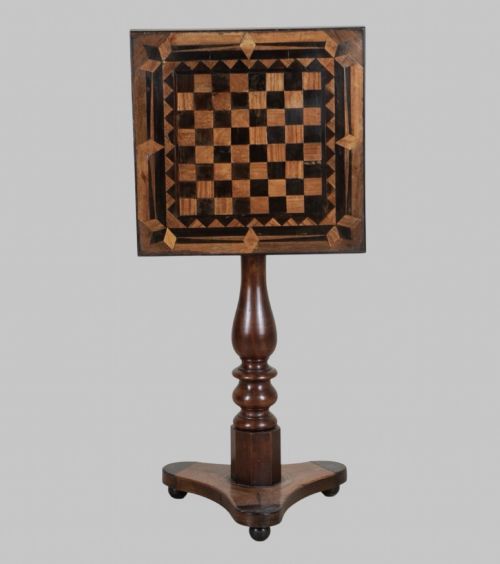
Marquetry and parquetry techniques required precise cutting of timber veneers to create floral motifs or geometric patterns surrounding the playing grid. Tripod bases, turned pedestals and carved centre columns demanded skilled carpentry to support the weight of stone or marble inserts where present.
Some tables hid the board beneath a rotating leaf, ready to turn the tea table into a battlefield.
What varies in quality
The refinement of the timber selection dictates much of the distinction, separating plain walnut or mahogany boards from richly figured burr walnut, pollard oak or intricate specimen wood compositions. Precision in the marquetry work and the tightness of the joints around the chequerboard squares show the hand of a superior workshop.
Mechanical elements such as swivelling tops, folding leaves and fitted drawers for gaming pieces reveal the underlying standard of construction. Original mounts, brass detailing and stable tripod bases also separate simpler utilitarian items from grander drawing room pieces.
The Antique Chess Top Table Glossary
- Chequerboard
- A squared grid pattern of alternating dark and light tiles used for games such as chess and draughts. This pattern forms the central feature of the table top.
- Marquetry
- Decorative veneer work forming pictures or patterns using various woods, shells or ivory. Craftsmen applied these designs to the surfaces surrounding the board.
- Parquetry
- Geometric mosaic woodwork arranged in regular patterns like cubes or bricks. This technique frequently frames the playing surface.
- Specimen wood
- Furniture constructed from a multitude of different native and exotic timbers to display grain variation. Tables incorporating these woods often originate from specific regions like Ceylon or Sorrento.
- Tilt top
- A table top hinged to a pillar so it can tilt vertically when not in use. This mechanism saved floor space in smaller period rooms.
Antique Chess Top Table: Frequently Asked Questions
What is an antique chess top table?
An antique chess top table is a piece of domestic furniture featuring an integrated playing surface for chess, draughts or other board games. These tables combine the daily function of an occasional or sewing table with a permanent board.
Most examples date from the Georgian, Regency and Victorian eras, utilising timbers such as rosewood, mahogany and walnut. They allowed families to keep a game set out without needing a dedicated gaming room.
How were these tables used?
These tables served as general furniture for the parlour or drawing room, holding lamps, sewing baskets or decorative objects during the day. When evening arrived, occupants sat down to play chess or backgammon.
Many versions include internal compartments or drawers to store playing pieces, dice and counters close at hand. Swivel tops and folding leaves allowed the board to be concealed or revealed as required.
How do I date an antique chess top table?
Dating relies on the prevailing style of the legs, pedestal and timber choices rather than the board itself. Regency examples often feature brass mounts, rosewood veneers and delicate tripod bases, while Victorian pieces lean towards heavy carved walnut and burr veneers.
Georgian models display simpler, sturdier mahogany frames with tripod supports. Secondary woods inside drawers and the method of construction also offer clues to the decade of manufacture.
Where were chess tables placed?
They typically stood beside armchairs, near fireplaces or in the centre of Victorian drawing rooms as occasional furniture. Because many featured tilt-top mechanisms or lightweight tripod frames, servants moved them around the room easily.
Smaller lamp tables and quartetto nests found placement wherever a compact surface was needed for reading or social play.
How do I care for a wood chess top?
Keep the wood away from direct sunlight and extreme temperature swings to prevent the veneers from lifting or splitting. Regular dusting with a dry cloth maintains the finish without building up heavy wax residues.
Avoid placing damp glasses or unsealed containers directly onto the antique polish to protect both the inlaid squares and the surrounding timber.