


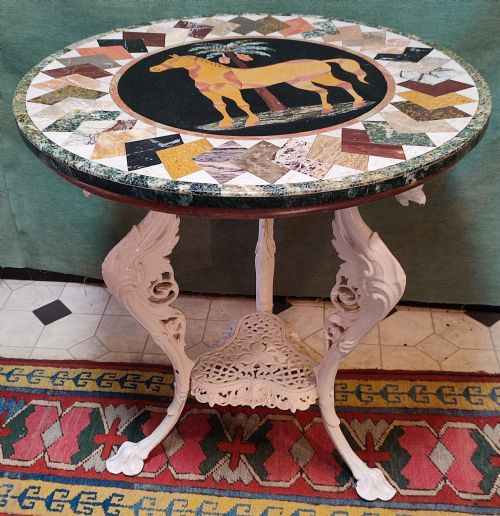


Specimen Marble Top
A specimen marble top brings together precise geological variety and cabinet-maker skill, offering a surface made from multiple coloured stones arranged in geometric or pictorial patterns.
Specimen Marble Top
A specimen marble top consists of numerous individual pieces of coloured stone, marble, and mineral sliced and fitted together to form a decorative surface. When searching for a specimen marble top, buyers encounter everything from grand centre tables to occasional tables, writing desks, and small desk accessories.
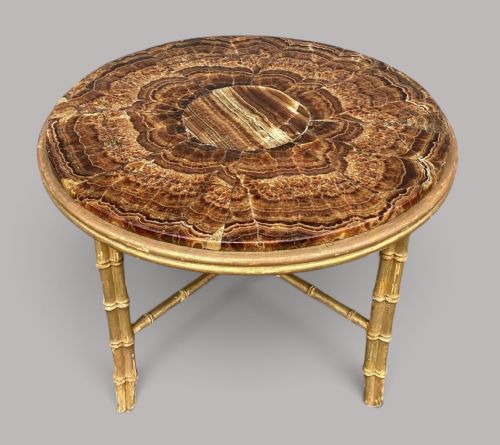
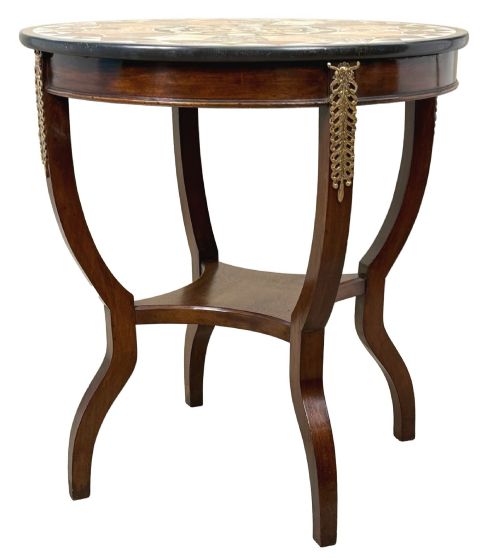
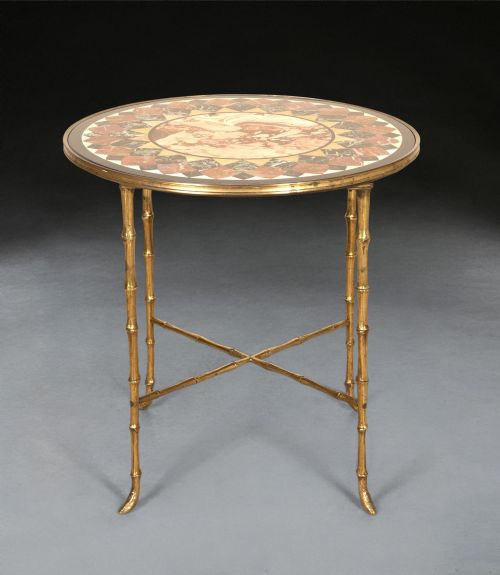
The pieces on this page span the nineteenth century, including Regency, William IV, and Victorian periods, alongside Grand Tour souvenirs and Italian workshop productions. Centre tables and occasional tables with circular or rectangular tops appear most frequently, supported by timber bases or metal frames.
Italian origins and English cabinet-making traditions intersect in these objects, where imported Florentine stone surfaces were mounted onto locally made mahogany, rosewood, walnut, or giltwood frames. The resulting tables served as focal points in drawing rooms and libraries, designed to display both mineralogical interest and artistic skill.
Materials and Construction
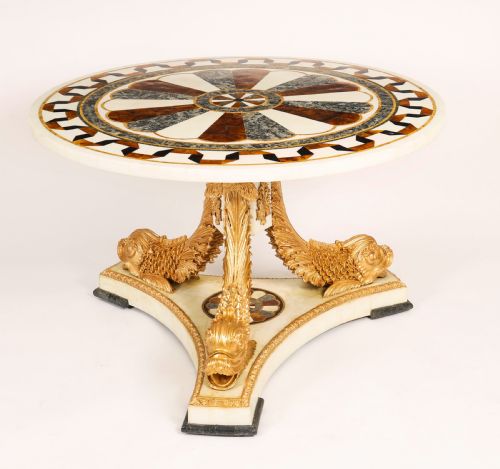
The construction relies on hardstones and marbles such as malachite, lapis lazuli, alabaster, and various coloured jaspers, cut into thin veneers and meticulously inlaid into a marble or slate backing. This technique, known as pietra dura or micro-mosaic when executed in microscopic glass tesserae, requires immense precision to ensure tight joints between dissimilar mineral densities.
Support structures utilise dense timbers like mahogany, rosewood, and walnut, frequently shaped into pedestal bases, dolphin supports, or carved legs, while some later examples employ cast iron or giltwood. The top is secured to the base with consideration for the seasonal movement of wood against stable stone.
Listings feature nineteenth-century furniture forms including centre tables, occasional tables, games tables, console tables, and collectors' cabinets.
Assessing Quality and Execution
The selection of the supporting base matters equally, where finely carved mahogany, rosewood, or burr walnut frames with secondary decorative elements like swan supports or gilt enrichments elevate the piece. The depth of the stone slab and the harmony between the tabletop geology and the base proportions separate standard production from exceptional works.
James Shoolbred·Woodley family
The Specimen Marble Top Glossary
- Pietra dura
- An Italian term for the artistic technique of using cut and fitted, highly polished coloured stones to create images or geometric designs. This lapidary work forms the decorative centrepiece of many nineteenth-century tables.
- Grand Tour
- A cultural journey of Europe undertaken by wealthy young men in the eighteenth and nineteenth centuries. Travellers frequently returned with specimen marble table tops and small desk objects as mementos of their travels in Italy.
- Micro-mosaic
- A method of creating detailed decorative scenes using tiny coloured glass or stone tiles assembled with high precision. These panels were often inset directly into the centre of marble table tops.
- Turtle-stone
- A descriptive term for septarian nodule limestone featuring natural geometric patterns resembling turtle shell markings. Cabinet-makers incorporated these distinct fossiliferous stones into specialised occasional tables.
Specimen Marble Top: Frequently Asked Questions
What is a specimen marble top?
A specimen marble top is a decorative surface composed of many different varieties of coloured marble, stone, and mineral cut and fitted together into geometric patterns or pictorial designs. These tops were produced primarily in Italy and England during the nineteenth century.
They appear mounted on tables, desks, and as standalone desk accessories, showcasing the diverse colours and geological formations of natural stone.
How do I care for a marble top table?
Marble is a softer and more porous stone than modern synthetic alternatives, requiring gentle cleaning with a damp cloth and mild soap. Avoid acidic liquids like wine, lemon juice, or vinegar coming into contact with the surface, as they etch the polish.
Use coasters and felt pads beneath objects placed on the table to protect the polished stone and the underlying stone inlays from scratching.
Where were these tables made?
Many of the stone tops originated in Italian workshops, particularly in Florence and Rome, where lapidary artisans specialised in pietra dura and micro-mosaic work. These imported tops were then sent to British cabinet-makers who built bespoke mahogany, rosewood, or walnut bases for them.
Some tables were entirely constructed in Britain using imported mineral specimens, while others arrived as complete Grand Tour souvenirs.
How can I tell the period of a table?
Dating relies on the style of the furniture base, cabinet-making construction methods, and the specific characteristics of the stone work. Regency and William IV examples often feature rosewood or mahogany with classical pedestal supports, while Victorian pieces incorporate burr walnut, carved swan supports, or cast iron.
The complexity of the stone composition and the framing techniques on the underside of the top provide further chronological clues.