
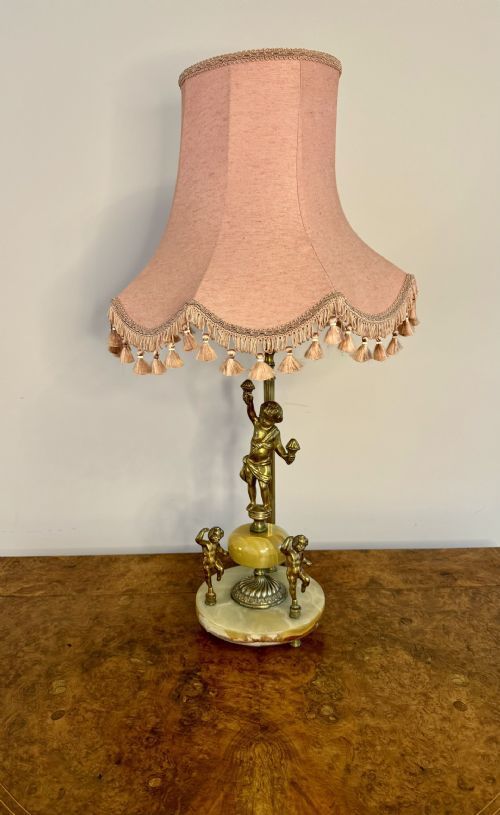


Antique Cherub Desk Light
These antique cherub desk light designs combine figural bronze work with functional illumination, offering a decorative focal point for a traditional study or writing desk.
Antique Cherub Desk Light
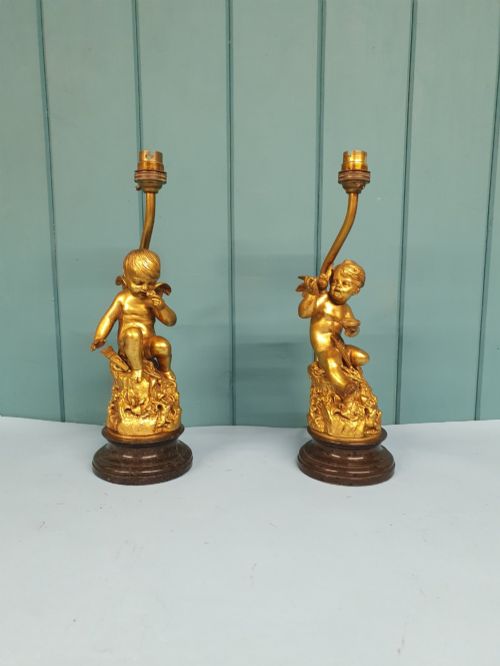
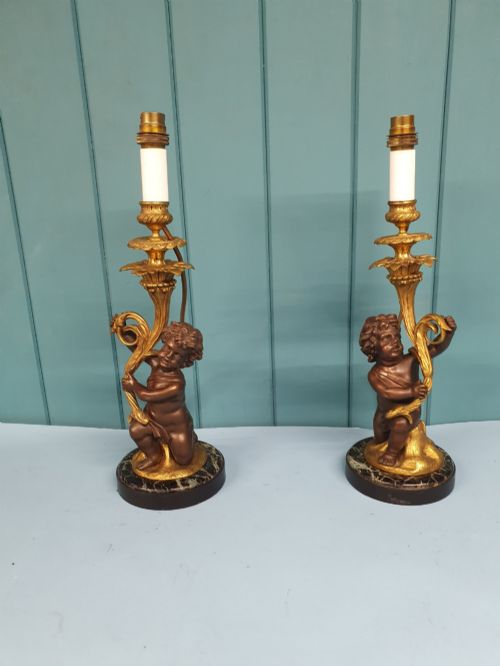
An antique cherub desk light brings figural sculptural art to a practical workspace, uniting classical figures with interior lighting. The pieces seen here span the nineteenth century and the early decades of the twentieth century, capturing varied interpretations of putti and cherubs.
Most examples originate from French workshops or draw heavily on French design vocabulary, ranging from Rococo Revival and Empire styles to Edwardian adaptations. Buyers encounter matched pairs, single monumental table lamps, and converted oil lamps or statuettes adapted for electrical wiring.
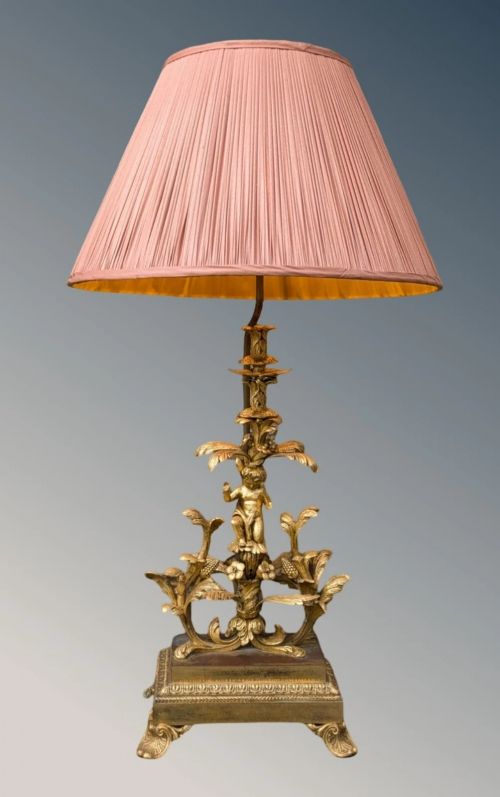
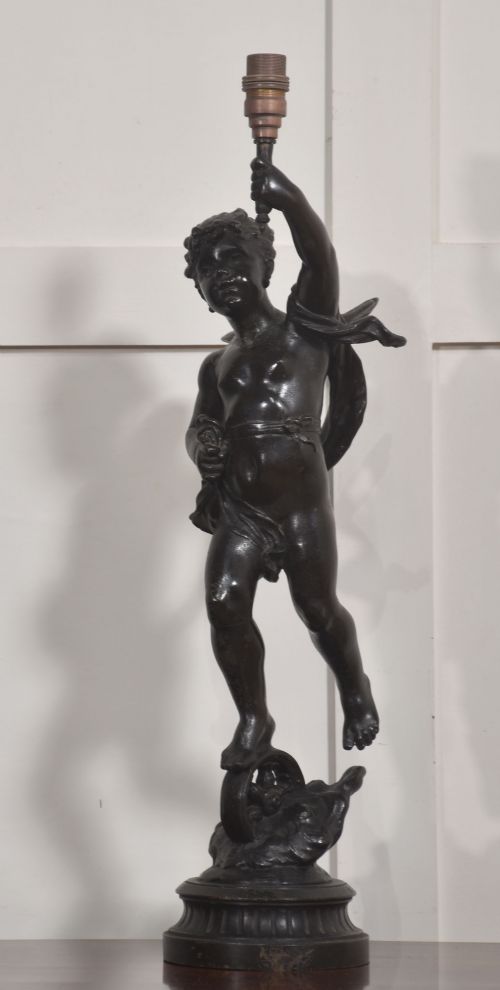
Materials vary widely across the selection, featuring combinations of gilt bronze, ormolu, patinated bronze, marble, onyx, and brass alongside occasional fabric shades. These objects function as primary desk illumination or ambient mantel and side table pieces.
How they were made
Foundry workers utilised traditional lost-wax or sand-casting methods to produce the bronze and brass figures, finishing the raw metal through chiselling, chasing, and detailing by hand. Ormolu and gilt bronze pieces received a layer of gold amalgamation or chemical gilding to achieve their characteristic bright surface finish.
Casters and metalworkers often mounted these figural bronzes onto heavy bases of carved marble or onyx to provide physical stability for daily desk use. Many items began as nineteenth-century oil lamps, candlesticks, or cabinet statuettes before receiving later conversions to electrical fittings.
Listings feature 19th Century, Victorian, 1900, 1910, 1920, and 1930 periods in various metal and stone combinations.
What varies in quality
The integrity of the original surface patination or fire gilding distinguishes superior items from those with heavy wear or unsympathetic modern refinishing. Furthermore, the harmonious integration of electrical fittings without damaging the antique metalwork dictates the overall standard of a converted piece.
Aug. Moreau
The Antique Cherub Desk Light Glossary
- Ormolu
- Gilded bronze produced by applying a mercury-gold amalgam to a bronze base, creating a durable golden surface finish. This technique was widely practiced in French workshops during the eighteenth and nineteenth centuries.
- Patinated bronze
- Bronze that has been treated with chemical solutions to produce a controlled surface colour, typically dark brown, green, or black. This finish protects the metal and highlights the sculptural contours.
- Putto
- A plump, naked male infant figure frequently depicted in classical art and architectural decoration. These figures form the primary sculptural motif of the desk lights on this page.
- Rococo Revival
- A nineteenth-century design style that revives the ornate, asymmetrical curves, scrolls, and naturalistic motifs of the eighteenth-century French Rococo movement. It appears frequently in the decorative mounts of these lamps.
- Spelter
- A zinc alloy used as a less expensive alternative to bronze for figural castings. It is softer than bronze and frequently found in later nineteenth and early twentieth-century decorative items.
Antique Cherub Desk Light: Frequently Asked Questions
How do I date an antique cherub desk light?
Dating relies on examining the casting techniques, the style of the base materials such as marble or onyx, and the wear patterns on the bronze or ormolu surface. Stylistic indicators like French Rococo Revival or Edwardian design cues help narrow the period of manufacture.
Electrical components, if added later, do not reflect the original creation date of the metal body. Checking for foundry marks or signatures on the bronze casting provides further chronological context.
Were these lamps originally made for electricity?
Many examples began life as oil lamps, candlesticks, or decorative bronze statuettes before being converted to electricity in the twentieth century. Conversion work often involved drilling through the original metal or mounting wiring through existing channels.
Original oil lamp reservoirs or burner assemblies sometimes remain intact beneath later electrical adaptations. This history of adaptation is standard for figural lighting from the nineteenth century.
How do I care for gilt bronze and ormolu?
Gilt bronze and ormolu require gentle dusting with a soft, dry cloth to prevent the accumulation of dirt in the recessed chased details. Avoid using commercial metal polishes, abrasive cloths, or liquid cleaners, which can strip away the thin gold surface layer.
Stable indoor humidity and moderate temperatures protect the underlying metal and any attached marble or onyx bases from cracking or corrosion.
What is the difference between bronze and spelter?
Bronze is a heavy, durable copper alloy that takes fine detail during the casting process and develops a stable historical patina over time. Spelter uses a softer zinc base that was common in more commercial nineteenth-century decorative pieces.
Bronze examples generally command higher interest among collectors due to their strength and superior resistance to structural fatigue. Inspecting the underside or areas of wear helps reveal which metal lies beneath the surface finish.