


Antique Cheroot Holder
An antique cheroot holder is a small smoking accessory designed to fit narrow cigars, prized for protecting fingers and clothing from smoke and ash.
Antique Cheroot Holder
An antique cheroot holder serves collectors of tobacciana as both a practical smoking accessory and a pocketable item of personal silver or precious metalwork. When you search for an antique cheroot holder, you encounter pieces designed to hold small cigars securely while offering a clean draw.
The selections available range from simple mouthpieces to elaborate sets complete with fitted cases in leather, silver, or crocodile skin. Many examples survive alongside their original cases, preserving the paired combination of holder and protective housing.
Origins span the Georgian, Victorian, and Edwardian eras, alongside pieces marked by nineteenth-century Dutch craftsmanship or early twentieth-century dates. These items frequently intersect with cigar cases, card cases, and combination vesta holders.
Materials and construction
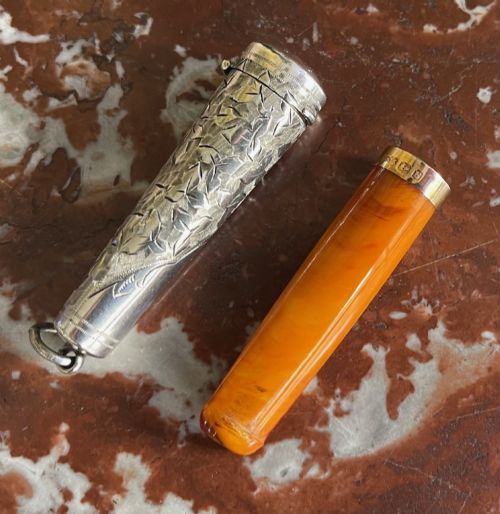
Makers shaped natural materials like amber and meerschaum to form the mouthpieces of these smoking accessories, often pairing them with carved motifs such as hunting dogs. Amber frequently joins with mounts of solid silver or nine-carat gold.
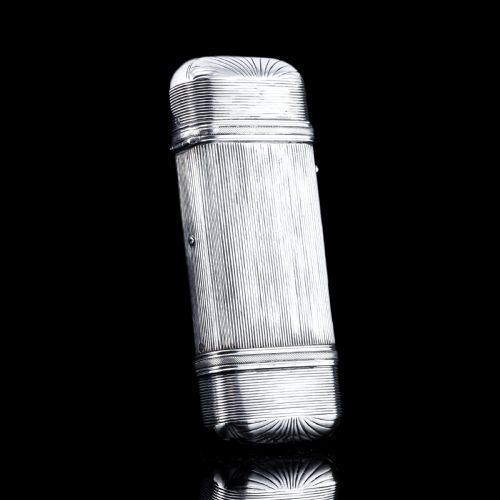
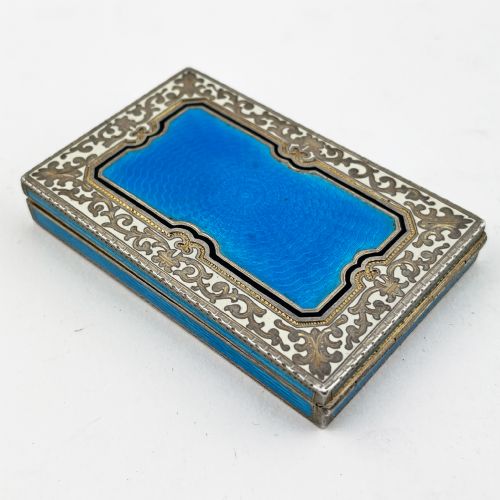
Metalwork utilises sterling silver, silver gilt, and gilt metal, shaped through engine turning, reeded designs, and hand engraving. Cases incorporate structural elements of leather, crocodile skin, and vitreous enamel for decorative finish.
Hunting dogs carved into meerschaum wait patiently on nineteenth-century mouthpieces, guarding a smoke that vanished over a century ago.
Markers of distinction
Quality rests upon the combination of materials, such as clear amber meeting gold mounts, and the crispness of chased or engine-turned decoration on the silver cases. Superior items retain their original fitted cases, which match the exact contours of the holder or cigar case inside.
The presence of clear hallmarks, specific maker marks like that of Edward Edwards, and intricate detailing such as hand-carved motifs or vitreous enamel separate standard production pieces from finer workshop commissions.
Edward Edwards
The Antique Cheroot Holder Glossary
- Cheroot
- A narrow cigar with both ends cut square rather than tapered. It requires a specific holder to keep the tobacco intact while smoking.
- Vesta
- A pocket matchbox, frequently incorporated into combination cases alongside compartments for cheroots or holders. These often include a striking surface on the exterior.
- Engine turned
- A geometric pattern mechanically engraved into metal surfaces using a lathe. This technique creates precise, repeating lines across silver cases.
- Meerschaum
- A soft white mineral used for carving detailed pipe bowls and cheroot holder motifs. It absorbs nicotine and colours gradually with use.
- Sterling silver
- An alloy consisting of silver and other metals to ensure durability for pocket accessories. It provides the primary structural metal for nineteenth-century cases.
Antique Cheroot Holder: Frequently Asked Questions
What is a cheroot holder?
A cheroot holder is a slim mouthpiece designed to hold a narrow, open-ended cigar during smoking. It prevents staining on the fingers and keeps loose tobacco out of the mouth.
Most examples consist of a mouthpiece made from amber or meerschaum, frequently accompanied by a protective metal or leather case.
How do you clean an amber cheroot holder?
Amber requires careful handling due to its relative softness compared to precious metals. Cleaning typically involves gentle wiping with a soft cloth to remove residues.
Harsh chemical solvents and abrasive cleaners should be avoided to prevent damage to the historic surface and any gold or silver mounts.
Did Victorians use cigar cases daily?
Victorian gentlemen and ladies utilised pocket cases daily to transport cheroots, cards, and matches safely through urban environments. The materials chosen reflected personal status and the formality of the occasion.
Leather, crocodile skin, and solid silver protected the delicate contents from being crushed within pockets or bags.
How are Victorian silver cases dated?
Silver cases carry hallmarks stamped by official assay offices, indicating the town of origin, the fineness of the metal, and a date letter specific to the year of testing.
Additional clues include stylistic markers such as Gothic Revival motifs, engine-turned patterns, or inscriptions noting historical events like the Boer War.