


Antique Ceramic Wash Jug
An antique ceramic wash jug brings functional Victorian hygiene history into modern spaces with bold earthenware and porcelain forms.
Antique Ceramic Wash Jug
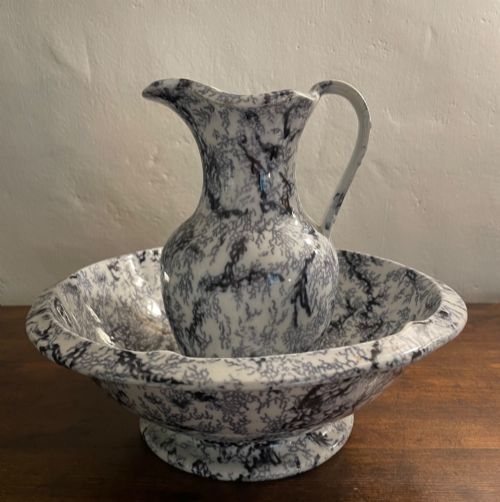
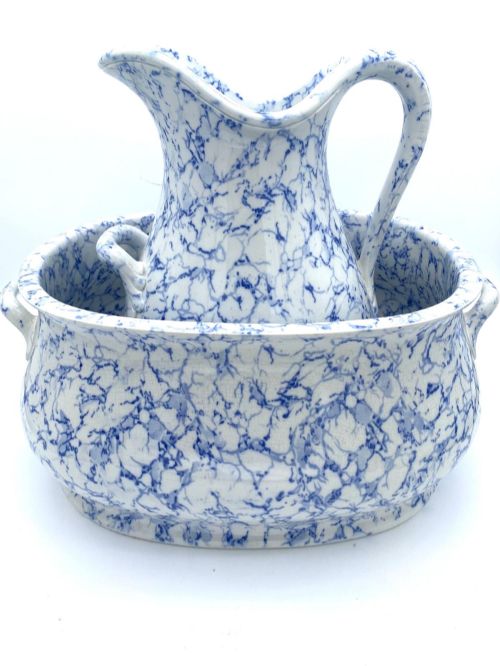
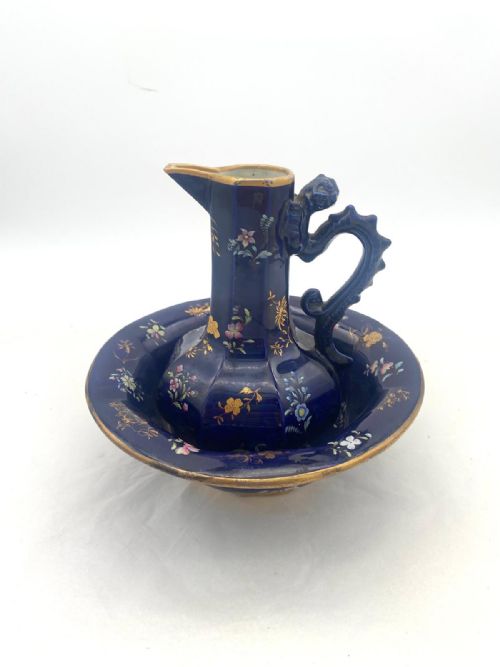
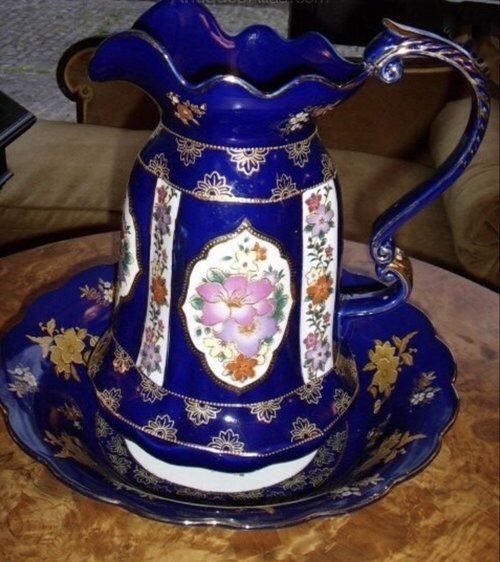
An antique ceramic wash jug forms the centrepiece of traditional bedroom sanitary equipment, usually accompanied by a matching basin or footbath. When collectors search for an antique ceramic wash jug, they encounter heavy earthenware and porcelain vessels designed for daily ablutions before indoor plumbing became standard. The pieces available here span periods from the Georgian era through the Victorian and Edwardian decades up to the 1930s.
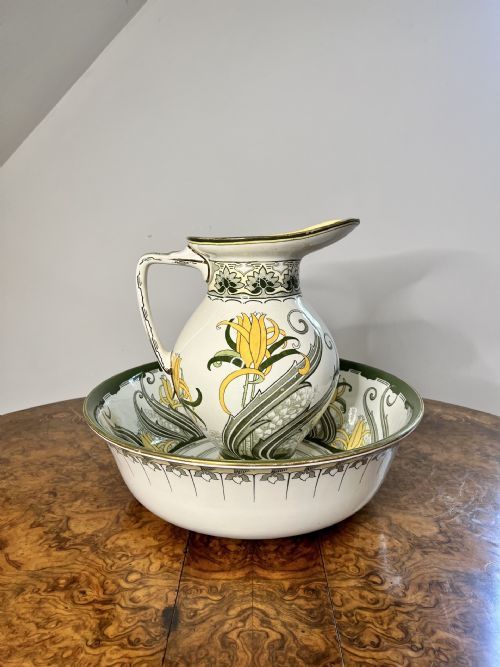
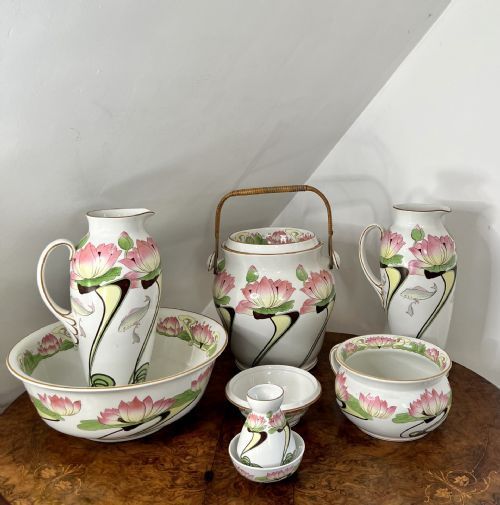
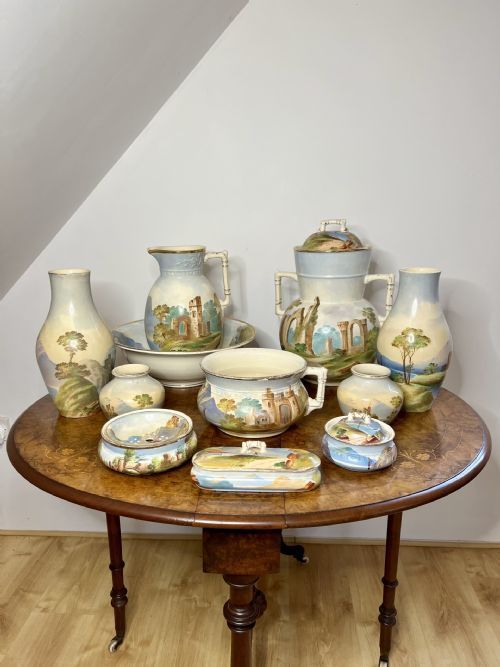
Most examples appear within complete washstand sets or larger bathroom services rather than as isolated pitchers. Forms range from large one-gallon vessels to miniature display sets, incorporating styles like Art Nouveau, Regency, and Chinoiserie alongside traditional English earthenware patterns.
Judging standard and execution
Quality rests upon the clarity of the transfer print, the crispness of the moulded ironstone or porcelain body, and the complexity of the glaze. Pieces bearing named pottery marks or sophisticated multi-colour enamel work demonstrate superior factory execution compared to plain utility wares.
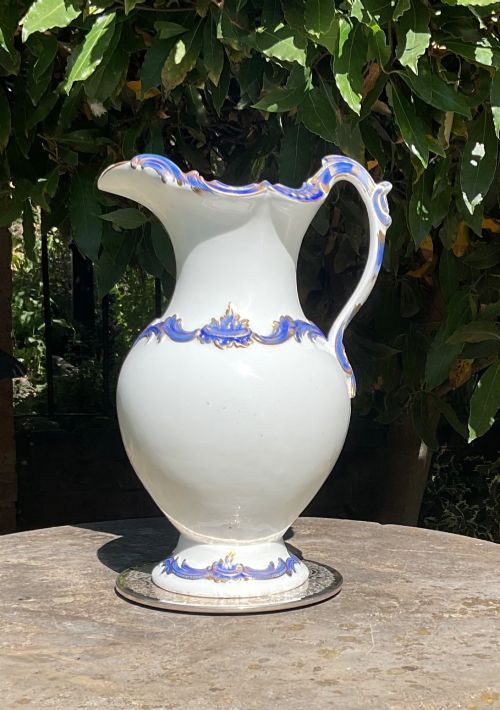
The preservation of delicate gilt highlights and gold leaf details distinguishes well-kept chamber pieces from heavily worn examples. Form complexity also plays a part, with octagonal shapes and decorative moulding requiring greater skill from the potter.
Styles span from Georgian and Regency forms through Victorian Chinoiserie to Edwardian bathroom sets and 1930s pottery.
Minton·Doulton Burslem·Masons Ironstone·Mark Jones and Sons·Shelley·Spode
The Antique Ceramic Wash Jug Glossary
- Ironstone
- A dense, durable type of earthenware patented in the nineteenth century. It resists chipping better than standard pottery while retaining a fine ceramic finish.
- Transfer printing
- A method of applying detailed monochromatic designs to ceramics using an engraved copper plate and tissue paper. This technique allowed factories to produce intricate blue and white patterns rapidly.
- Flow blue
- A Staffordshire pottery style where cobalt blue glaze intentionally blurred during the kiln firing. This created a hazy, atmospheric effect across the surface of the jug.
- Footbath
- A large vessel shaped similarly to a wash jug or basin, intended for soaking feet. These deep containers often share the decorative patterns of their matching toilet sets.
Antique Ceramic Wash Jug: Frequently Asked Questions
How were wash jugs used originally?
These pitchers stood on wooden washstands inside bedrooms, holding water for morning washing before bathrooms moved indoors.
Servants filled them from kitchen supplies so residents could use the accompanying basin for daily hygiene.
Can I use these jugs for fresh flowers?
The waterproof glazed ceramic interiors make these vessels suitable for holding water and heavy floral arrangements.
Their substantial weight and wide bases provide stable support for large garden stems.
How do I date an antique jug?
Examining the ceramic body type, factory backstamps, and stylistic clues like transfer print colours helps narrow the period.
Georgian and Victorian pieces often display heavier ironstone bodies, while Edwardian sets favour lighter earthenware forms.
Why do some jugs have matching basins?
Pots and basins were produced as unified toilet sets to create a cohesive decorative scheme for period bedrooms.
Keeping the matching basin together preserves the historical context of the complete sanitary service.