
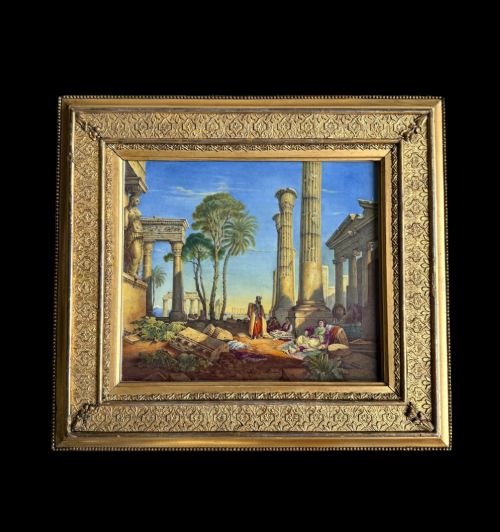
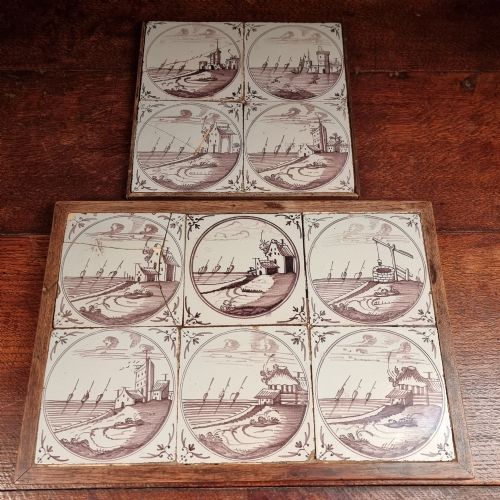
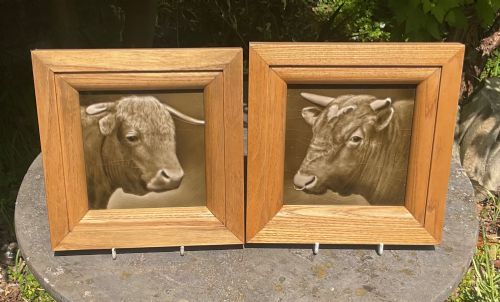
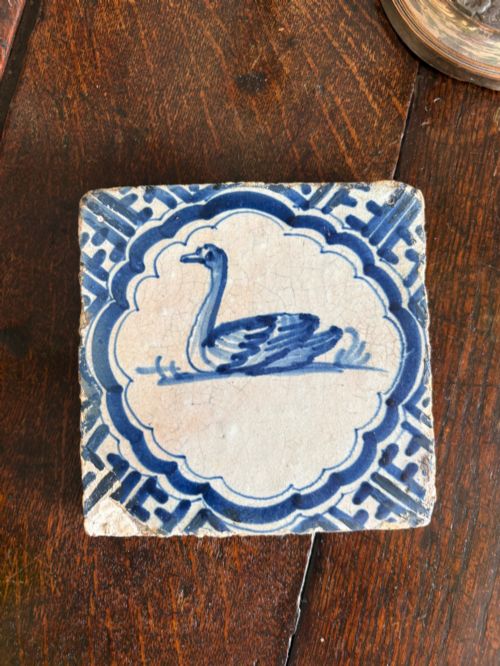
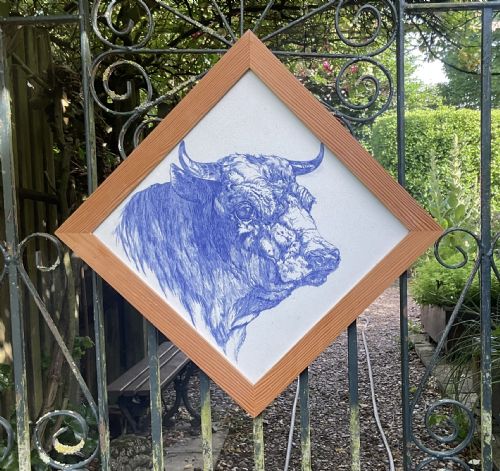


Antique Ceramic Wall Tiles
These antique ceramic wall tiles bring centuries of hand-painted glaze, robust earthenware and rich figurative design directly into domestic interiors.
Antique Ceramic Wall Tiles
When you examine antique ceramic wall tiles, you encounter everything from individual 17th Century Dutch Delft pieces to large framed architectural plaques and decorative sets. The selection spans earthenware and porcelain formats across the Victorian, Edwardian, and earlier eras.
Motive ranges widely across these pieces, taking in floral studies, animal motifs, religious scenes, and classical subjects like the Arts and Crafts semi-nude maiden or panels after Clodion. You meet single framed items alongside sets designed for display as wall art.
European workshops dominate the field, particularly through Dutch tin-glazed productions, English makers from the late nineteenth century, and Persian script tiles from earlier periods.
Materials and Techniques
Makers shaped these items primarily from earthenware and porcelain, applying glazes and pigments to create durable surfaces. Tin glaze and cobalt pigment appear frequently on early Dutch and European examples, providing a smooth white ground for hand-painted brushwork.
Firing techniques allowed for polychrome palettes, turquoise relief surfaces, and detailed hand-painted designs that survived centuries on walls. Later nineteenth and early twentieth-century makers utilised specialised kilns and presses to produce architectural pottery and framed pictorial tiles.
Assessing Quality
Quality rests in the crispness of the hand-painted brushwork, the depth and stability of the glaze, and the artistic ambition of the moulding or relief work. Pieces attributed to notable designers or specific factories display superior control over pigment and form.
Condition and completeness also govern worth, particularly where framed pairs, large multi-tile plaques, or intact sets are concerned. The clarity of pigment and the preservation of original edges without heavy modern restoration distinguish finer examples from standard production.
Sherwin and Cotton·Mintons·Architectural Pottery Co·William de Morgan·Longwy
The Antique Ceramic Wall Tiles Glossary
- Delft
- A tin-glazed earthenware typically associated with Dutch production, often featuring blue or manganese pigments on a white background. These pieces frequently depict biblical scenes, flora, or fauna.
- Tin Glaze
- An opaque white glaze containing tin oxide applied to earthenware before firing, creating a smooth surface for hand-painted decoration. It forms the basis of traditional Delftware.
- Faience
- European tin-glazed earthenware, particularly that produced in France, Italy, and other continental centres. The technique supports detailed pictorial and ornamental painting.
- Earthenware
- Porous pottery fired at lower temperatures, commonly used for traditional wall tiles and plaques before stronger stonewares and porcelains became widespread.
- Polychrome
- Decoration utilising multiple colours rather than a single pigment like blue or manganese. These bright glazes often appear on 18th-century and later decorative plaques.
Antique Ceramic Wall Tiles: Frequently Asked Questions
How do I hang antique ceramic wall tiles?
Many of these pieces arrive already framed or mounted specifically for wall display, protecting their edges while allowing secure hanging. Unframed tiles require specialist brackets or custom shadow boxes that support the weight without damaging the ceramic body.
Avoid adhesives applied directly to the reverse of historic earthenware, as this can trap moisture or pull away original glazes when removed.
Where were these tiles originally displayed?
Earlier examples, such as Dutch Delft productions, often lined fireplaces, kitchens, or functional interior walls in European homes. Later Victorian and Edwardian plaques were created purely as decorative wall art or architectural highlights for domestic reception rooms.
Individual pictorial tiles and framed sets served as focal points in studies, hallways, and dining spaces rather than working surfaces.
How do I date a painted ceramic tile?
Dating relies on stylistic clues, pigment choices, body thickness, and edge characteristics. Early pieces often show irregular hand-cut edges and specific glaze cracking patterns unique to historic kilns.
Maker marks, signatures, or registration numbers stamped into the ceramic body provide the most direct evidence of a tile's exact period.
Can antique tiles be cleaned safely?
Dusting with a dry, soft cloth is normally sufficient for maintaining glazed ceramic surfaces. Avoid harsh chemical cleaners, soaking, or abrasive pads that can pit the historic glaze or damage painted pigments.
Damaged or unglazed earthenware requires particular care to prevent moisture from penetrating the porous clay body.