
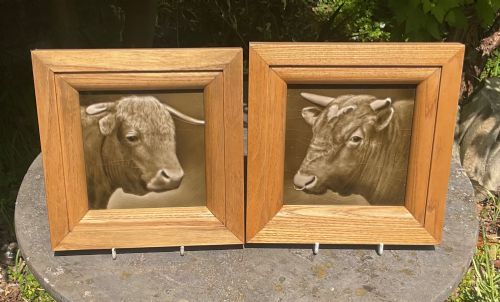
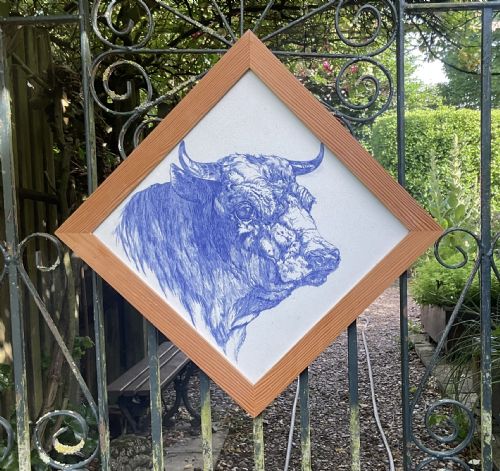


Framed Tiles
Framed antique tiles turn humble domestic ceramics into wall art, bringing deep earthenware glazes and painted panels straight into the sitting room.
Framed Tiles
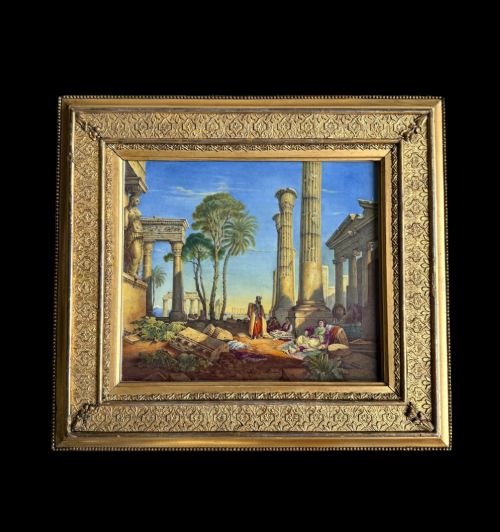
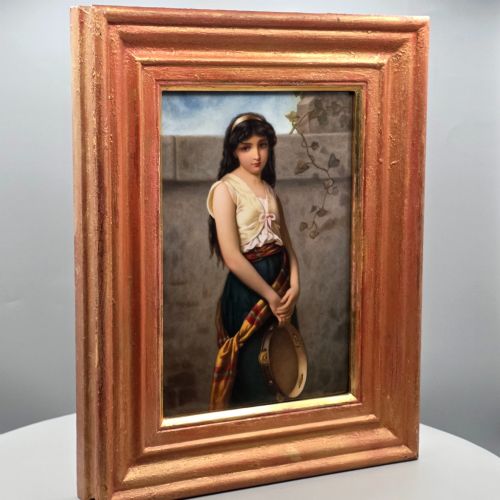
When you search for framed antique tiles, you are looking at single ceramic panels or pairs set into wooden surrounds, often designed to hang on a wall or sit upon a table. These pieces transform utilitarian earthenware and porcelain into decorative wall art through careful mounting.
The selections span from the eighteenth century through the Edwardian period, taking the form of wall plaques, trivets, and individual decorative tiles. You will frequently encounter nineteenth-century production alongside Arts and Crafts designs.
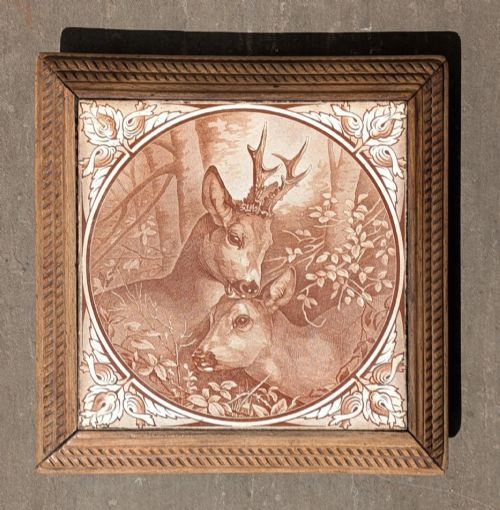
Many items repurpose architectural or fireplace tiles into standalone pictures, housing them in oak, mahogany, or gilt wood frames. Others originate as factory-produced wall plaques intended from the outset for display.
How they were made
Potters shaped clay bodies from earthenware, porcelain, and terracotta before applying rich coloured glazes that often pool in the recesses of relief work. Some makers utilised tin-glazes or manganese to achieve deep, lustrous finishes.
Makers framed these ceramic panels using timber surrounds such as oak and mahogany, occasionally incorporating gold leaf or glass to protect the surface. Workshops mounted others onto wooden stands or integrated them into marble and stone panels.
Dogs and goats feature in relief children's plaques, while butcher's shops and cheetahs populate the ceramic canvas.
What varies in quality
Quality rests upon the crispness of the ceramic moulding and the depth of the glaze, alongside the skill involved in hand-painting the subject. Pieces bearing clear workshop signatures or attribution to notable potteries display superior execution in both the clay and the framing.
The construction of the surrounding woodwork also defines the tier of the piece, with solid hardwoods and bespoke joinery marking out finer examples from simpler mounted panels. The harmony between the tile and its frame dictates the overall visual presence.
Sherwin and Cotton·Mintons·KPM·Longwy
The Framed Tiles Glossary
- Earthenware
- Porous pottery fired at lower temperatures, commonly used for nineteenth-century decorative tiles and wall plaques. It accepts thick glazes readily.
- Manganese
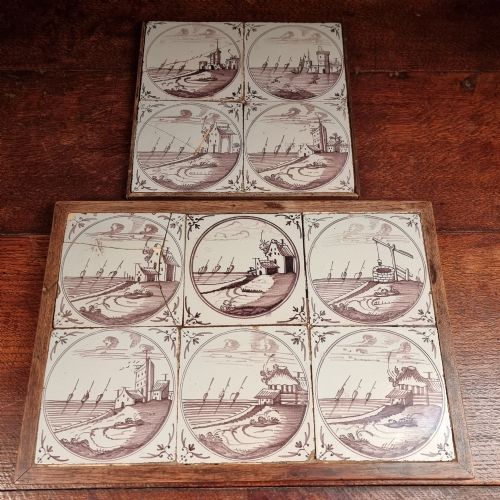
- A metallic oxide producing a characteristic purple-brown or violet hue, frequently seen in eighteenth-century Dutch delft tiles. It creates a distinct monochrome palette.
- Pietra dura
- An inlay technique using cut and fitted polished coloured stones to create pictorial designs. Examples appear alongside marble panels in nineteenth-century work.
- Delft
- Tin-glazed earthenware originating from the Netherlands and England, often featuring blue or manganese painted scenes. These early tiles are frequently collected in sets.
- Relief
- Decoration that projects from the background plane rather than resting flat. Arts and Crafts tiles often utilise this to give depth to figurative subjects.
Framed Tiles: Frequently Asked Questions
Were these tiles originally meant for walls?
Many antique tiles began life inset into fireplaces, washstands, or architectural walls before being framed later for decorative display.
Others were manufactured specifically as wall plaques or art panels from the start.
How should I clean the glaze and frame?
Dust the ceramic surface gently with a soft, dry cloth and avoid liquid cleaners that might seep into old grout or unglazed clay edges.
Treat the wooden frame with appropriate furniture wax sparingly, keeping moisture away from both the wood and the tile face.
How do I tell nineteenth-century tiles apart?
Examine the back of the tile for maker's marks, registry numbers, or factory stamps that often indicate the exact period of production.
Style cues such as Victorian ornamentation or Arts and Crafts motifs also help narrow down the decade of manufacture.