


Glazed Ceramic Panels
Glazed ceramic panels are fired pictorial works that bring rich colour and historic narrative into an interior.
Glazed Ceramic Panels
Glazed ceramic panels encompass framed tile pictures, wall plaques, and individual tiles configured for display rather than standard architectural installation. Buyers searching for glazed ceramic panels encounter diverse historic expressions, from framed 19th-century tile pictures to larger Italian faience and Persian script examples.
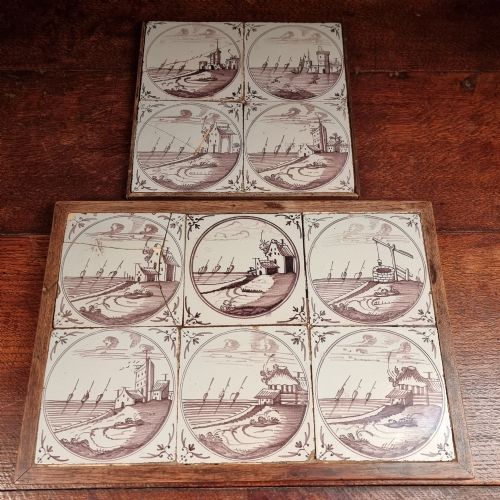
The physical formats vary from single monumental plaques signed by makers like C. Ravier to sets of ten 18th-century manganese delft tiles. Each object presents a specific glaze treatment, whether cobalt pigment on white tin-glaze or turquoise relief modelling.
Materials and production methods
Makers shaped earthenware, porcelain, and standard ceramic bodies before applying tin-glaze or coloured pigment layers. Cobalt pigment and gold leaf frequently enhance the surface detail before the final high-temperature kiln firing.
Relief plaques utilise specialised moulds to achieve dimensional figures, as seen in pieces after Clodion, while traditional delftware employs fluid brushwork on an opaque white tin-glaze ground.
Listings span multiple centuries, ranging from 17th-century Dutch delft plates and Kubachi pottery tiles to 19th-century Japanese Imari and Edwardian Arts and Crafts reliefs.
Distinctions in craftsmanship
Quality rests in the crispness of the modelled relief, the depth of the glaze, and the precision of the hand-painted brushwork. Superior pieces display controlled pigment application without running or pooling in the kiln.
The pedigree of the design, such as attribution to makers like Reginald Robert Tomlinson or signature by artists like C. Ravier, separates standard decorative production from significant studio output.
Reginald Robert Tomlinson·C. Ravier·Longwy
The Glazed Ceramic Panels Glossary
- Tin-Glazed Earthenware
- Pottery covered with a glaze containing tin oxide that turns opaque white upon firing. This surface provides a smooth ground for painted decoration in cobalt or manganese.
- Kraak Style
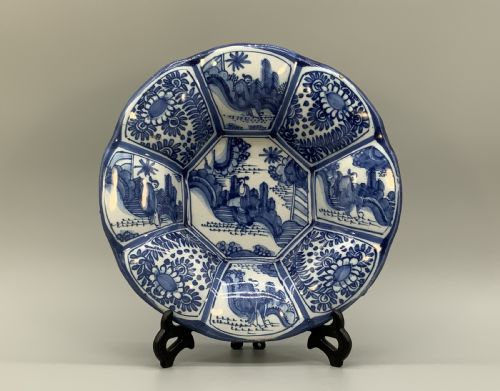
- A Dutch imitation or adaptation of Chinese export porcelain featuring panelled border designs. It appears frequently on 17th-century delft plates.
- Manganese
- A metallic oxide used to produce a distinctive purple-brown or violet pigment on historic tiles. It creates a warm alternative to standard blue and white cobalt decoration.
- Faience
- European tin-glazed earthenware, particularly associated with Italian and French traditions. It allows for detailed pictorial painting on large wall plaques.
- Relief Plaque
- A decorative panel where the subject is raised above the background plane. These pieces utilise moulding techniques to create strong shadow and depth.
Glazed Ceramic Panels: Frequently Asked Questions
How do I hang heavy ceramic wall plaques safely?
Heavy ceramic panels require custom-built metal mounts that support the entire base weight rather than relying solely on rear hanging loops. Professional picture hangers should secure these pieces directly into wall studs.
Ensure the frame or backing board distributes the pressure evenly across the ceramic body to prevent stress fractures in the glaze or earthenware.
Are these ceramic panels suitable for outdoor display?
Historic glazed ceramic panels are generally intended for interior display. Frost and moisture can penetrate unglazed ceramic edges or hairline crazing in the glaze, causing expansion and cracking over time.
Keeping these works in climate-controlled rooms protects both the earthenware body and the delicate surface pigments from environmental damage.
What is the difference between delft tiles and wall plaques?
Delft tiles are typically produced as standardised modular units meant to be grouped together in panels or integrated into hearth surrounds. Wall plaques are conceived as singular, self-contained pictorial artworks designed to hang independently.
Plaques often feature specific figural subjects or signatures, whereas individual tiles focus on repeating motifs or narrative scenes within a grid.
How do I clean historic glazed ceramic panels?
Dust ceramic panels gently with a soft, dry artist's brush or a microfiber cloth. Avoid commercial liquid cleaners, abrasive pads, or excessive water, which can seep into historic glaze cracks or damage exposed earthenware.
Professional conservators should handle any deeper cleaning or structural stabilization required for fragile pieces.
How can I distinguish Arts and Crafts tiles from earlier periods?
Arts and Crafts ceramic panels focus on naturalistic motifs, matte glazes, and sculptural relief work influenced by designers of the late 19th and early 20th centuries. They often depict mythological figures or animals with strong tactile depth.
Earlier 17th and 18th-century pieces rely primarily on flat painted tin-glaze decoration, featuring cobalt or manganese pigments in blue and purple tones.