


Persian Wall Plaques
These Persian wall plaques bring centuries of intricate metalwork and ceramic artistry straight into your home.
Persian Wall Plaques
When searching for persian wall plaques, collectors encounter a diverse selection of decorative items originating from various historical eras. The pieces span from the seventeenth century through to the nineteenth century, reflecting rich regional traditions.
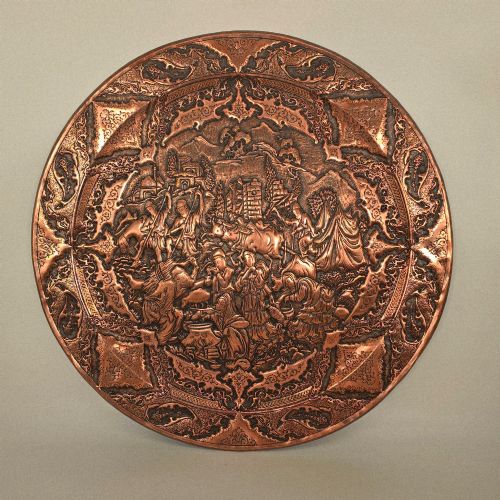
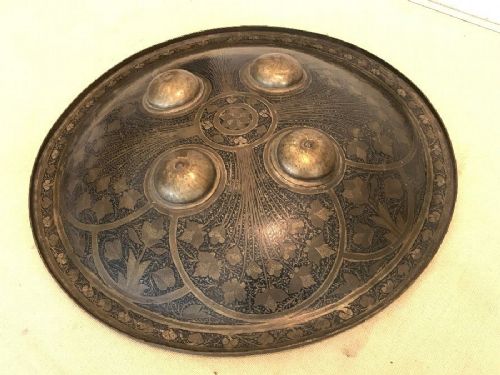
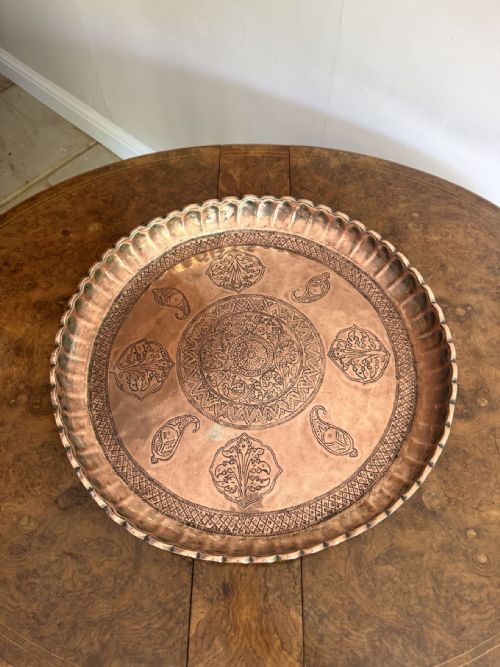
The offerings on this page encompass various forms such as large circular copper and mixed metal trays, decorative platters, architectural tiles, and shields. These items display distinctive aesthetic influences ranging from Safavid Persian to Indo-Persian and Middle Eastern styles.
Buyers are most likely to meet substantial copper chargers, brass platters, and ceramic tiles featuring detailed script or figural motifs. Each object serves as a striking focal point for interior display, combining utilitarian metalwork or architectural elements with fine decorative art.
How they were made
Makers utilised metals such as copper, brass, steel, and bronze, often applying silver plating or mixed metal elements to create contrast. Many metal items employ engraved repoussé work, where designs are hammered from the reverse and chased on the front.
Ceramic examples from the seventeenth century and later periods utilise earthenware bodies decorated with traditional glazes and painted script, such as Nastaliq calligraphy. Piercing techniques also appear on specific trays, demonstrating fine openwork alongside surface engraving.
What varies in quality
The distinction between ordinary and superior pieces rests upon the crispness of the engraved repoussé work and the complexity of the surface design. Finer examples display deeply chased foliate decoration and well-defined figural or calligraphic scripts.
Material composition and patination further differentiate the collection, with heavier bronze plaques and early earthenware tiles holding particular visual depth. The integration of mixed metals and silver plating demands a higher level of artisan skill.
The Persian Wall Plaques Glossary
- Repoussé
- A metalworking technique where the artisan hammers the design from the reverse side to form raised relief on the front. This method creates tactile depth on copper chargers and brass shields.
- Nastaliq
- A traditional calligraphic script used in Persian writing, frequently found on tiles and metalwork. It is characterised by short vertical strokes and long horizontal sweeps.
- Safavid
- A historical period of Persian art known for refined decorative styles and intricate tilework. Pieces from this era often exhibit sophisticated floral and geometric patterns.
- Dhal
- A traditional term for a round shield, often decorated with engraved foliate motifs and metal bosses. These defensive items evolved into purely decorative wall pieces.
- Chasing
- The complementary metalworking process to repoussé, executed on the front side to refine details and add texture. Artisans use small punches and hammers to sharpen the lines.
Persian Wall Plaques: Frequently Asked Questions
What materials are these plaques made from?
The pieces utilise a range of metals including copper, brass, steel, bronze, and silver-plated surfaces. Earthenware is also represented through antique tiles.
Craftsmen combined these materials with techniques like engraving and repoussé to produce textured decorative finishes.
How do I hang a heavy charger?
Due to the substantial weight of copper and brass chargers, secure wall fixings are essential. Utilise proper picture wire or brackets designed for heavy metal objects.
Ensure the hanging hardware engages directly with wall studs or appropriate masonry anchors for safety.
How do I date an antique tile?
Dating relies on stylistic analysis of the glaze, pottery body, and any incorporated script such as Nastaliq calligraphy. Seventeenth-century tiles differ in paste and pigment from later nineteenth-century examples.
Comparing the decorative motifs with documented historical periods helps narrow the timeframe of manufacture.
Are these items purely decorative?
Many items started as functional objects such as serving trays, shields, or architectural tiles before becoming wall displays. Their intricate engraving made them suitable for interior decoration.
Over time, collectors repurposed these utilitarian forms specifically for hanging as visual art.