


Antique Ceramic Stool
When you search for antique ceramic stool, you find garden seats and footstools that bring solid presence and useful function to a room.
Antique Ceramic Stool
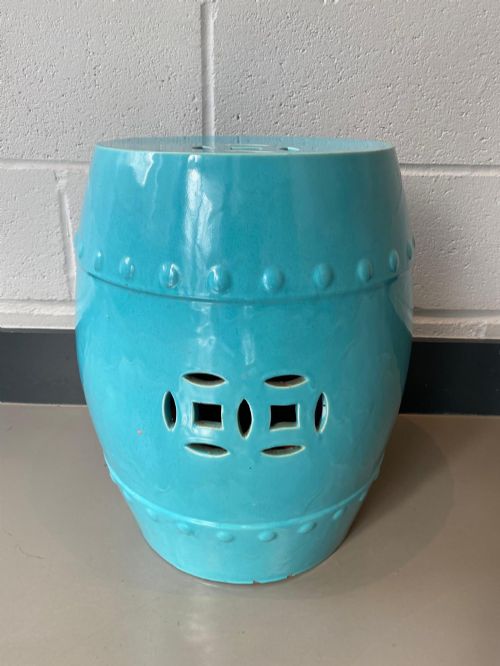
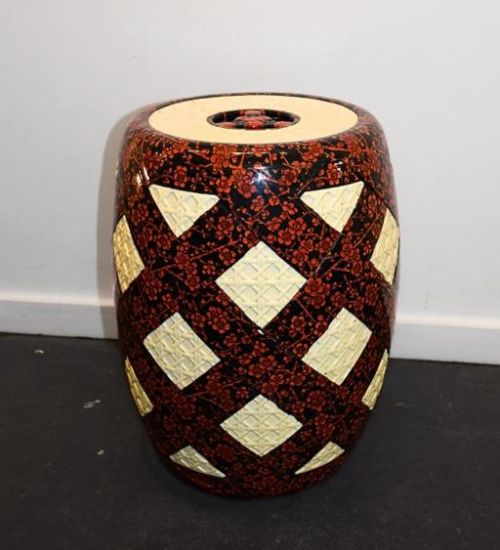
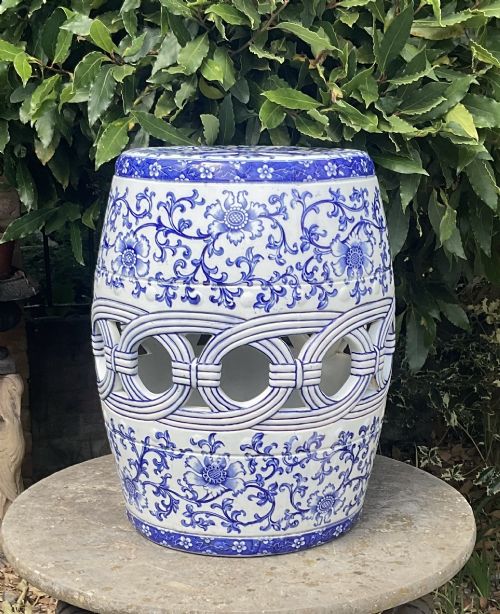
An antique ceramic stool on this page primarily takes the form of a garden seat, often drawing on Chinese Qing Dynasty or Victorian Chinoiserie aesthetics. These substantial objects serve both indoor and outdoor spaces as extra seating or display surfaces.
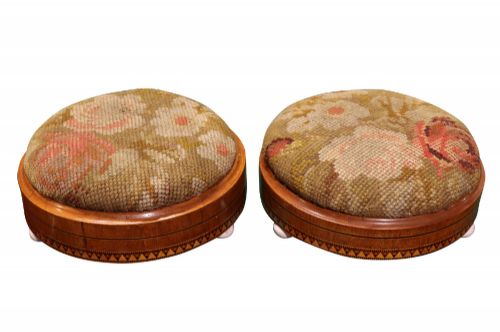
The selection also includes footstools constructed from walnut with upholstered needlepoint, geometric kilim tapestry, or wool. These domestic items offer a direct contrast to the heavy glazed ceramic barrels found in the wider group.
How they were made
Makers shaped ceramic garden seats using earthenware, ironstone, or porcelain, applying rich enamel and glaze to create durable decorative surfaces. Blue and white transfer printing, famille rose palettes, and clobbered decoration overglaze define the ceramic techniques visible across the nineteenth-century examples.
Footstools utilise walnut timber for their circular frames, incorporating inlaid details and Tunbridge ware before finishing with detailed wool needlepoint and tapestry tops.
Some nineteenth-century decorators found plain blue and white porcelain too simple, so they painted over the glaze with extra colours.
What varies in quality
The distinction in quality rests upon the crispness of the hand-painted enamel work and the complexity of the glaze. Pieces featuring detailed famille rose or rose medallion patterns demonstrate a higher level of artistic execution than simpler monochrome glazed bodies.
For wooden footstools, the intricacy of the walnut inlay, the precision of the Tunbridge ware, and the tightness of the needlepoint tapestry determine the standard of craftsmanship.
Minton
The Antique Ceramic Stool Glossary
- Famille rose
- A palette of opaque enamels dominated by pink, introduced in Chinese porcelain production. It allows for soft shading on garden seats.
- Clobbered
- A process where older blue and white ceramics receive an extra layer of overglaze colour by subsequent decorators. This creates a dense and colourful finish.
- Tunbridge ware
- Woodworking involving small mosaic tiles of different coloured woods to form geometric patterns. It appears on Victorian walnut footstools.
- Creamware
- A refined earthenware developed in the eighteenth century with a pale yellowish-cream glaze. It provides a smooth ground for painted decoration.
- Kilim tapestry
- A flatweave textile using a technique that leaves small slits between colour changes. It provides durable upholstery for nineteenth-century stools.
Antique Ceramic Stool: Frequently Asked Questions
Can ceramic garden seats stay outside?
Many nineteenth-century ceramic garden seats function well in outdoor garden settings. Frost can damage glazed earthenware during freezing winter months.
Moving heavier porcelain and ironstone seats indoors preserves the enamel and glaze over time.
How do I clean antique wool needlepoint?
Needlepoint and kilim tapestries on antique footstools require gentle surface cleaning. Vacuuming through a mesh screen removes loose dust safely.
Water can warp the wool and damage the walnut frame below the upholstery.
How do I date a Victorian footstool?
Walnut frames combined with Tunbridge ware inlay point directly to mid-nineteenth-century British production. Geometric kilim tapestry and needlepoint tops confirm the Victorian period.
Comparing the timber finish and joinery underneath helps verify the age of the piece.