



Antique Ceramic Lion Figures
Antique ceramic lion figures bring fierce guardian presence into a room, spanning Staffordshire potteries, Chinese porcelain, and Japanese earthenware traditions.
Antique Ceramic Lion Figures
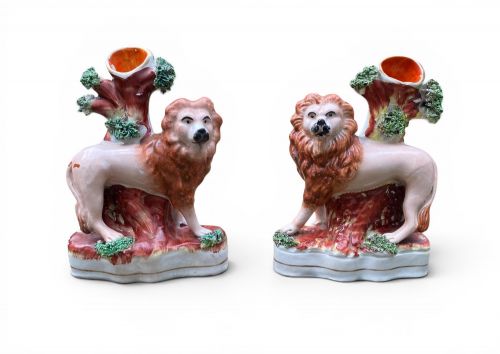
When you search for antique ceramic lion figures, you encounter a diverse gathering of European earthenware models alongside Asian porcelain and pottery guardians. The Staffordshire pottery tradition dominates local interpretations, often appearing as matched pairs with moulded details and glazed surfaces.
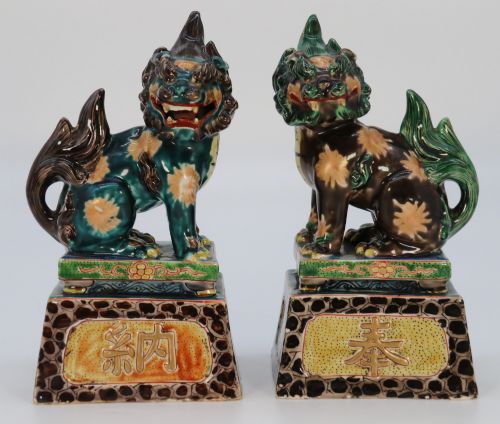
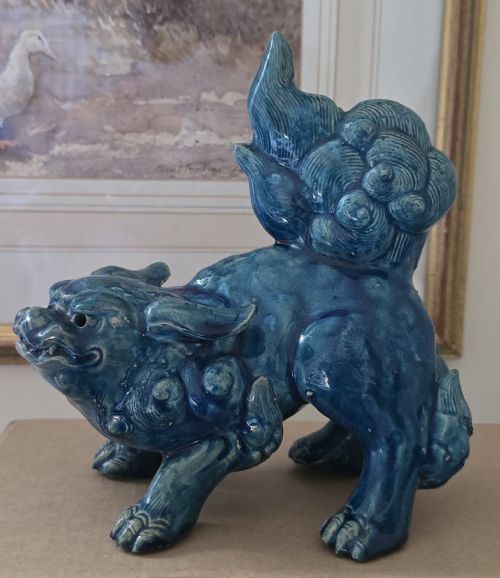
Beyond the British figures, the selection stretches to Chinese Qing Dynasty porcelain and Japanese Meiji period Shishi, frequently referenced as Foo dogs or Buddhist lion dogs. These creatures range from recumbent bookends and spill vases to robust sculptural figures glazed in turquoise, copper lustre, or pale green.
The periods represented span from the eighteenth century through the Victorian era into the early twentieth century, capturing various global interpretations of regal beasts. Buyers typically choose between the domestic charm of Staffordshire pottery and the intricate glazes of Asian ceramic traditions.
How they were made
Potters shaped these figures using earthenware, porcelain, and pearlware, often employing moulds to achieve consistent forms for Staffordshire pairs and larger sculptural pieces. Techniques involved applying lead glazes, tin glazes, enamel colours, and rich treacle or copper lustre finishes before firing in kilns.
Listings feature pieces spanning the eighteenth century through the Victorian era up to the nineteen-twenties.
What varies in quality
Glaze application heavily influences the visual impact, separating flat surfaces from rich, lustrous finishes with deep colour variation. Rich treacle glazes, vibrant turquoise coatings, and carefully controlled enamel work elevate the presence of the figure.
Rockingham Pottery·Lancaster and Sons of Hanley
The Antique Ceramic Lion Figures Glossary
- Pearlware
- A refined earthenware developed in the eighteenth century featuring a bluish glaze that pooled slightly in recesses. This material frequently serves as the base for early Staffordshire figures.
- Treacle glaze
- A dark, translucent brown lead glaze that created a glossy, highly reflective finish on nineteenth-century pottery. It gives Staffordshire lions a rich, caramel-like depth.
- Shishi
- A traditional Japanese term for a guardian lion or Buddhist lion, often modelled in porcelain or pottery. These figures draw inspiration from Chinese temple lions.
- Spill vase
- A hollow cylindrical vessel attached to a figure, designed to hold wooden spills for lighting fires or pipes. Pairs of Staffordshire lions often incorporated these functional holders.
- Foo dog
- A popular Western term for Chinese guardian lions, traditionally placed outside temples and palaces. They appear in ceramic form as protective household figures.
Antique Ceramic Lion Figures: Frequently Asked Questions
Where were Staffordshire lion figures displayed?
These figures traditionally sat upon mantelpieces, often arranged as symmetrical pairs framing a clock or other decorative ornaments. Their robust earthenware bodies suited domestic parlours across the Victorian period.
Owners also utilised models incorporating spill vases beside hearths to keep taper lights close at hand. Today, collectors place them on bookshelves or side tables as standalone decorative accents.
How do I tell Chinese Foo dogs from Staffordshire lions?
Chinese Foo dogs, or Shishi, display distinct stylistic traits rooted in Asian temple art, including stylised curly manes, brocade balls, and expressive, snarling jaws. They often feature turquoise, green, or enamel glazes.
Staffordshire lions project a more domestic, British interpretation of the beast, typically finished in treacle glaze, copper lustre, or hand-painted earthenware. Their postures frequently mirror traditional British heraldic lions rather than temple guardians.
What is a Medici lion?
The Medici lion design copies the classical marble sculptures guarding the Villa Medici in Rome, featuring a powerful feline resting one paw upon a sphere. Staffordshire potters widely adopted this regal stance for earthenware figures.
These versions translate grand classical sculpture into accessible domestic ceramics, often glazed in rich browns or pearlware tones. They remain distinct from recumbent resting lions and upright guardian figures.
How should I clean antique ceramic lions?
Dust these figures gently with a soft, dry brush to prevent accumulation in the crevices of the moulded manes and painted surfaces. Avoid using wet cloths or harsh cleaning agents, which can damage delicate enamels and historic glazes.
Earthenware and porcelain from the nineteenth century require careful handling to protect aged glazes from accidental scratching. Keeping them out of direct sunlight preserves the vibrancy of any overglaze enamels.