

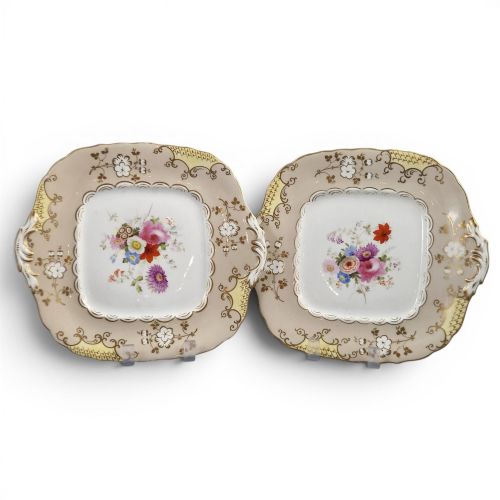


Antique Ceramic Handle Dish
An antique ceramic handle dish offers a functional form shaped through centuries of porcelain and earthenware tradition, bringing decorative utility to the table.
Antique Ceramic Handle Dish
When you search for an antique ceramic handle dish, you encounter forms ranging from porcelain baskets and dessert dishes to sugar bowls and fruit comports. These pieces originate across the eighteenth, nineteenth, and early twentieth centuries, spanning periods such as Georgian, Regency, and Victorian.
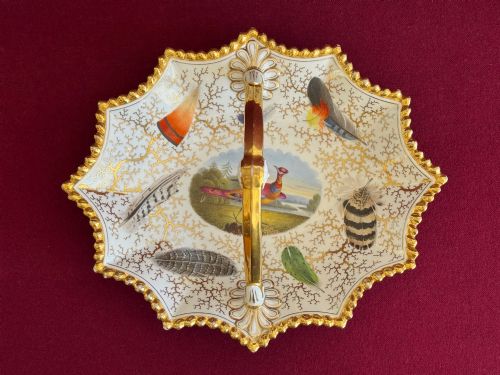
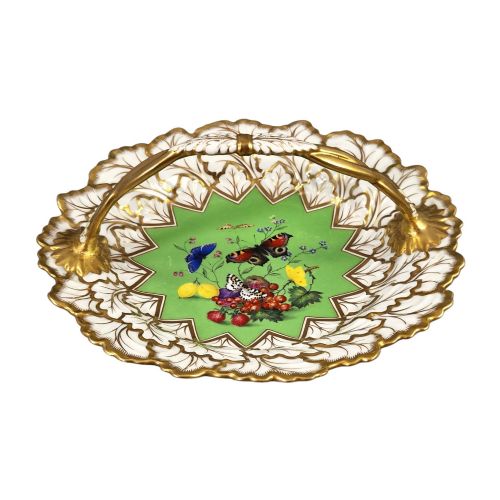
The version you are most likely to meet on this page is an English porcelain basket or serving dish featuring painted motifs, gilt handles, or applied floral decoration. Makers and manufacturers of these vessels utilised earthenware, ironstone, and fine paste porcelain.
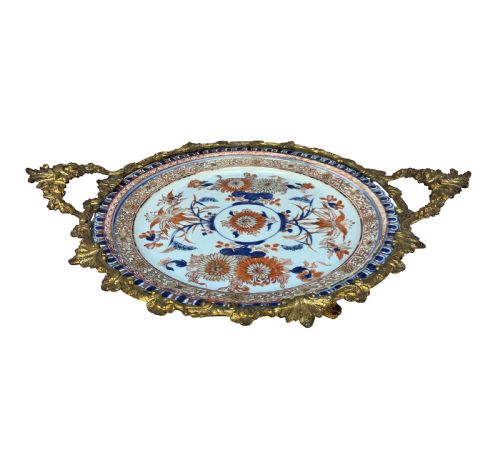
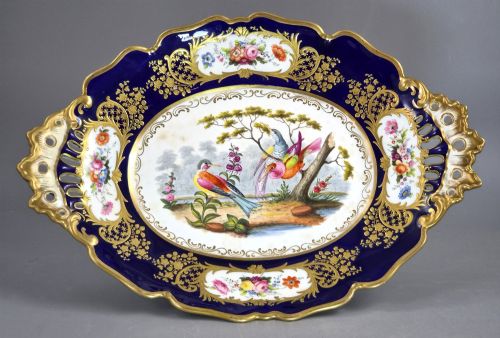
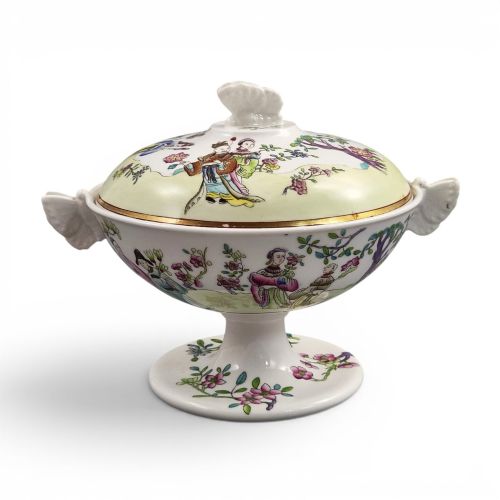
Many of these handled dishes served specific dining functions, from holding fruit and desserts to presenting sugar or sauce at the table. Their forms vary from oval dishes and pedestals to twin-handled serving vessels mounted with ormolu or finished with cobalt blue and gold leaf.
Materials and construction
Potters shaped these vessels using fine paste porcelain, felspar porcelain, ironstone, and earthenware, often incorporating moulded or applied handles. The construction involved careful kiln firing before artisans applied hand-painted enamels, cobalt blue underglaze, and transfers.
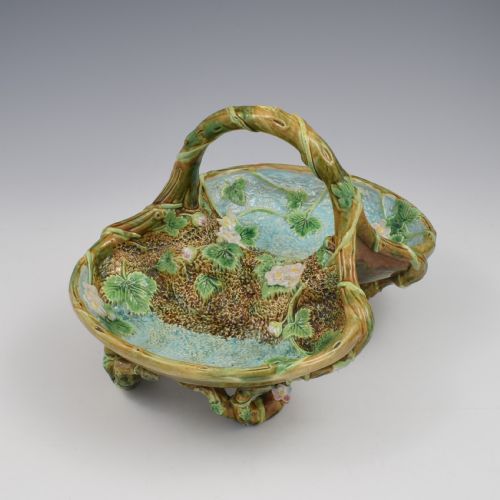
Gilding and gold leaf frequently highlight the rims and handles of Regency and Victorian pieces, applied over fired glazes to create metallic contrast. Majolica and faience pieces received rich coloured lead glazes that settled into the modelled contours of leaves, fruit, and masks.
Antique Ceramic Handle Dish Retail Price Guide 2026
Typical asking prices for ceramic handle dish among the pieces listed under this phrase on Sellingantiques today, from the lower quarter to the upper quarter. They describe what is for sale here now, not the wider market.
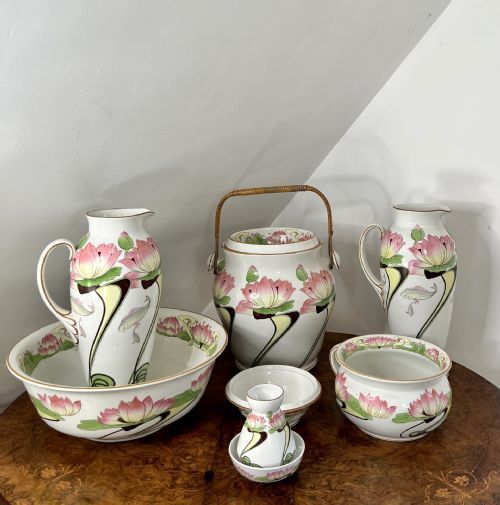
The object forms include decorative baskets, fruit comports, sugar bowls, and bathroom sets.
Judging quality and finish
Quality rests in the crispness of the modelling and the precision of the hand-painted decoration across the body and handles. Superior examples display detailed brushwork, such as named views, fancy birds, or intricate Chinoiserie patterns executed without smudging.
The refinement of the paste and the evenness of the glaze also distinguish finer items, alongside the structural integrity of applied flowers and moulded handles. Pieces bearing attribution to established works or notable decorators command greater interest among collectors.
Flight Barr and Barr·Samuel Alcock·Coalport·Spode·George Jones·John Ridgway·Masons Ironstone·Staffordshire·Swansea Porcelain·Rockingham Porcelain·Gien·Royal Worcester
The Antique Ceramic Handle Dish Glossary
- Comport
- A large decorative dish or bowl raised on a pedestal, used traditionally for serving fruit or dessert. These pieces often feature twin handles and detailed painted scenes.
- Imari
- A style of ceramic decoration employing a palette of underglaze blue, iron red, and gilt, originating from Japanese export wares and copied by European factories. This aesthetic appears frequently on nineteenth-century dishes and bowls.
- Felspar porcelain
- A dense ceramic body introduced in the nineteenth century, known for its durability and bright white surface. Manufacturers utilised this material to produce robust tableware and handled vessels.
- Gilding
- The application of gold leaf or gold paint to ceramic surfaces, particularly around rims and handles. This decorative touch signals finer production standards in Georgian and Regency tableware.
Antique Ceramic Handle Dish: Frequently Asked Questions
What were antique ceramic handle dishes used for?
These vessels served dining and decorative purposes, holding desserts, fruit, sugar, or sauce at formal meals. Their handles allowed servants or diners to pass them safely across the table.
Over time, many transitioned from active dining service to display pieces in cabinets and drawing rooms, valued for their painted scenes and sculptural forms.
How do I date a ceramic handle dish?
Dating relies on identifying factory marks, paste compositions, and stylistic markers such as Regency neo-classical shapes or Victorian naturalism. Factory backstamps and pattern numbers painted on the base provide the most reliable chronological clues.
Decoration styles also shift across periods, moving from eighteenth-century Chinoiserie and Chinese Imari towards nineteenth-century floral studies and colourful majolica glazes.
Are these dishes safe to use with food?
Most pieces from the Georgian, Regency, and Victorian eras function best as display items or decorative bowls rather than daily tableware. Historic glazes and overglaze enamels can wear or contain materials unsuited to modern culinary use.
Hand-washing in warm water without harsh detergents preserves the fragile painted enamel, gilding, and applied floral details found on these fragile ceramics.
What is the difference between porcelain and ironstone?
Porcelain is a fine, translucent ceramic fired at high temperatures, often associated with delicate dessert plates, baskets, and named view dishes. It offers a smooth, glassy body suited to refined hand-painted decoration.
Ironstone is a heavy, opaque earthenware developed for durability, frequently seen in robust jugs, basins, and large serving dishes designed for heavy household use.