


Georgian Porcelain Fruit Basket
Georgian porcelain fruit baskets are pierced serving vessels from the eighteenth and early nineteenth centuries designed to hold fresh fruit on a dining table.
Georgian Porcelain Fruit Basket
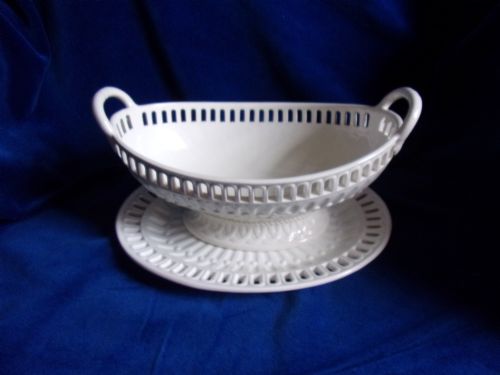
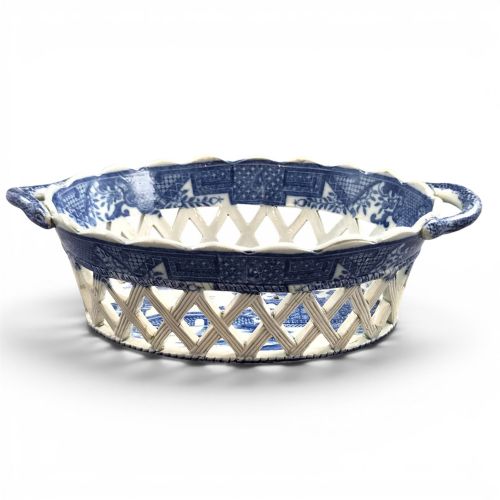
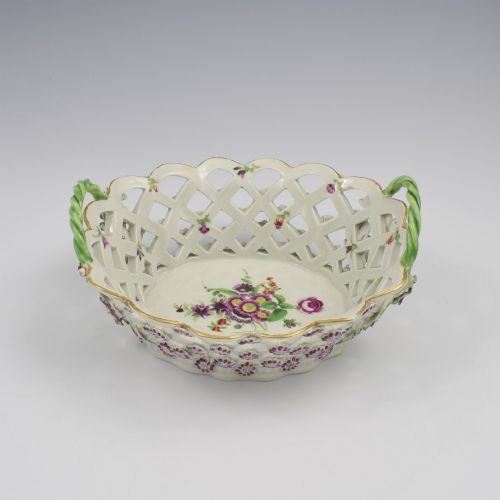
When searching for a georgian porcelain fruit basket, you encounter openwork ceramic vessels designed for the dessert course of a formal meal. These pieces typically take the form of chestnut baskets with matching stands or lids, often featuring pierced lattice walls.
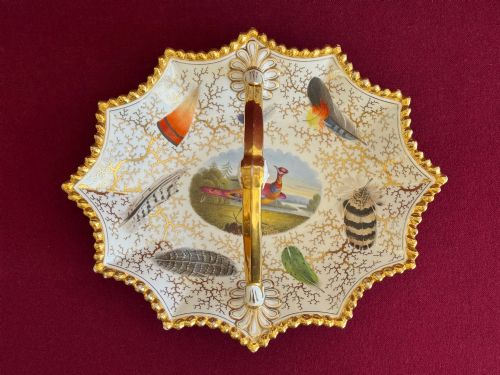
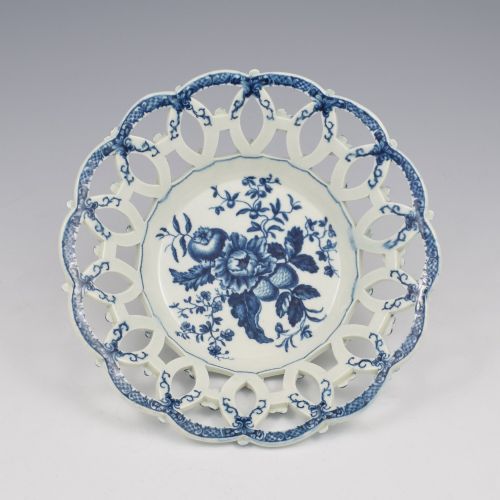
The examples available range from eighteenth century Dr Wall Worcester and First Period Worcester productions to Regency period pieces by Spode and Flight, Barr and Barr. Alongside English soft-paste porcelain and pearlware, the selection includes Chinese export porcelain decorated in the famille rose palette.
Most entries belong to the broader categories of decorative baskets and bowls, spanning the Georgian, Regency, and nineteenth century periods. These items display both transfer printed willow patterns and hand-painted polychrome motifs including the pine cone pattern.
How they were made
Potters constructed these vessels using soft-paste porcelain, pearlware, or ironstone, shaping the openwork lattices by hand-piercing the wet clay before firing. Many incorporate applied floral elements or twisted twig handles that imitate natural forms.
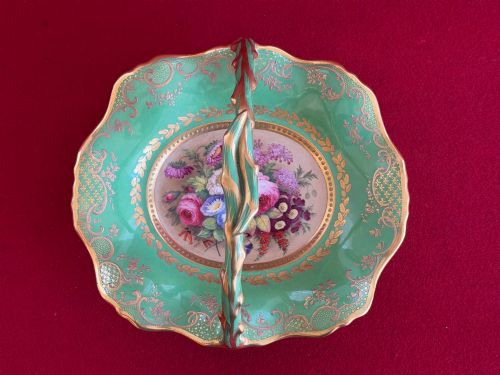
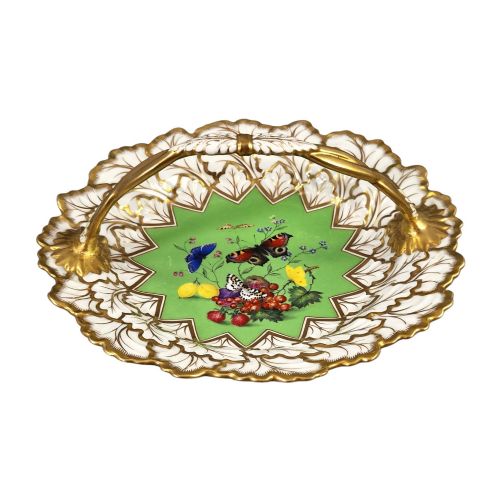
Decoration relied on underglaze blue transfer printing or meticulous hand-painting in polychrome enamels, frequently enhanced with gold leaf and gilding applied over the glaze. Makers often paired the pierced basket with a matching undertray or lid to complete the set.
Chestnut baskets were designed with pierced walls specifically so roasted chestnuts could cool gracefully while guests debated politics over port.
What varies in quality
Quality reveals itself in the crispness of the pierced reticulation and the precision of the hand-painted or transfer-printed decoration. Finer pieces maintain structural integrity and sharp detail across intricate lattice walls without distortion from the kiln.
The sophistication of the enamel palette and the application of gold leaf distinguish standard domestic production from premier factory outputs such as Worcester and Spode. Complete sets that retain both the original basket and its matching stand demonstrate higher preservation.
Flight, Barr and Barr·Spode·Dr Wall Worcester·Mason
The Georgian Porcelain Fruit Basket Glossary
- Soft-paste porcelain
- A ceramic composition made from white clay mixed with ground glass and other materials, fired at lower temperatures than hard-paste porcelain. This body type characterises much eighteenth century English tablewares.
- Reticulated
- Describes ceramic work featuring an openwork lattice or net-like pierced design. This technique allowed air to circulate around chestnuts or fruit stored inside.
- Pearlware
- An earthenware body developed in the late eighteenth century featuring a clear glaze with a faint blueish tint in puddings and crevices. It was designed to mimic the whiteness of Chinese porcelain.
- Famille rose
- A palette of opaque enamel colours dominated by pink or rose hues, introduced to Chinese porcelain decoration in the eighteenth century. Export pieces using this scheme reached European markets during the Georgian period.
- Transfer printing
- A mechanical method of applying complex designs to pottery by pressing paper or tissue inked from a copper engraving onto the biscuit or glazed surface. This technique enabled uniform patterns like the willow pattern.
Georgian Porcelain Fruit Basket: Frequently Asked Questions
What were these baskets used for?
These vessels served as ornamental centrepieces on the dining table during the dessert course, specifically holding chestnuts, soft fruit, or sweetmeats.
Their pierced walls allowed air circulation to keep provisions fresh while adding texture and visual interest to the table setting.
How do I distinguish eighteenth century pieces?
Eighteenth century examples, such as those from the Dr Wall period at Worcester, typically utilise soft-paste porcelain bodies with hand-painted polychrome decoration or underglaze blue.
They often display subtle potting imperfections and characteristic glaze pooling that differ from later nineteenth century ironstone and pearlware production.
Why do some baskets have stands?
Many chestnut baskets were potted alongside a matching undertray or stand to catch stray crumbs and protect the polished wood of the dining table.
Retaining both the basket and its original stand together preserves the intended aesthetic and historical integrity of the serving set.
How should I display them at home?
Due to their delicate pierced walls and historical nature, these baskets suit placement in secure cabinets or on stable sideboards away from heavy household traffic.
Keeping them out of direct sunlight helps protect any delicate enamel colours and gold leaf gilding from fading over time.