





Antique Ceramic Gardener
An antique ceramic gardener brings the charm of the soil indoors through porcelain and earthenware modelled across centuries.
Antique Ceramic Gardener
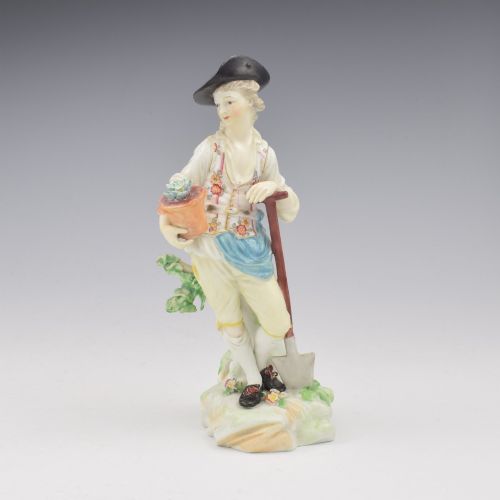
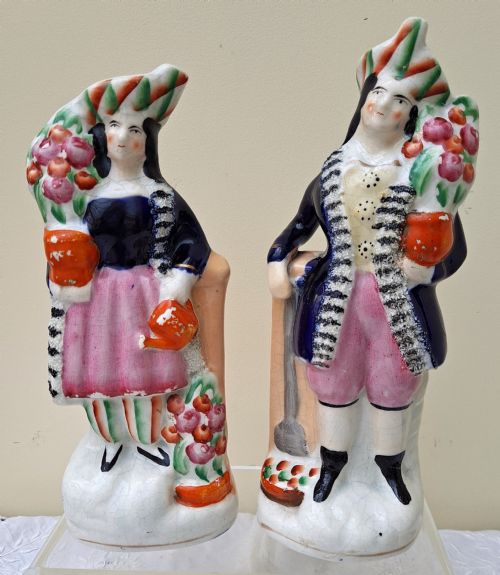
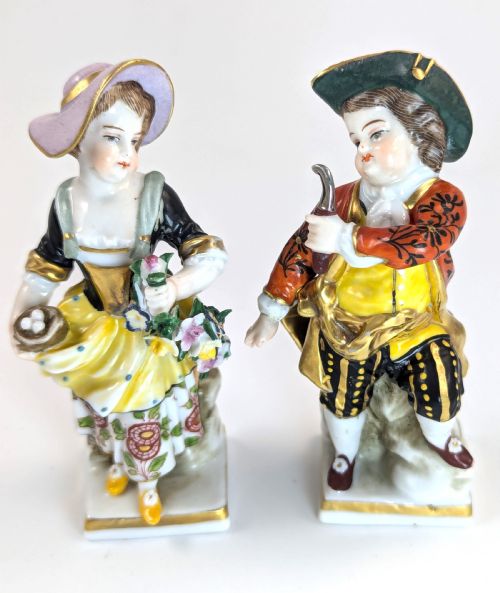
An antique ceramic gardener captures the rural worker in figurative form, rendered in porcelain, earthenware, and biscuit porcelain. These figures portray men and women tending flowers or carrying baskets, originating from eighteenth-century works and nineteenth-century Staffordshire potteries.
Buyers meet pairs and individual statuettes shaped as candlesticks or freestanding ornaments. The aesthetic ranges from the elaborate flourish of Rococo Revival to the matte surface of Parian porcelain.
The pieces on this page span the eighteenth and nineteenth centuries, offering a selection of Derby, Meissen, Minton, Sitzendorf, Limbach, and Staffordshire examples.
How they were made
Potters shaped these figures using hard-paste porcelain, earthenware, and Parian biscuit porcelain, sometimes incorporating enamel colours, glaze, and gold leaf. Biscuit porcelain required firing without glaze to produce a smooth, matte finish resembling marble.
Manufacturing methods involved moulding ceramic bodies in parts before hand-finishing details such as applied flowers and baskets. Enamel paints and gilding were applied over or under the glaze before secondary kiln firings.
Antique Ceramic Gardener Retail Price Guide 2026
Typical asking prices for ceramic gardener among the pieces listed under this phrase on Sellingantiques today, from the lower quarter to the upper quarter. They describe what is for sale here now, not the wider market.
Sitzendorf gardeners balance precariously on floral bases while holding impossibly small baskets of nineteenth-century blooms.
What varies in quality
Quality rests in the crispness of the modelling and the delicacy of applied elements like leaves and petals. Finer figures retain precise facial expressions and clean moulding seams.
The application of enamel and gold leaf distinguishes standard production from superior output. Hand-painted detail on eighteenth-century Derby and Meissen pieces shows greater depth than later industrial output.
Gotthelf Greiner·Meissen·Minton·Sitzendorf
The Antique Ceramic Gardener Glossary
- Biscuit porcelain
- Unglazed porcelain fired once to create a matte, porous surface resembling marble. Parian porcelain is a specific type of biscuit used for Victorian figures.
- Earthenware
- Opaque, porous ceramic pottery fired at lower temperatures than porcelain. Staffordshire figures are typically formed from this material.
- Enamel
- Vitreous coloured glass fused to the ceramic surface during firing. It provides the bright hues on eighteenth-century garments.
- Hard-paste porcelain
- A dense ceramic composed of kaolin and petuntse fired at high temperatures. It resists scratching and displays a bright white body.
- Patch marks
- Unglazed spots on the bottom of porcelain figures where kiln props supported the piece during firing. These are common on eighteenth-century Derby work.
Antique Ceramic Gardener: Frequently Asked Questions
What materials are antique ceramic gardeners made from?
These figures are constructed from hard-paste porcelain, earthenware, and Parian biscuit porcelain. Makers added enamel paints, glaze, and gold leaf to decorate the surfaces.
Earthenware appears in utilitarian Staffordshire pieces, while hard-paste porcelain characterises eighteenth-century German and English works.
How do I identify an eighteenth-century figure?
Eighteenth-century pieces often display patch marks on the base from kiln supports and feature hand-modelled floral elements. The painting style on works from factories like Derby and Meissen shows distinct brushwork.
Consult the paste and modelling quality to differentiate early porcelain from later Victorian reproductions.
Were these figures meant for display?
Gardeners and agricultural figures served as ornamental display pieces on mantelpieces and side tables. Some examples incorporated candle sockets to function as figural candlesticks.
They reflect a romanticised rural aesthetic popular among wealthy households in the eighteenth and nineteenth centuries.
What is the difference between Derby and Staffordshire pieces?
Derby figures utilise refined porcelain with delicate enamel painting and gilding, often featuring patch marks. Staffordshire pieces rely on earthenware with bolder, simpler glazes suited to domestic pottery production.
Derby output targets porcelain collectors, whereas Staffordshire figures represent popular nineteenth-century ceramic traditions.