
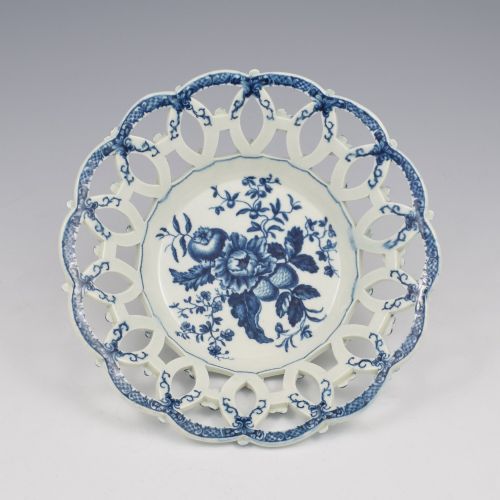


Antique Ceramic Fruit Basket
An antique ceramic fruit basket brings sculptural form and transfer-printed or hand-painted charm to a dining table or sideboard.
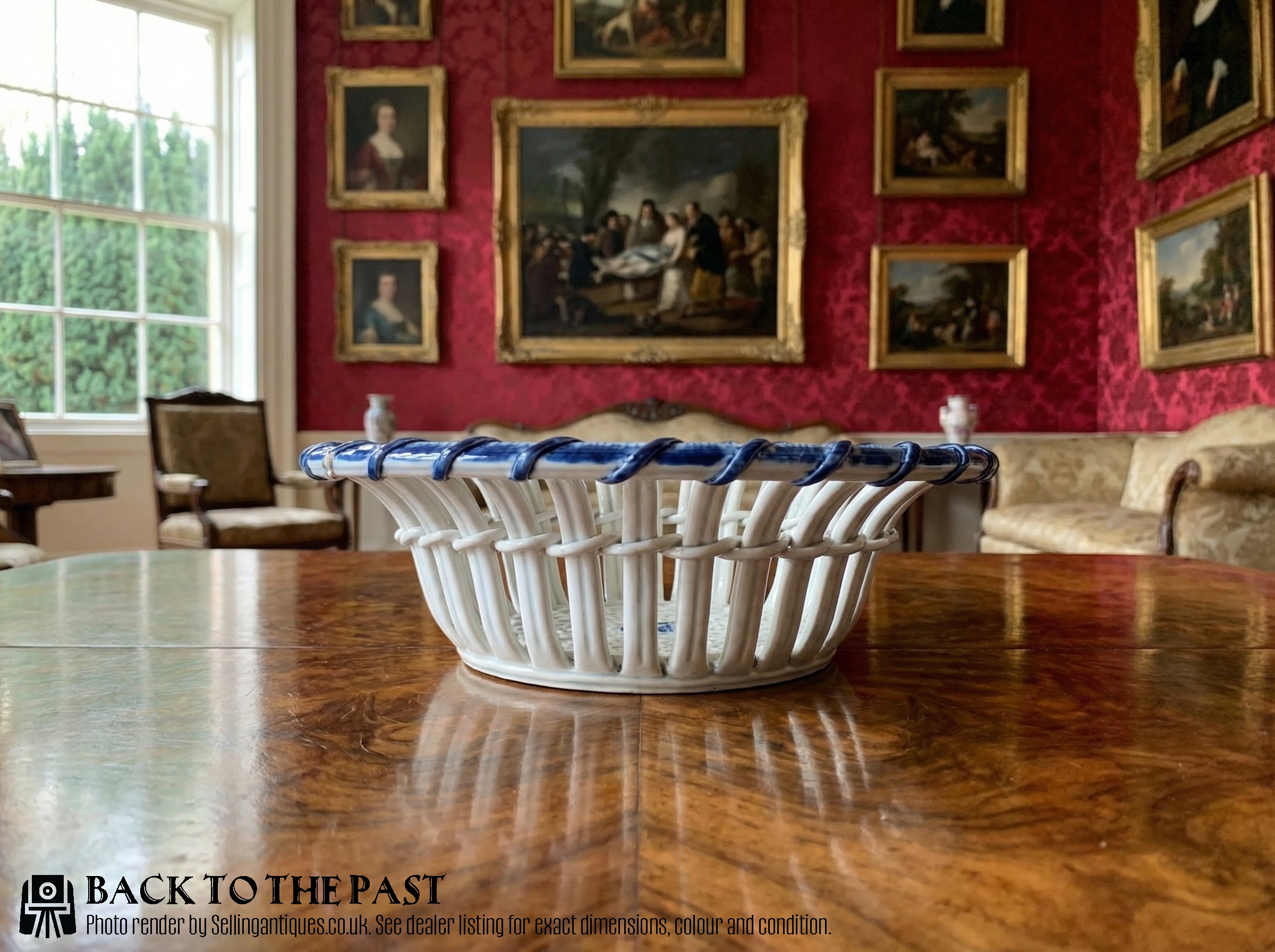
Antique Ceramic Fruit Basket
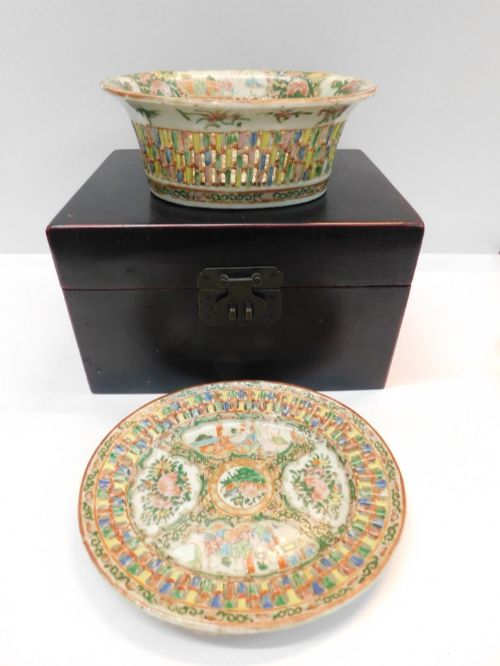
An antique ceramic fruit basket spans utilitarian serving vessels and decorative centrepieces created across the eighteenth, nineteenth, and early twentieth centuries in English, continental European, and Chinese kilns.
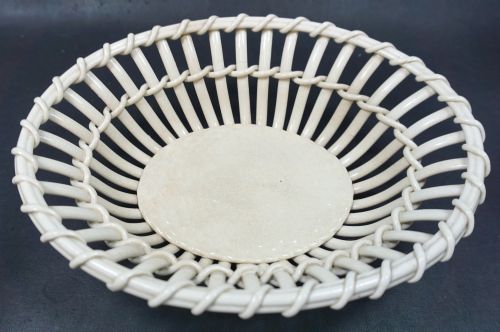
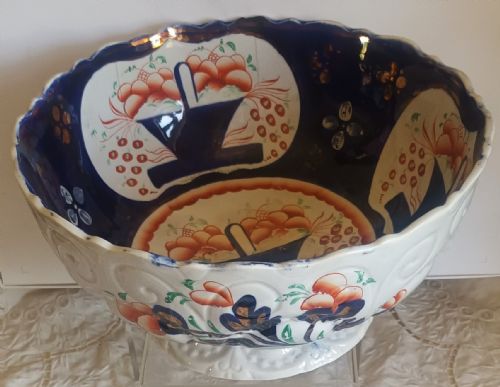
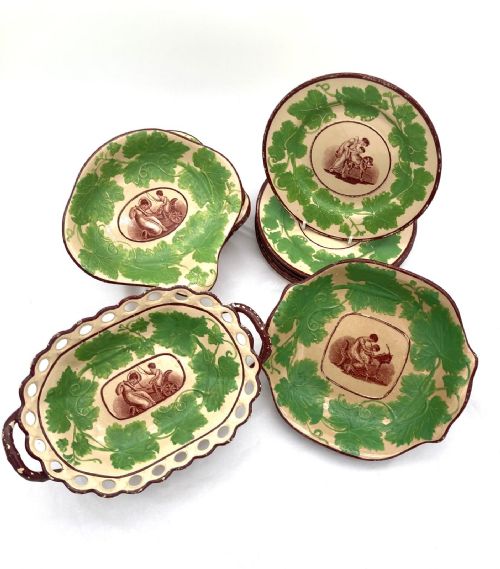
Buyers most frequently encounter footed bowls, pierced chestnut baskets with matching stands, and dessert service comports shaped from earthenware, creamware, pearlware, and porcelain.
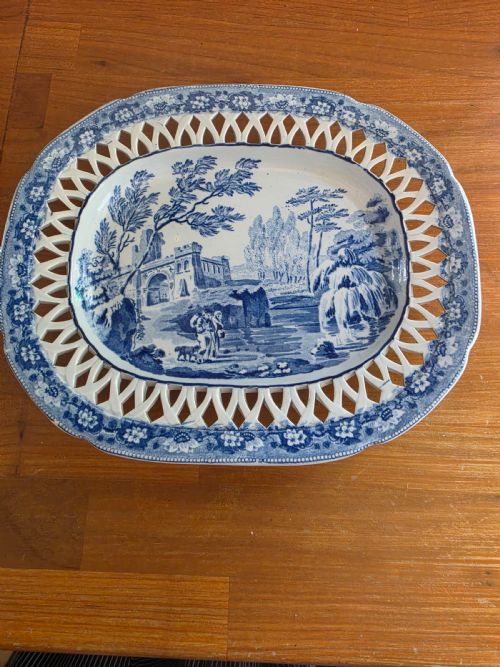
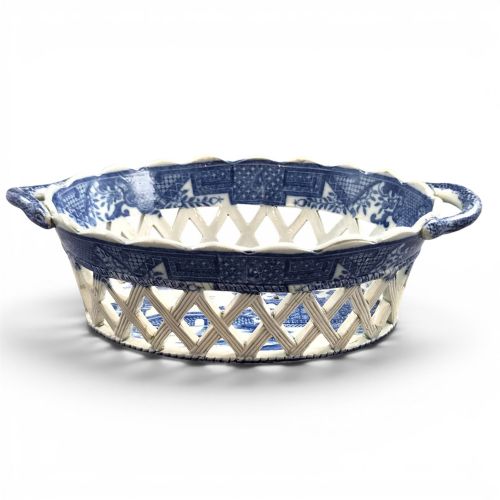
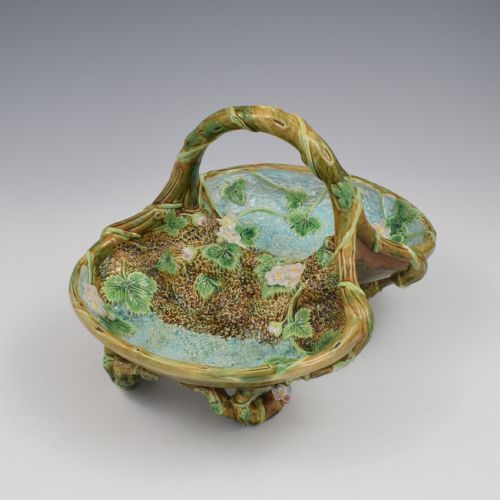
Pieces range from Regency blue and white transfer-printed pottery and Georgian creamware to Victorian majolica with naturalistic moulded foliage and elaborate German porcelain centrepieces.
Materials and Technique
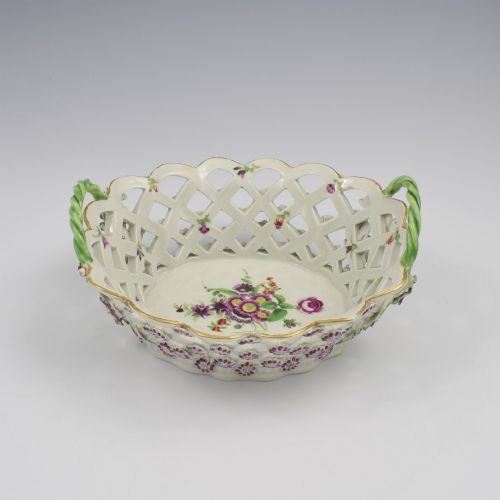
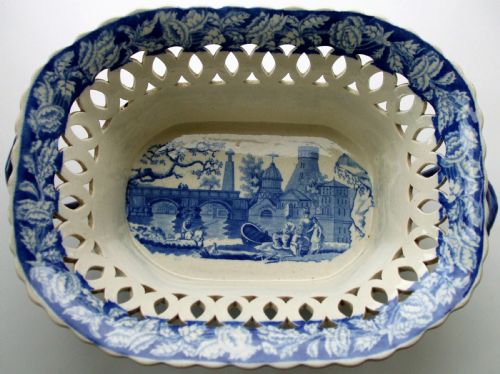
Potters shaped these vessels using fine earthenware, creamware, pearlware, and porcelain, frequently employing reticulated or fretted openwork walls to lighten the heavy bodies.
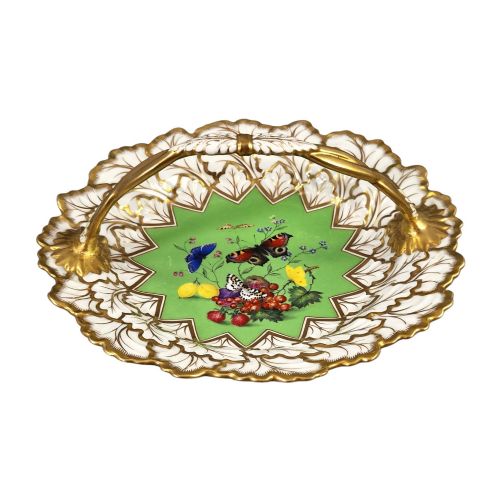
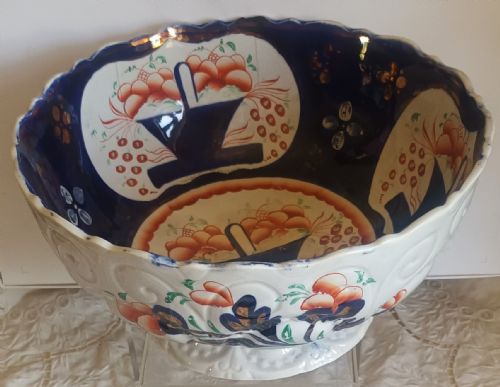
Decoration relied on underglaze blue and white transfer printing, hand-painted polychrome enamels, and highlights in gold leaf or gilding applied over the glaze.
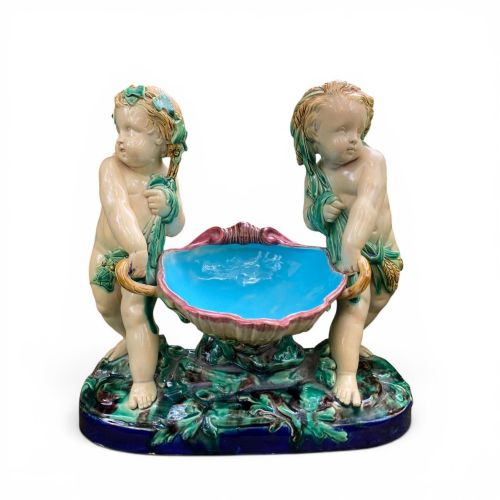
Majolica examples utilised vibrant coloured glazes over moulded earthenware bodies, while factories like Worcester and Spode combined delicate porcelain pastes with intricate pierced detailing.
Antique Ceramic Fruit Basket Retail Price Guide 2026
Typical asking prices for ceramic fruit basket among the pieces listed under this phrase on Sellingantiques today, from the lower quarter to the upper quarter. They describe what is for sale here now, not the wider market.
Nineteenth-century ceramicists occasionally added cherubs clinging precariously to the rims of fruit baskets, seemingly tasked with guarding the dessert.
Evaluating the Pieces
Quality rests upon the crispness of the pierced reticulation and the precision of the moulding, where finer examples retain sharp edges and well-defined apertures rather than softened outlines.
The hand-painted enamel work or transfer-printed clarity distinguishes standard production from superior pieces, particularly in the depth of blue and white tones or the delicacy of polychrome brushwork.
The presence of matching original stands or underplates elevates a composition, as does the complexity of figurative or naturalistic sculptural additions such as applied flowers and cherubs.
Flight Barr and Barr·Wedgwood·Spode·Dr Wall Worcester·George Jones·J and R Clews·Minton·C G Schierholz and Sohn·Mason
The Antique Ceramic Fruit Basket Glossary
- Reticulated
- Pierced or openwork pottery or porcelain resembling basketry or lace. This technique required considerable skill from the potter to cut the damp clay without distorting the vessel wall.
- Chestnut basket
- A specialised covered or open container designed for serving chestnuts at the table. These pieces often include an integral or separate matching stand to catch condensation.
- Creamware
- A refined light-coloured earthenware developed in England during the eighteenth century. It is covered in a transparent lead glaze that yields a warm, buttery tone.
- Pearlware
- An improved earthenware body introduced in the late eighteenth century featuring a bluish glaze that pooled in crevices to mimic the appearance of Chinese export porcelain.
- Majolica
- A type of earthenware decorated with brightly coloured opaque lead glazes. Victorian examples frequently adopted naturalistic fruit, leaf, and floral motifs.
- Comport
- A decorative footed dish or bowl elevated above the table surface. They frequently formed part of larger nineteenth-century dessert services for displaying fruit.
Antique Ceramic Fruit Basket: Frequently Asked Questions
What were antique ceramic fruit baskets used for?
These vessels served elite dining tables for holding fresh fruit, sweetmeats, or roasted chestnuts during dessert courses. They functioned as functional tableware and decorative centrepieces.
Larger footed bowls and comports dominated the centre of the table, while smaller baskets with stands kept delicate items elevated and accessible to diners.
How do I date an antique ceramic basket?
Dating relies on identifying the ceramic body, glaze characteristics, and decorative transfer-print or painting styles. Creamware and pearlware point toward the Georgian period, while majolica and elaborate floral motifs suggest Victorian manufacture.
Maker marks stamped or painted on the base provide the most reliable chronological anchor, though many early eighteenth-century pieces remain unmarked.
Are these baskets safe to use for food?
While historical pieces were designed for culinary service, antique ceramics often feature lead-based glazes and microscopic crazing that can absorb liquids or harbour bacteria. Modern collectors generally treat them as decorative display objects rather than functional kitchenware.
Hand washing in lukewarm water without harsh detergents protects the fragile glazes, enamels, and gilding from further wear.
What is the difference between porcelain and earthenware baskets?
Porcelain is a vitrified, dense ceramic material fired at high temperatures that appears white and translucent when held to the light. Earthenware, including creamware and pearlware, is a more porous, opaque body fired at lower temperatures.
Porcelain allowed makers to achieve thinner walls and finer pierced reticulation, whereas earthenware offered robust structures suited to colourful lead glazes and majolica moulding.