




Antique Ceramic Court Figures
Antique ceramic court figures bring dignity and tradition into a room, spanning dynasties and European factories.
Antique Ceramic Court Figures
When you search for antique ceramic court figures, you enter a field that spans Chinese funerary attendants and European salon groups. These pieces represent dignitaries, musicians, attendants, and romantic couples captured in porcelain, earthenware, and terracotta.
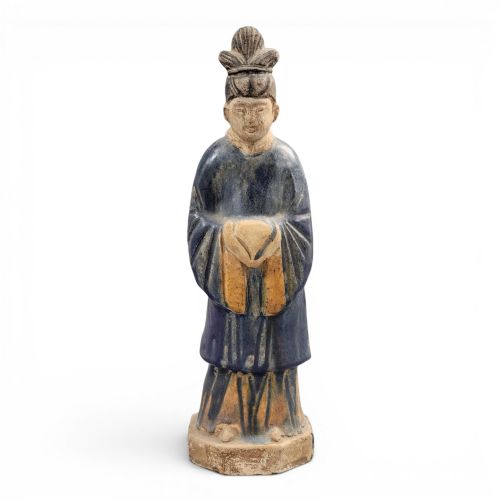
The selections available here range from pre-sixteenth century Chinese tomb figures to nineteenth-century French and German porcelain groups. You meet figures modelled as court attendants, musicians, and gallants alongside vases decorated with court scenes.
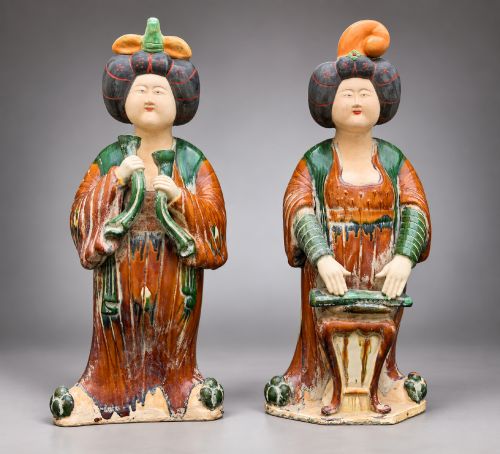
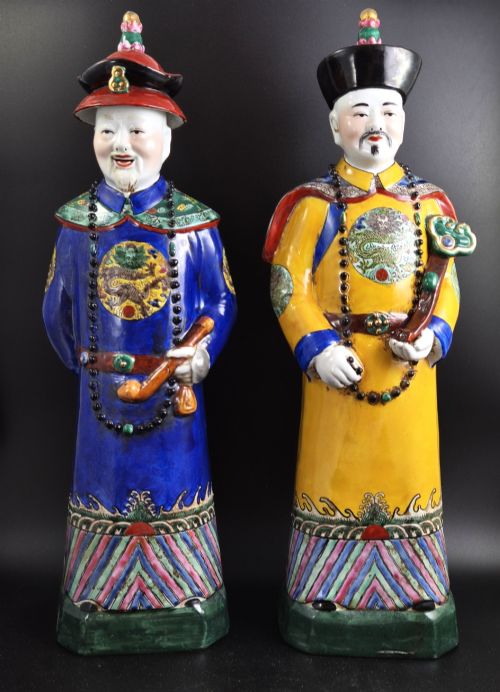
European factories produced glazed and biscuit porcelain figures reflecting rococo styles and Victorian tastes, while Asian works include sancai glazes and famille rose palettes. Each piece records the dress and posture of its period, whether created for a tomb or a mantelpiece.
Materials and construction methods
Potters shaped these figures from earthenware, hard-paste porcelain, and terracotta, applying lead glaze, enamel, and gold leaf for surface decoration. French and German factories utilised biscuit porcelain and intricate lace techniques, while Chinese works relied on sancai glazes.
Makers formed sculptures in moulds or modelled them by hand, adding details such as moriage work on Japanese Satsuma vases and hand-painted enamels on French porcelain. Firing temperatures determined whether the ceramic matured into dense stoneware or translucent porcelain.
The listings span periods from pre-sixteenth century Chinese dynasties to the Victorian era, utilising hard-paste porcelain, earthenware, and terracotta.
Distinctions in craftsmanship and finish
Quality rests in the crispness of the modelling, the control of the glaze, and the precision of the hand-painted enamels. Superior examples show refined facial expressions, delicate hand placement, and careful application of gold leaf or moriage.
Bourdois & Bloch Paris·Letu & Mauger Paris·La Coutille Factory·Volkstedt Porcelain·Meissen porcelain·Triebner Ens & Co·Ludwigsburg porcelain
The Antique Ceramic Court Figures Glossary
- Biscuit
- Unglazed porcelain fired once to produce a matte, white surface resembling marble. This finish was favoured for classical and romantic figures.
- Sancai
- A three-colour lead glaze technique characteristic of Chinese pottery, typically combining amber, green, and cream tones. Potters applied this glaze directly to the clay body.
- Moriage
- A Japanese decorative technique where slip is piped onto the ceramic surface to create raised patterns. This method often highlights robes and borders on Satsuma ware.
- Faience
- Tin-glazed earthenware produced in France and other European regions. It provides an opaque white ground for hand-painted enamel decoration.
- Hard-paste porcelain
- A dense, vitrified ceramic composed of kaolin and petuntse fired at high temperatures. European factories adopted this durable material for figures and table wares.
Antique Ceramic Court Figures: Frequently Asked Questions
How do I care for antique ceramic figures?
Dust these pieces gently with a soft, dry brush to prevent accumulation in crevices and painted areas. Avoid using water or liquid cleaners, particularly on items with enamel, gold leaf, or delicate porcelain lace.
Keep figures away from direct sunlight and areas subject to sudden temperature fluctuations. Stable indoor conditions protect the glaze and prevent stress on older ceramic bodies.
What is the difference between Chinese and European figures?
Chinese court figures often served a funerary purpose or recorded imperial attire using earthenware with sancai glazes or famille rose porcelains. These pieces emphasise traditional court roles, attendants, and symbolic forms.
European figures from German and French factories generally served decorative functions in salons and drawing rooms. They depict romantic couples, musicians, and courtiers modelled in glazed or biscuit porcelain.
How can I date an antique porcelain figure?
Examine the base of the piece for factory marks, impressed numbers, and glaze characteristics. Early European works often feature underglaze blue painted marks, while nineteenth-century pieces may display impressed or printed factory ciphers.
Compare the style of the dress, the modelling technique, and the palette with known periods such as the Victorian era or the eighteenth century. Material composition also aids dating, as hard-paste and biscuit porcelain evolved across different manufacturing eras.
Where were these ceramic figures displayed?
European figures stood on mantelpieces, salon tables, and pedestals as conversational and decorative ornaments. Pairs were often arranged symmetrically to adorn furniture in nineteenth-century interiors.
Earlier Chinese figures served different roles, originating inside tombs as funerary attendants meant to accompany the deceased. Later export pieces and vases found places in European cabinets and display rooms.