

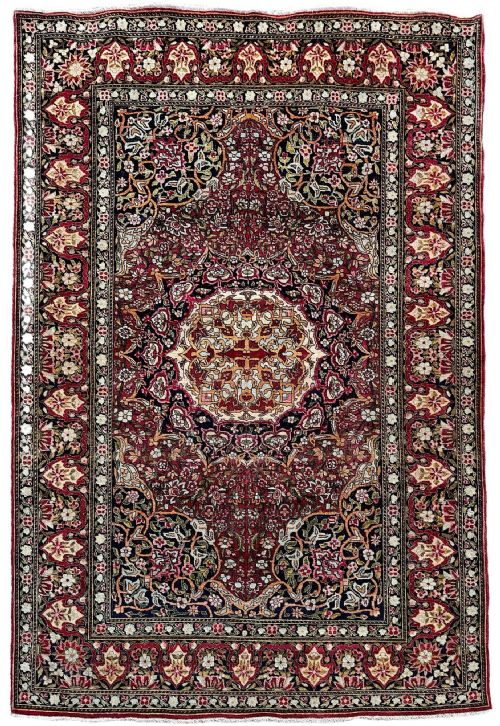
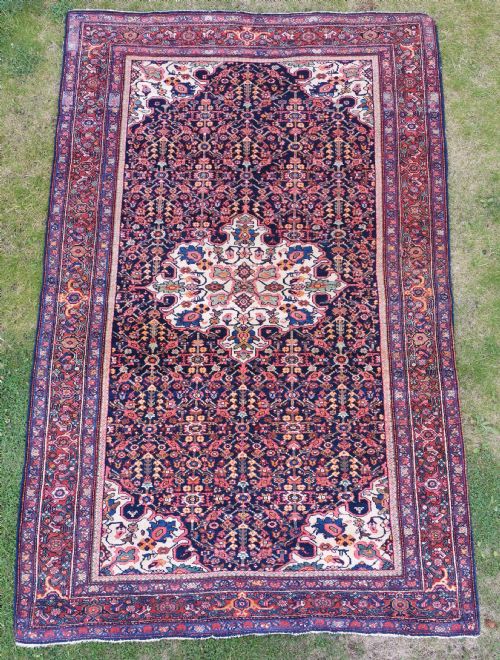
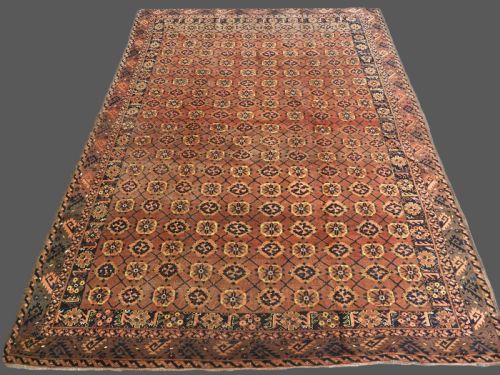
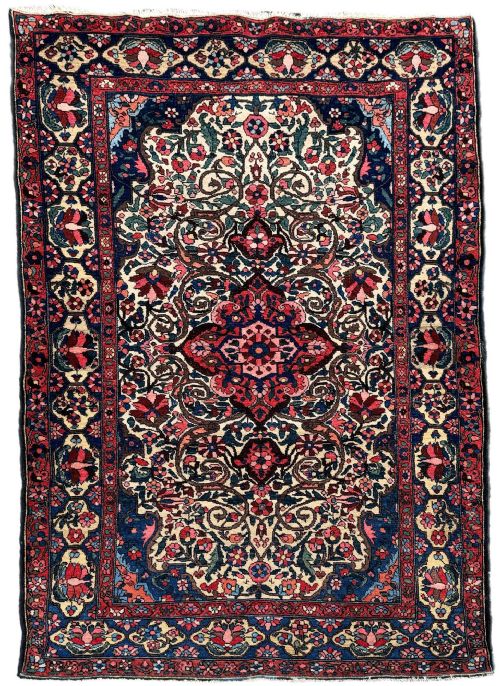


Antique Central Persian Rug
An antique central persian rug brings centuries of woven artistry into a room, offering rich colours and intricate patterns that anchor a traditional interior.
Antique Central Persian Rug
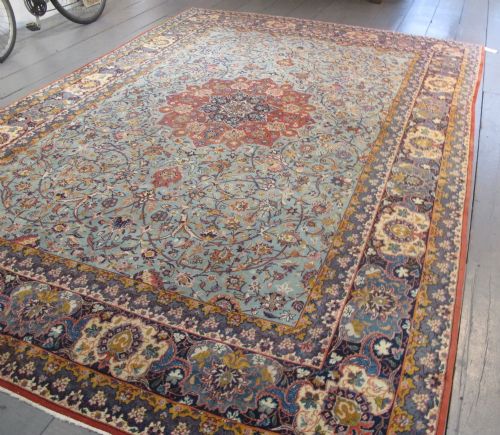
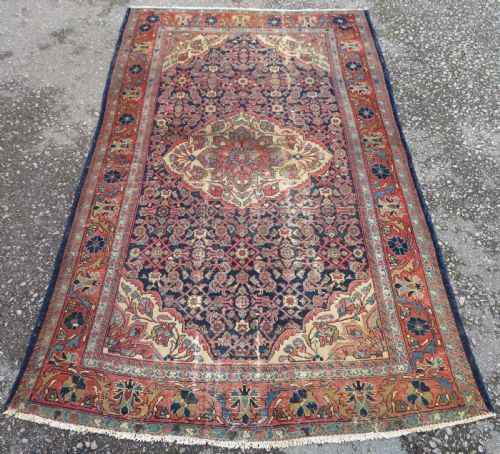
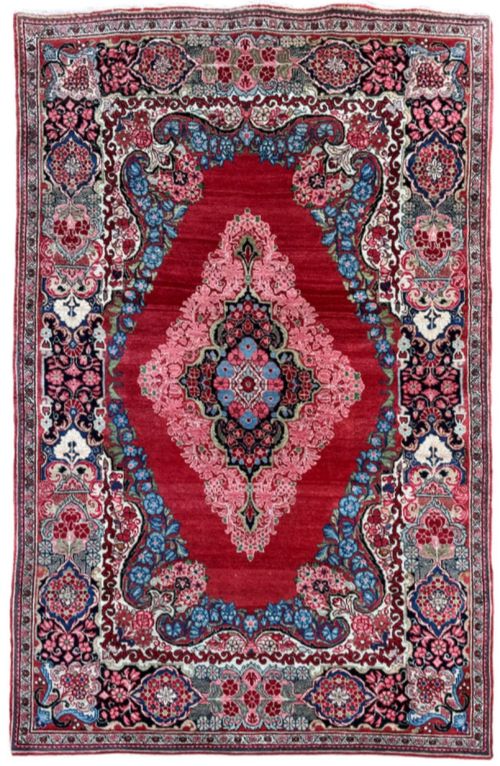
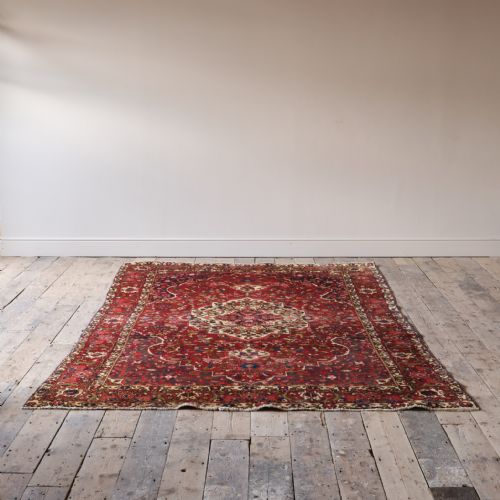
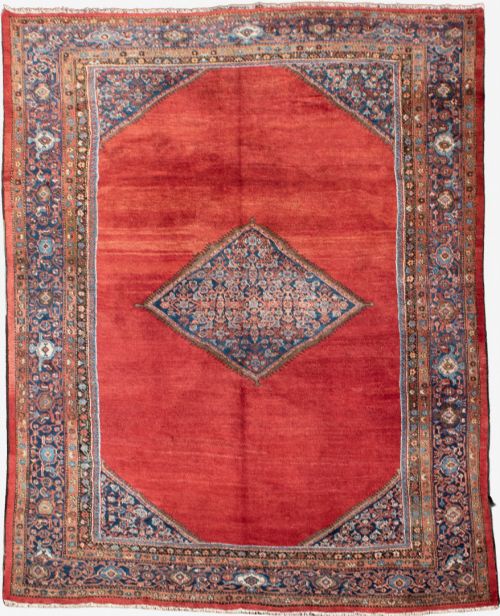
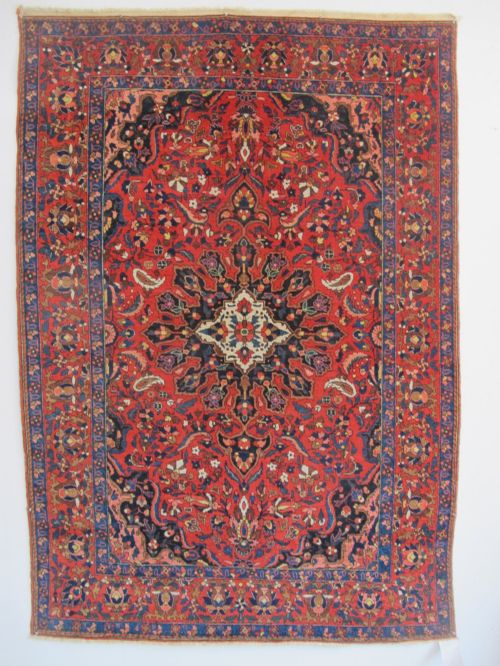
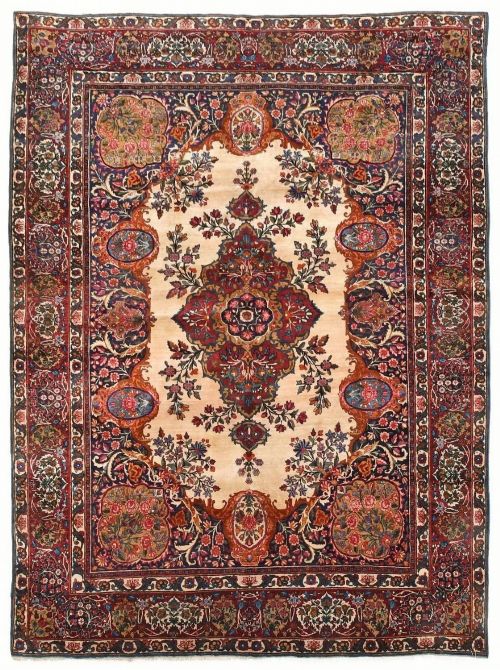
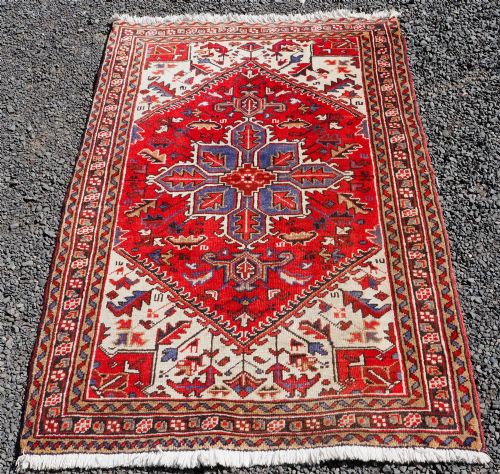
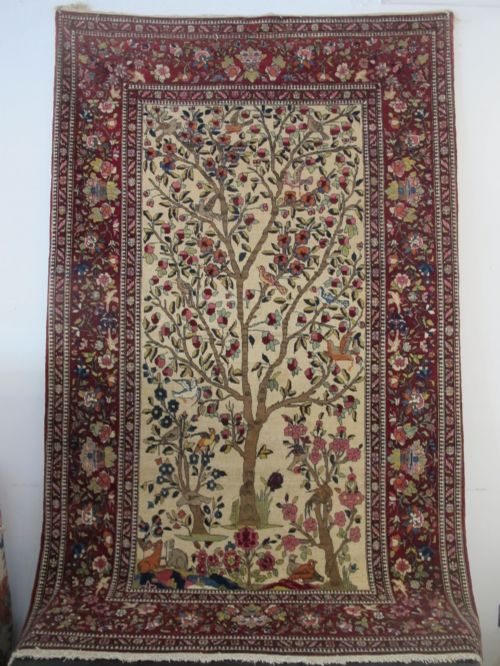
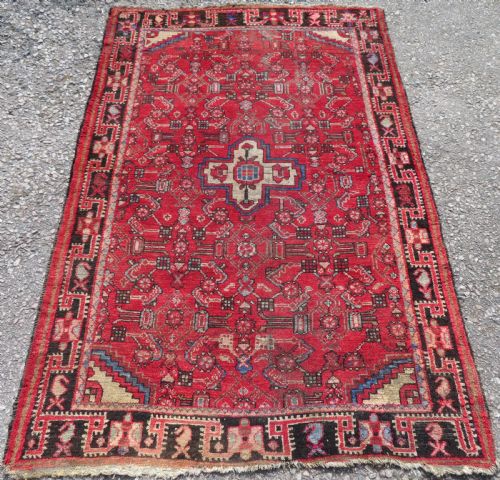
When searching for an antique central persian rug, buyers encounter floor coverings originating from historic weaving centres such as Isfahan, Kashan, Tabriz, and Bakhtiar. These textiles span periods from the nineteenth century through the early decades of the twentieth century, appearing as smaller area formats or room-size carpets.
The most common examples on this page are wool rugs and carpets created in traditional Persian styles, often featuring characteristic central medallions, floral motifs, or garden designs. Woven by hand in urban workshops and village communities, these pieces reflect regional aesthetics passed down through generations.
Alongside standard floor rugs, the selection includes specialised forms such as runner rugs, bag faces, and embroidered bread sofreh textiles. Each piece demonstrates the diverse utility of historical Persian weaving traditions, accommodating different spatial requirements within a home.
How they were made
Makers constructed these rugs predominantly using wool and cotton foundations, tying hand-knotted piles to create dense, durable surfaces. Silk also appears in specific finer examples, yielding softer textures and more intricate detail work.
Dyers utilised natural dyes to achieve deep rust backgrounds, blues, and earth tones that mellow gradually over time. This reliance on plant and mineral colourants provides the characteristic palette found across nineteenth and early twentieth-century Persian textiles.
Antique Central Persian Rug Retail Price Guide 2026
Typical asking prices for central persian rug among the pieces listed under this phrase on Sellingantiques today, from the lower quarter to the upper quarter. They describe what is for sale here now, not the wider market.
What varies in quality
Knot density and precision of execution distinguish finer carpets from standard village work, dictating how sharply the floral and geometric motifs render. Superior pieces display exceptional handle and meticulous symmetry in their central medallions.
The choice of materials significantly influences a piece, with high-grade wool and pure silk yielding greater resilience and luminosity. Purity of natural dye application determines the richness of the background hues and the overall visual depth of the textile.
Ahmadi
The Antique Central Persian Rug Glossary
- Medallion
- A central ornamental motif dominating the field of the rug. It serves as the primary focal point around which secondary floral and geometric patterns unfold.
- Pile
- The upright yarn loop surface forming the nap of the rug. This cut or uncut fibre layer determines the tactile softness and protects the structural foundation underneath.
- Warp
- The stationary lengthwise threads stretched tightly on the loom. Weavers knot the pile yarns directly onto these parallel foundation strands.
- Weft
- The horizontal threads passed across the warp strands between rows of knots. Beating these down firmly secures the structure of the woven textile.
- Sofreh
- A specialised cloth used for spreading meals or handling bread. These flatwoven or embroidered pieces originate from domestic traditions rather than commercial floor use.
Antique Central Persian Rug: Frequently Asked Questions
How do I style a central persian rug?
Place the rug in a living room, dining area, or study where foot traffic remains moderate to light. Allow surrounding wooden floors or neutral furnishings to frame the rich colours and traditional patterns without visual competition.
Keep the textile away from direct, harsh sunlight to preserve the natural dyes. Rotate the piece periodically to ensure even wear across the surface over the years.
How do I clean an antique rug?
Vacuum the rug gently using a suction-only attachment without a rotating brush bar. This removes embedded dust while protecting the delicate hand-knotted wool pile from physical damage.
Consult a specialist professional experienced in antique textiles for deeper washing or stain removal. Household cleaning agents can permanently damage natural dyes and fibres.
How can I tell regions apart?
Examine the palette, drawing style, and structural characteristics to identify the origin. Isfahan and Kashan pieces typically display refined floral curves, while Bakhtiar or Hamadan examples often show bolder, structured geometric compartments.
Look closely at the knotting technique and foundation materials visible on the reverse. Regional weavers maintained distinct technical preferences that help pinpoint the weaving centre.
What is a garden design rug?
Garden design carpets feature compartments depicting stylized trees, flowers, and water channels representing traditional Persian paradise gardens. These structured layouts break the central field into distinct rectangular or diamond-shaped panels.
Each compartment contains detailed botanical motifs executed with careful precision. This symbolic imagery connects the textile directly to historic courtyard garden architecture.