

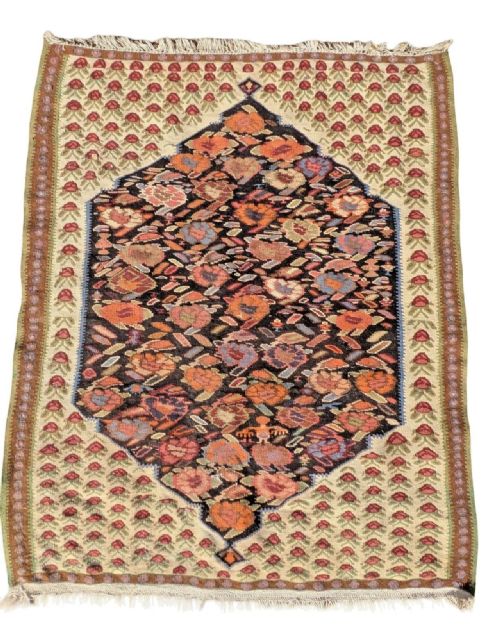
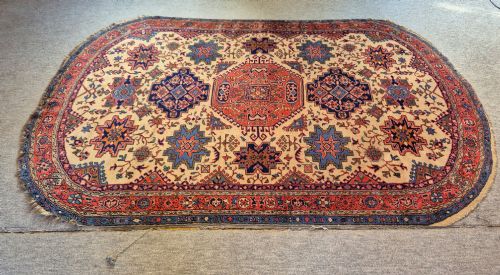
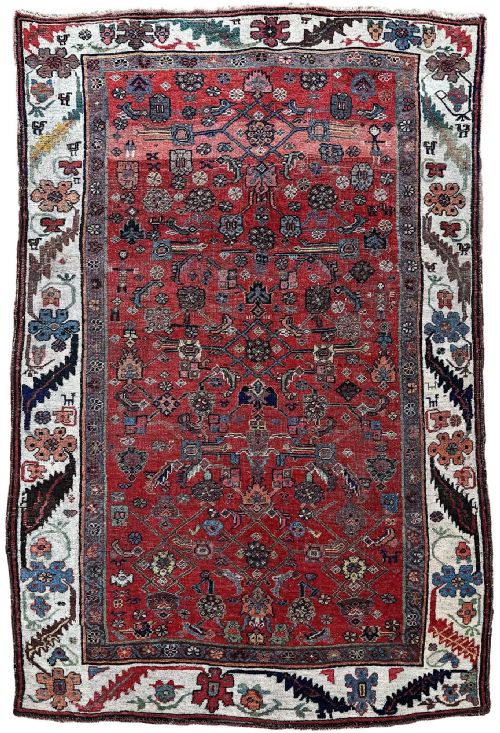
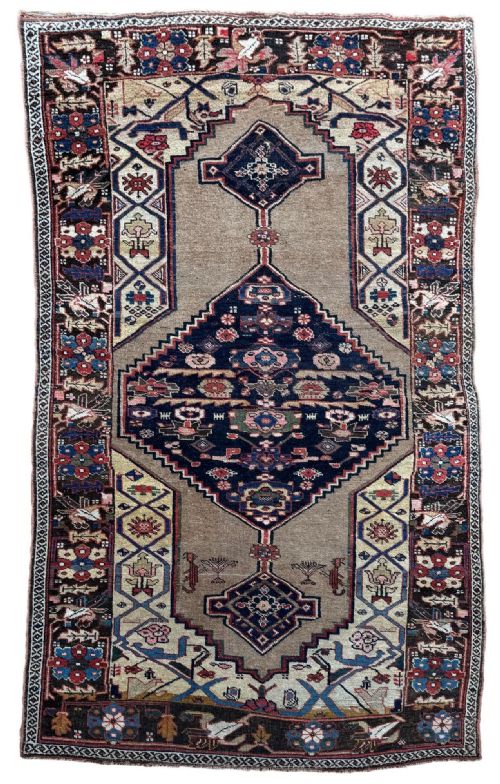
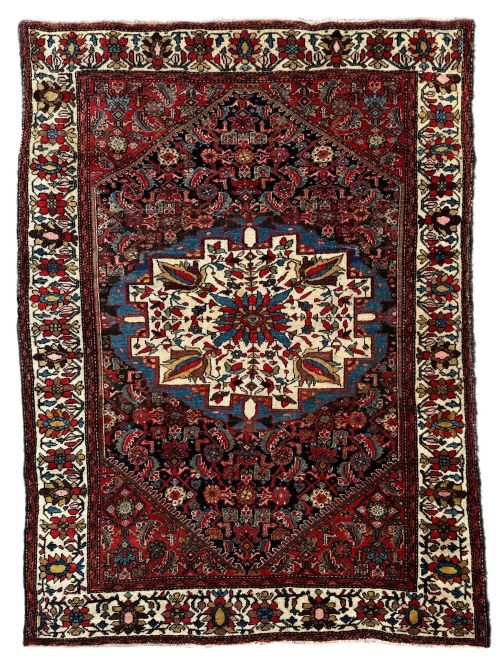


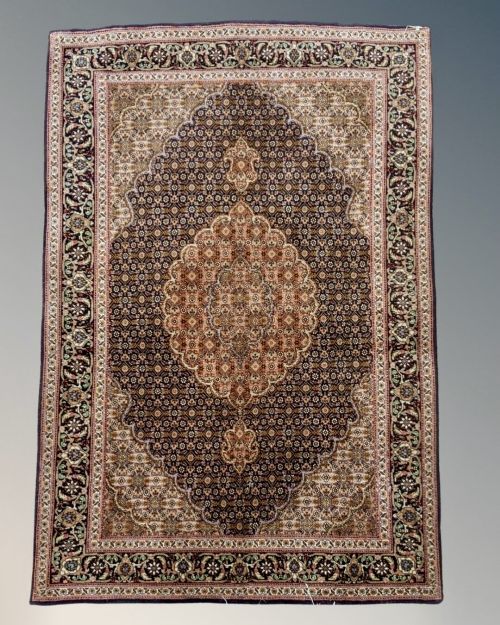


Bidjar Wool Carpet
These heavy, durable examples of a bidjar wool carpet demonstrate the remarkable resilience of Kurdish weaving from Persia.
Bidjar Wool Carpet
A bidjar wool carpet represents the robust output of Kurdish weavers operating in and around the town of Bidjar in Persia. Buyers searching this phrase encounter substantial village and tribal formats, ranging from small bag faces and scatter rugs to expansive kelleh carpets and oversized floor coverings.
The pieces available span from the late nineteenth century into the early twentieth century, capturing traditional Persian designs created by Kurdish hands. Village workshops and nomadic makers produced these dense textiles to withstand heavy daily use while retaining intricate field patterns.
Most examples adopt classical Persian layout traditions, though executed with the heavier proportions characteristic of Kurdish tribal artistry. Buyers find both room-sized carpets and elongated runners designed for corridors and halls.
Materials and construction
Weavers built a bidjar wool carpet using wool piles set upon sturdy cotton foundations. This pairing of materials provided the heavy, rigid structure that distinguishes the weave from more flexible urban Persian carpets.
The signature durability arises from heavy packing of the wefts during knotting, which forces the pile to stand upright. This technique creates an exceptionally dense fabric that resists crushing and wear over decades of use.
Bidjar Wool Carpet Retail Price Guide 2026
Typical asking prices for bidjar wool carpet among the pieces listed under this phrase on Sellingantiques today, from the lower quarter to the upper quarter. They describe what is for sale here now, not the wider market.
An occasional lemon ground colour brightens the palette among these traditionally deep red and navy Persian village weaves.
Assessing quality and character
Quality in these carpets rests upon the tightness of the knotting and the resulting density of the wool pile. Tighter packing yields a stiffer, heavier handle that defines the best specimens.
Visual appeal depends on the handling of traditional dyes and the clarity of the tribal motifs across the field. Unusual ground colours, such as lemon hues, introduce distinct character to individual pieces.
The Bidjar Wool Carpet Glossary
- Kelleh
- A large rectangular carpet format, typically longer and narrower than standard room-sized carpets. These long proportions suit traditional hallway and reception spaces.
- Kilim
- A flat-woven textile produced without a raised pile. These pieces offer lighter weights and distinct geometric patterning.
- Garrus
- A specific regional sub-style associated with large carpets featuring Herati motifs and grand scale. These oversize formats often display bold medallion layouts.
- Bag face
- The functional front panel of a storage sack produced by nomadic tribes. These small formats preserve intricate village designs in miniature proportions.
Bidjar Wool Carpet: Frequently Asked Questions
How do I clean a bidjar wool carpet?
Regular gentle vacuuming without a beater bar removes surface dust and grit from the dense wool pile. Professional specialist cleaning remains essential for deep maintenance.
Avoid saturation and harsh chemical treatments, which damage the traditional wool fibres and cotton foundations. Specialist care preserves the integrity of the heavy weave.
Where were these carpets made?
These textiles originated in the town of Bidjar and the surrounding Kurdish villages in western Persia. Local tribal weavers adapted classical Persian motifs into robust village formats.
Production spanned local workshops and nomadic encampments across the region. The resulting pieces reflect distinct Kurdish interpretations of traditional Persian design.
Are these carpets suitable for heavy traffic?
The exceptionally dense wool pile and rigid cotton foundation make these carpets well-suited for busy areas. Their heavy construction resists crushing under substantial foot traffic.
Proper rug underlays help protect the sturdy structure on hard flooring surfaces. This inherent resilience explains their survival from the nineteenth century onward.
What defines a kelleh carpet?
A kelleh represents a specific room-sized format characterised by an elongated rectangular proportion. These substantial pieces served traditional Persian domestic interiors.
They offer greater length than standard carpets while maintaining narrower widths for specific room layouts. The scale accommodates large open floor spaces.