



Antique Cattle Artwork
Antique cattle artwork brings the texture of rural pastoral life into a room through oil and watercolour portrayals of livestock.
Antique Cattle Artwork
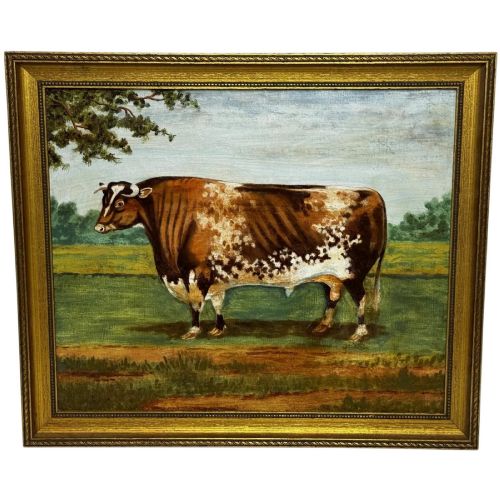
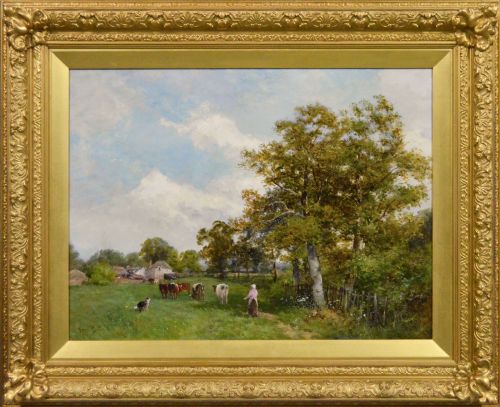
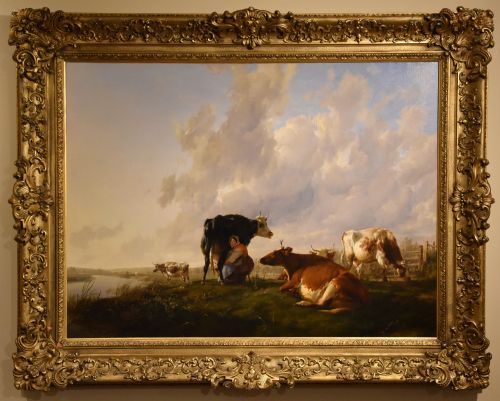
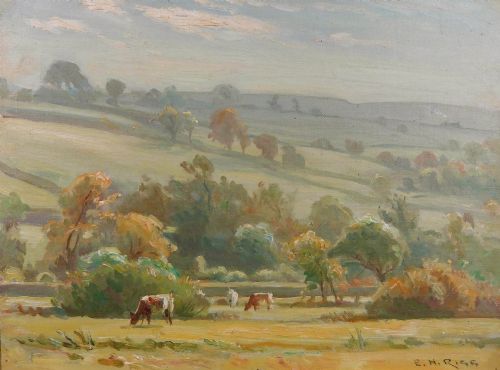
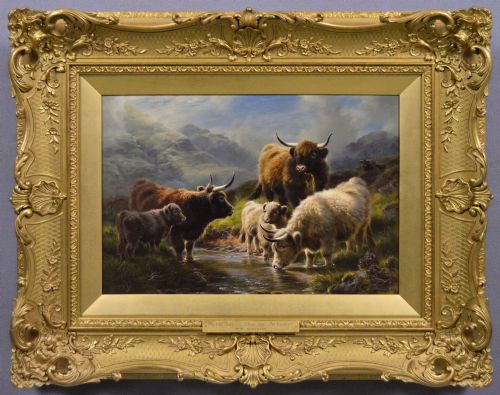
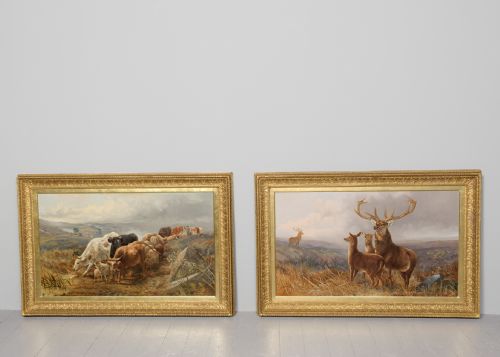
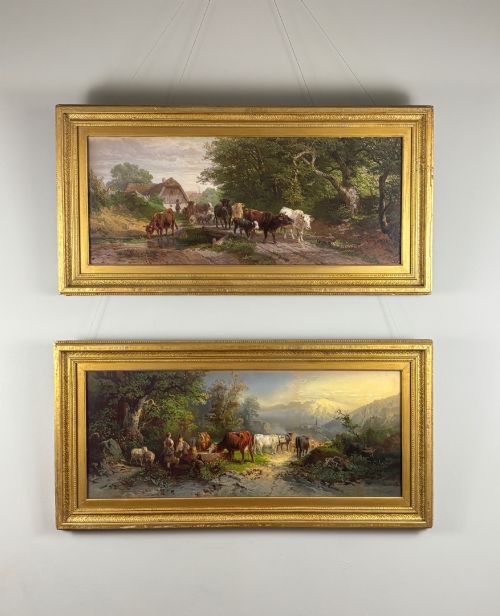
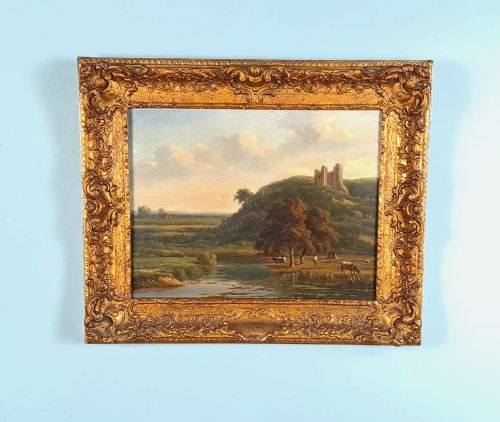
Antique cattle artwork comprises paintings and watercolours depicting herds, bulls, and cows within British and European landscapes. These works span the nineteenth century and the early decades of the twentieth century, reflecting a strong agricultural interest in pastoral subjects.
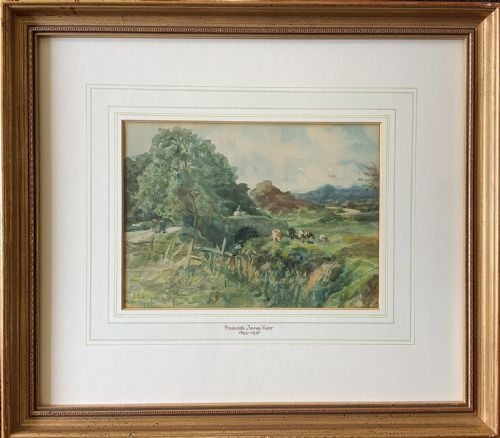
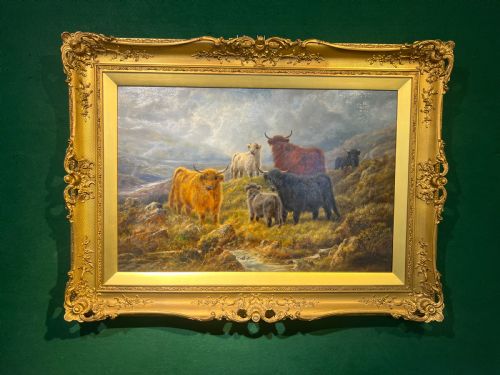
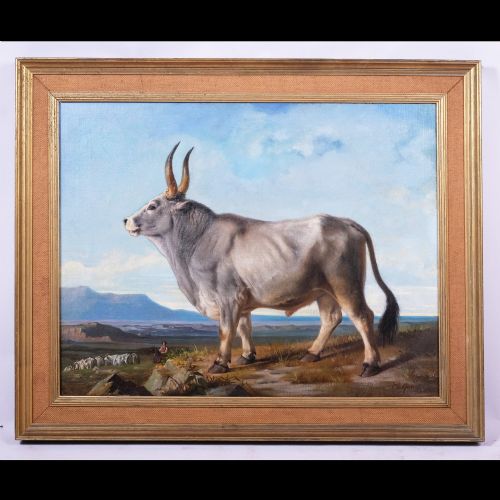
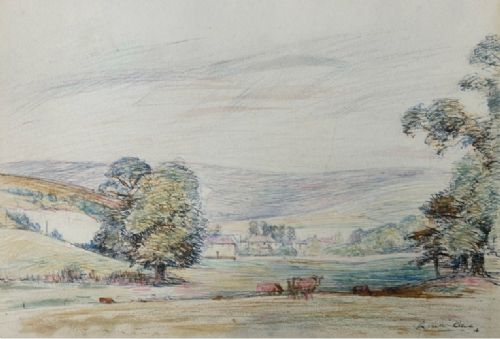
The most common form on this page is the oil painting on canvas, often set within a giltwood and gesso frame. Watercolours on paper also appear frequently, capturing scenes of farming and riverbanks.
The styles range from Victorian pastoral and nineteenth-century realism to early British impressionism. Makers and artists documented prize shorthorns, highland cattle, and ploughing beasts against specific regional backdrops.
How they were made
Artists applied oil paint onto stretched canvas or wood panels, building up layers of pigment to capture the texture of animal hides and atmospheric weather. Watercolours utilised pigment on paper, relying on washes of light to delineate rivers and fields.
Finished works found their houses in wooden frames enriched with gesso mouldings and gold leaf. These frames frequently carry the weight and ornamentation typical of the Victorian and Edwardian periods.
The listings combine oil paintings and watercolours spanning the nineteenth century up to the nineteen-thirties, executed on canvas, wood, and paper.
What varies in quality
Quality rests in the anatomical accuracy of the animals and the handling of light across the landscape. The most accomplished works convey the distinct weight and musculature of breeds like shorthorns and highland cattle rather than generic shapes.
Depth of background detail and compositional balance separate standard topographical records from masterworks. Brushwork in the surrounding foliage and skies demonstrates the painter's skill in integrating the livestock into the wider environment.
Thomas Sidney Cooper·Robert Watson·Henry Robinson Hall·David Bates·Johann Friedrich Voltz
The Antique Cattle Artwork Glossary
- Giltwood
- Wood carved and coated with gold leaf. This material forms the primary structure of many period picture frames.
- Gesso
- A plaster mixture applied to wood frames before gilding. It provides a smooth base for intricate decorative moulding.
- Realism
- An artistic movement focusing on everyday subjects without idealisation. In these works, it manifests in the truthful depiction of farm labour and livestock.
- Pastoral
- A genre celebrating rural life and shepherd scenes. Paintings under this term emphasise calm countryside settings with grazing animals.
Antique Cattle Artwork: Frequently Asked Questions
How do I identify a Victorian cattle painting?
Victorian cattle paintings typically feature heavy giltwood and gesso frames combined with rich, dark oil palettes. The subjects often highlight prized livestock breeds rendered with nineteenth-century realism.
Look for detailed background landscapes such as Scottish lochs or pastoral river valleys that place the animals in a distinct British or European setting.
Where should I hang antique cattle artwork?
These works suit dining rooms, studies, or living spaces with traditional architectural details. Their rural subjects complement wooden furniture and neutral wall colours.
Keep the paintings away from direct sunlight and excessive moisture to protect the oil paint and paper watercolours over time.
What is the difference between oil and watercolour?
Oil paintings utilise pigments bound in drying oils applied to canvas or wood boards, offering thick textures and deep colour saturation. Watercolours use water-soluble pigments on paper, producing lighter, translucent effects.
Watercolours require protective glass framing, whereas oil paintings on canvas remain open to the air within their decorative surrounds.
How do I care for a giltwood frame?
Dust giltwood and gesso frames gently with a dry, soft brush to prevent accumulation in the carved crevices. Avoid chemical cleaners or moisture, which can damage the underlying gold leaf.
Check the hanging wire and structural joints periodically to ensure the heavy frame remains secure on the wall.