

Antique Castored Library Chair
An antique castored library chair brings serious historical character and deep-seated comfort to a room, offering a sturdy yet mobile seat designed for long hours of reading.
Antique Castored Library Chair
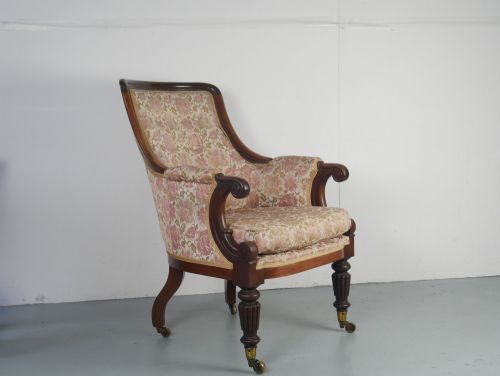
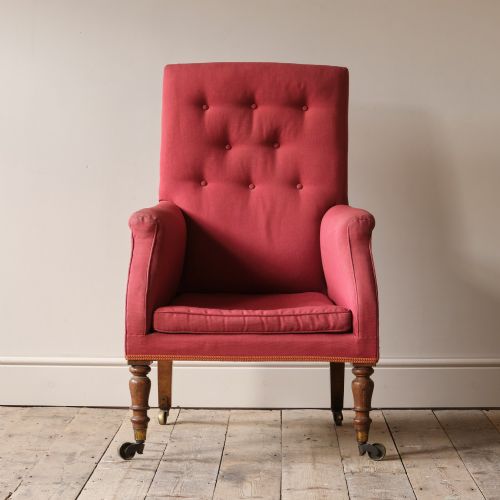
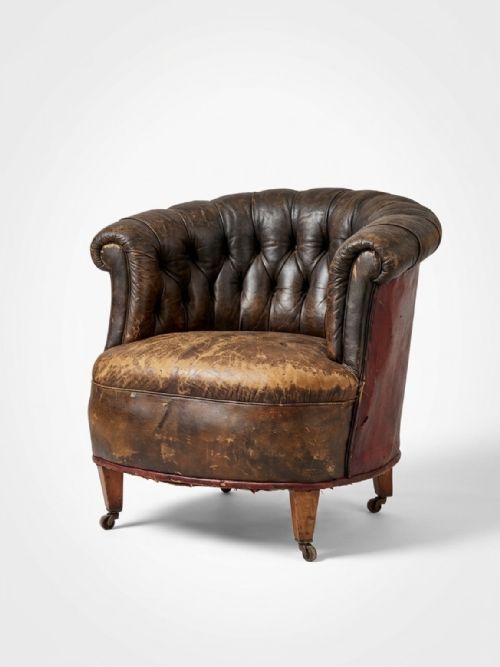
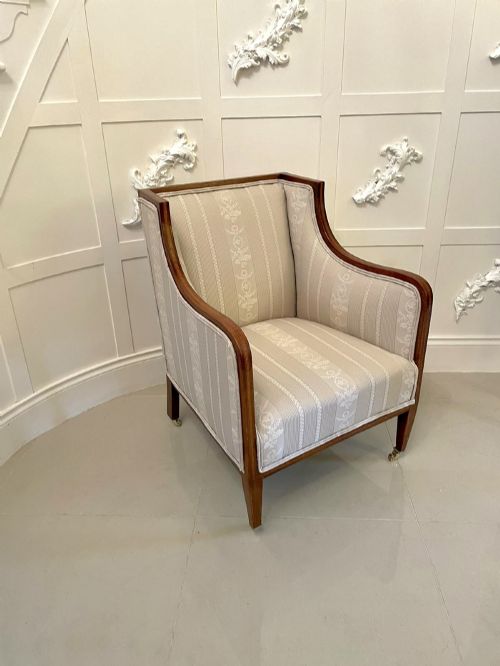
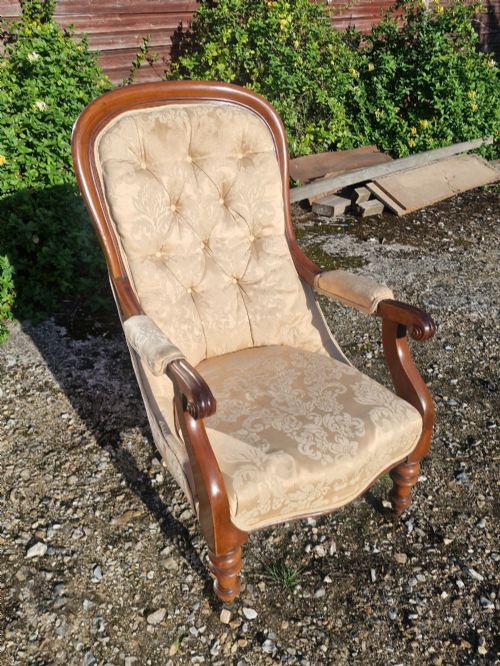
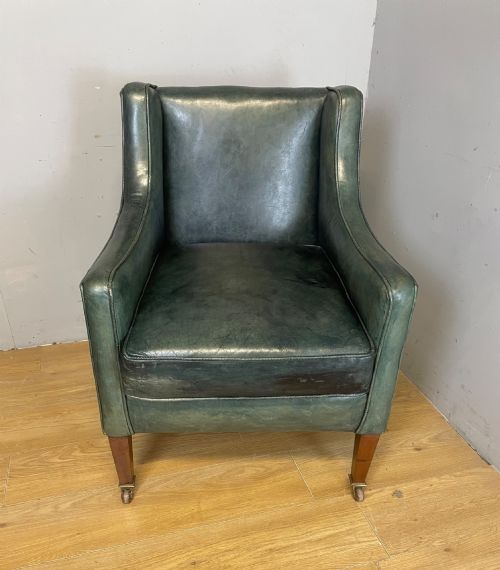
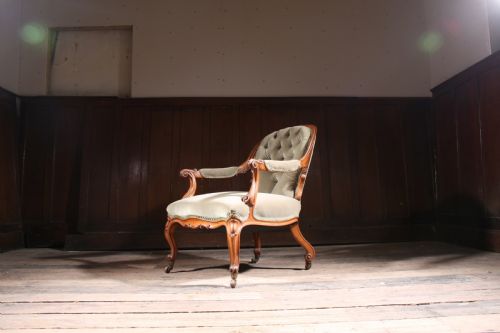
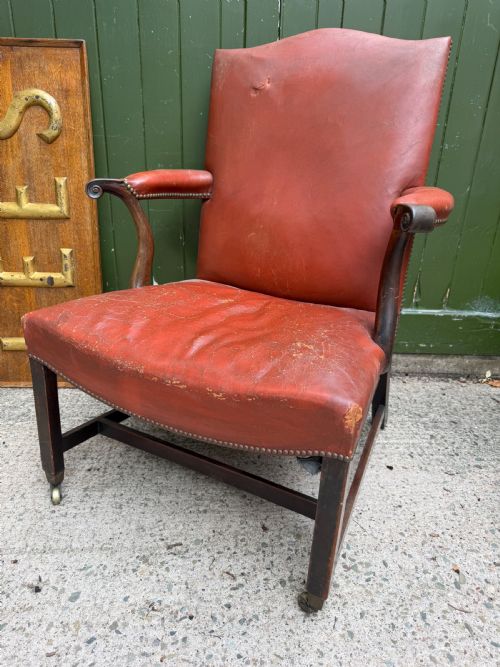
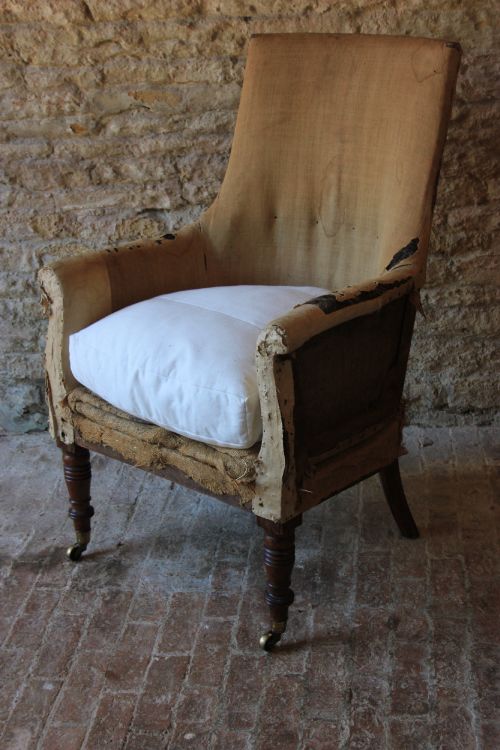
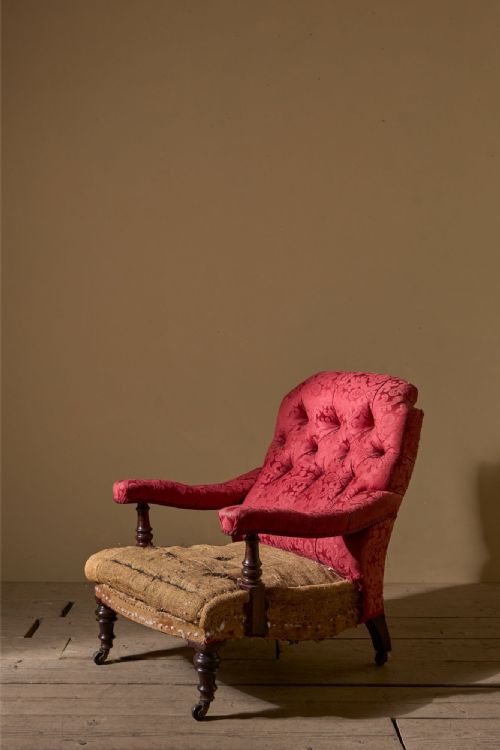
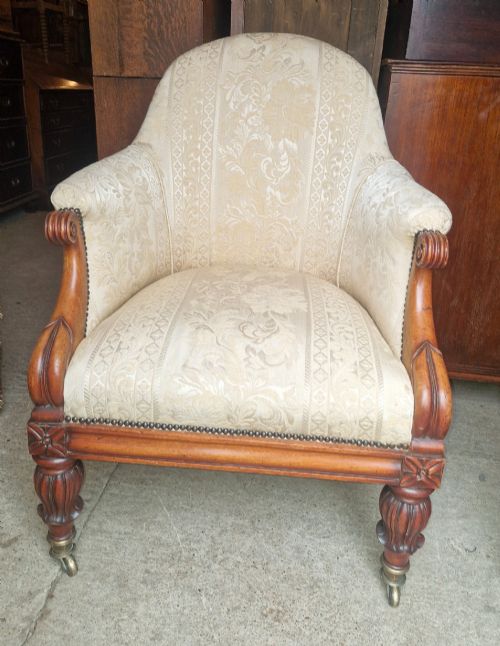
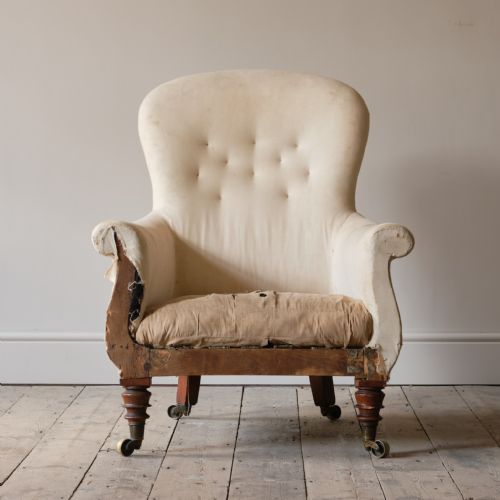
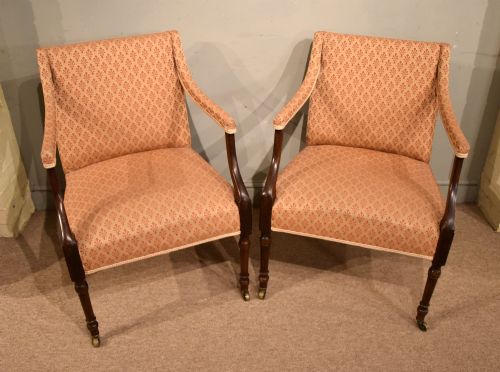
An antique castored library chair combines solid timber frames with functional wheel attachments, designed to move easily across study floors and large rooms. You will encounter substantial timber frames built during the Regency, William IV, and Victorian periods, often taking the form of open armchairs, desk chairs, or deep-seated country house models.
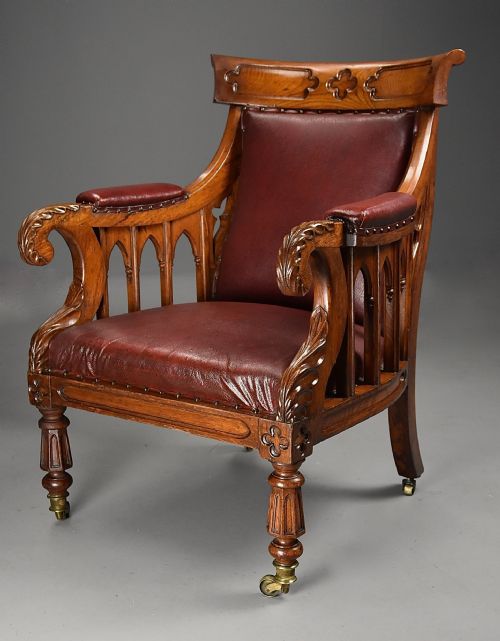
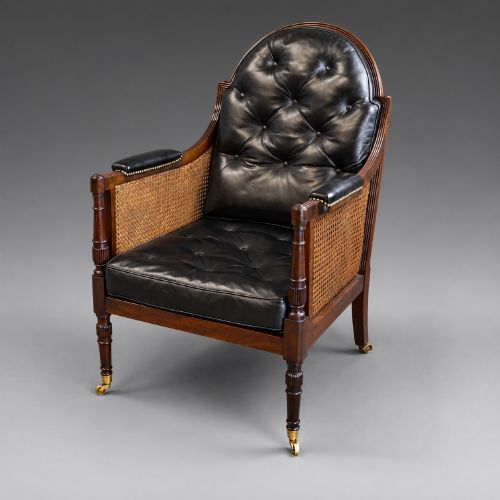
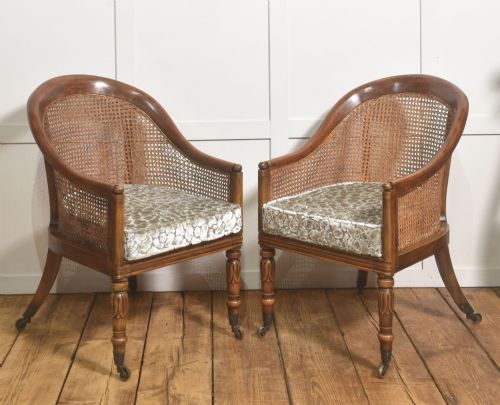
The most common forms on this page include mahogany and oak armchairs upholstered in leather or fabric, alongside caned bergère models. These pieces bridge the gap between formal drawing-room seating and heavy desk chairs, reflecting the domestic habits of nineteenth-century readers and writers.
Originating largely from English workshops, these chairs range from grand George III mahogany frames to late Victorian oak captain's chairs. Buyers searching for an antique castored library chair seek both the architectural presence of the period and the practical utility of wheeled mobility.
Materials and construction
Cabinet makers utilised dense hardwoods like mahogany, walnut, rosewood, and golden oak to build frames that could withstand heavy daily use. These timbers were turned, carved, and joined with traditional methods to support deep upholstery or woven cane panels.
Metal castors, predominantly cast in brass, were fitted to the base of the legs to allow smooth movement across carpets and wooden floors. Upholstery materials included red or green leather, calico, hessian, velvet, and fabric, often secured with traditional stuffing and buttoning techniques.
Antique Castored Library Chair Retail Price Guide 2026
Typical asking prices for castored library chair among the pieces listed under this phrase on Sellingantiques today, from the lower quarter to the upper quarter. They describe what is for sale here now, not the wider market.
Many a nineteenth-century reader likely nodded off behind these very armrests, trusting the brass castors to hold firm.
Assessing quality and character
Quality rests in the harmony of proportion, the integrity of the timber frame, and the retention of original brass castors. Superior examples display refined carving, well-figured mahogany or oak, and harmonious scaling that balances comfort with structural support.
The distinction between ordinary utility seating and top-tier workshop production lies in the precision of the joinery and the selection of materials. Maker attribution and untouched secondary woods further elevate a piece, separating standard nineteenth-century seating from exceptional cabinet work.
Howard and Sons·Morison and Co·Holland and Sons·Hindley and Sons·Gillows
The Antique Castored Library Chair Glossary
- Castor
- A small wheel mounted on a swivel attached to the foot of a chair leg. This mechanism allows the heavy timber seat to glide across a floor without lifting.
- Bergère
- An enclosed armchair with cane or upholstered sides and back. This French-inspired form became popular in English libraries for its light yet supportive structure.
- Gainsborough
- A wide, open-armed armchair with a padded back and seat, typically dating from the eighteenth century. It was designed to accommodate the wide skirts of the period.
- Captain's chair
- A sturdy wooden desk armchair featuring a curved, low backrest supported by small spindles. These chairs often incorporate a revolving mechanism or castors for office use.
Antique Castored Library Chair: Frequently Asked Questions
How do I identify a Regency library chair?
Regency library chairs typically feature clean architectural lines, reeded mahogany frames, and sabre legs fitted with brass castors. They often incorporate cane panels or restrained upholstery reflecting classical Greek and Roman influences.
Look for dark, dense mahogany and robust joinery characteristic of the early nineteenth century. These pieces prioritize structural clarity and mobility over heavy carving.
What is a bergère library chair?
A bergère library chair is an upholstered or caned armchair featuring enclosed sides that provide a supportive, cocoon-like seat. Eighteenth and nineteenth-century versions often combined exposed wood frames with woven cane work.
These chairs were designed for reading rooms and libraries, offering a lighter visual footprint than solid leather armchairs while maintaining deep comfort.
Why do these chairs have castors?
Castors were fitted to heavy library chairs to allow readers to reposition their seats easily near bookshelves, desks, or fireplaces without scratching parquet floors. Brass wheel assemblies were standard on quality nineteenth-century seating.
The inclusion of castors also helped protect thick wool carpets from the immense weight of dense mahogany and oak frames.
How should I care for leather upholstery?
Leather upholstery on antique chairs benefits from regular dusting and occasional treatment with specialist conservation balms to prevent drying and cracking. Avoid placing antique leather near direct heat sources or strong sunlight.
Preserving the original surface patination requires gentle maintenance rather than aggressive cleaning or modern chemical sealants.