

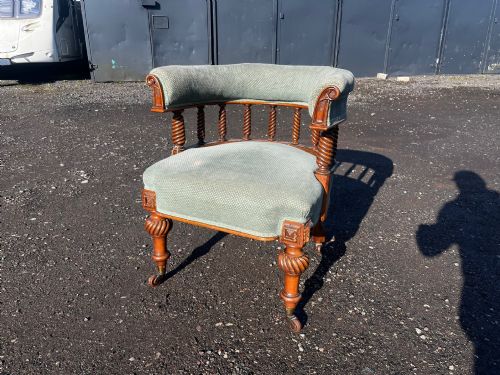


Carved Walnut Library Chairs
Carved walnut library chairs are substantial seating pieces providing comfort and period character for studies and reading rooms.
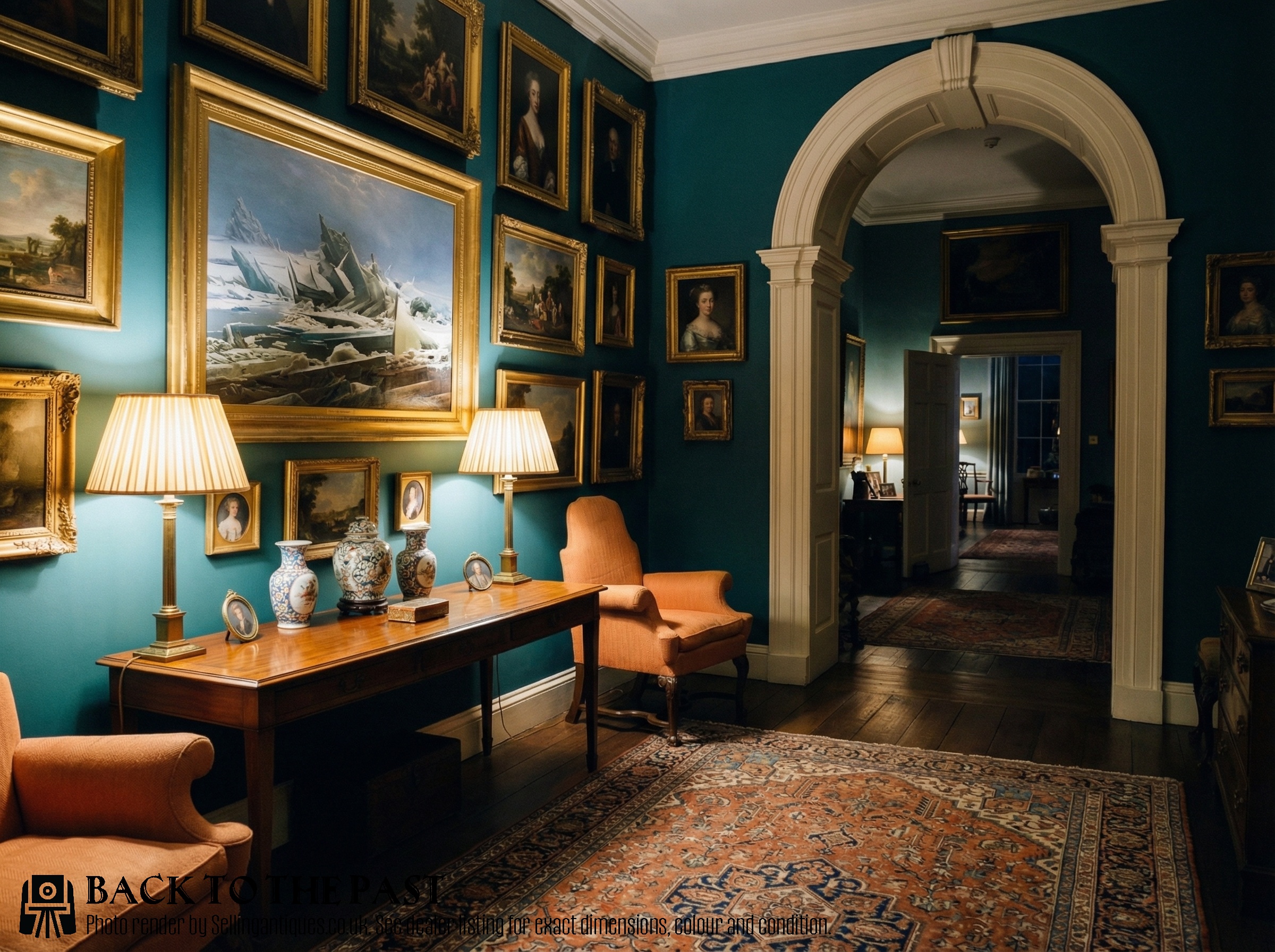
Carved Walnut Library Chairs
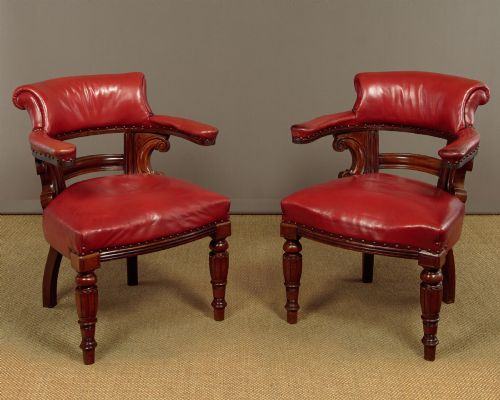
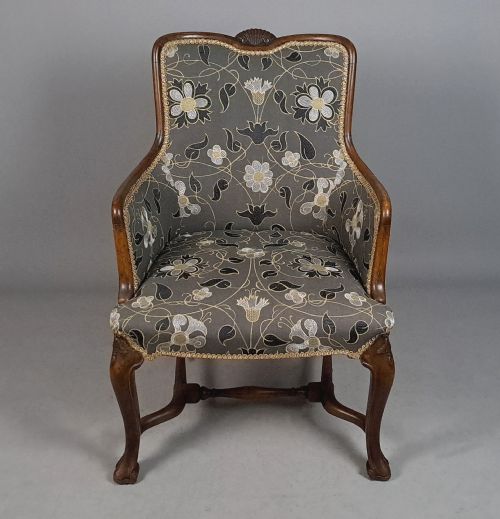
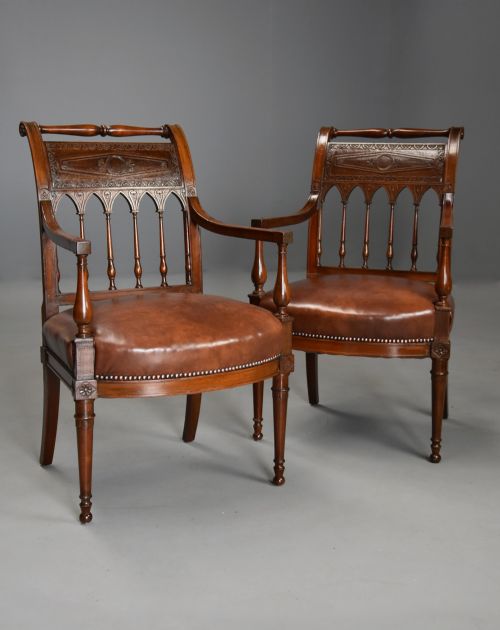
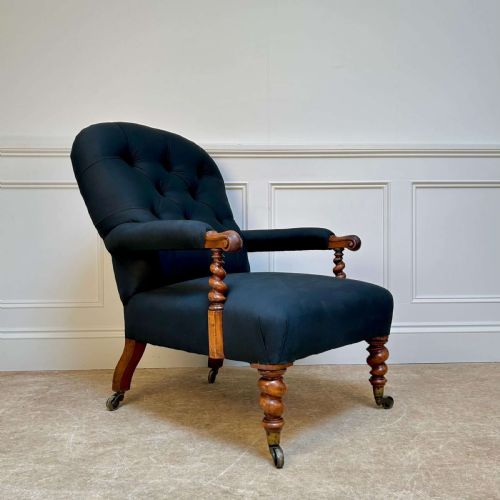
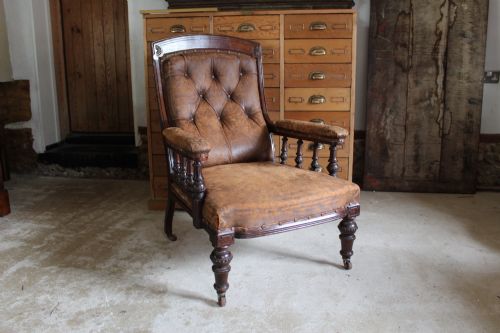
Carved walnut library chairs combine robust timber frames with upholstered elements designed for long hours of reading and study. You will frequently encounter Victorian and late nineteenth-century iterations on this page, often built as desk armchairs or open armchairs.
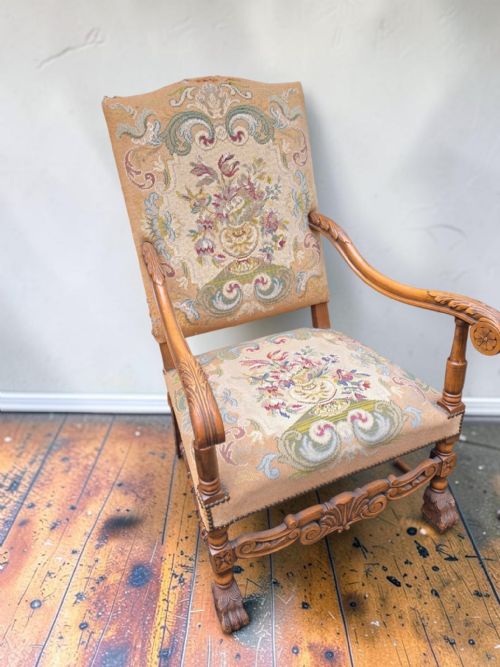
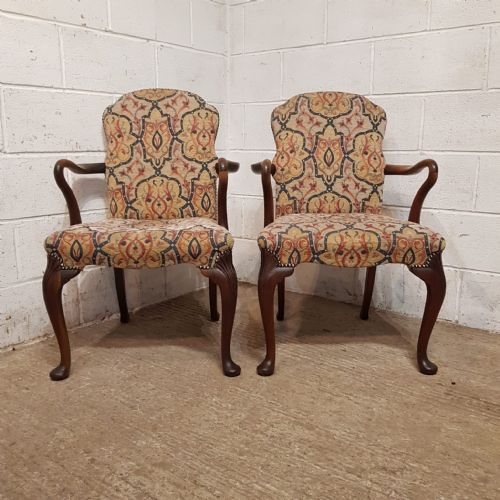
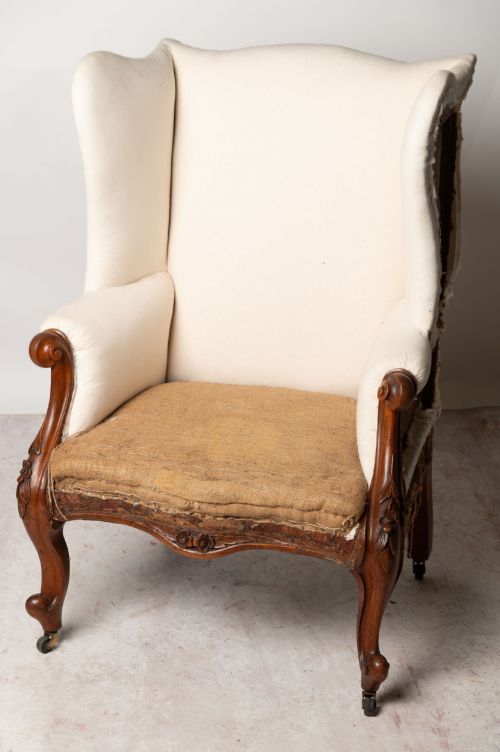
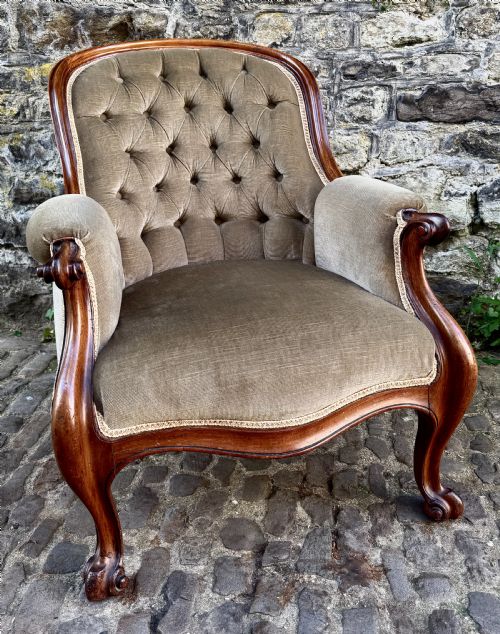
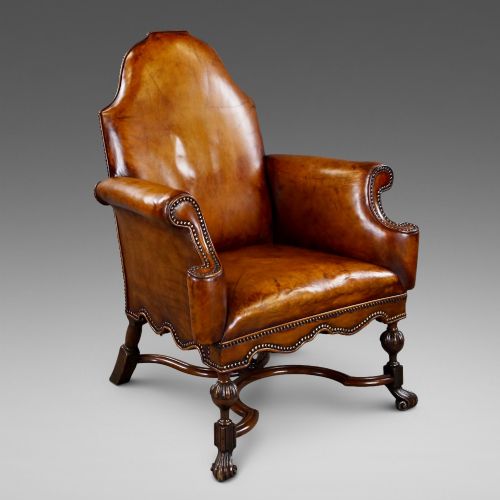
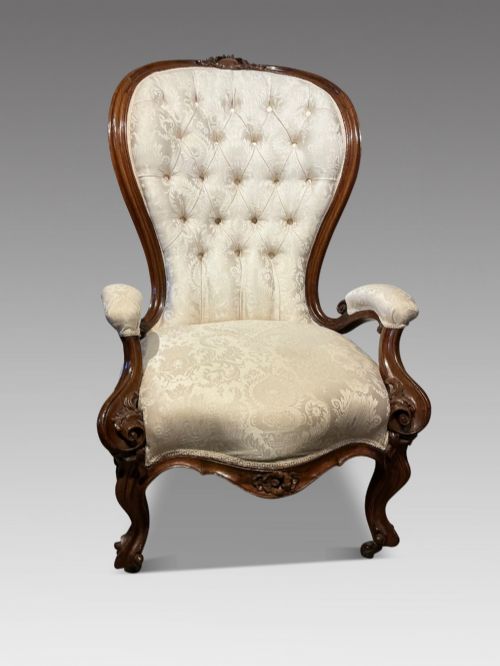
The selections span various revival movements, including Queen Anne, William and Mary, and Victorian Rococo styles, reflecting historical design influences. Forms range from low-backed desk chairs to high-backed wing chairs and sculptural armchairs.
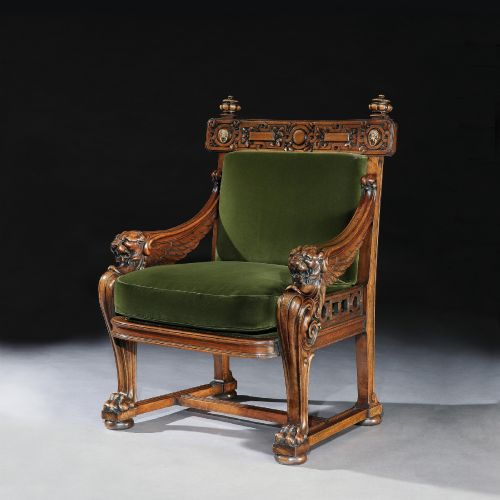
Many examples incorporate leather upholstery, while others feature tapestry fabric, velvet, or traditional textile coverings. Pairs appear alongside single armchairs, offering options for matched seating at a partner desk or fireside.
How they were made
Makers shaped the timber frames from walnut, utilising its dense grain to support intricate hand-carved details along the arms, legs, and crest rails. Joinery techniques such as mortise and tenon ensured structural rigidity for heavy daily use.
Upholstery methods involved stuffing horsehair or wool into textile, leather, or tapestry coverings, secured with brass tacks or button-tufting. Frame accents frequently included carved scrollwork, lion monopodia, or cabriole legs terminating in ball and claw feet.
The archive and current selection demonstrate enduring demand for nineteenth-century French and English reading seats.
What varies in quality
The depth and crispness of the timber carving distinguish standard production from exceptional examples, with hand-tooled execution showing superior definition in floral and figural motifs. The selection of walnut timber itself varies in figure and grain richness across frames.
Integrity of the original frame construction and the fidelity of revival styling dictate the standing of individual pieces. The quality of period upholstery materials, whether supple leather or hand-woven tapestry fabric, alters the character of the chair.
Hindley And Sons
The Carved Walnut Library Chairs Glossary
- Monopodia
- A carved furniture support taking the form of a single animal leg, often ending in a paw or claw.
- Fauteuil
- An open-armed upholstered armchair with exposed wooden framing, originating in France.
- Cabriole leg
- A furniture leg that curves outward in an arc and tapers inward to a decorative foot, typical of revival styles.
- Wing chair
- An upholstered armchair with high back and side panels designed to shield the sitter from draughts.
- Button back
- An upholstery technique where depressions are formed in the padding by stitching or tufting buttons deep into the fabric.
Carved Walnut Library Chairs: Frequently Asked Questions
How do I date a walnut library chair?
Dating relies on examining the stylistic revival motifs, construction joinery, and wear patterns visible on the timber frame and upholstery substructure. Comparing the carved details against documented periods helps establish a reliable timeframe.
Cabinetmaking techniques evolved from hand-sawn elements in the eighteenth century to machine-assisted production by the late Victorian era. Reviewing the specific hardware and upholstery webbing provides further chronological clues.
Are these chairs suitable for daily desk use?
Most of these chairs were originally constructed for reading, correspondence, and study use in domestic libraries or offices. Their sturdy timber frames and supportive upholstered backs accommodate seated work.
Checking the seat height and arm clearance ensures compatibility with modern desks and tables. Many buyers successfully utilise antique desk armchairs for daily tasks in home studies.
What is the difference between an armchair and a wing chair?
Standard armchairs feature open or upholstered sides with armrests, offering a versatile profile for general seating and desk placement. They allow flexible movement and fit easily beneath most library tables.
Wing chairs incorporate high protective side panels flanking the upper back to trap heat and block draughts. This enclosed design makes wing chairs particularly suited for fireside placement.
How should I care for antique leather upholstery?
Maintaining vintage leather involves gentle cleaning with a dry cloth and applying appropriate conservation waxes or leather feeds to prevent cracking. Keeping the material away from direct heat sources preserves its suppleness.
Avoiding harsh chemical cleaners ensures the original finish and patina remain undisturbed over decades of use. Regular dusting prevents particulate buildup within the grain and button tufts.