


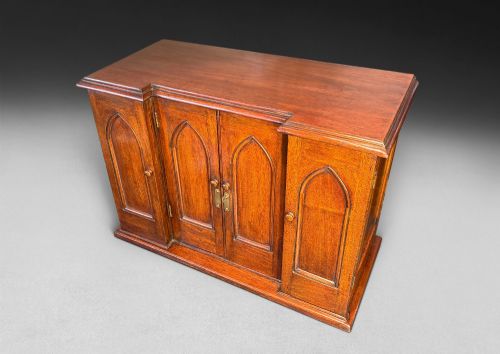
Antique Carved Wood Box
When you search for an antique carved wood box, you meet everything from small table snuffers to heavy oak coffers that held linen and silver.
Antique Carved Wood Box
An antique carved wood box spans domestic containers built for storage, personal grooming and correspondence across several centuries. The selection ranges from small personal items like pocket snuff boxes and tea caddies to substantial oak coffers, blanket chests and side cupboards.
Domestic life shaped these forms, providing secure storage for documents, textiles and valuables before fitted furniture became common. Smaller receptacles accommodated precious materials, while heavy chests served practical household needs in bedrooms and halls.
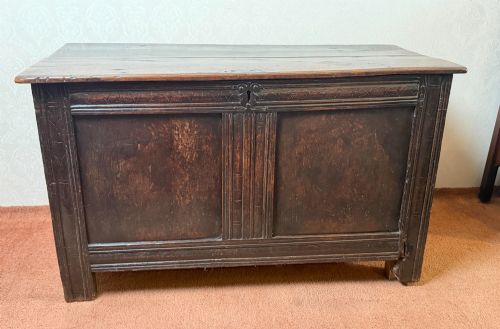
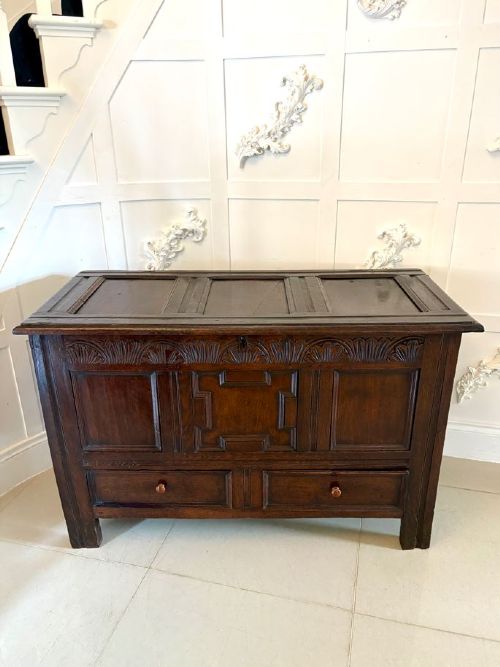
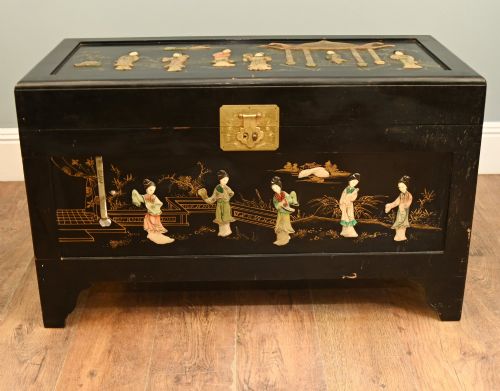
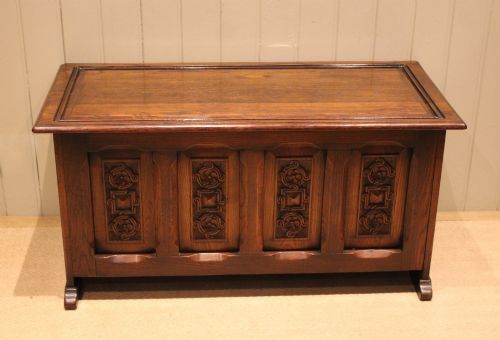
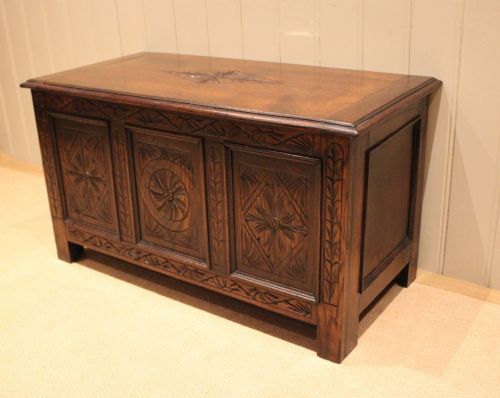
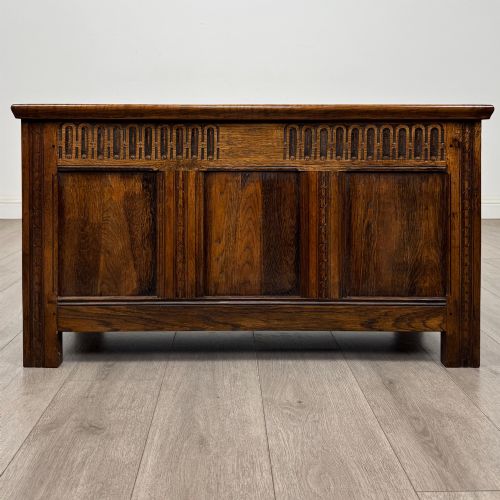
The most prevalent forms on this page include solid oak coffers from the seventeenth and eighteenth centuries alongside Victorian work tables and smaller folk art containers. Regional pieces from India, China and Europe add variety in timber and decorative technique.
What varies in quality
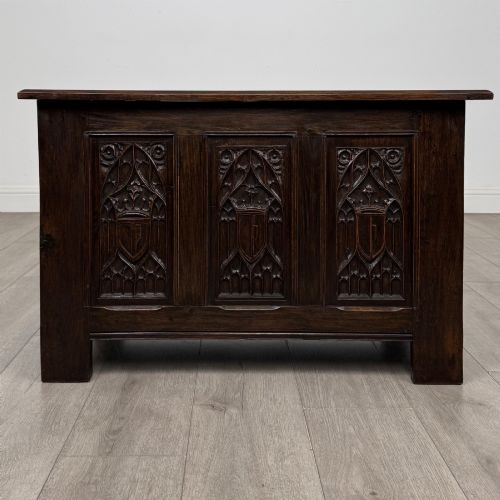
The distinction between ordinary and exceptional pieces rests on the depth and crispness of the carving relative to the timber used. Crisp, confident tool work on dense hardwoods indicates a higher tier of craftsmanship than shallow, hurried incisions on soft or secondary woods.
Proportion and structural integrity dictate value just as much as surface decoration. Pieces retaining their original patination, hardware, and structural joints without excessive replacement parts represent the superior end of the survival rate.
Period origins span from the seventeenth-century Jacobean era through the Georgian, Regency, and Victorian epochs into the early twentieth century.
The Antique Carved Wood Box Glossary
- Coffer
- A heavy wooden chest traditionally used for storing valuables, linen or documents. They often feature panelled construction and robust framing.
- Teapoy
- A small table fitted with a box or caddy top designed for holding tea canisters. Originating during the Georgian and Regency periods, they often stand on a central pillar.
- Folk art
- Utilitarian objects decorated by self-taught makers or ordinary craftspeople. These items frequently display naive carving and regional character.
- Treen
- Small handmade wooden domestic objects produced from the sixteenth century onwards. Examples include snuff boxes, small bowls and needle cases.
- Patina
- The surface sheen and colour developed by wood through age, handling and polishing over centuries. Original surfaces display a soft, mellow depth.
Antique Carved Wood Box: Frequently Asked Questions
How do I date an oak coffer?
Dating relies on construction methods, joint types, and the style of the carved panels. Early examples utilise hand-riven timber and pegged joints rather than modern mechanical fasteners.
Changes in moulding profiles and decorative motifs like guilloche or linenfold also help establish the decade or century of origin.
What were foot stoves used for?
Foot stoves were small wooden boxes drilled with holes and lined with metal to hold hot embers from the hearth. People placed their feet on top during cold church services or chilly winter evenings.
Many feature charming chip carving and sliding lids designed for easy removal of the internal ember pan.
How should I care for antique wood boxes?
Keep wooden boxes away from direct sunlight and sudden temperature changes to prevent the timber from splitting or warping. Maintain a stable indoor humidity level.
Apply a traditional beeswax polish sparingly and buff with a soft cloth to preserve the natural lustre without building up heavy residue.
What is the difference between a teapoy and a work table?
A teapoy is designed specifically to hold tea caddies and loose tea leaves, often featuring internal compartments and a sarcophagus shape. Work tables contain drop leaves, fitted drawers and fabric bags for sewing and needlework.
Both forms became popular during the Regency and William IV eras as refined additions to parlour rooms.