



Antique Carved Marble Sideboard
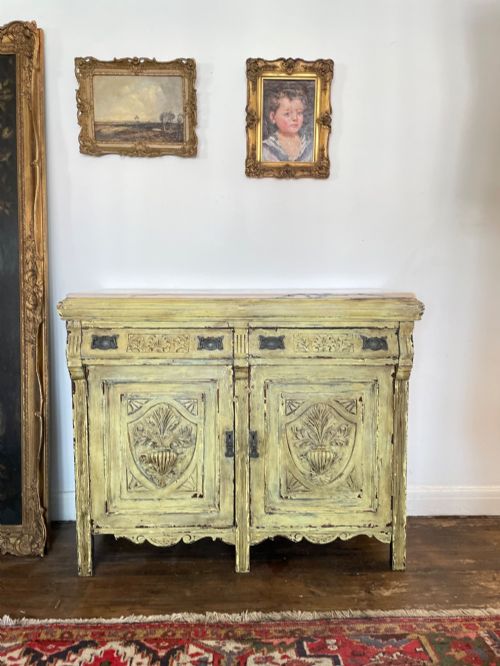
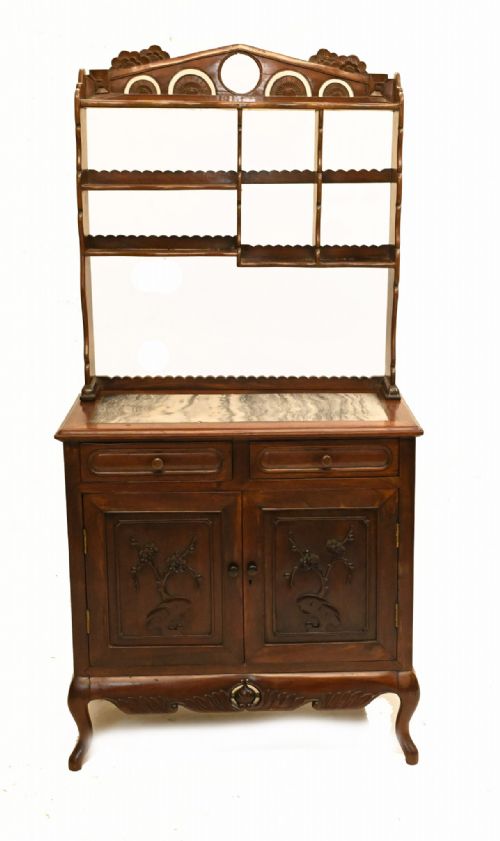
An antique carved marble sideboard anchors a room with heavy stone and timber, bringing surface durability and carved ornament together in one heavy piece of furniture.
Antique Carved Marble Sideboard
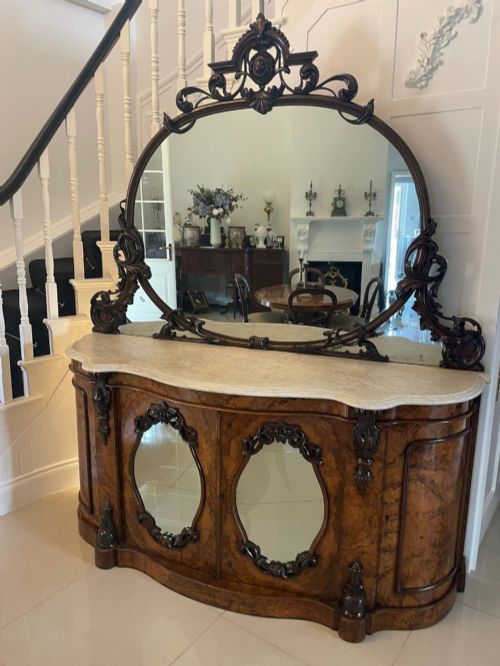
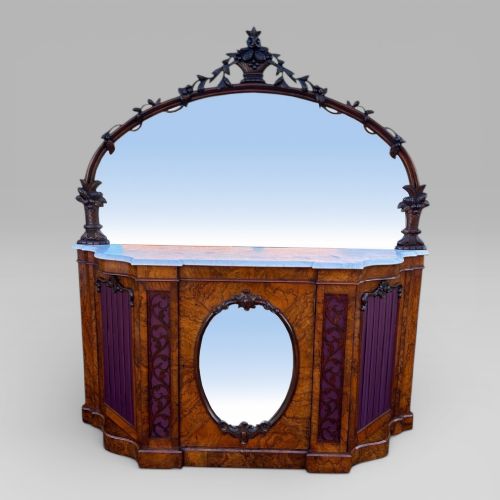
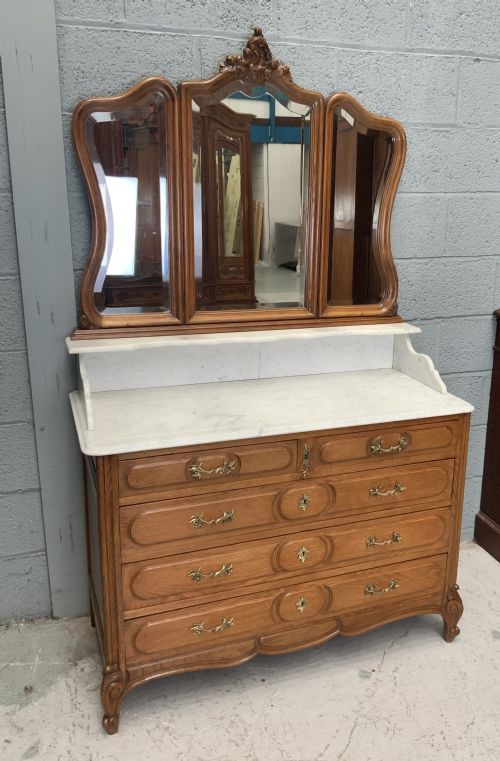
An antique carved marble sideboard unites heavy timber framing with a smooth stone surface, serving as a formal serving station or display cabinet in dining rooms and grand hallways. These pieces appear across Victorian, Regency, and twentieth-century designs, often taking the form of credenzas, mirror-backed side cabinets, or low credenzas with enclosed cupboards.
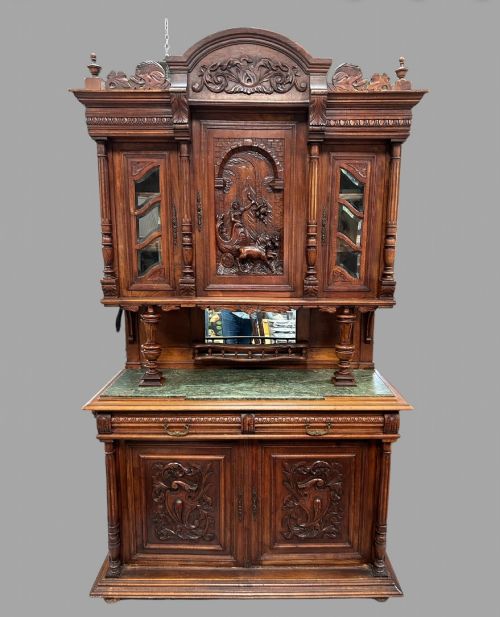
The most common examples on this page date from the nineteenth century, particularly the Victorian period and French provincial workshops. Walnut, burr walnut, mahogany, and rosewood form the wooden carcasses, while white, pink, or rouge marble slabs provide the heavy upper surface.
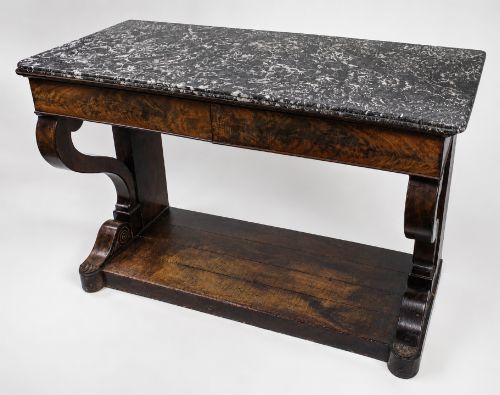
Makers integrated carved details into the wooden doors, panels, and mirror backs, drawing upon French Renaissance revival, Louis styles, and Victorian rococo motifs. Alongside traditional sideboards, buyers frequently encounter related forms such as console tables, washstands, and commodes featuring the same stone and timber construction.
Materials and construction methods
Cabinetmakers constructed these frames using dense hardwoods including walnut, mahogany, rosewood, and oak, often applying figured burr walnut veneers or marquetry inlay to flat surfaces. Carvers shaped foliage, scrolls, and architectural mouldings directly into the solid timber sections by hand.
Heavy marble slabs were cut, ground, and polished to fit precisely over the wooden base, functioning as water-resistant tops for serving food or holding wash basins. Brass mounts, ebony details, and mirrored back panels completed the assembly, secured with period joinery techniques such as dovetailed drawers and tenon joints.
The furniture spans multiple eras, including Regency, Victorian, Edwardian, and Art Deco periods.
Distinguishing quality in construction and material
The fineness of the hand carving separates standard production from exceptional pieces, visible in the depth and sharpness of floral motifs, scrolls, and moulded panels. Heavy burr walnut veneers and figured rosewood grain demonstrate superior selection of raw timber by the cabinetmaker.
The thickness, colouration, and figuring of the marble top indicate grade, with solid, highly polished slabs showing precise bevelling along the edges. Original brass mounts, intact mirror glass, and tight joinery throughout the carcass distinguish high-workshop output from later alterations.
Krieger of Paris·Gillow
The Antique Carved Marble Sideboard Glossary
- Credenza
- A low dining room cabinet or sideboard, frequently featuring mirrored backs and glazed or panelled doors.
- Burr walnut
- Timber taken from the warted growths of walnut trees, displaying complex swirling grain patterns used for decorative veneer.
- Console table
- A table designed to stand against a wall, frequently topped with marble and supported by carved brackets or legs.
- Chiffonier
- A compact sideboard or cabinet developed in the nineteenth century, often equipped with shelves and enclosed lower cupboards.
- Marquetry
- The art of applying decorative pieces of veneer to a structure to form intricate geometric or floral designs.
Antique Carved Marble Sideboard: Frequently Asked Questions
How do I clean a marble top?
Wipe the stone surface using a soft cloth dampened with warm water and a neutral, non-acidic soap. Avoid household detergents or vinegar, which etch polished marble.
Dry the surface thoroughly with a clean cloth to prevent water spots and maintain the natural lustre of the stone.
Are these pieces heavy to move?
These sideboards combine dense hardwoods with thick slabs of stone, resulting in substantial weight. The marble top is typically heavy but removable on many designs.
Lift the stone slab off the wooden base before shifting the carcass to reduce strain and prevent damage to the joints.
How do I identify Victorian examples?
Victorian pieces often feature dark walnut or mahogany timbers, rich burr veneers, and deep, elaborate carvings. Look for mirror backs with bevelled glass and heavy moulded cornices.
Construction details like hand-cut dovetails in the drawer boxes further confirm nineteenth-century origin.
Can I use a washstand as a sideboard?
Washstands share the same timber and marble construction as low sideboards, making them suitable for alternative living spaces. Their compact proportions fit smaller hallways or dining rooms.
The stone top handles hot dishes and serving items just as effectively as a traditional sideboard surface.