


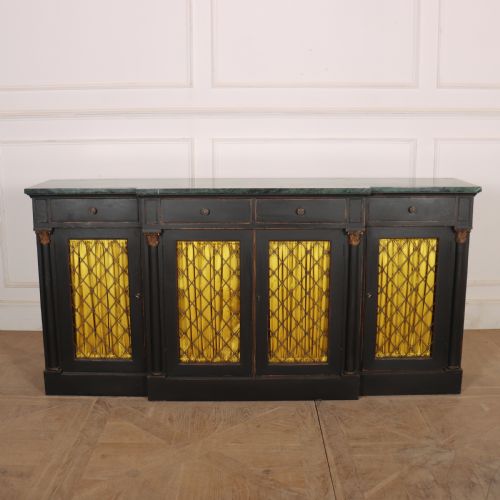


Green Marble Cupboard
A green marble cupboard brings solid weight and colour to a room, offering surface space and concealed storage.
Green Marble Cupboard
When you search for a green marble cupboard, you are looking at substantial case furniture topped with polished stone, spanning periods from the Regency era through Victorian times to the Edwardian period. The versions most commonly met on this page are bedside cabinets, side cabinets, and pedestal cupboards.
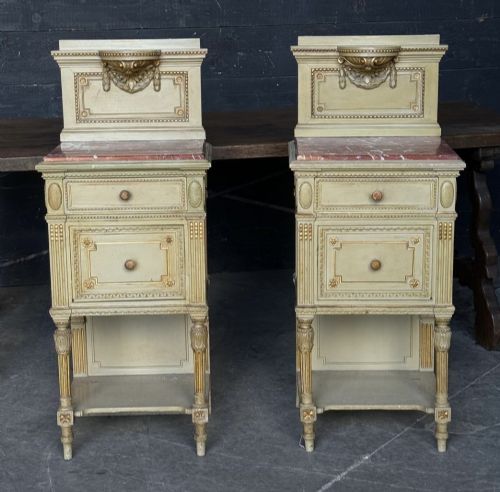
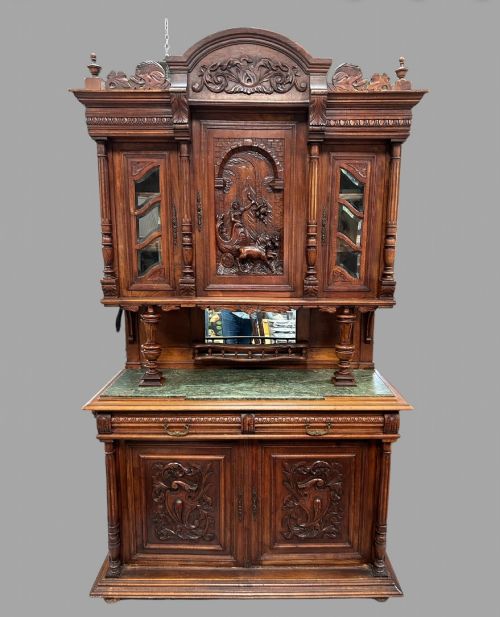
The form crosses several styles, including French Provincial, Louis XIII Revival, and Regency Gothic. These pieces function as bedside storage, compact sideboards, or washstands, combining timber bodies with stone working surfaces.
How they were made
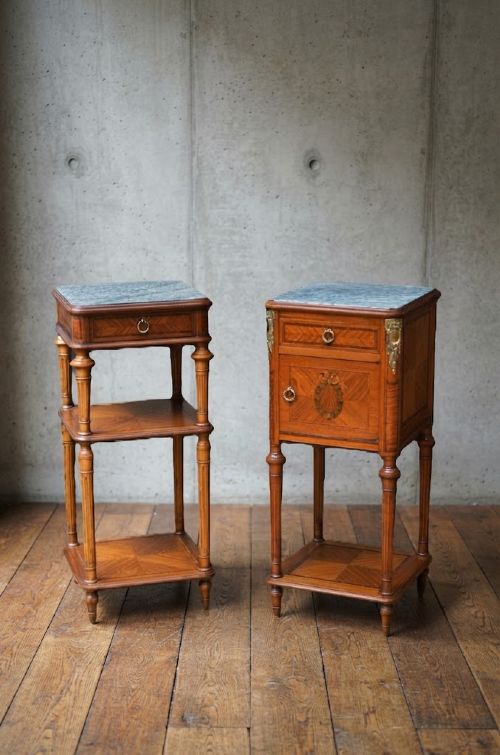
Cabinet makers built these pieces using solid timbers such as mahogany, walnut, rosewood, and satinwood, often pairing them with brass mounts and glass elements. The marble tops were shaped, slabbed, and polished to provide a durable, water-resistant surface.
Joinery methods included panel construction and framing suited to housing heavy stone slabs. Some surfaces received painted finishes or elaborate inlay work, while carved details defined revival styles.
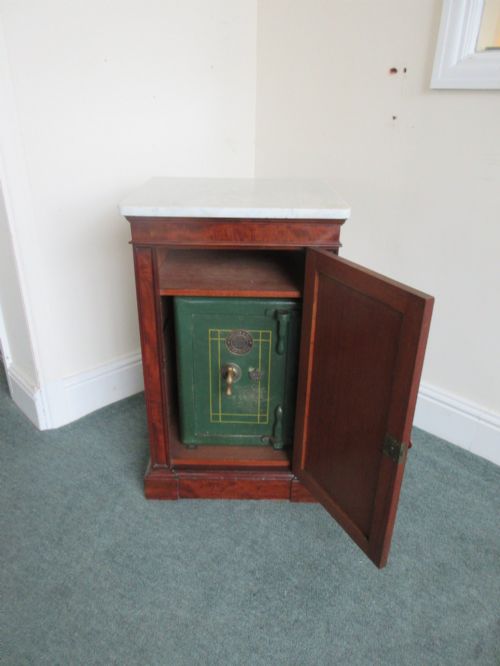
At least one historic cabinet hides a safe within its Victorian mahogany frame, keeping valuables behind closed wooden doors.
What varies in quality
Quality rests in the selection of timber and the figure of the wood grain, alongside the weight and depth of the marble top. Pieces with crisp carving and well-fitted brass hardware sit clearly above simpler utilitarian examples.
The integration of the stone top to the timber base determines the structural integrity of the piece. Well-preserved painted finishes and original hardware distinguish the finest survivals from altered examples.
The Green Marble Cupboard Glossary
- Pedestal cupboard
- A tall, narrow cabinet designed to stand alone, often housing a single internal shelf or compartment. These pieces save floor space while offering a flat top surface.
- Washstand
- A piece of furniture made to hold a basin and jug, typically fitted with a marble top to resist water damage. They frequently include lower cupboards or shelves.
- Breakfront
- A cabinet design where the central section projects forward from the flanking wings. This architectural arrangement creates depth and shadow across the front elevation.
- Inlay
- A decorative technique where contrasting materials are inserted into recessed portions of the timber base. This method creates patterns or pictorial designs across the surface.
Green Marble Cupboard: Frequently Asked Questions
What is a green marble cupboard?
A green marble cupboard is a cabinet, bedside locker, or washstand topped with polished green stone. These pieces combine wooden storage bases with durable stone upper surfaces.
They appear across various nineteenth and early twentieth century styles, including French Provincial and Regency Gothic.
How do I use a bedside cabinet?
Bedside cabinets provide enclosed storage beside a bed while holding lamps or books on the stone top. The marble surface easily resists moisture from glasses and jugs.
Their compact proportions allow them to fit beside lower or higher bed frames.
How do I date a Victorian marble cabinet?
Dating relies on timber choices, construction methods, and stylistic revival markers. Victorian pieces often employ solid mahogany or walnut with hand-cut joinery.
Comparing the hardware and internal linings helps narrow the decade of manufacture.
Are these cupboards heavy?
The inclusion of solid stone slabs makes these cabinets considerably heavier than standard wooden furniture. The marble top alone adds substantial weight to the overall structure.
Care must be taken when moving them to avoid chipping the stone edges or straining the wooden joints.
How do I care for the marble top?
Marble requires gentle cleaning with warm water and mild soap to preserve the polished finish. Acidic liquids like citrus juice or vinegar should be wiped away immediately to prevent etching.
Regular dusting keeps the stone surface clear of abrasive grit.