






Antique Canterbury Table
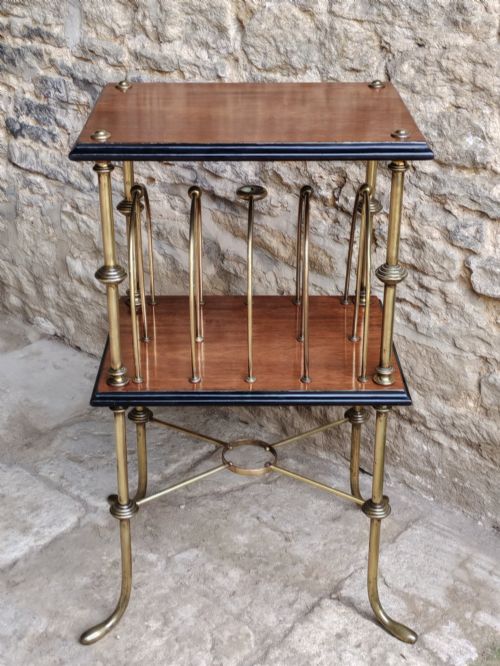
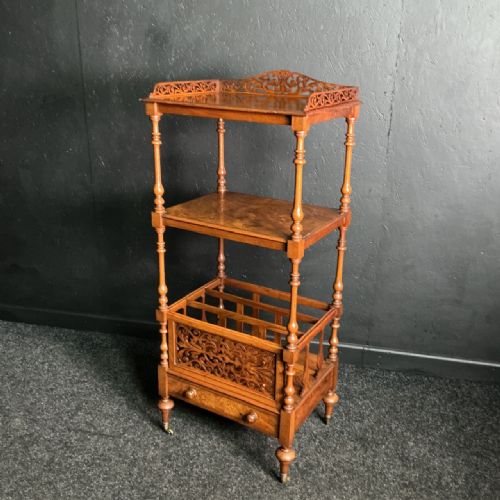
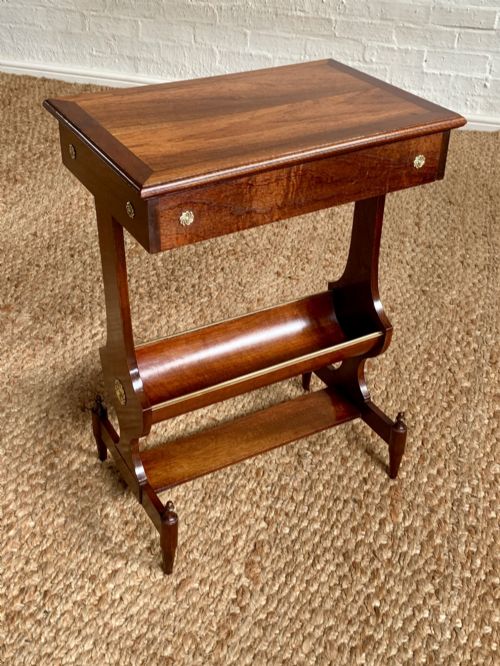
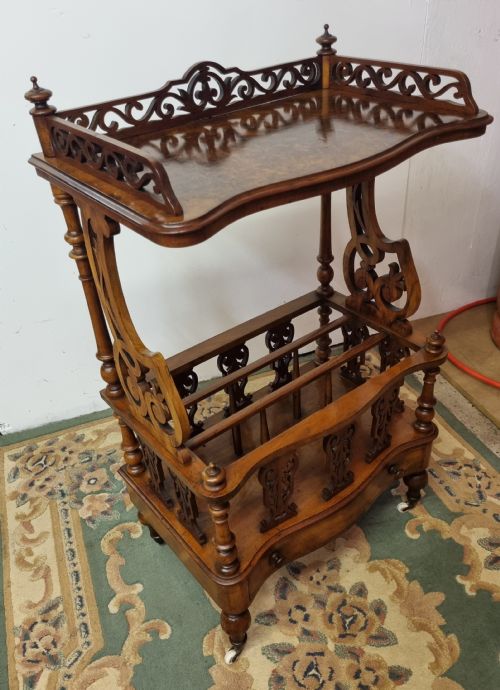
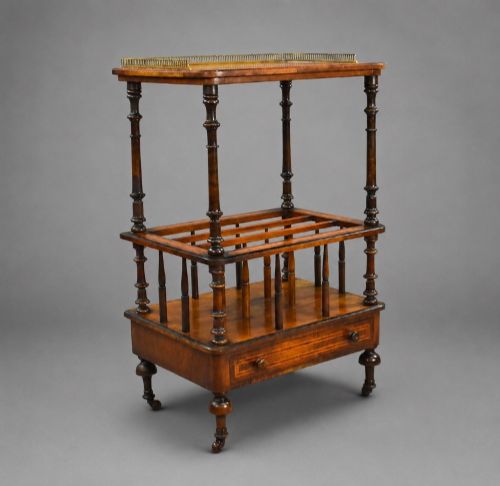
When you search for an antique canterbury table, you meet a dual-purpose stand designed to hold newspapers, sheets of music, and periodicals alongside a sturdy flat surface.
Antique Canterbury Table
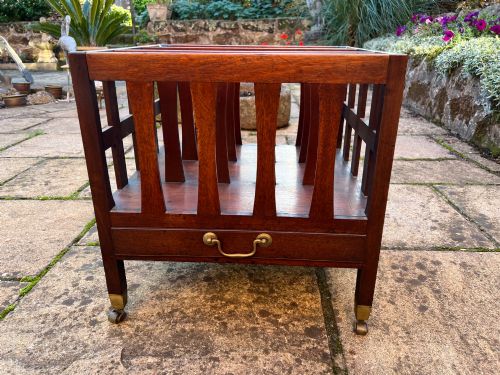
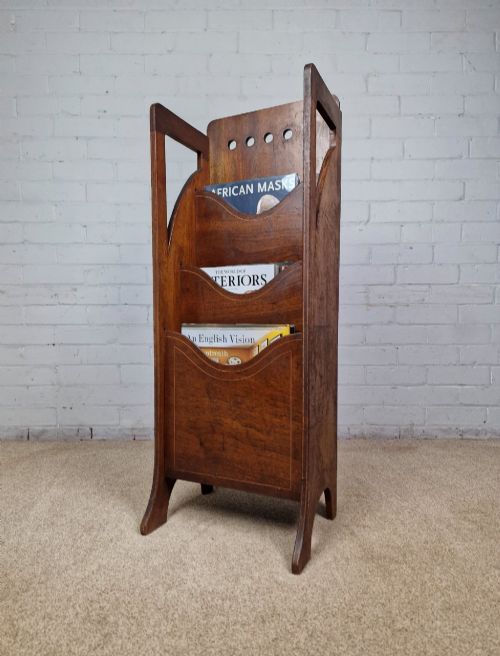
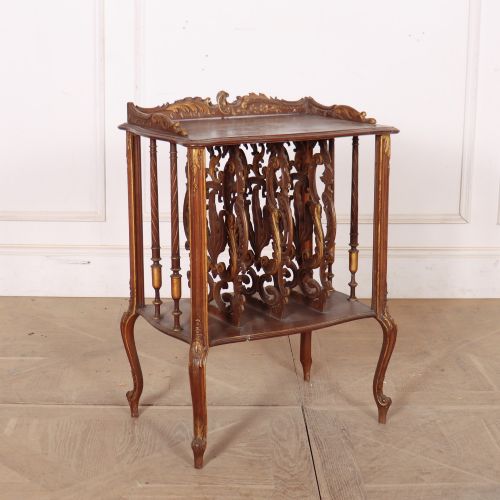
An antique canterbury table combines the compartmentalised paper rack of a traditional canterbury with the top surface of a side, lamp, or occasional table. These pieces emerge predominantly across the Victorian and Regency periods, stretching into Edwardian workshops.
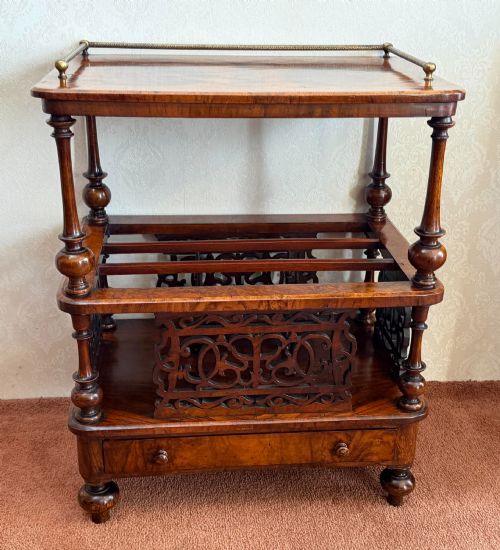
Most examples encountered here pair burr walnut, mahogany, or rosewood with lower slatted divisions for reading material and drawers or work tops above. Makers often combined the form with a whatnot or music stand, resulting in multi-functional household items.
Materials and Construction
Cabinet makers utilised richly figured timbers such as burr walnut, rosewood, and mahogany, frequently enhancing surfaces with boxwood inlay, ebony stringing, or brass mountings. Structural elements demand tight joinery to support the weight of stacked periodicals beneath a functional tabletop.
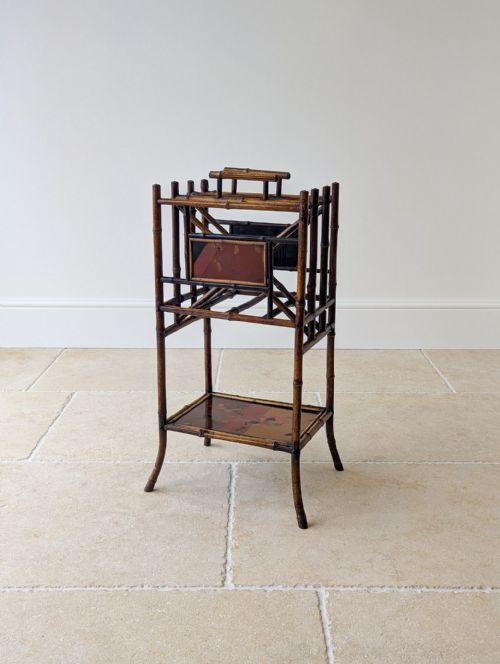
Lighter alternatives incorporate bamboo frames paired with ceramic or hand-painted panels, reflecting late nineteenth-century aesthetic preferences. Turned uprights, carved fretwork partitions, and brass castors complete the construction of freestanding pieces.
Antique Canterbury Table Retail Price Guide 2026
Typical asking prices for canterbury table among the pieces listed under this phrase on Sellingantiques today, from the lower quarter to the upper quarter. They describe what is for sale here now, not the wider market.
Judging Quality
The standard of an antique canterbury table depends on the choice of timber veneer and the precision of its marquetry or inlay. Grain selection in burr walnut and rosewood distinguishes refined workshop output from simpler utilitarian pieces.
Proportion and stability determine the success of the dual-purpose form. Finer examples maintain crisp carving on uprights, smooth operation in drawers, and sturdy division slats that resist the warping common in softer secondary woods.
Melissa White
The Antique Canterbury Table Glossary
- Canterbury
- A low stand featuring vertical partitions designed for holding sheet music, newspapers, and magazines. This piece originated in the late eighteenth century and frequently evolved to include table tops and drawers.
- Whatnot
- A set of open shelves supported by slender pillars, often combined with a canterbury base to display ornaments while storing papers below.
- Burr Walnut
- A highly prized timber obtained from the wart-like growths on walnut trees, showing swirling, intricate grain patterns. Cabinet makers utilised veneers of this wood on prominent surfaces.
- Inlay
- A technique where contrasting materials such as boxwood or ebony are inserted into recessed cavities on a timber surface to create decorative patterns.
Antique Canterbury Table: Frequently Asked Questions
What is an antique canterbury table?
An antique canterbury table is a piece of furniture that unites a compartmentalised rack for papers or music with a flat surface for lamps, books, or decorative objects.
These hybrids served as versatile companions beside seating areas in Victorian and Regency parlours.
How were canterbury tables used originally?
Households utilised these stands to keep current newspapers, periodicals, and sheet music tidy and within reach while using the top for daily tasks or displaying lamps.
Some variations included reading slopes, drawers for writing materials, or lower shelves functioning as miniature whatnots.
How do I date an antique canterbury?
Dating relies on identifying timber choices, decorative motifs, and construction styles associated with periods like the Regency or Victorian eras. Heavier rosewood and mahogany often point earlier, while bamboo and lighter satinwood frequently indicate late nineteenth or Edwardian production.
Checking the hardware, dovetailing in drawers, and inlay techniques helps narrow the decade of manufacture.
Where should I place a canterbury table?
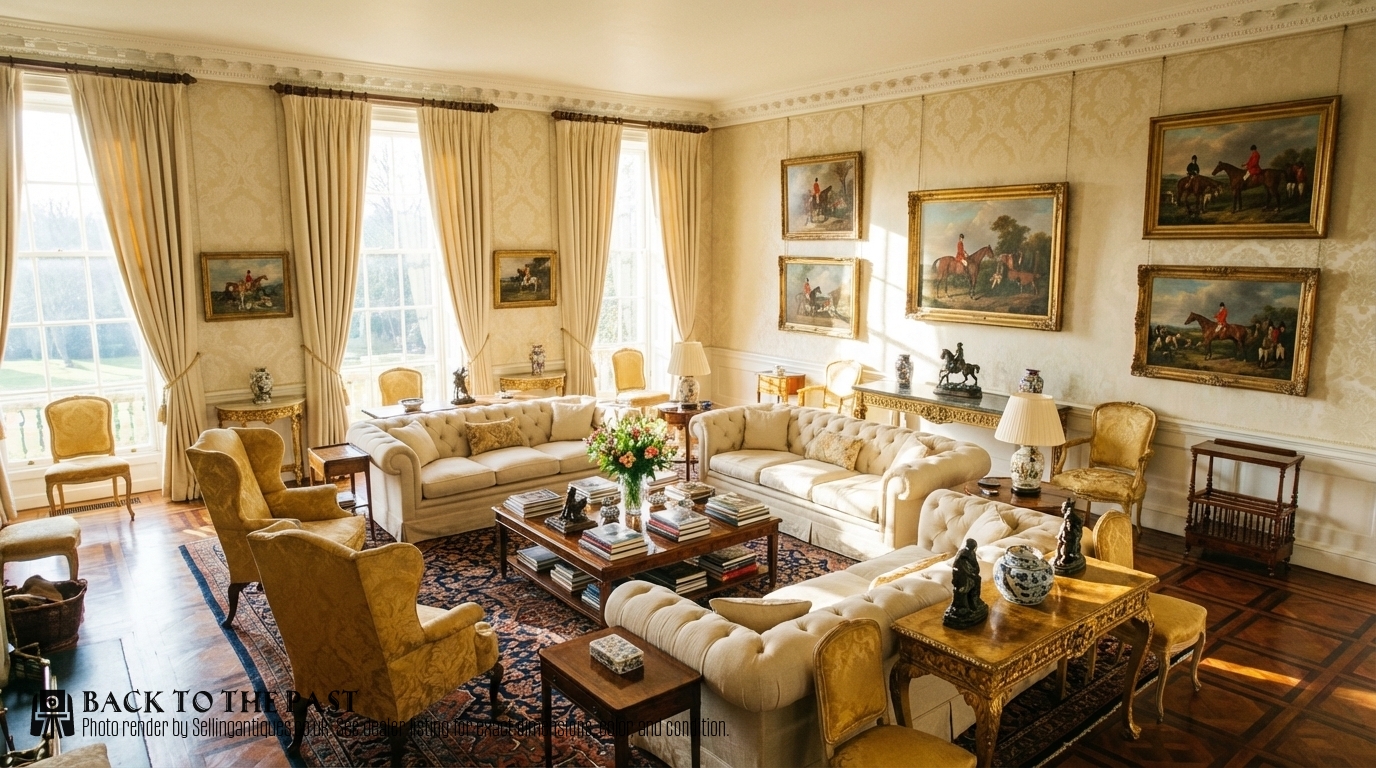
These tables fit easily beside sofas, armchairs, or desks where their dual storage and surface functions remain accessible. Their finished backs and freestanding designs allow placement in open room layouts.
Keep them away from direct heat sources to protect figured wood veneers and delicate inlaid stringing.