



Antique Canteen Box
An antique canteen box holds silver, flatware, and cutlery securely in fitted wooden cases spanning the Georgian to Art Deco periods.
Antique Canteen Box
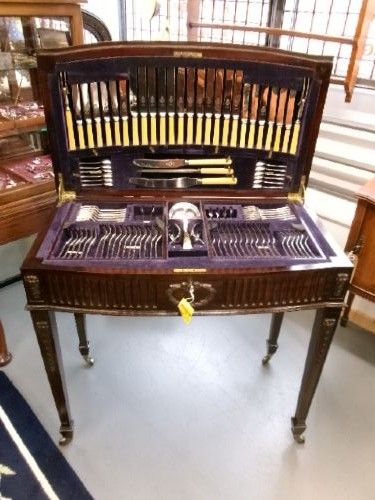
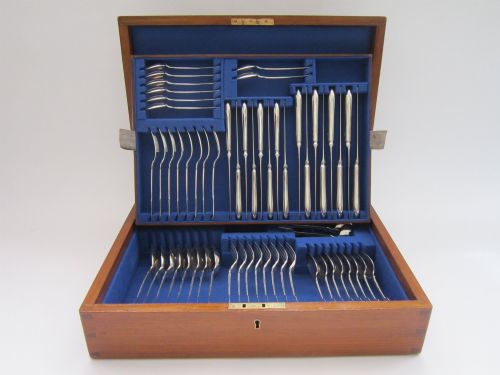
An antique canteen box serves as a specialised storage chest designed to protect and organise complete flatware and cutlery sets. When searching for an antique canteen box, buyers encounter substantial oak, mahogany, and walnut chests alongside fitted tabletop knife boxes and large canteens on stands.
The pieces on this page originate from periods including the Georgian era, Victorian period, Edwardian years, and the 1930s. Forms range from dedicated knife boxes and silver chests to comprehensive cutlery storage units housing dozens of individual implements.
Most examples combine solid timber construction with velvet or cloth linings to secure sterling silver or silver-plated sets. Buyers select these items for both practical tableware organisation and traditional cabinetwork display.
Construction and Materials
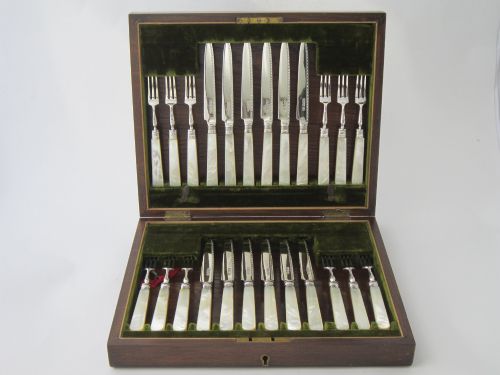
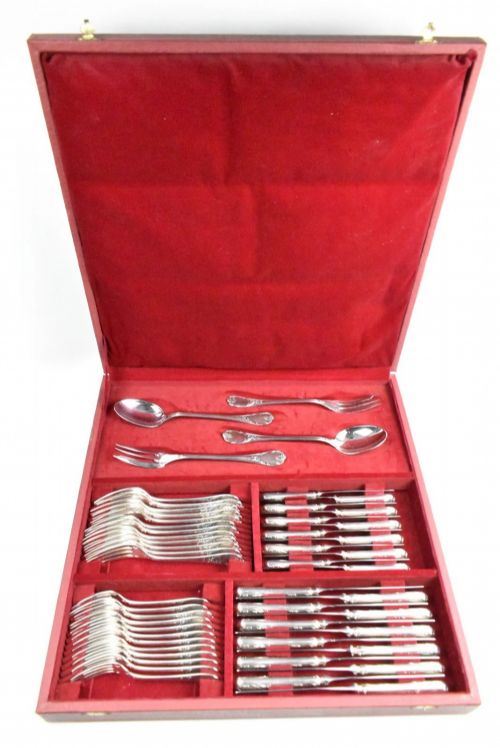
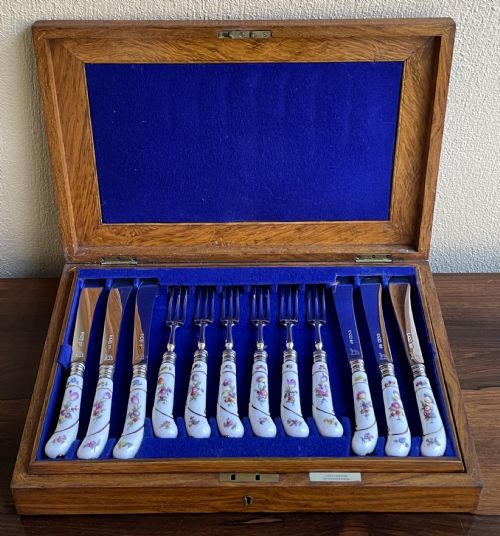
Cabinetmakers built these boxes using dense timbers such as mahogany, oak, and walnut, often applying polished finishes to highlight natural wood grain. Interiors feature tailored compartments lined with velvet to cushion silver plate, sterling silver, and mother-of-pearl handled pieces.
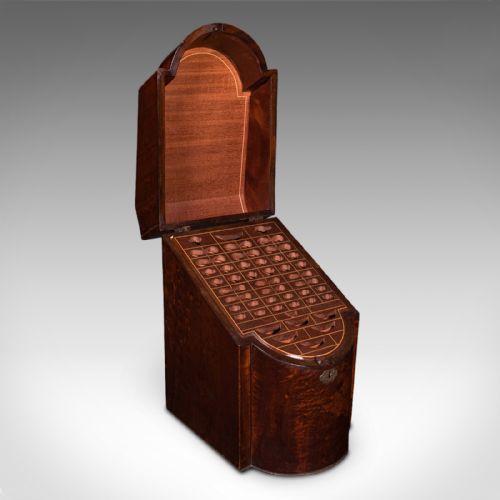
Metal hardware including brass locks, hinges, and carrying handles reinforced heavy wooden structures designed to hold extensive cutlery sets. Specialised knife boxes utilised sloping lids and fitted internal partitions to keep individual blades and handles separate.
Antique Canteen Box Retail Price Guide 2026
Typical asking prices for canteen box among the pieces listed under this phrase on Sellingantiques today, from the lower quarter to the upper quarter. They describe what is for sale here now, not the wider market.
Listings feature oak, mahogany, walnut, and coromandel timbers combined with brass hardware and velvet linings across multiple centuries.
Factors That Determine Quality
Quality rests upon the selection of cabinet timbers, the integrity of the joinery, and the retention of original interior fittings. Superior pieces exhibit well-figured mahogany or oak, robust brass mounts, and clean velvet linings that securely hold the complete set of cutlery.
The completeness of the original flatware set and the presence of working locks and matching keys distinguish standard storage boxes from exceptional collector pieces. Makers such as Walker & Hall or Mappin & Webb introduced high standards of fitted internal carpentry into Edwardian canteens.
Carrington·Walker & Hall·Mappin & Webb·Waring & Gillows·Christofle
The Antique Canteen Box Glossary
- Canteen
- A fitted box or chest designed specifically to hold a set of cutlery or flatware. These containers ensure every knife, fork, and spoon has a designated slot.
- Fiddle Pattern
- A traditional nineteenth-century flatware handle design featuring a distinctive broadened, shaped end resembling a violin. This style appears frequently on Victorian silver sets.
- Knife Box
- A dedicated vertical or sloping wooden container traditionally used in the eighteenth and nineteenth centuries to store table knives upright. Georgian examples frequently employ mahogany.
- Silver Plate
- A base metal coated with a thin layer of silver through electroplating or older techniques. Christofle and other makers utilised this method for large flatware sets.
- Tantalus
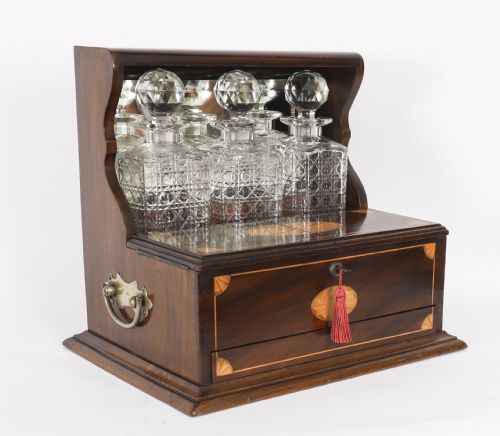
- A decorative cabinet holding decanters securely behind a locking wooden bar while leaving the contents visible. Certain designs incorporate games equipment alongside the bottles.
Antique Canteen Box: Frequently Asked Questions
What is an antique canteen box?
An antique canteen box is a dedicated wooden chest or case built to store flatware, cutlery, or knives safely. These boxes range from tabletop knife chests to large freestanding canteens on stands.
Interiors feature fitted trays, partitions, and velvet linings designed to hold specific numbers of silver or silver-plated implements without movement.
How were canteen boxes used?
Dining rooms utilised these boxes to keep large table services organised, protected from tarnish, and readily accessible for formal meals. Servants and hosts stored complete sets of forks, spoons, and knives inside fitted compartments.
Many designs included locks to secure valuable sterling silver sets when not in active use during dining service.
How do I date an antique canteen box?
Dating relies upon timber choice, cabinet style, hardware design, and any accompanying hallmarks on the silver contents. Georgian pieces often feature mahogany knife boxes, while Edwardian and 1930s examples show oak or walnut construction.
Maker stamps on locks or fitted cutlery help narrow the manufacturing period to specific decades between the eighteenth and twentieth centuries.
How do I live with a canteen box?
These boxes function effectively as statement furniture pieces on sideboards or as practical storage for contemporary flatware collections. Placing them away from direct heat sources protects the polished wood and internal velvet linings.
Regular dusting and occasional waxing preserve the timber exterior while the fitted interior keeps cutlery organised for daily use or entertaining.