


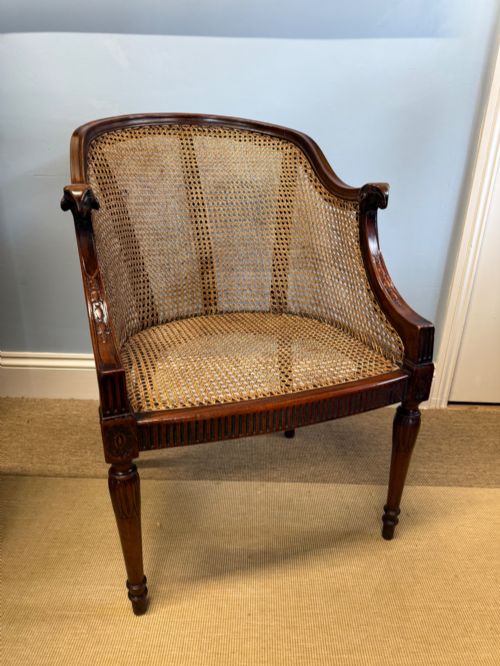



Antique Caned Tub Armchair
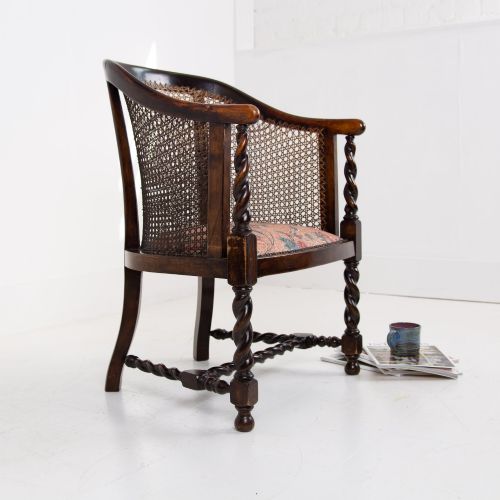
An antique caned tub armchair offers a deeply curved back and woven panels, bringing elegance and comfortable seating to a study or drawing room.
Antique Caned Tub Armchair
An antique caned tub armchair combines a rounded enclosing back with woven seating panels, creating a supportive seat designed for relaxation. The selection spans the Regency, William IV, Victorian, and Edwardian eras, alongside various twentieth-century pieces.
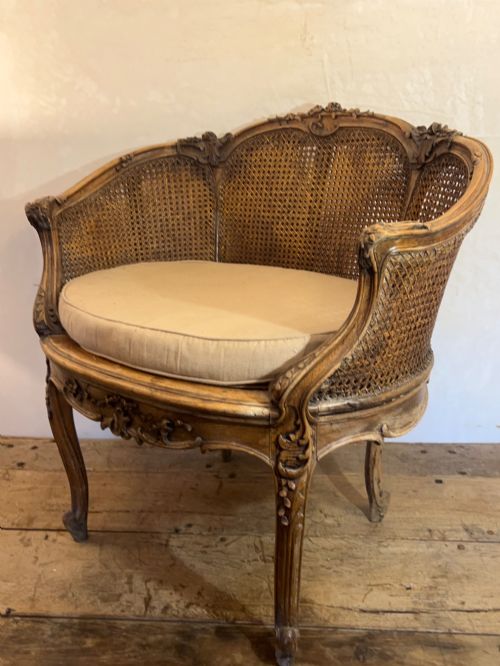
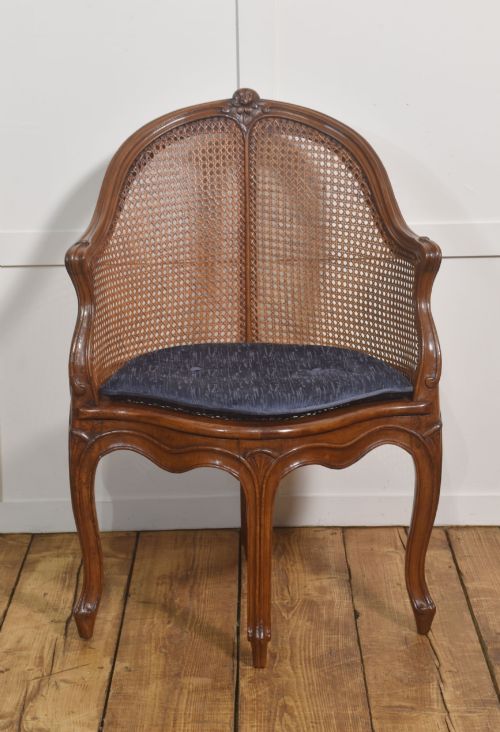
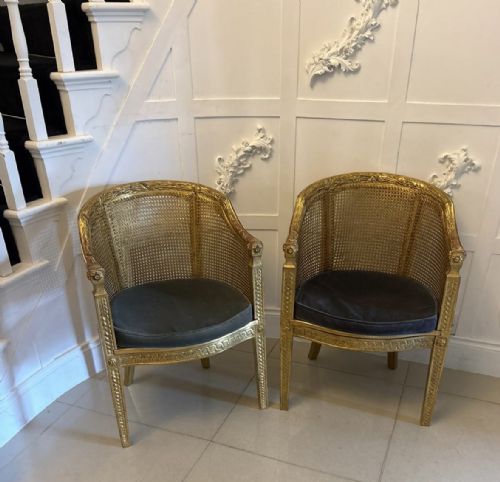
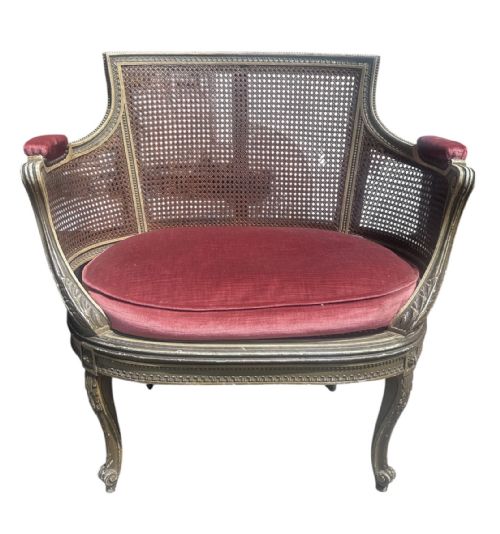
Many examples follow French Louis XV styles with carved frames, while others adopt clean British lines in mahogany, walnut, or satinwood. Buyers frequently encounter nineteenth-century library bergères alongside lighter Edwardian iterations and occasional child-sized variants.
The form evolved from formal library seating into versatile domestic armchairs, often incorporating upholstered cushions in leather or velvet. These seats bridge decorative appeal and functional daily use, suiting both traditional interiors and modern spaces.
Materials and Construction Methods
Cabinetmakers built the foundational frames using dense timbers like mahogany, walnut, satinwood, and oak, occasionally applying ebonised or faux rosewood finishes. Selected pieces incorporate decorative elements such as brass mounts or giltwood carving.
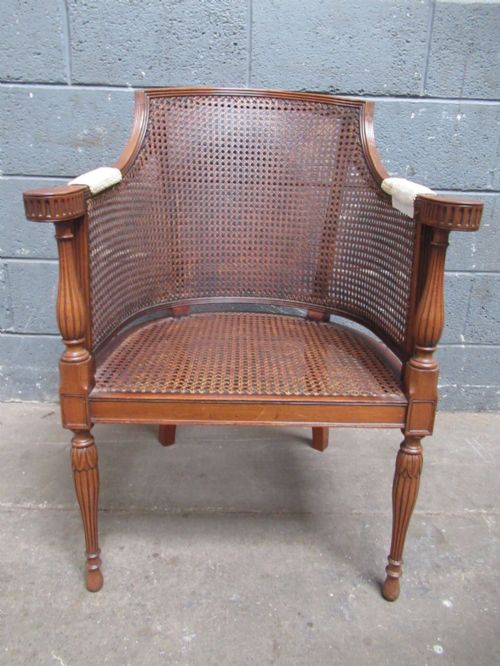
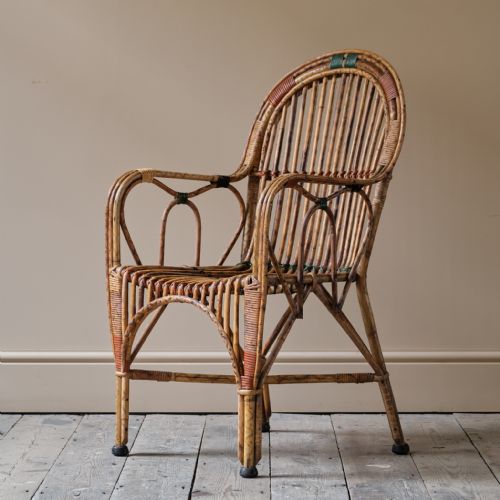
The characteristic back and seat panels utilise woven cane or rattan, threaded laboriously through pre-drilled holes in the wooden frame by hand. This technique provides both structural resilience and a flexible, supportive surface that accommodates the seated user.
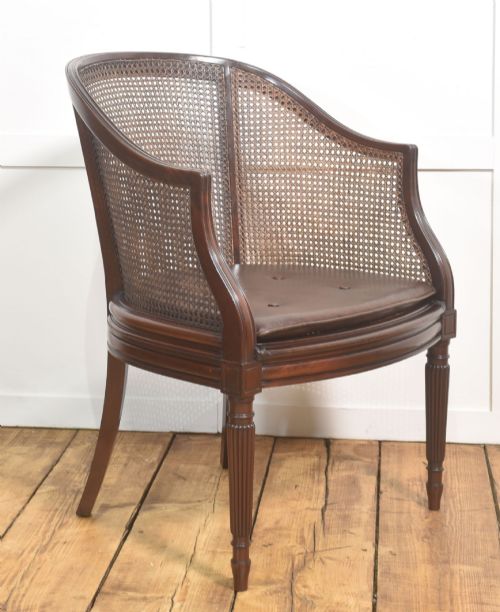
Many examples are finished with loose squab cushions upholstered in leather, velvet, or woven fabric to enhance comfort. The integration of solid wood joinery with delicate cane work demonstrates considerable craftsmanship across all represented periods.
Musicians once requested specialised parlour chairs with curved low backs to accommodate the awkward angles of holding cellos and lutes.
Distinctions in Quality and Craftsmanship
The refinement of the wooden frame's carving and the tightness of the timber joints separate exceptional seating from standard production. Finer examples display crisp hand-carved details, balanced proportions, and high-grade primary woods like figured mahogany or satinwood.
The condition and execution of the cane work heavily influence the standard of the piece, as tight, uniform weaving requires significant skill. Original cane panels that remain intact without breakage denote careful preservation, whereas coarser or loose replacement weaving alters the character.
Subtleties in design, such as gracefully swept armrests and well-turned legs, distinguish bespoke workshop creations from mass-produced items. The harmony between the structural woodwork and the woven panels ultimately determines the piece's standing.
Gillows·Dryad And Co·Dryad of Leicester
The Antique Caned Tub Armchair Glossary
- Bergère
- An enclosed upholstered armchair with cane or solid sides, originating in France during the eighteenth century. These seats frequently feature loose squab cushions for added comfort.
- Cane
- Strips of rattan plant peeled and woven into open mesh patterns for chair backs and seats. This material provides lightweight strength and flexibility.
- Tub Chair
- An armchair featuring a continuous curved back that wraps around to form the armrests in a rounded shape. The design resembles an open barrel or tub.
- Faux Rosewood
- A painted or stained finish applied to a secondary timber to imitate the distinctive grain of true rosewood. Makers utilised this technique during the Regency period.
- Squab
- A thick, loose cushion placed upon the seat base of an armchair. These pads are commonly covered in leather, velvet, or fabric.
Antique Caned Tub Armchair: Frequently Asked Questions
What is a bergere chair?
A bergere chair is a French-style upholstered armchair featuring enclosed wooden sides filled with woven cane. These seats offer a deep, comfortable sitting position suitable for libraries and drawing rooms.
They emerged in various revival styles through the nineteenth and twentieth centuries, often accompanied by loose cushions in leather or fabric for additional support.
How do I care for antique cane?
Antique cane requires gentle cleaning with a damp cloth to remove dust, followed by immediate drying. Avoid excessive moisture, which can make the natural rattan brittle over time.
Maintaining moderate humidity in the room prevents the woven panels from drying out and snapping under normal seating pressure.
Are these chairs comfortable for daily use?
These armchairs were designed for relaxation, featuring supportive curved backs and flexible woven cane panels that yield slightly to the body. The addition of a padded squab cushion provides extra seating comfort.
While robustly constructed from hardwoods like mahogany and walnut, users should sit gently to preserve historical cane work.
How do I distinguish Regency from Edwardian pieces?
Regency pieces date from the early nineteenth century and typically showcase architectural lines, simulated rosewood finishes, or formal library styling associated with makers like Gillows. They often feature heavier mahogany frames and precise classical details.
Edwardian items, made around the early twentieth century, tend to be lighter in scale, reflecting revived eighteenth-century French tastes with painted surfaces or delicate carved walnut.