
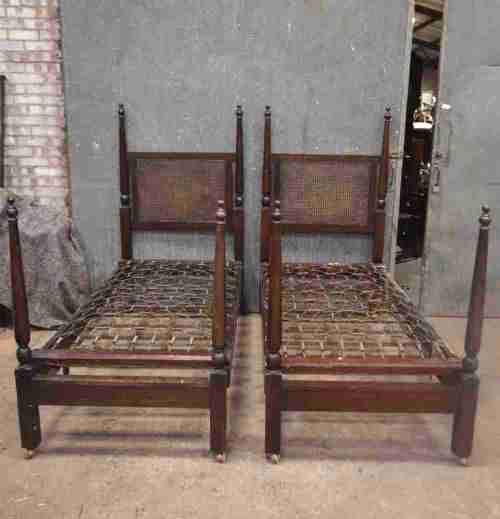
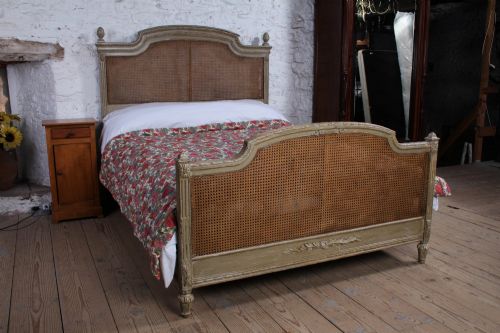


Antique Caned Bedstead
These antique caned bedstead pieces combine woven natural materials with timber frames, offering classic sleeping furniture for period interiors.
Antique Caned Bedstead
When you search for an antique caned bedstead, you encounter framed sleeping furniture incorporating woven cane, rattan or similar materials within wooden structures. The examples available here span single beds, doubles, kingsize proportions and larger suites, alongside daybeds and folding campaign pieces.
The aesthetic leans heavily toward French Neoclassical taste and Louis XVI styles, alongside Colonial Revival and late Victorian interpretations. Many pieces display painted finishes, gold leaf highlights or carved wooden elements surrounding the woven panels of the headboards and footboards.
You are most likely to meet twentieth-century adaptations from the 1900s to 1920s, alongside nineteenth-century and Victorian origins. These range from polished oak and mahogany frameworks to polychrome painted surfaces featuring decorative portrait panels.
Materials and construction
Makers utilised solid timbers including oak, mahogany, satinwood, beech and painted woods to build the structural frameworks of these beds. Panels of cane and rattan were then woven by hand into the headboards and footboards to provide flexible, breathable backing.
Surface decoration involved applied paint, polychrome detailing, hand-painted portrait panels, gold leaf gilding and detailed wood carving. Certain functional items, such as the George IV campaign bed, incorporated brass fittings alongside mahogany and rattan for portability.
Listings feature French Neoclassical and Louis XVI styles executed in beech, oak, satinwood and painted finishes.
Assessing quality and execution
The standard of a piece rests upon the crispness of the wood carving and the tightness of the cane or rattan weave. Superior examples display intricate hand-painted details, such as portrait panels or gilded highlights, executed on substantial timbers like satinwood or mahogany.
Construction methods also distinguish standard production from finer outputs, particularly in the joinery of the four-poster frames and the integration of matching bedroom suites. The harmony between the painted or polished wood finish and the condition of the woven panels dictates the overall stature of the bedstead.
Maple and Co
The Antique Caned Bedstead Glossary
- Cane
- Woven material derived from the peeled bark of rattan palms, utilised to form flexible, patterned panels in headboards and footboards. It provides a lightweight yet durable backing for the sleeper.
- Rattan
- A climbing palm species whose stems are processed to create the material used in weaving panels for furniture. It offers natural flexibility and strength.
- Bergere
- An enclosed upholstered or caned armchair or bed frame style originating in France, typically featuring exposed wooden framing. The style often incorporates woven cane sides or backs.
- Louis XVI Style
- A neoclassical design movement characterised by straight lines, symmetrical forms and classical ornamentation such as fluting and carved ribbons. It heavily influences many twentieth-century bedstead designs.
- Polychrome
- Decoration executed in multiple colours, frequently seen on painted wooden bed frames and decorative panels. This technique adds vibrant visual detail to the timber framework.
Antique Caned Bedstead: Frequently Asked Questions
What periods do these beds come from?
The listings span the nineteenth century, the Victorian era, and early twentieth-century dates ranging from 1900 through to 1920.
Styles across these periods include Louis XVI Revival, French Chateau aesthetics, and Colonial Revival pieces.
What woods were used for the frames?
Cabinetmakers utilised a variety of timbers including oak, mahogany, beech and satinwood to construct the structural supports.
Many of these wooden frames were subsequently painted, gilded with gold leaf, or polished to highlight the grain.
Are matching bedroom suites available?
Certain listings include larger suites that pair the main bedstead with matching items such as bedside tables and drawers.
Other configurations are accompanied by matching chairs to create a cohesive bedroom interior.
How do campaign beds differ?
Campaign beds were designed for portability and folding transport, often utilising materials like mahogany, brass and rattan.
Unlike standard stationary bed frames, their construction allowed for easy dismantling while maintaining structural rigidity.