


Antique Calling Card Case
An antique calling card case is a pocket-sized repository for social exchange, most often encountered here in Victorian or Edwardian silver.
Antique Calling Card Case
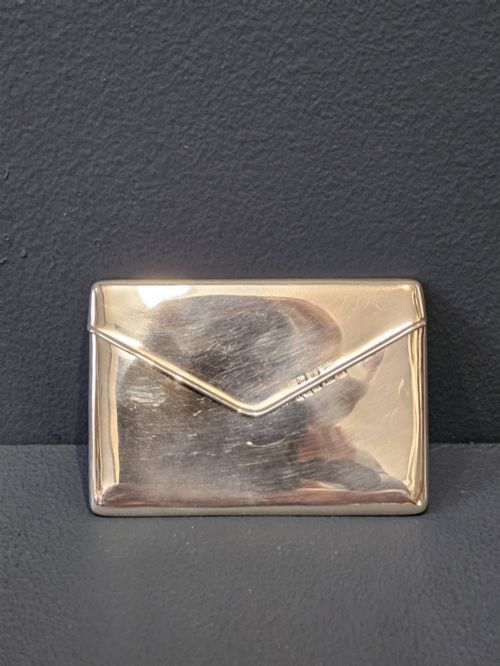
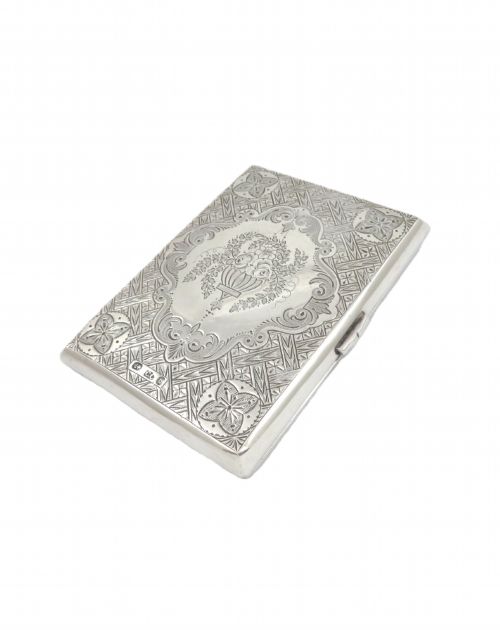
An antique calling card case is a small, rigid container designed to hold the visiting cards that governed Victorian and Edwardian polite society. These pieces reflect a formal era when callers left cards at a residence to signal their arrival or intent. Collectors encounter these items primarily in sterling silver, alongside organic materials like sandalwood, tortoiseshell and mother of pearl.
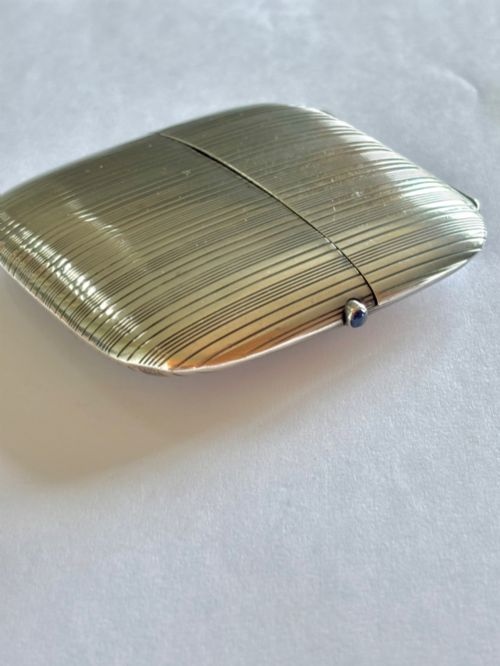
The versions most frequently met on this page date from the mid-nineteenth century through to the Edwardian period, often bearing Birmingham or London hallmarks. Many are fashioned as flat rectangular slip cases or hinged boxes, while others incorporate aide-memoires, stamp compartments or spring-clip mechanisms. Alongside British silver, the selection includes Cantonese carved sandalwood and export silver pieces from the nineteenth and early twentieth centuries.
How they were made
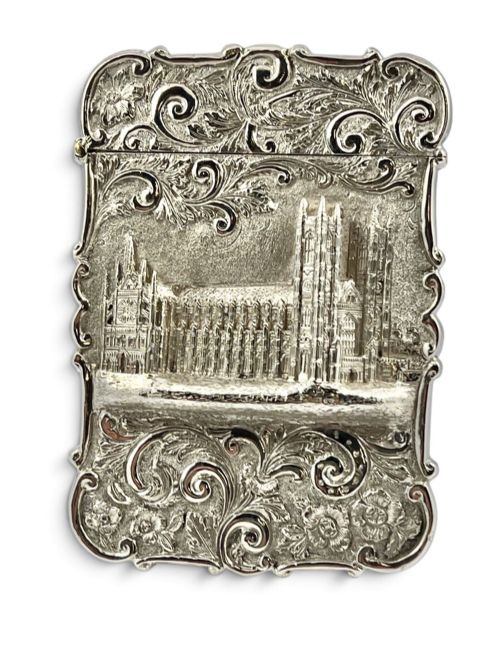
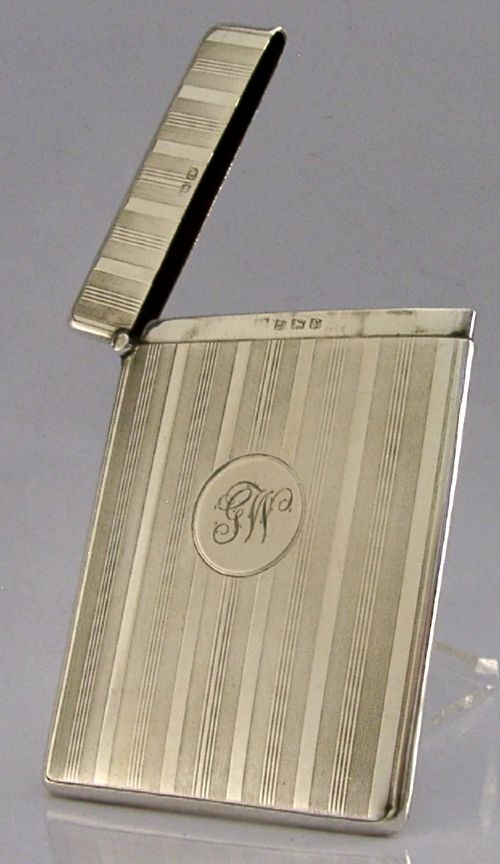
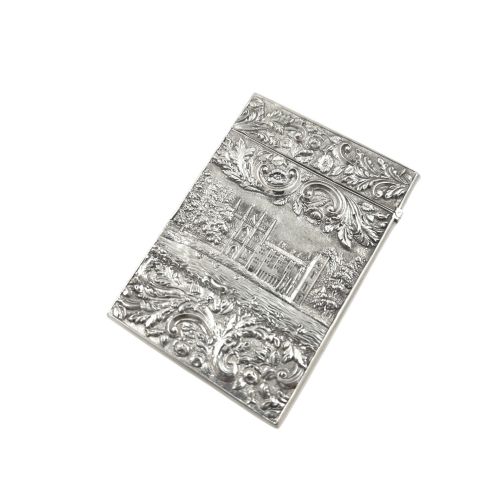
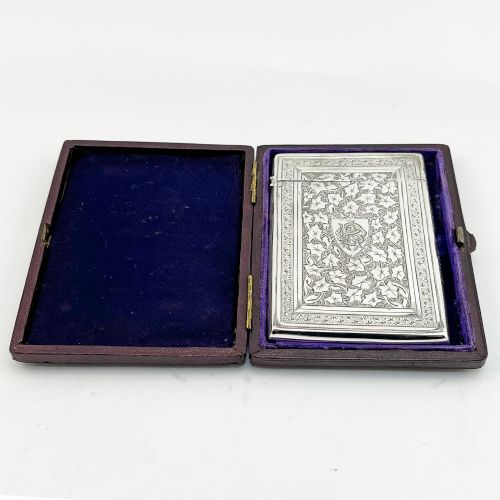
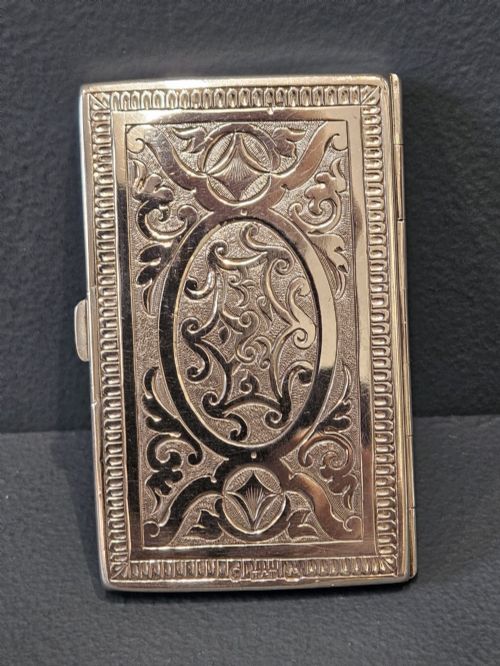
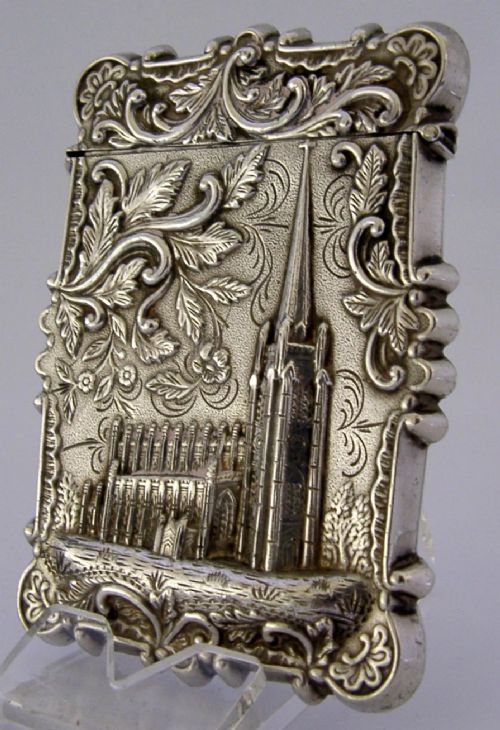
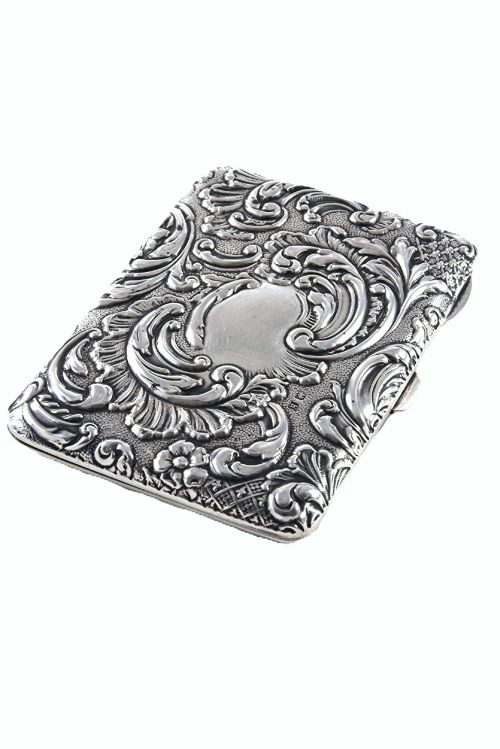
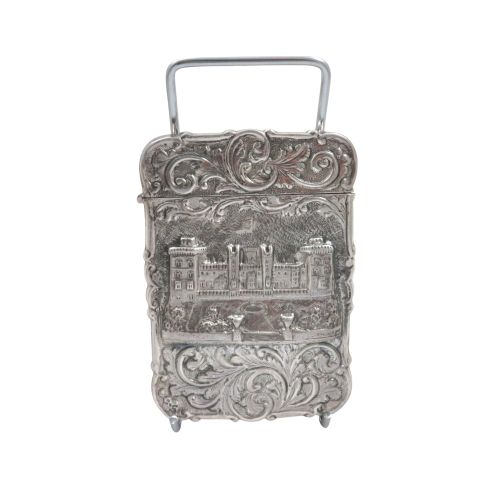
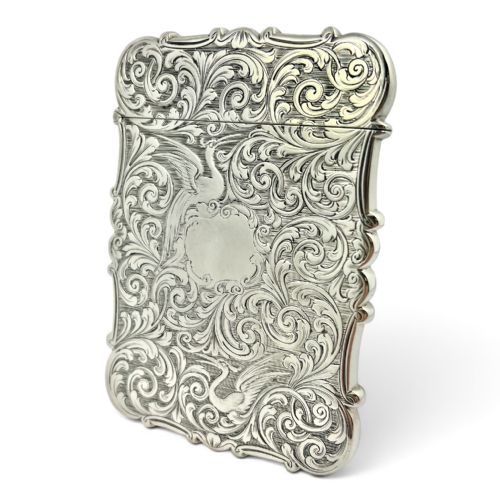
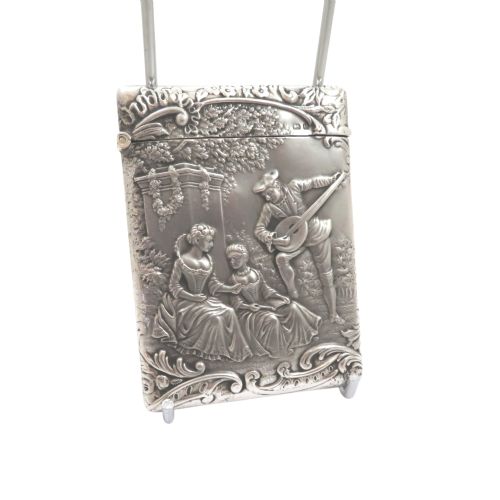
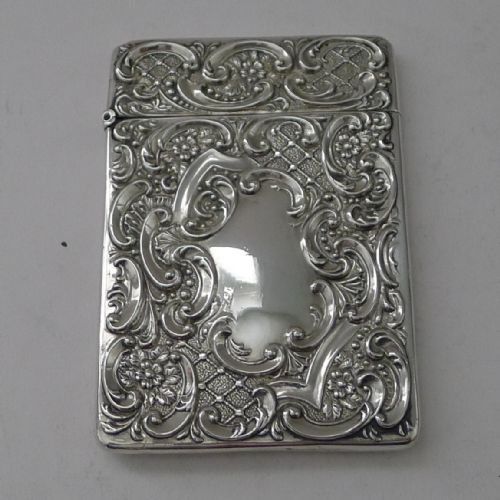
Metal cases relied heavily on die-stamping, repoussé and crisp engine-turning or scroll engraving to create ornate surface patterns. Castle top examples required specialised relief stamping to render intricate architectural landmarks such as Windsor Castle or St Paul's Cathedral in miniature detail. Silver gilt linings were occasionally added to protect the interior metal from tarnishing through daily use.
Organic examples utilised meticulous hand-carving and inlay techniques, particularly evident in Cantonese sandalwood and mother of pearl items. Artisans worked these dense materials with tiny chisels to depict complex garden scenes, figures, birds and floral motifs with deep relief. Individual panels were then assembled into rigid enclosures designed to withstand constant handling in pockets and reticules.
Antique Calling Card Case Retail Price Guide 2026
Typical asking prices for calling card case among the pieces listed under this phrase on Sellingantiques today, from the lower quarter to the upper quarter. They describe what is for sale here now, not the wider market.
Some Victorian cases feature hidden spring mechanisms designed to present your calling card with a sudden, polite snap.
What varies in quality
Quality in metalwork is dictated by the crispness of the engraving and the depth of the relief work. Highly prized castle top pieces depend entirely on the sharpness of the architectural rendering, where master silversmiths achieved photographic levels of detail on a miniature scale. Softer, worn engraving or shallow stamping indicates a lower tier of craftsmanship or excessive past polishing.
In carved organic materials, distinction lies in the precision of the undercutting and the preservation of the natural patina. Pieces that retain deep, multi-layered carving without splintering or loss to the tiny figures and foliage sit firmly at the upper end of the range. Simpler, flat surfaces or muddy carving demonstrate less skilled execution.
Willian Aitken·Nathaniel Mills·George Unite·Foxall and Co·Joseph Gloster
The Antique Calling Card Case Glossary
- Castle top
- A descriptive term for metal card cases featuring a high-relief engraving or stamping of a famous building or landmark on the cover. These architectural scenes are among the most sought-after by specialist collectors.
- Aide-memoire
- A pocket notebook or case incorporating ivory leaves or paper pads alongside a tiny pencil for recording social engagements. They frequently double as calling card holders.
- Repoussé
- A metalworking technique where the artisan hammers the design from the reverse side to form a raised relief on the front. It creates a tactile, three-dimensional decorative surface.
- Silver gilt
- Sterling silver that has been coated with a thin layer of gold on the interior surfaces. This process adds a warm decorative contrast and protects the metal from wear.
- Cantonese export
- Items manufactured in China specifically for the Western market during the nineteenth century. These objects typically feature intricate, dense carvings of traditional figures and landscapes.
Antique Calling Card Case: Frequently Asked Questions
How were calling cards used?
Visiting cards were presented to household servants when visiting acquaintances to signal an arrival, offer condolences or pay respects. The recipient used the cards to keep track of social obligations and reciprocate visits.
Carrying these cards in a dedicated case prevented them from bending or creasing in pockets or handbags. The case itself became a subtle indicator of personal taste and social standing.
How do I date a silver case?
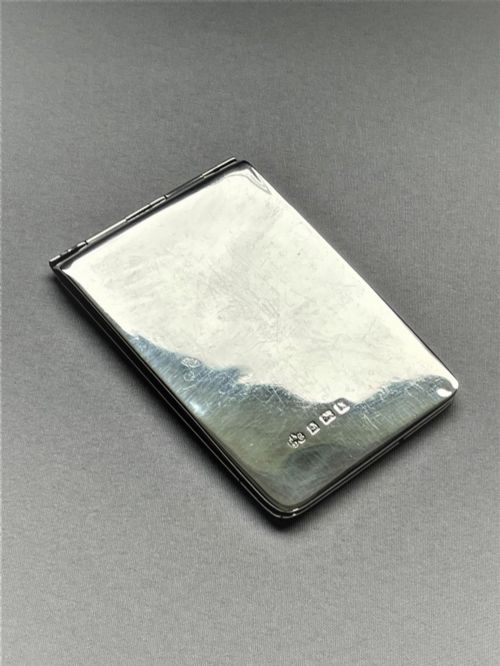
British silver cases can be dated accurately using the hallmarks stamped into the metal, which typically include a maker's mark, a standard mark, a town mark and a date letter. Assay office symbols from Birmingham and London are especially common on these pieces.
Stylistic clues also help narrow down the period, such as the architectural focus of mid-Victorian castle top designs versus the geometric lines of later Art Deco examples.
Can these cases hold modern cards?
Most antique calling card cases were made for nineteenth-century visiting cards, which measured significantly smaller than modern business cards. Standard modern credit cards and business cards will generally not fit inside the rigid compartments.
Buyers often repurpose them to hold folded notes, stamps or modern medications, or collect them purely as historical display objects.