
Antique Cabriole Footstool
An antique cabriole footstool brings tactile comfort and period character to a room through gracefully curved wooden legs and upholstered seating.
Antique Cabriole Footstool
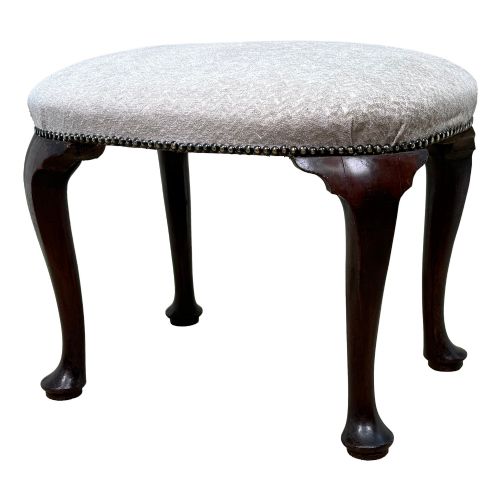
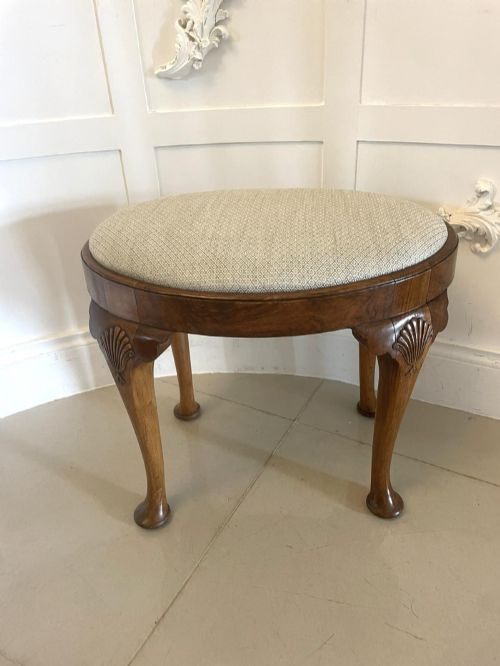
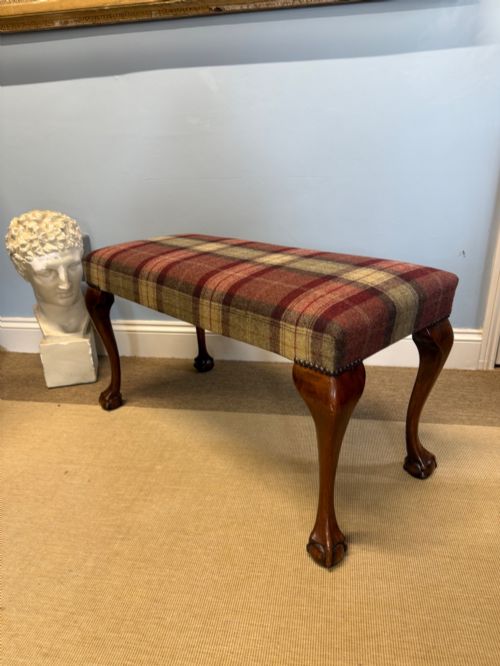
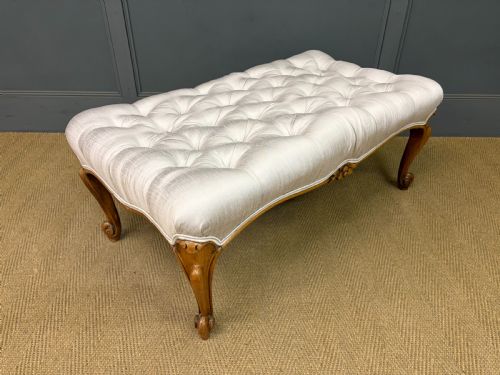
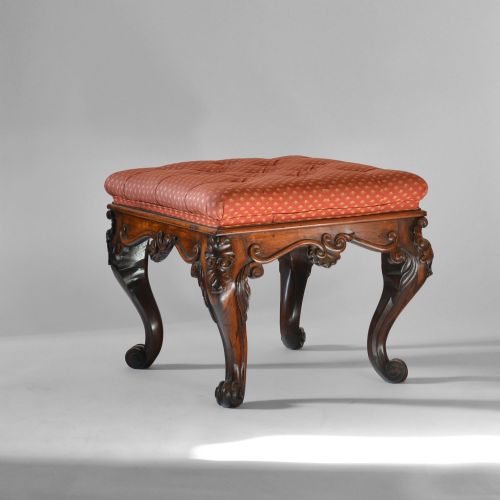
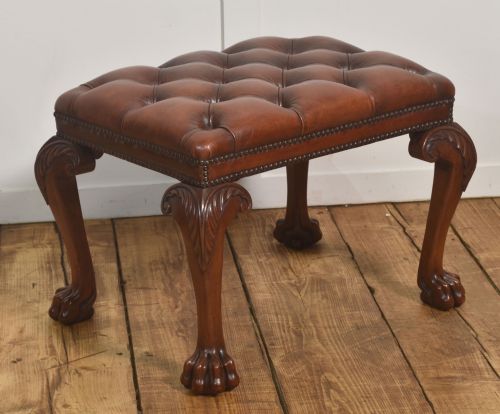
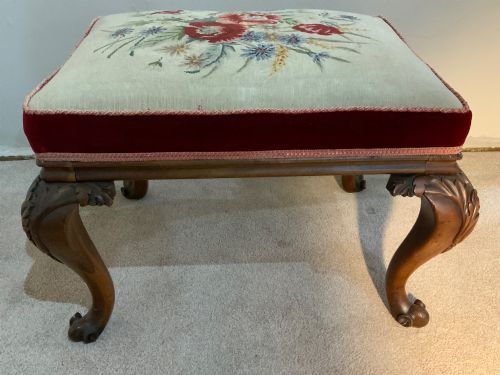
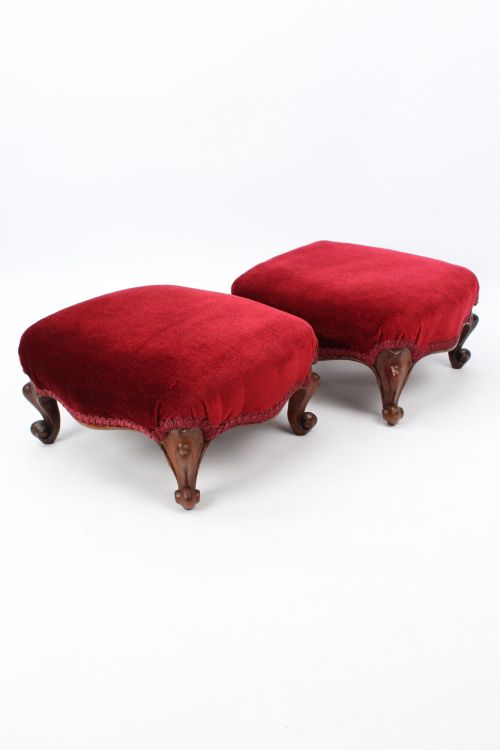
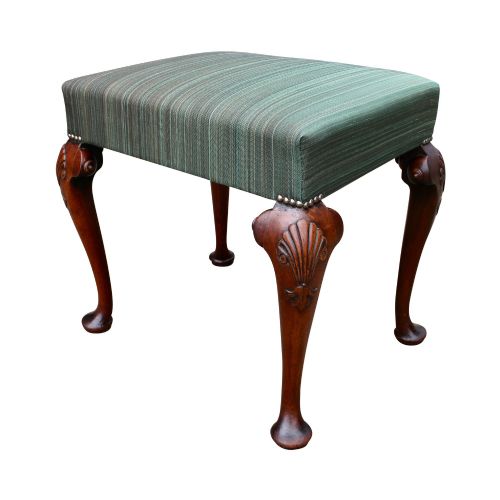
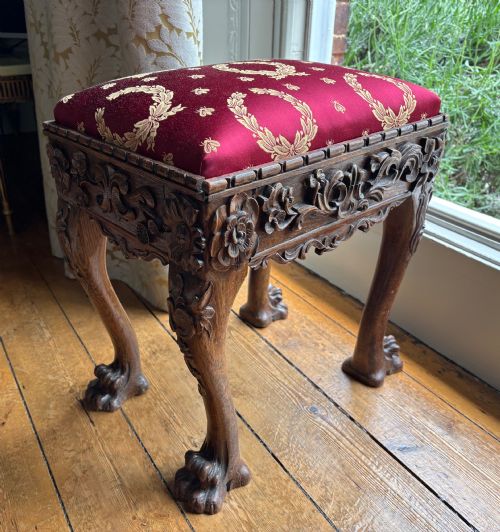
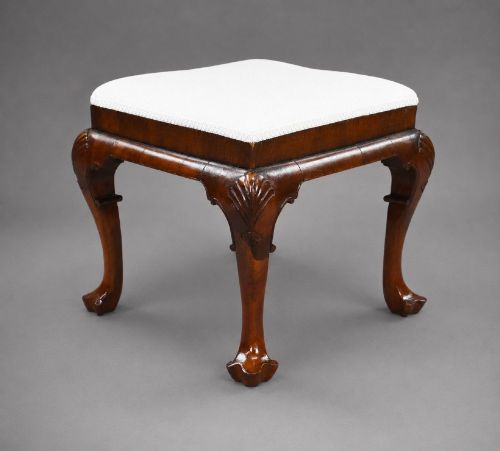
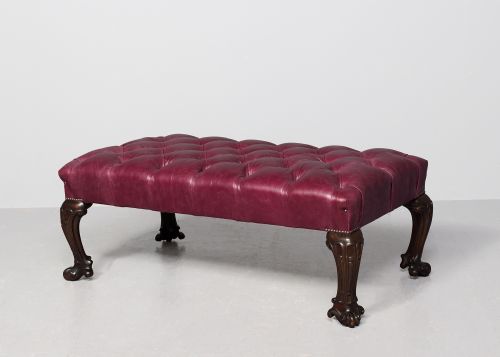
An antique cabriole footstool is a low seating piece supported by curving legs that swell outward at the knee and taper down to pad or ball and claw feet. You will most frequently encounter Victorian and late nineteenth-century walnut or mahogany examples on this page, often built as dressing table stools or fireside rests.
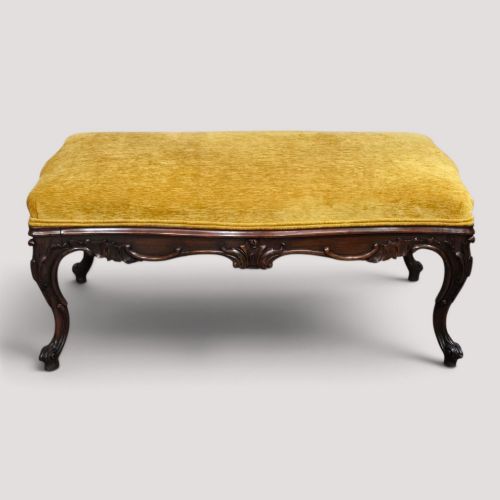
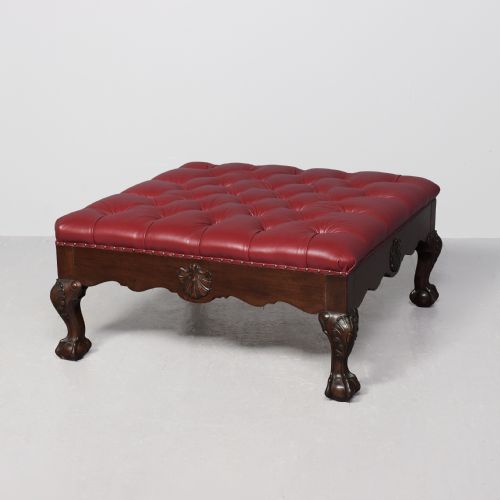
The evidence spans from mid-eighteenth-century Irish elm and mahogany pieces up to twentieth-century revivals. Alongside compact low footstools, the selection includes larger benches, dressing stools and occasional chaise longue forms sharing the characteristic shaped leg.
Design influences draw heavily on revival aesthetics, notably Queen Anne, Chippendale, and Louis XV styles. These range from solid walnut frames with subtle knee carving to grander rosewood and mahogany pieces finished with elaborate upholstery.
Materials and Construction
Frames rely primarily on dense hardwoods such as walnut, mahogany, rosewood, and occasionally beech or elm, selected for their structural strength under load. Artisans shaped the signature leg profiles directly from solid timber blocks using saws and hand chisels before smoothing the surfaces.
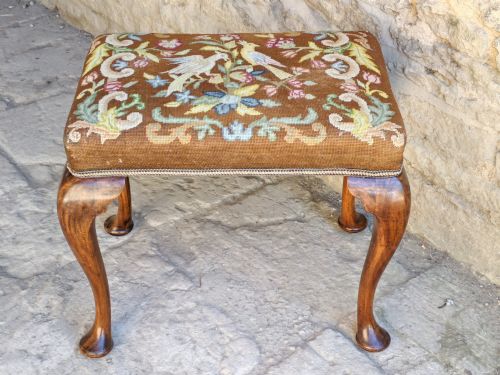
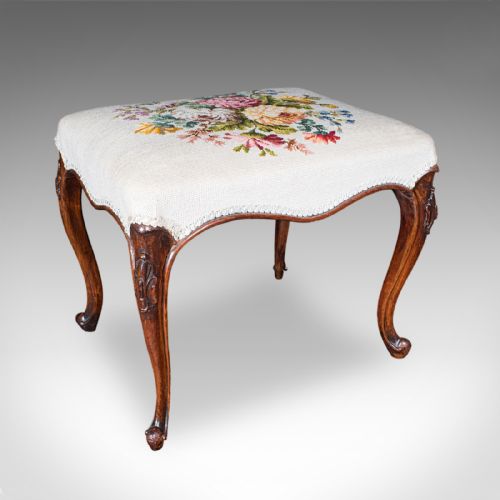
Upholstery techniques involve textile coverings such as wool, needlepoint tapestry, patterned fabric, and burgundy hide stretched over padded seats. Brass tacks or decorative trims frequently secure the fabric edges to the wooden framework.
Listings feature walnut as the dominant wood choice, closely followed by mahogany and rosewood across various nineteenth-century periods.
Assessing Quality
Superior examples reveal themselves in the crispness and depth of hand-carved details along the knees and scroll feet, showing the woodcarver's command of line. Heavier timber framing and refined proportions distinguish a master-built piece from simpler production items.
The integrity of the original wood finish and the authenticity of period upholstery or sympathetic re-covering significantly impact the character of the piece. Subtle variations in timber grain and the harmony between the carved frame and its textile top separate ordinary seating from exceptional survivals.
The Antique Cabriole Footstool Glossary
- Cabriole leg
- A furniture leg that curves outward at the top and inward near the foot, mimicking animal limbs. It gained widespread popularity during the eighteenth century and saw frequent revivals in Victorian design.
- Needlepoint
- A type of canvas work embroidery utilised for durable upholstery on seats and footstools. This stitched textile often displays floral or geometric motifs.
- Queen Anne style
- An English design aesthetic characterised by curvilinear forms, cabriole legs, and understated elegance. Eighteenth-century originals inspired numerous revival pieces throughout the Victorian era.
- Rococo revival
- A nineteenth-century artistic movement that re-introduced asymmetrical scrollwork, naturalistic shell motifs, and flowing curves into furniture design.
- Goncalo Alves
- A dense exotic hardwood with striking contrasting grain patterns, occasionally utilised for nineteenth-century dressing table furniture and stools.
Antique Cabriole Footstool: Frequently Asked Questions
How do I identify a true antique cabriole leg?
Examine the transition where the leg joins the seat frame, looking for hand-cut joinery and signs of age in the timber rather than modern mechanical fixings.
Genuine period pieces display subtle irregularities in the carved curves, reflecting hand tool work rather than uniform machine production.
Were these stools used only for feet?
Historical records and dimensions show they served multiple domestic purposes, functioning equally as dressing table seats, piano benches, and fireside rests.
Many larger surviving examples were specifically constructed as dressing stools to accompany bedroom suites.
How do I match a stool to my interior?
Consider the wood tone and fabric weight in relation to your existing furniture, pairing walnut or mahogany frames with complementary textiles.
Low footstools fit easily beside firesides or armchairs, while larger upholstered benches suit the end of a bed or a dressing area.
What is the difference between original and replaced upholstery?
Original upholstery retains period textiles and traditional stuffing materials like horsehair, showing authentic wear consistent with age.
Replaced upholstery utilises modern internal padding and new fabric, which often ensures greater structural firmness for daily use.