
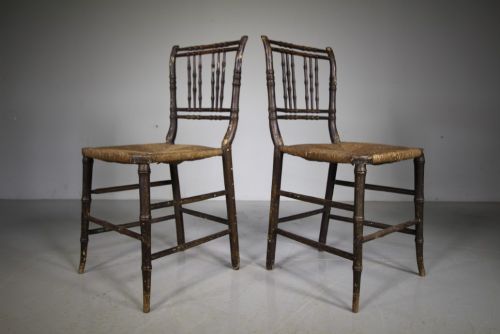
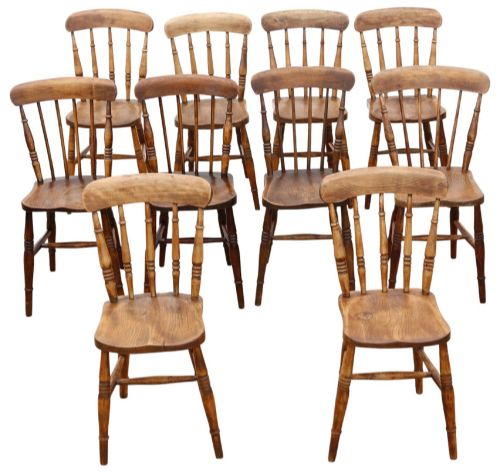
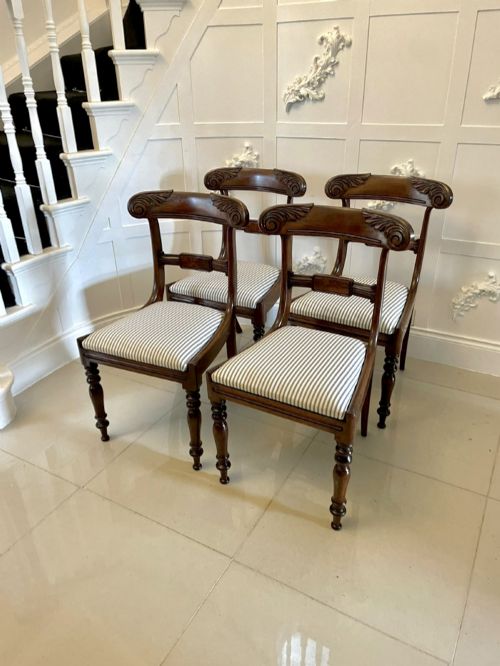
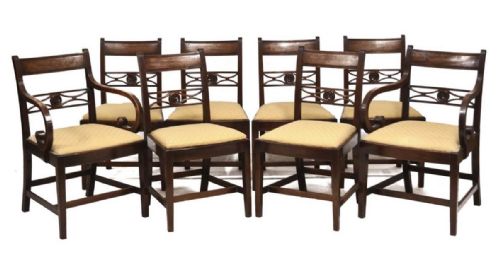

Antique Brown Side Chairs
These antique brown side chairs bring practical seating and deep timber tones into a room, offering sturdy construction alongside period character.
Antique Brown Side Chairs
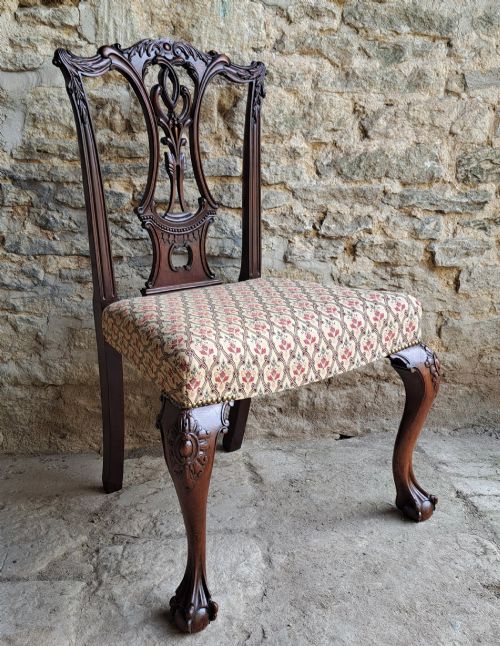
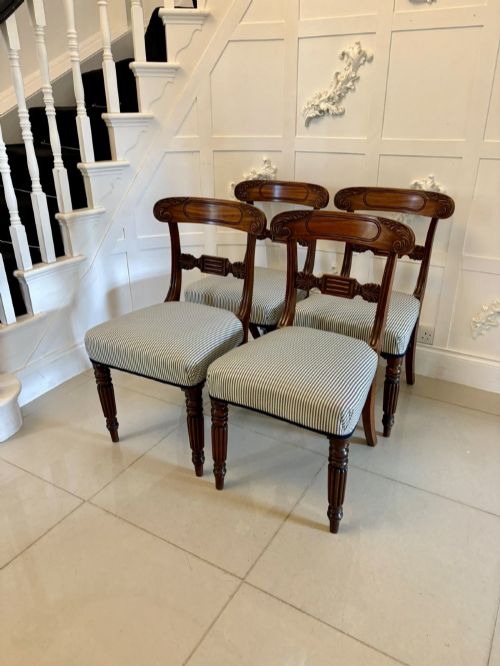
These pieces encompass seating designed primarily without arms for dining, hall, or desk use, constructed in timber across several centuries. You encounter them most frequently as single chairs, matched pairs, or larger sets intended around a dining table.
The selection spans periods from the eighteenth century through to the Edwardian era, taking in Georgian, Victorian, and Regency forms. Timber shades range from pale fruitwood to deep, polished mahogany and walnut.
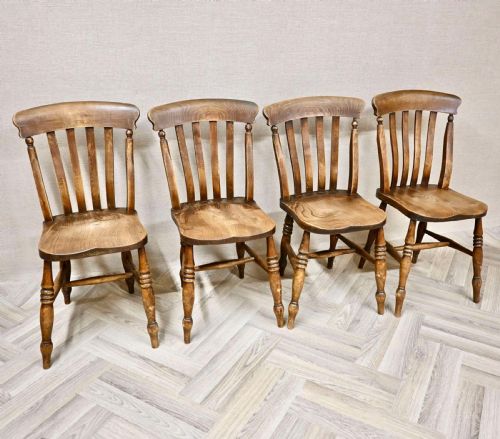
Makers produced these chairs for various domestic settings, from formal dining rooms to country kitchens. Regional variations appear in country windsors and formal town seating alike.
Materials and construction
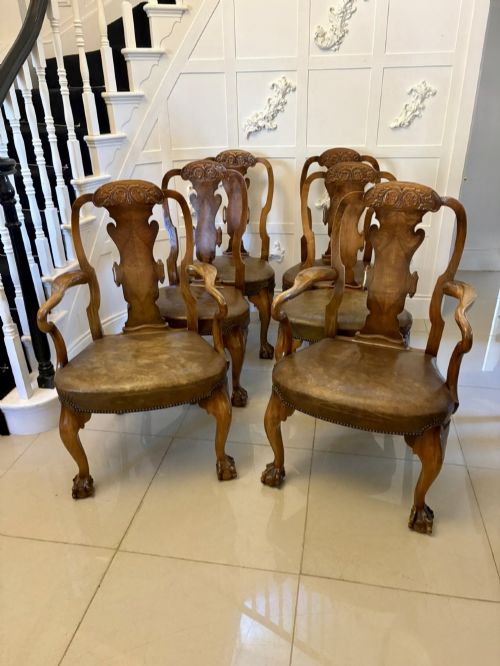
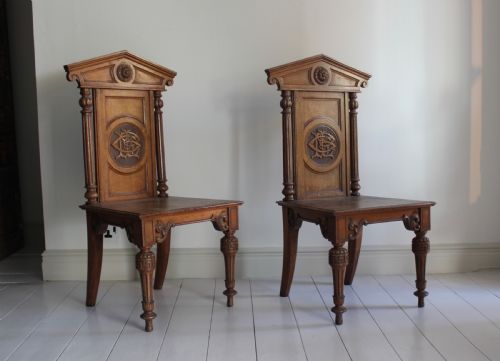
Cabinet makers utilised dense hardwoods such as mahogany, walnut, and oak for formal dining and hall seating. Turning, carving, and joinery methods defined the regional style and period.
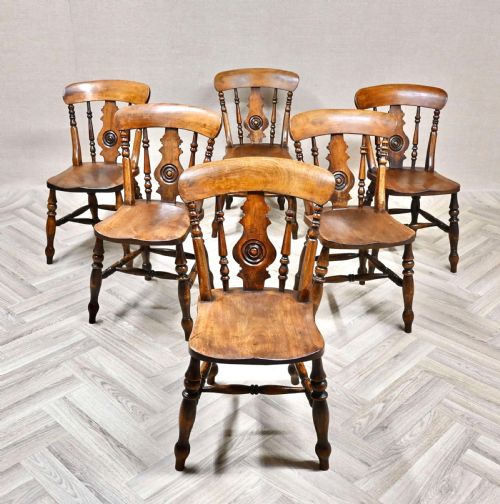
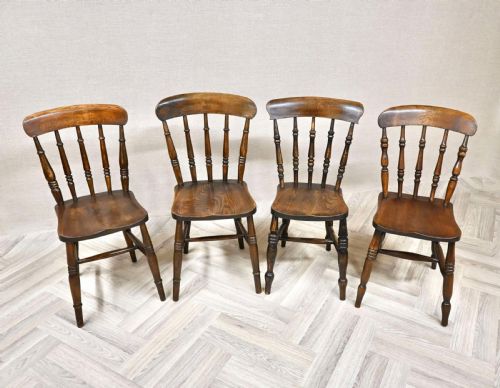
Country workshops favoured elm, beech, fruitwood, and pine for kitchen and Windsor chairs, often combining timbers within a single frame for structural strength.
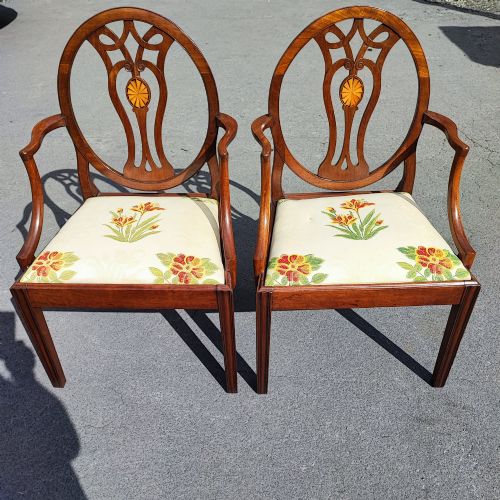
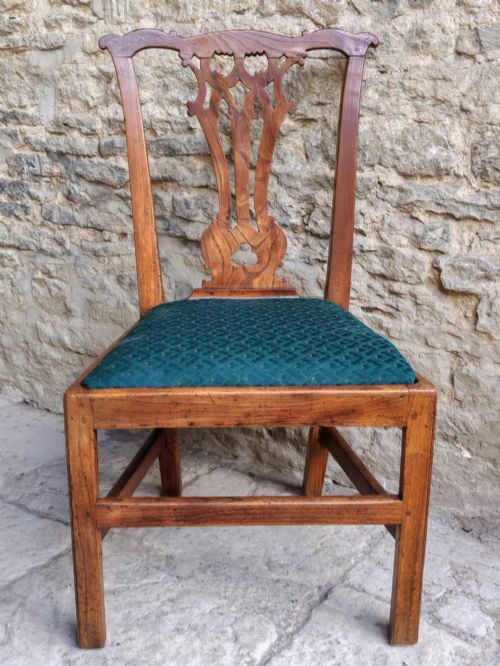
Upholstery, when present, relied on textiles, fabric, leather, or tapestry secured over webbing or stuffed pads, complementing the exposed timber frames.
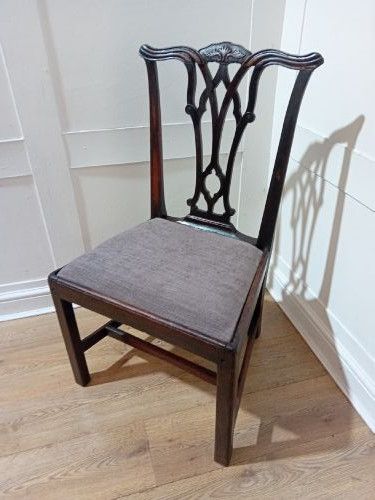
Harlequin sets bring together chairs that share a period and timber yet display subtle individuality in every carved splat.
Distinctions in quality
The depth of timber selection and the crispness of hand carving separate standard production from superior examples. Better workshops employed heavier gauge timbers and more refined joinery techniques.
Integrity of the original frame structure and the retention of surface finish dictate desirability. Later alterations or replaced components diminish the integrity of period pieces.
The Antique Brown Side Chairs Glossary
- Windsor chair
- A wooden chair constructed with a solid saddle-shaped seat into which the legs and back spindles are wedged. This form originates in vernacular country traditions.
- Balloon back
- A rounded, oval-shaped chair back popular during the Victorian period. The curved timber profile resembles the outline of a balloon.
- Bar back
- A horizontal wooden slat or rail running across the upper back of a chair. This style appears frequently on nineteenth-century dining seats.
- Sgabello
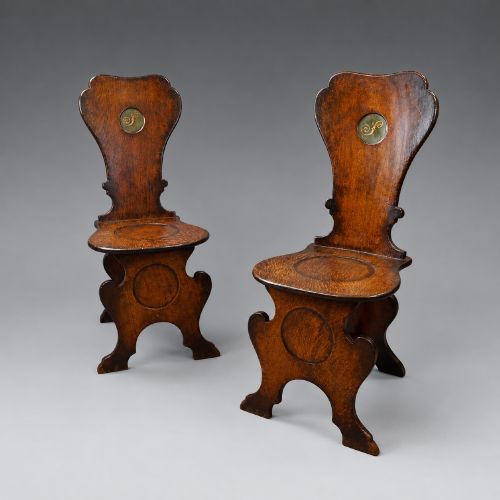
- An early Renaissance-style hall chair with solid trestle supports and an octagonal seat. These pieces serve primarily as decorative reception seating.
Antique Brown Side Chairs: Frequently Asked Questions
How do I date an antique brown side chair?
Dating relies upon examining the timber species, joinery methods, and stylistic cues present in the design. Certain leg profiles, stretcher arrangements, and carving motifs align with specific reigns and centuries.
Secondary woods used in the frame construction and tool marks left by hand saws also provide reliable indicators of age.
Are these chairs suitable for daily dining use?
Many period chairs retain sufficient structural strength for regular seating at a dining table. Checking the stability of the joints ensures safe everyday use.
Heavier hardwood frames generally withstand daily use better than lighter vernacular or country kitchen examples.
How do I maintain the timber finish?
Maintaining the wood involves applying a microcrystalline wax polish periodically to nourish the surface and protect the grain. Avoid placing wooden seating near direct heat sources or strong sunlight.
Gentle dusting with a soft, dry cloth prevents the accumulation of grit that can scratch old polishes.
What is the difference between a side chair and a dining chair?
A side chair is a general term for any chair without arms, designed to be placed at the side of a room or table. A dining chair specifically refers to seating proportioned for use around a dining table.
Many antique side chairs function perfectly well as dining seats due to their standard seat heights and proportions.