




Antique Bronze Relief Carving
These pieces of antique bronze relief carving bring tactile depth to interiors through cast figures and ornament.
Antique Bronze Relief Carving
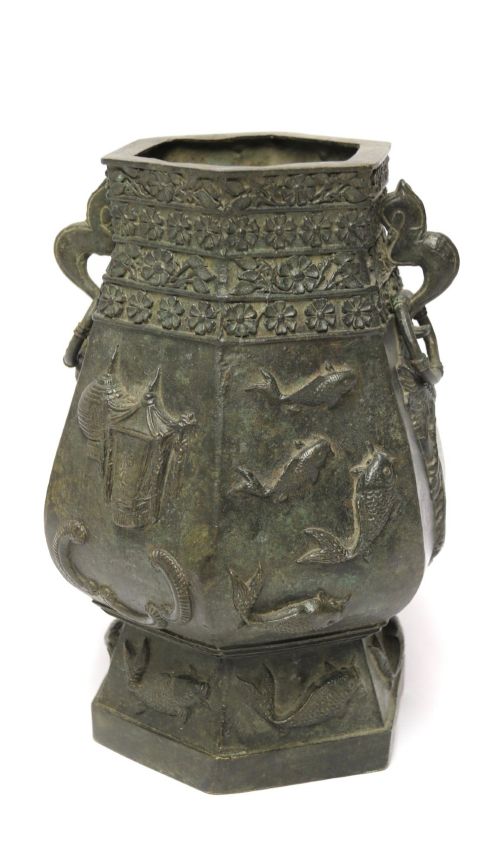
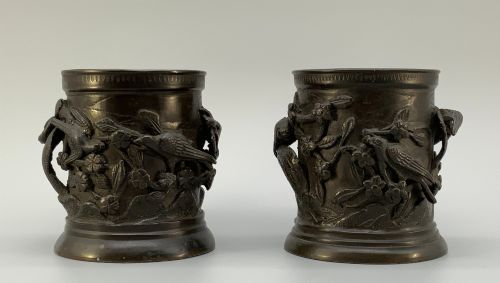
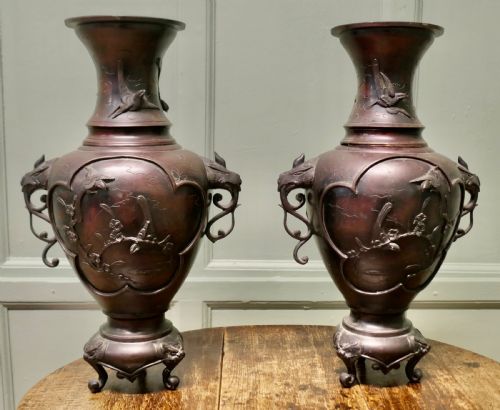
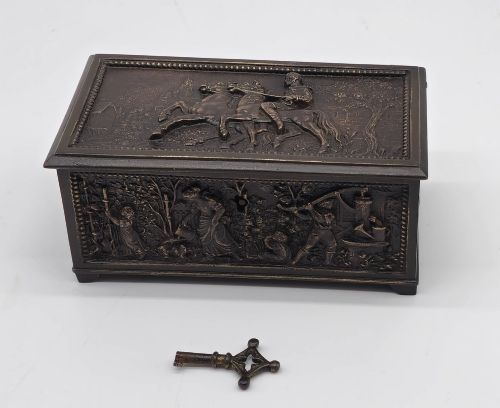
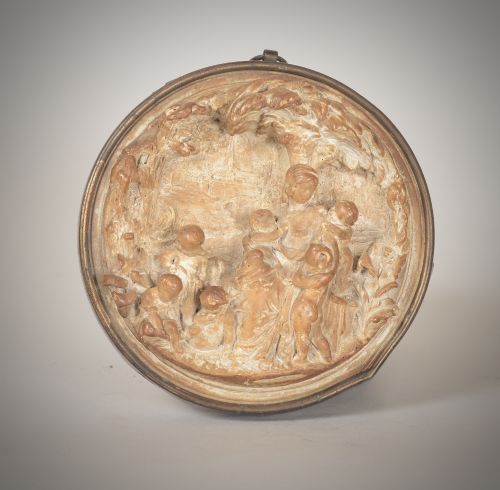
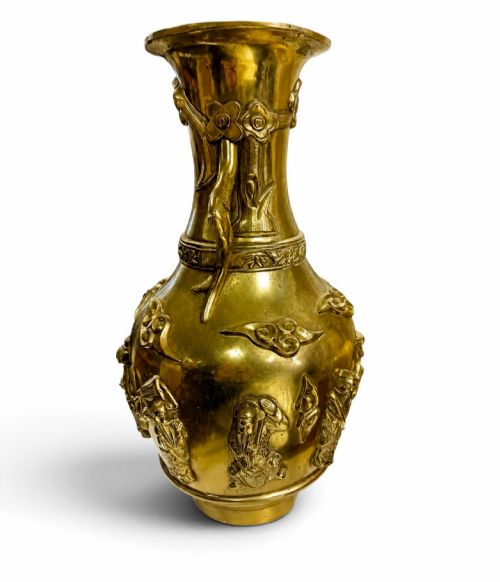
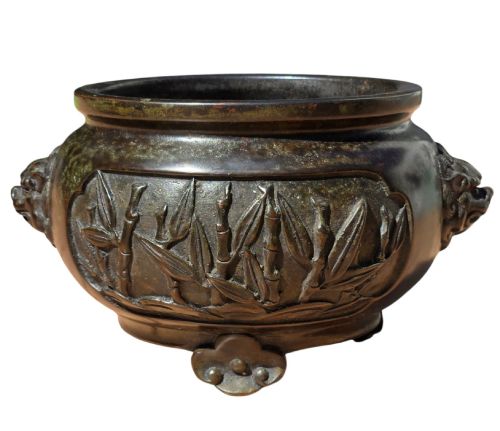
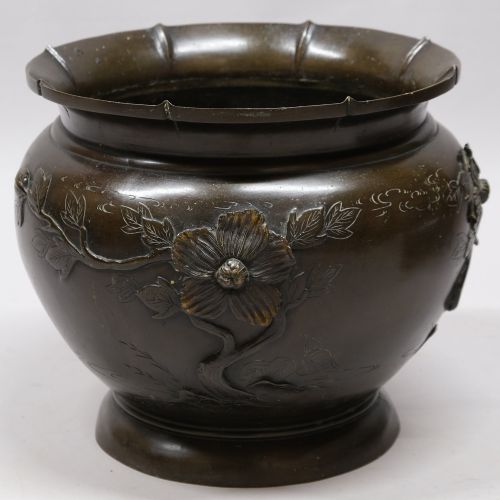
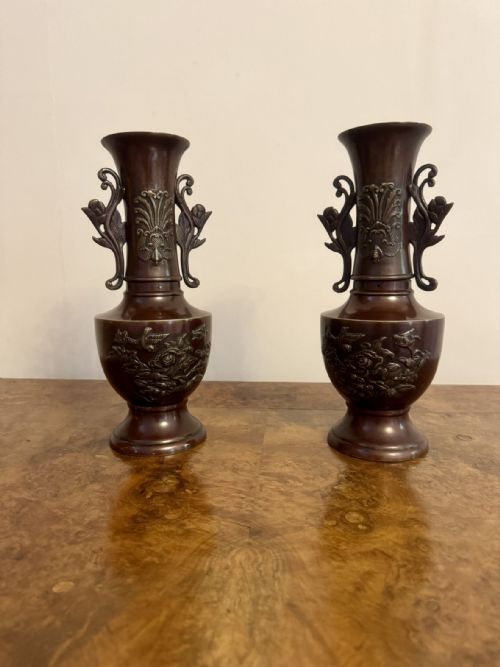
When you examine antique bronze relief carving on this page, you encounter cast metal vessels, decorative urns, and sculptural table lamps originating from nineteenth-century Japan, China, and Europe. Japanese Meiji period vases and Chinese baluster vessels dominate the selection, alongside Italian Grand Tour souvenirs and Victorian decorative pieces.
The forms range from large jardinieres and temple censers to small jewellery caskets and furniture mounts. Makers utilised patinated bronze, gilt metal, and copper alloys to create dimensional scenes featuring birds, blossoms, dragons, and human figures.
What varies in quality
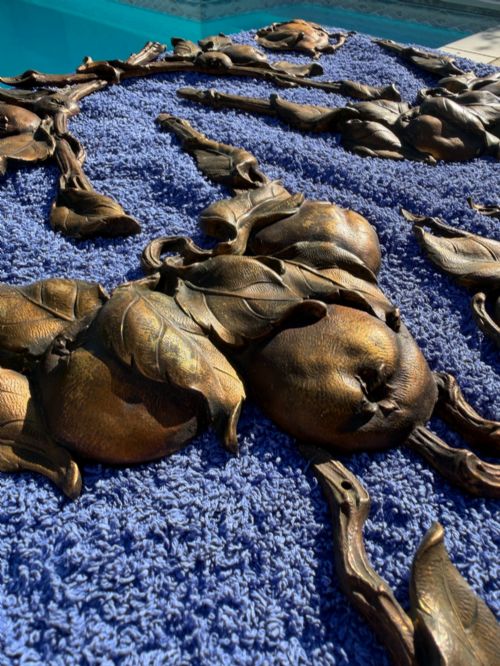
The distinction between standard production and superior craftsmanship rests in the crispness of the chased detail and the depth of the casting. Master metalworkers achieved complex undercuts and lifelike movement in figures, whereas simpler pieces rely on shallow surface stamping.
Proportion and material weight signal the standard of an object, with solid, well-balanced vessels demonstrating greater structural integrity. The subtlety of the patination and the precision of fitted components further separate ordinary items from exceptional works.
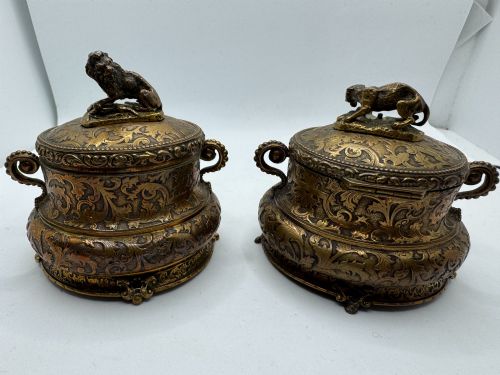
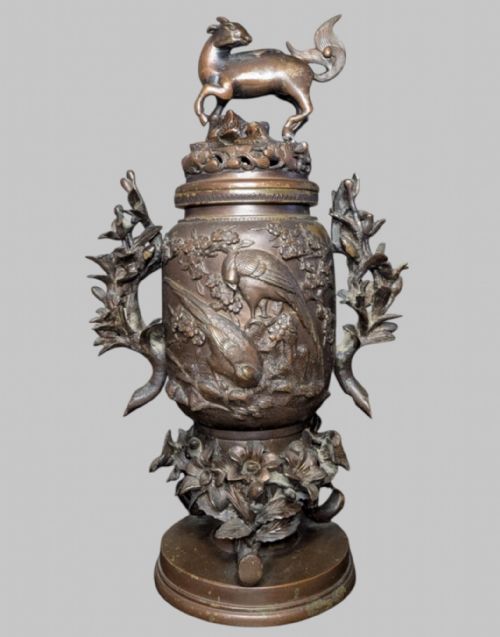
Monkeys and goats occasionally guard the vessels, appearing as sculptural finials on nineteenth-century incense burners and caskets.
Poix Blin·Kibundo
The Antique Bronze Relief Carving Glossary
- Relief
- Sculpture where the figures project from a background plane. High relief projects significantly, while low relief stays flatter.
- Patinated Bronze
- Metal treated with chemicals to produce a stable surface colour. This finish protects the alloy and adds visual depth.
- Meiji Period
- The era in Japanese history spanning from 1868 to 1912. Metalwork from this time achieved worldwide renown for intricate casting.
- Censer
- A vessel designed for burning incense. These often feature elaborate pierced lids and raised panels depicting auspicious motifs.
- Baluster
- An architectural form resembling a vase or pillar with a rounded lower body and a slender neck. Many metal vases adopt this profile.
Antique Bronze Relief Carving: Frequently Asked Questions
What is an antique bronze relief carving?
An antique bronze relief carving is a cast metal object featuring raised ornamental scenes or figures created by hand-finishing techniques. These pieces include vases, censers, and plaques originating primarily from nineteenth-century workshops in Asia and Europe.
Buyers acquire them for their tactile surface decoration and the rich patination developed over decades. Each item represents traditional metalworking skills passed down through generations of artisans.
How do I care for bronze relief?
Maintain antique bronze by dusting the surface gently with a soft, dry brush to prevent dirt accumulation in the carved recesses. Avoid liquid cleaners or abrasive cloths, which can strip away the historical patination.
Keep the pieces away from excessive moisture and direct sunlight to preserve the metal finish. Occasional gentle buffing with a clean microfibre cloth helps maintain a natural lustre.
How do I identify a Meiji period bronze?
Meiji period bronzes often feature distinct Japanese iconography such as dragons, bamboo, and birds set against heavily textured backgrounds. Artisans in this era frequently signed their work with character marks or artist signatures cast directly into the base.
Look for dynamic compositions and meticulous hand-chasing that distinguish Japanese casting from contemporary European equivalents. The specific bronze alloy composition and dark chemical patinas also point to late nineteenth-century Asian production.