

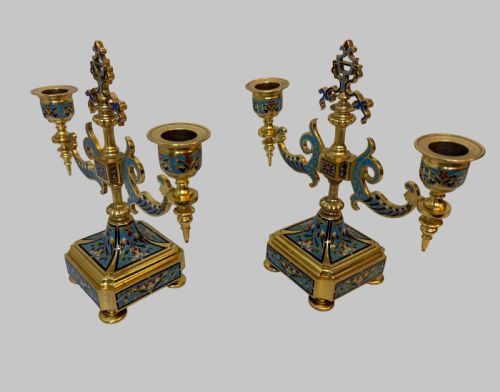


Antique Bronze Mantel Lights
Antique bronze mantel lights illuminate a room with the refined weight of past centuries, bringing sculptural form and steady flame to a shelf or sideboard.
Antique Bronze Mantel Lights
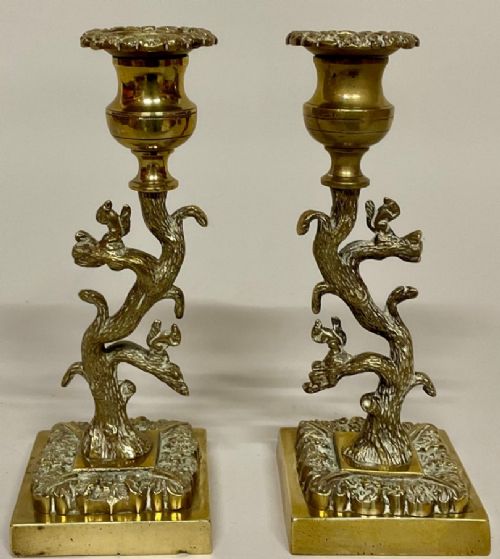
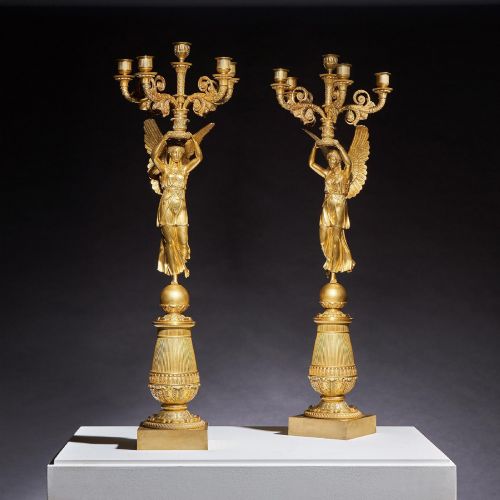
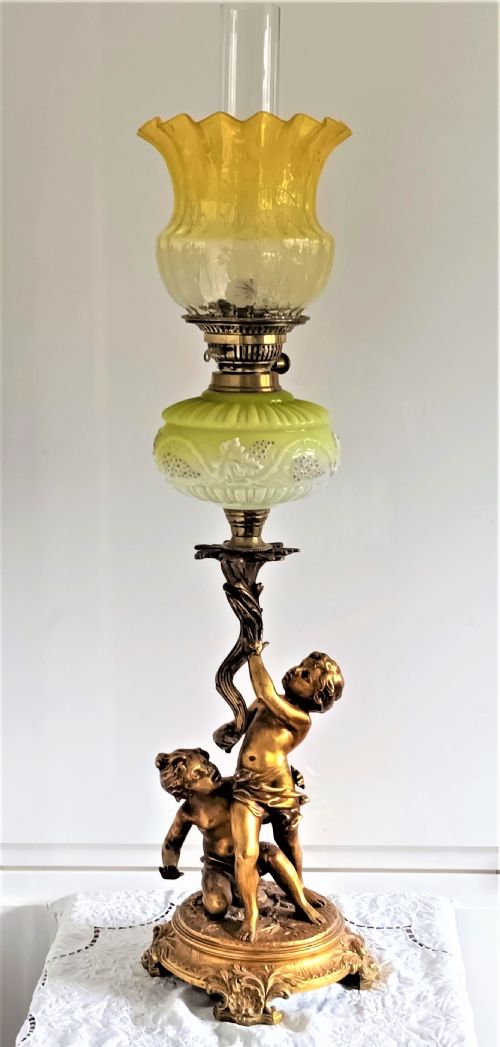
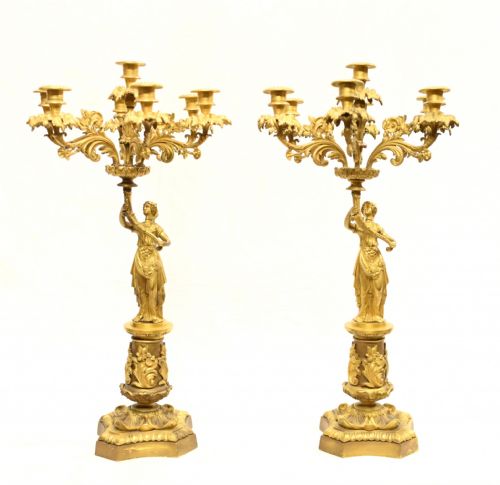
When searching for antique bronze mantel lights, a buyer encounters a diverse group of domestic illumination pieces designed to sit on a chimney piece or sideboard. The selection spans single candlesticks, multi-branched candelabra, and occasionally adapted oil or table lamps.
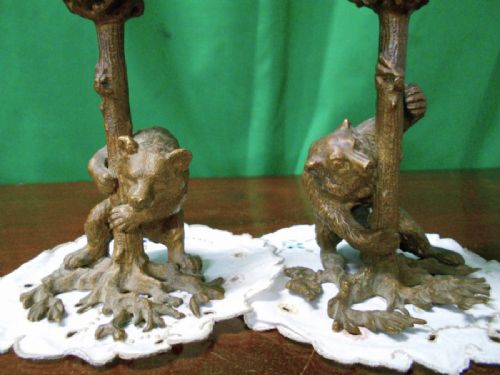
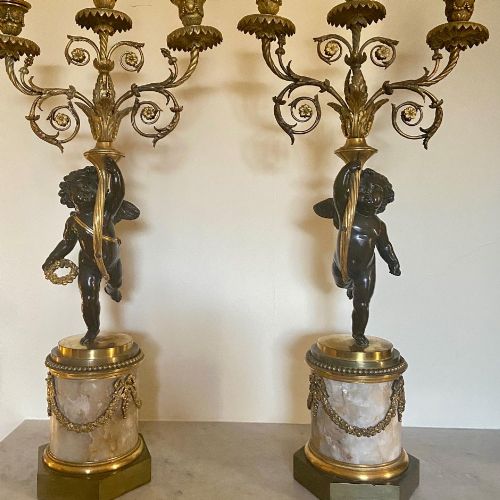
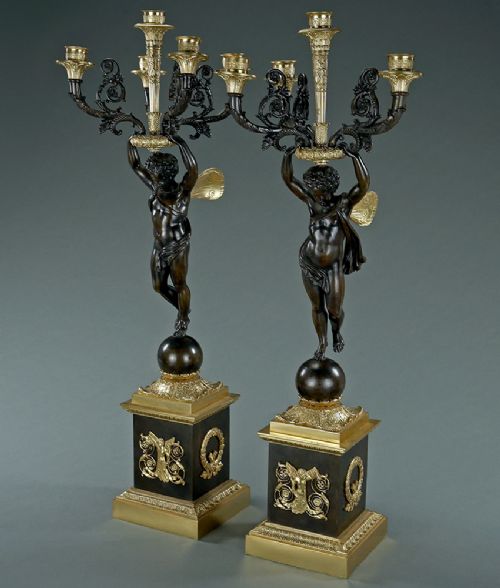
The most common examples on this page are French and English pairs dating from the nineteenth century, reflecting periods such as Regency, Empire, and Victorian. These items frequently incorporate figural elements like putti, animals, or classical figures alongside functional sconces.
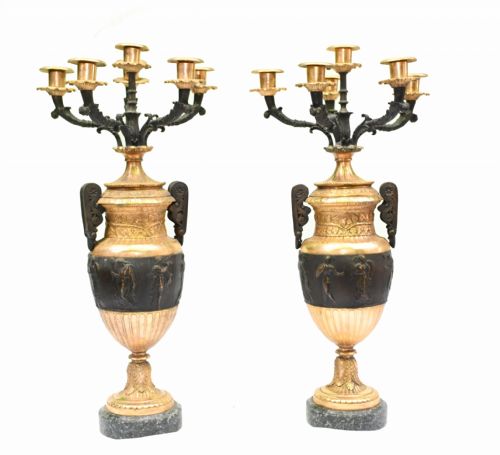
Beyond standard bronze, these mantel pieces often integrate contrasting materials such as white or sienna marble bases, gilt ormolu mounts, and occasionally champlevé enamel or glass components. They function simultaneously as decorative sculpture and sources of ambient light.
Materials and Working Methods
The construction of these pieces relies heavily on casting bronze, brass, or spelter, which was then chased and finished by hand to sharpen the intricate details of foliage, drapery, or anatomy. Ormolu, or mercury gilding, was frequently applied to highlight specific architectural or sculptural elements against dark patinated surfaces.
Many nineteenth-century examples combine metalwork with stone, mounting bronze figures and sconces onto turned or polished marble and slate plinths to provide stability and visual contrast. Additional decorative techniques visible in the material record include enamel work and glass lustres.
Makers utilised specialised casting and assembly methods to support multi-arm candelabra, ensuring that branches and drip pans could bear the weight of candles safely. The combination of patinated and gilded finishes required precise chemical treatments that have endured across generations.
Listings feature items spanning the eighteenth through the twentieth century, with nineteenth-century French and English workshop productions dominating the selection of bronze mantel lights.
Distinctions in Execution
The degree of crispness in the casting separates superior mantel pieces from simpler commercial output, visible in the depth of feathering on wings, fur on animals, or the sharpness of acanthus leaves. Master founders invested significant labour in hand-chasing the metal after it left the sand or lost-wax mould.
The integration of materials dictates the sophistication of an object, where the inclusion of carefully selected marble bases, fine ormolu gilding, and original rock crystal or glass components elevates the overall harmony. Lesser pieces rely on uniform patination or substitute harder bronze with softer spelter.
Compositional balance and sculptural proportion distinguish ambitious workshop output from standard production, ensuring that figures retain naturalistic movement even when supporting heavy candelabra arms.
Francois Redmond·Pierre Philippe Thomire·Thomas Hope·Henry Dasson·Galle
The Antique Bronze Mantel Lights Glossary
- Ormolu
- Gilded bronze produced by applying a mercury and gold amalgam to a bronze object and heating it until the mercury vaporised. This technique creates a durable, rich golden surface characteristic of fine French decorative arts.
- Patinated bronze
- Metal that has been treated with chemical solutions or natural processes to develop a stable, dark surface coloration. This finish protects the underlying alloy and accentuates sculptural contours.
- Spelter
- A zinc alloy frequently utilised as a less expensive alternative to bronze during the nineteenth century. It accepts patination and metallic paint well but is softer and lighter than genuine bronze.
- Candelabra
- A branched candlestick designed to hold multiple tapers simultaneously from a single central stem. They range from simple two-arm designs to grand multi-light fixtures.
- Campana
- A candle socket shaped in the inverted form of a classical bell. This silhouette appears frequently on Regency and Empire mantel pieces.
Antique Bronze Mantel Lights: Frequently Asked Questions
What is the difference between bronze and spelter?
Bronze is a heavy, durable copper alloy that takes fine chasing and deep patination, whereas spelter is a softer, lighter zinc-based metal often used for more commercial nineteenth-century figures.
Items cast in spelter generally feel lighter in the hand and may show different wear patterns on raised edges compared to genuine bronze.
How do I identify Regency period pieces?
Regency mantel pieces typically display clean classical lines influenced by ancient Rome and Greece, often featuring dark patinated bronze paired with bright ormolu mounts.
Look for motifs such as sphinxes, acanthus leaves, and campana sconces supported on square or stepped plinths.
Were these lights originally wired for electricity?
Almost all pieces on this page were made to hold wax candles or burn oil, designed long before domestic electric wiring existed.
Any modern electrical components are subsequent adaptations that have been fitted into the original structural channels.
Why are marble bases used on bronze lights?
Marble plinths provide essential weight at the base to stabilize heavy multi-arm candelabra and prevent tipping.
They also introduce a contrasting plane of smooth colour, such as white, sienna, or black slate, beneath the metallic figures.