

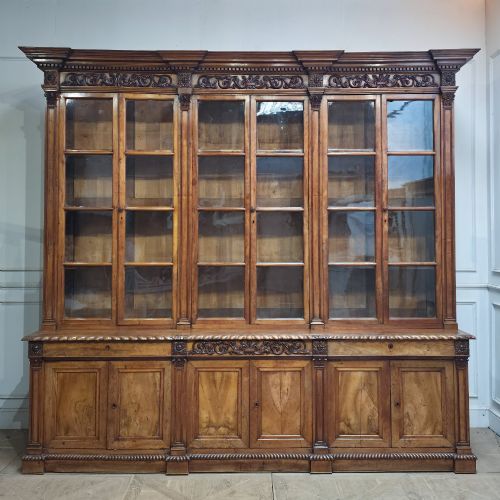
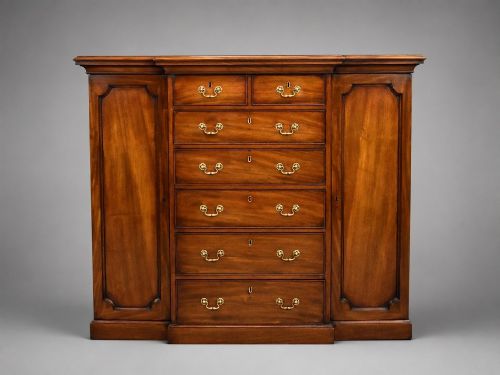


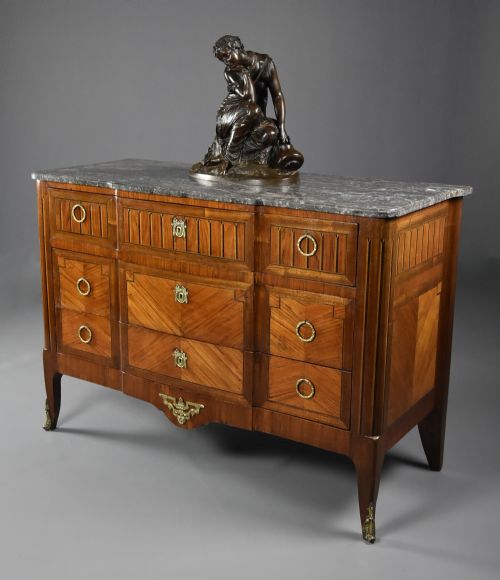


Antique Breakfront Dresser
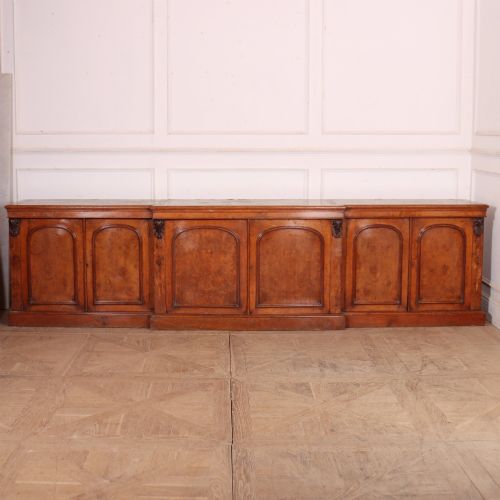
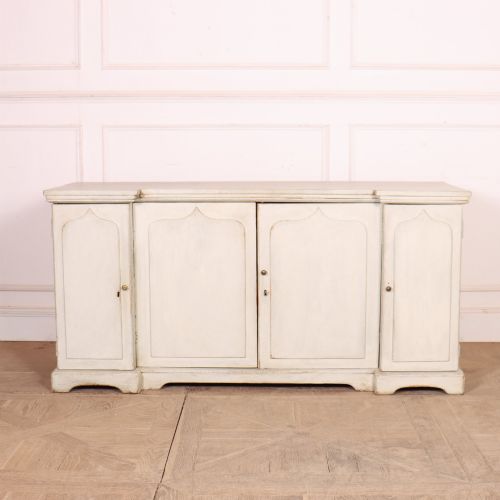
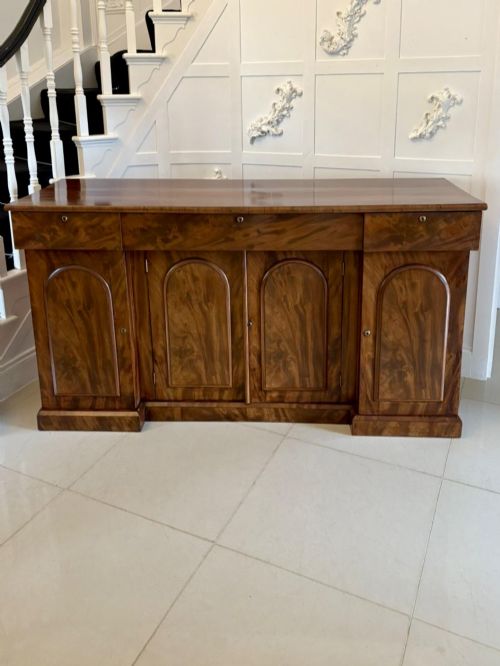
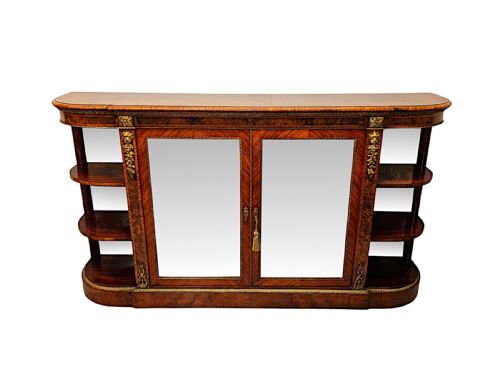
An antique breakfront dresser brings architectural presence and ample storage to a room, offering a projecting central section that defines its classic silhouette.
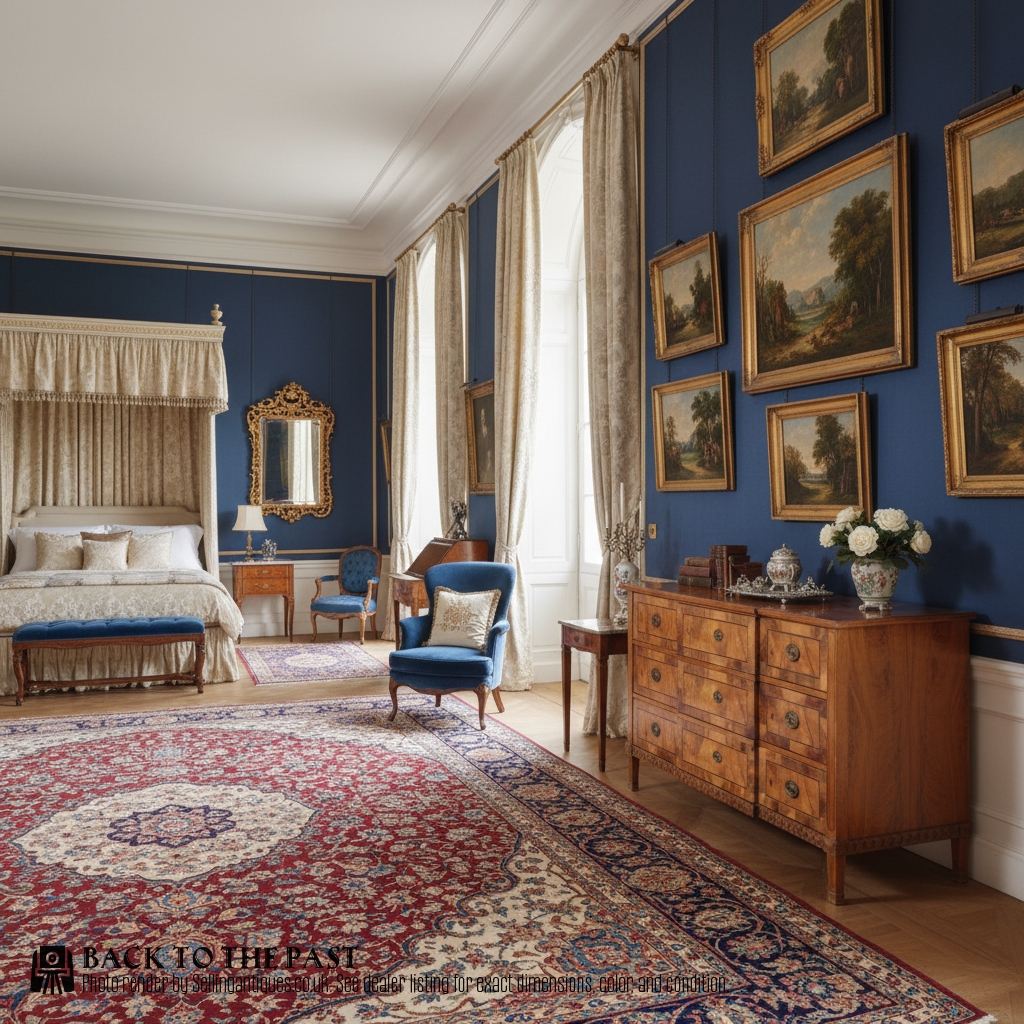
Antique Breakfront Dresser
The form spans several distinct functions, appearing as sturdy dresser bases with lower cupboards and drawers, sometimes paired with upper plate racks or tall bookcase sections. Georgian and Victorian cabinetmakers favoured this balanced layout to break up long expanses of timber, combining display capability with concealed storage.
Regional variations emerge across the selection, from Welsh oak country pieces to refined mahogany sideboard designs and French walnut commodes. The overarching configuration remains consistent in its stepped front, providing both a functional work surface and a commanding visual centrepiece.
Materials and Construction
Cabinetmakers relied heavily on dense native timbers such as oak and mahogany, alongside figured veneers like burr walnut and tulipwood applied to secondary carcase woods. These woods were chosen for their structural stability and rich grain patterns, which responded well to hand planing and polishing.
Joinery techniques involved traditional mortise and tenon frames, hand-cut dovetails for drawer construction, and panelled doors that allowed timber to expand and contract naturally. Brass hardware, ormolu mounts, and original glass panes completed the construction, securing structural longevity alongside decorative refinement.
Surface finishes typically included hand-applied wax or polish to nourish the timber, while painted or glazed variants received careful preparatory layers. Marble tops appeared on specific continental commode variations, inset directly into the timber frame to provide a durable, cool surface.
The selection spans compact 18th-century country pieces to monumental Victorian library bookcases and commodes.
Judging Quality and Execution
The calibre of an antique breakfront dresser rests primarily on the selection of timber and the precision of its joinery. Superior examples display continuous grain alignment across drawer fronts, finely hand-cut dovetails, and substantial secondary woods that indicate uncompromising workshop standards.
Proportion and decorative restraint set exceptional pieces apart from standard utility furniture. Refined cabinetwork is visible in crisp carvings, well-fitted panel doors that operate smoothly within their frames, and the retention of original hardware, glass, and surface patination.
Gillows·Maple and Co·Howard and Sons·Liberty of London
The Antique Breakfront Dresser Glossary
- Breakfront
- A cabinet design where the central section projects forward relative to the flanking sides. This layout adds visual depth and divides a long piece into distinct vertical bays.
- Dovetail
- A traditional interlocking joint used in drawer construction. Hand-cut dovetails indicate older, finer craftsmanship.
- Ormolu
- Gilded bronze mounts applied for decorative effect on furniture frames. It appears frequently on continental and high-style revival pieces.
- Credenza
- A low cabinet or sideboard designed for storage and display. The term often describes refined dining room or parlour furniture.
- Commode
- A low freestanding cabinet featuring drawers or doors. Continental European versions frequently incorporate marble tops.
Antique Breakfront Dresser: Frequently Asked Questions
Where should I place a breakfront dresser?
These large pieces suit principal reception rooms, dining areas, or spacious hallways where their architectural front can be fully appreciated. Ensure adequate wall space and clearance for doors and drawers to open.
Because of their depth, they anchor a room effectively and work well against long, uninterrupted walls rather than tight corners.
How do I care for antique timber furniture?
Maintain a stable indoor climate away from direct sunlight and heat sources to prevent the wood from drying out or splitting. Dust regularly with a soft, dry cloth and apply occasional natural wax to nourish the grain.
Avoid silicone-based sprays, which build up over time and dull the historic patination of the wood surface.
Are upper racks original to these dressers?
Many regional country pieces, particularly Welsh examples, were designed with removable upper plate racks meant to sit directly upon the lower base. Over time, some pieces became separated from their original racks.
Examine the mating surfaces and timber matching to determine whether the base and upper section share a unified history.
What is the difference between a sideboard and a dresser?
Sideboards generally focus on serving and storage within dining spaces, featuring low surfaces and concealed cabinet doors. Dressers historically combined lower storage cupboards with upper open shelving for displaying ceramics.
Regional vernacular pieces often blur these definitions, using the terms interchangeably depending on local workshop traditions.