

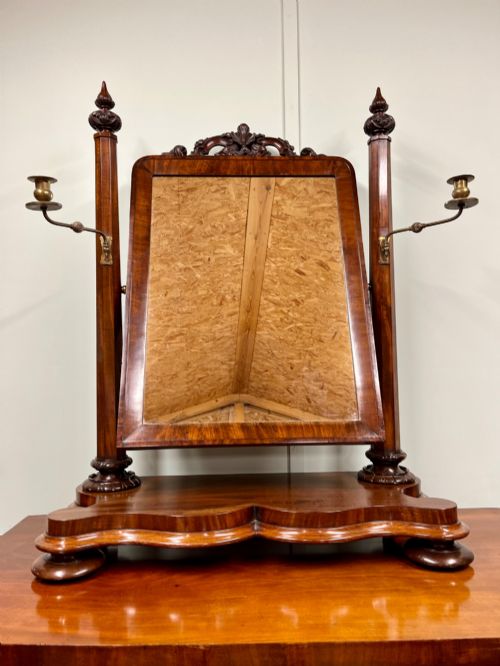


Antique Brass Table Sconces
Antique brass table sconces are illuminating accessories that bring period warmth and practical candle or lamp light to a room.
Antique Brass Table Sconces
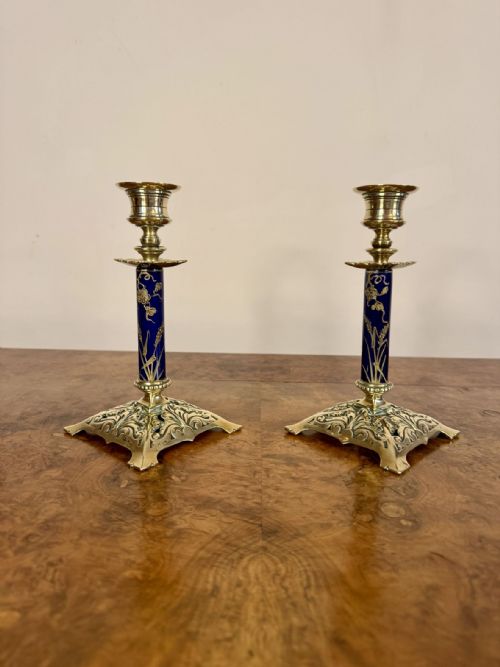
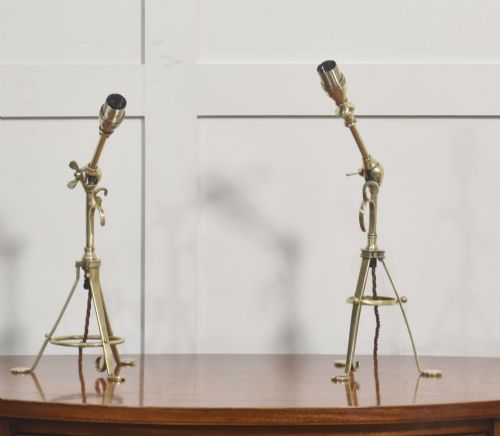
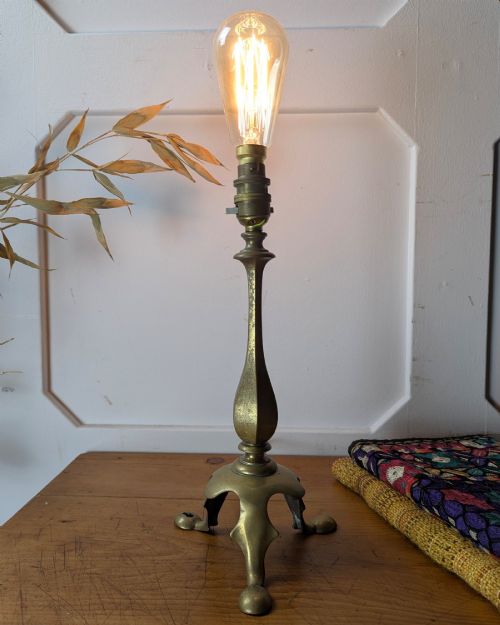
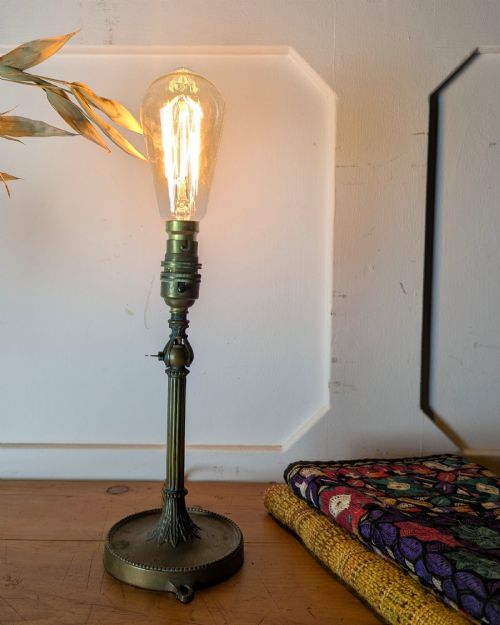
Antique brass table sconces and associated lighting pieces span the eighteenth, nineteenth, and early twentieth centuries, encompassing styles from Georgian elegance through Victorian revival to Edwardian design. Buyers searching for antique brass table sconces often encounter pairs of heavy metal candlesticks, adjustable wall or table lamps, and candle lamps featuring glass or shade elements.
The selection on this page relies heavily on nineteenth-century pieces alongside Edwardian examples and items dating around nineteen twenty. Forms range from simple baluster columns and open barley twist oak candlesticks to sophisticated double-arm designs and utilitarian Pullman lamps.
How they were made
Makers utilised solid brass, often combined with bronze, ormolu, and ebonised wood to build sturdy frames capable of supporting heavy candles and early electric fittings. Secondary materials such as glass, mahogany, and porcelain appear frequently in the columns, bases, and accompanying mirrors of these lighting fixtures.
Construction techniques involve heavy casting and turning of metal components, alongside secure joinery in pieces incorporating timber bases or dressing mirrors. Adjustability in telescopic and pivoting models points to clever mechanical engineering designed for practical daily use.
Antique Brass Table Sconces Retail Price Guide 2026
Typical asking prices for brass table sconces among the pieces listed under this phrase on Sellingantiques today, from the lower quarter to the upper quarter. They describe what is for sale here now, not the wider market.
Listings feature items from the eighteenth, nineteenth, and early twentieth centuries, incorporating materials like mahogany, porcelain, and ebonised wood alongside brass.
What varies in quality
The division between ordinary and superior antique brass table sconces rests on the crispness of casting detail and the weight of the metal used in the column and base. Finishes that retain their natural patination without over-cleaning command greater respect from discerning collectors.
Proportion and structural integrity dictate value, particularly in adjustable or dual-purpose designs where moving parts must function smoothly. Pieces that integrate contrasting materials like porcelain or ormolu with precision demonstrate higher workshop ambition.
W.A.S. Benson
The Antique Brass Table Sconces Glossary
- Baluster
- A moulded shaft with a swelling lower portion resembling a small column or pillar. This architectural form provides a stable, weighted base for many candle holders.
- Ormolu
- Finely ground high-carat gold applied to a bronze base in a mercury-gilding process. It yields a rich yellow metallic lustre seen on decorative mounts and finer candlesticks.
- Telescopic
- Having sliding tubular sections that allow the height of the shaft to be adjusted. This mechanism is common in shaving mirrors and reading lamps of the nineteenth century.
- Aesthetic Movement
- A late nineteenth-century design trend prioritising visual beauty over narrative or moral meaning. Objects from this period often feature refined lines and stylised ornamentation.
- Barley twist
- A woodworking or metalforming technique producing a helical spiral resembling a twisted barley stalk. It creates strong diagonal movement along the stem of a candlestick.
Antique Brass Table Sconces: Frequently Asked Questions
What are antique brass table sconces?
Antique brass table sconces are historic lighting fixtures and candle holders designed for placement on tables, ledges, or walls. They utilise metal casting and turning techniques developed across the eighteenth and nineteenth centuries.
These items served a practical domestic purpose before widespread electricity, holding wax candles to illuminate dark rooms. Today they function as decorative period accents that retain their original mechanical or structural character.
How do I clean antique brass?
Cleaning antique brass requires a gentle approach to preserve the accumulated patination and historic surface character built up over centuries. Harsh abrasive polishes strip away the aged skin that collectors value.
Most pieces simply need a light dusting with a soft cloth to maintain their appearance. If washing is necessary, mild soapy water dried immediately with a clean towel prevents moisture damage.
Were these lights originally electric?
Most pieces from the nineteenth and early twentieth centuries were originally designed for oil, gas, or wax candles rather than electricity. Inventors later adapted certain adjustable models for electric wiring as domestic power spread.
When buying older lighting, check the internal wiring and fittings to ensure they meet modern safety standards. Many collectors choose to preserve the original candle-holding format without electrifying the piece.
How do I date a brass candlestick?
Dating a brass candlestick involves examining the manufacturing technique, base construction, and stylistic clues from the prevailing design era. Early examples often show sand-casting seams and heavier, hand-finished metalwork.
Later Victorian and Edwardian pieces exhibit more uniform machine turning and standardised threading. Comparing the form against documented historical periods helps narrow down the decade of production.