

Antique Brass Surround
An antique brass surround frames a hearth with the warm, heavy presence of nineteenth-century metalwork.
Antique Brass Surround
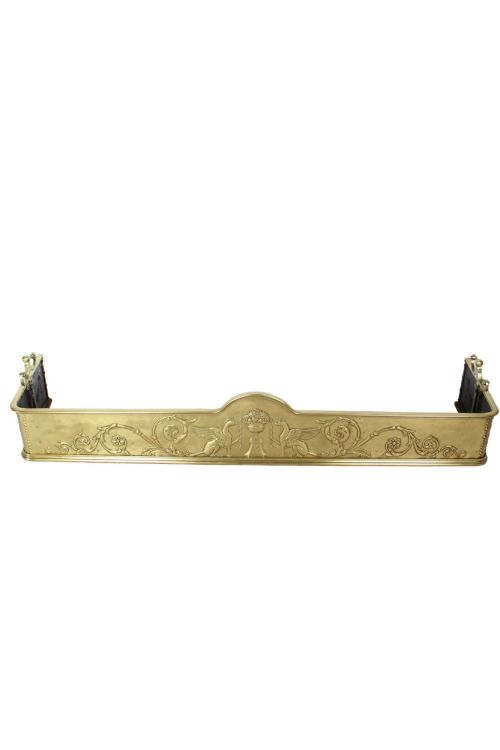
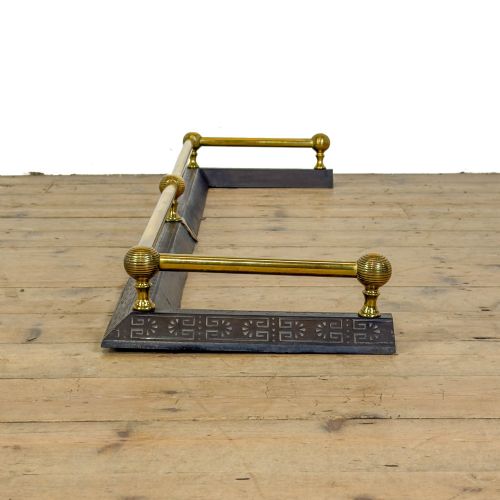
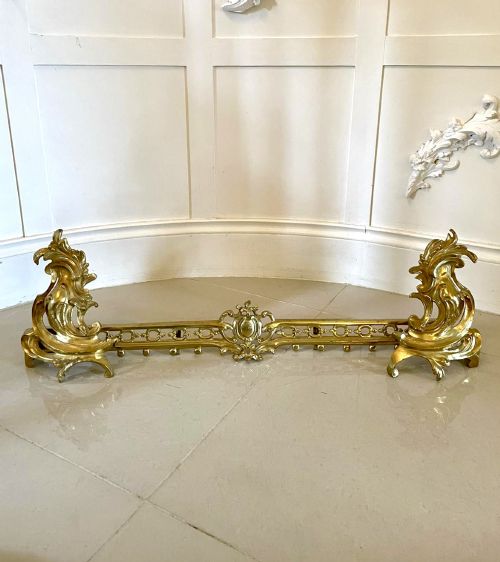
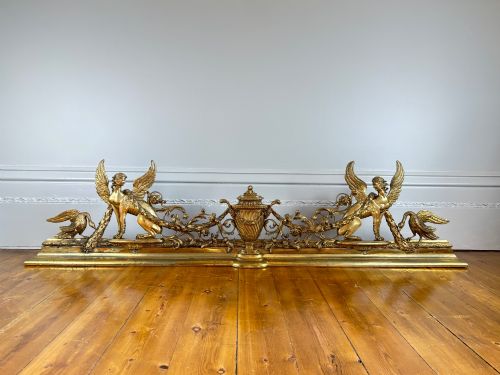
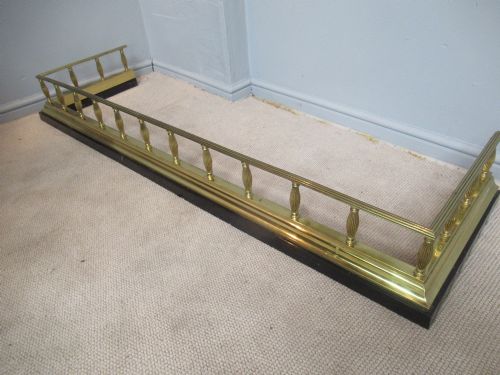
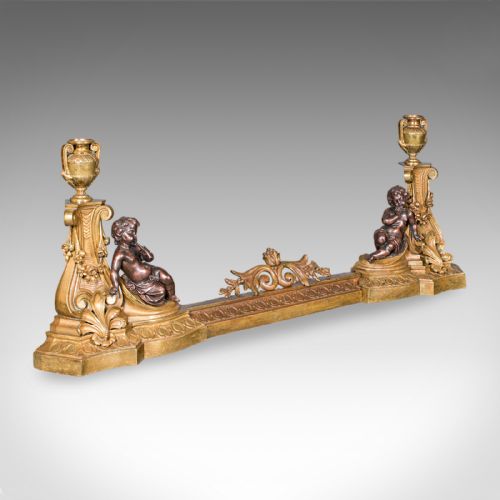
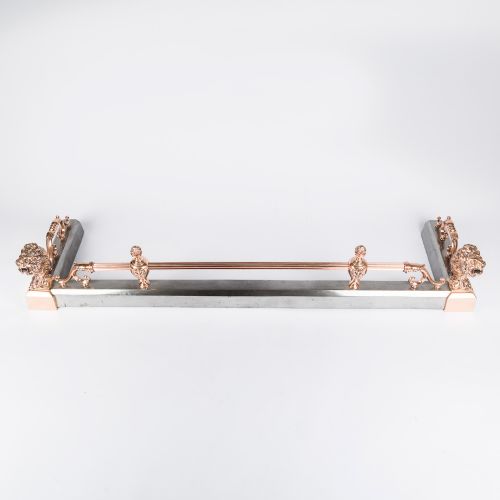
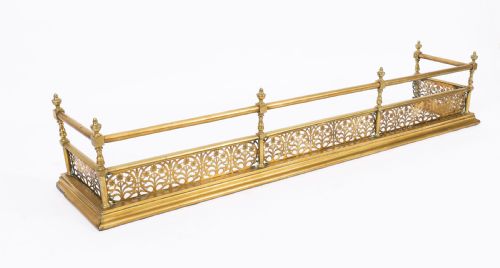
An antique brass surround most commonly takes the form of a fireplace fender or hearth kerb designed to contain ash and protect the room. These pieces anchor the fireplace arrangement, spanning the Victorian and Edwardian eras in various widths and configurations.
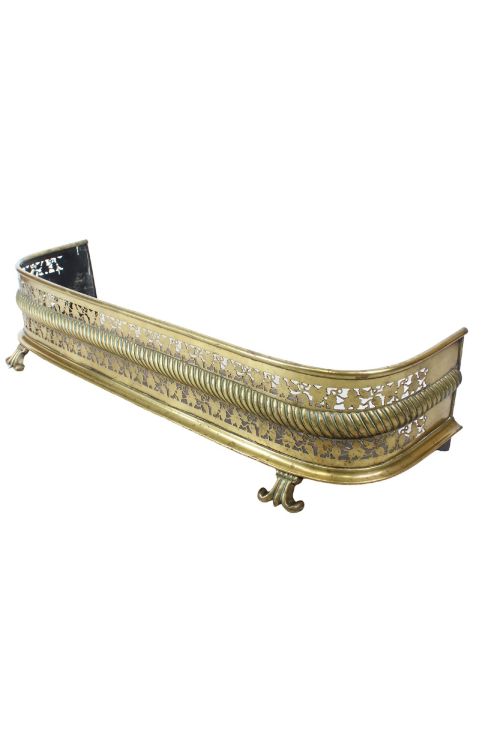
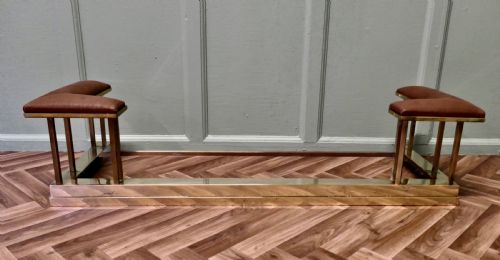
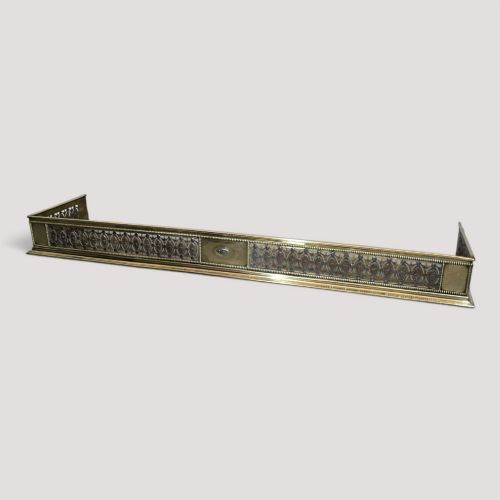
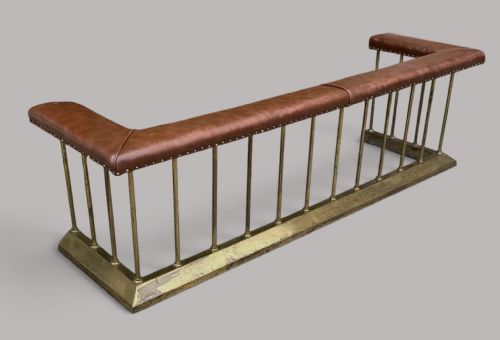
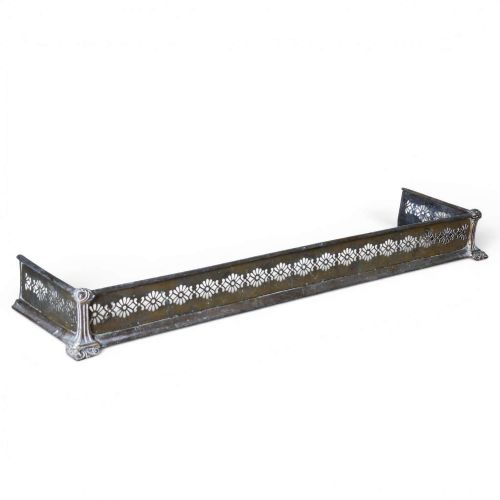
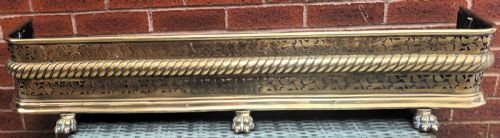
The selection ranges from low pierced brass kerbs to substantial club fenders featuring upholstered leather seats. Alongside full-scale hearth furniture, occasional miniature samples appear from the nineteenth century.
Originating predominantly from English and French workshops, these surrounds reflect periods spanning from the Georgian era through to Art Deco designs.
Materials and construction methods
Foundry work combined solid brass castings with iron and steel structural components to create rigid frames capable of withstanding heavy daily use. Piercing, openwork casting, and repoussé detailing defined the surface ornamentation of Victorian pieces.
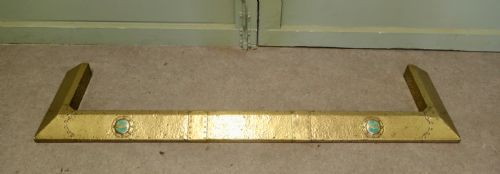
Club fenders integrated fine leather upholstery, often in tan, supported by brass balustrades or columns. Gilt bronze, ormolu, and applied enamel cabochons added colour and textural contrast to the metal frameworks.
Miniature salesman samples and architectural models appear alongside full-scale hearth furniture.
Assessing quality in hearth furniture
Quality rests upon the weight of the metal casting and the crispness of the pierced or chased ornamentation. Finer examples display meticulous hand-finishing on decorative brass mounts rather than simplified industrial stamping.
The integrity of the structural joints and the depth of the metal patina separate standard utilitarian fire guards from grander domestic showpieces. Leather upholstery on club fenders reveals quality through the grade of hide and the neatness of the studwork.
E F Caldwell New York
The Antique Brass Surround Glossary
- Club fender
- A low-seated hearth surround featuring upholstered benches flanking the fireplace opening. This form became popular in gentlemen's clubs and substantial Victorian homes.
- Fire fender
- A rigid metal barrier placed around the hearth to contain burning embers and protect the carpet. They range from simple flat kerbs to ornate pierced brass galleries.
- Ormolu
- Gilded bronze produced by applying a mercury and gold amalgam to a bronze base. The technique creates a rich, enduring golden surface seen on French decorative pieces.
- Pierced brass
- Sheet metal or casting worked with openwork patterns to allow light through the design. This technique lightened the visual weight of heavy nineteenth-century fenders.
Antique Brass Surround: Frequently Asked Questions
How do I measure for a club fender?
Measure the total width and depth of your fireplace hearth, ensuring clearance for the fire opening and surrounding floor materials. Allow sufficient space for the seating depth if choosing an upholstered club style.
Check whether your hearth sits level and flush with the floor, as antique fenders rely on a stable surface to sit squarely without rocking.
Were club fenders used for sitting?
The padded top rails of club fenders served as low benches close to the fire for warming. Victorian households utilised these seats to gather near the hearth during colder months.
Their sturdy brass frames and leather pads were built to support the weight of adults sitting directly beside the grate.
How do I clean antique brass?
Dust the metal regularly with a soft cloth and avoid abrasive cleaning compounds that strip the historical surface patina. Gentle washing with mild soapy water removes soot and accumulated grime.
Leave the deeper darkening and oxidation undisturbed, as collectors value the aged tone that centuries of use provide.
Can antique fenders be adjusted in size?
Certain Victorian and Edwardian models were constructed with sliding mechanisms to fit variable fireplace openings. These adjustable frames allowed buyers to modify the span to suit different hearth dimensions.
Fixed-size models require precise measurement before acquisition to guarantee a correct fit against the chimney breast.