



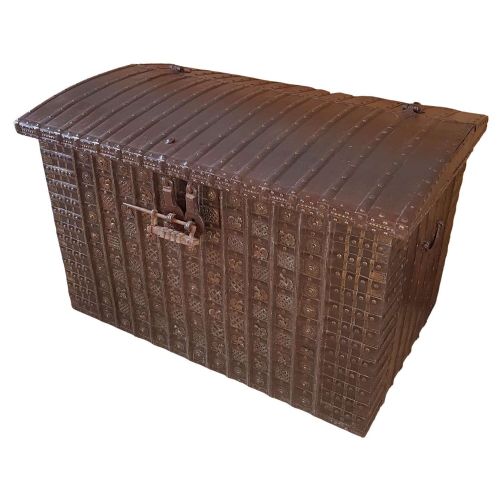


Antique Brass Strap Box
An antique brass strap box combines utilitarian timber construction with heavy metal reinforcement, offering both secure travel storage and robust domestic organisation.
Antique Brass Strap Box
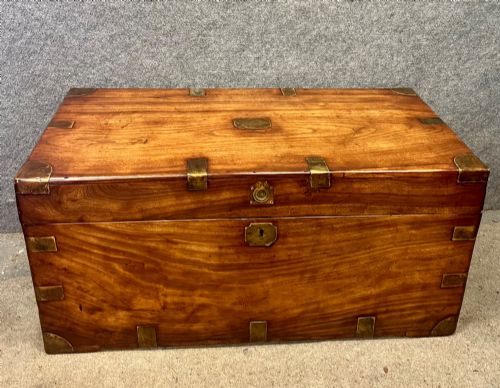
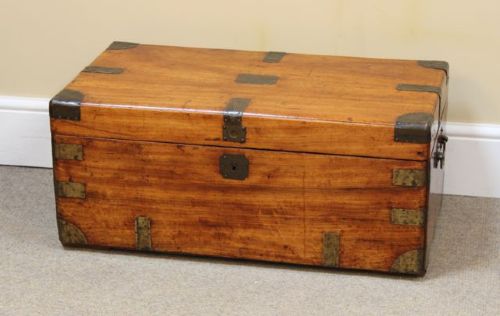
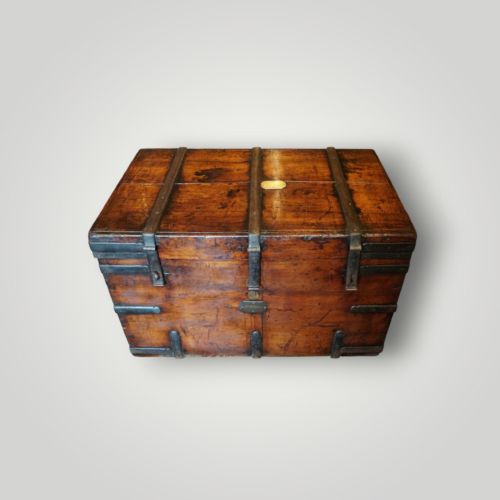
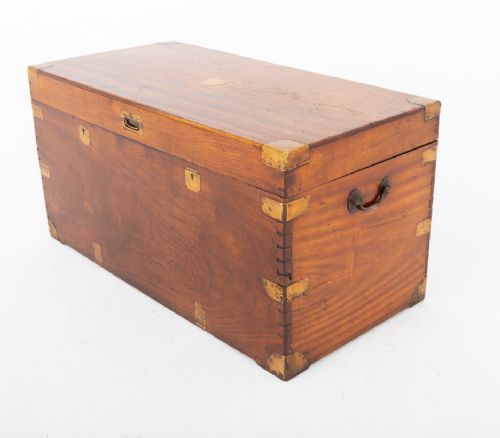
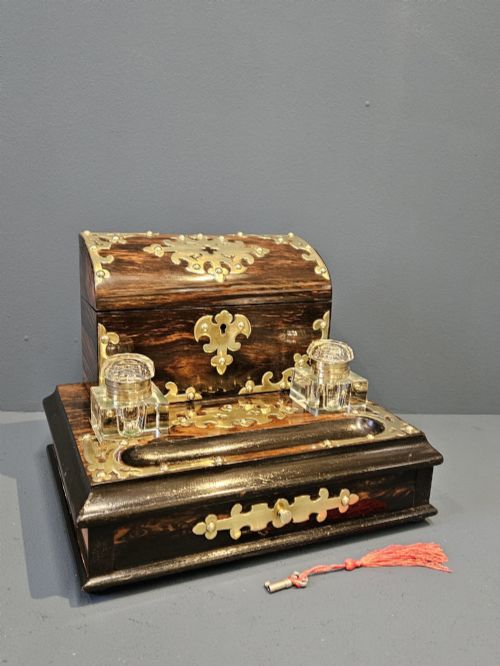
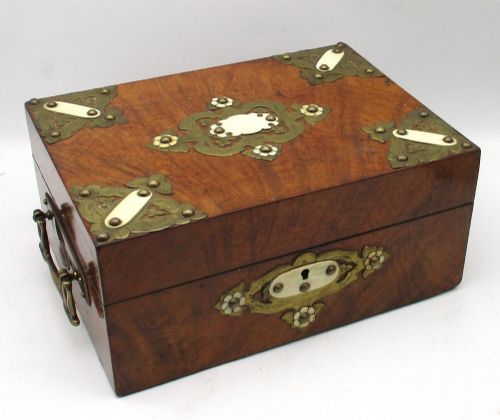
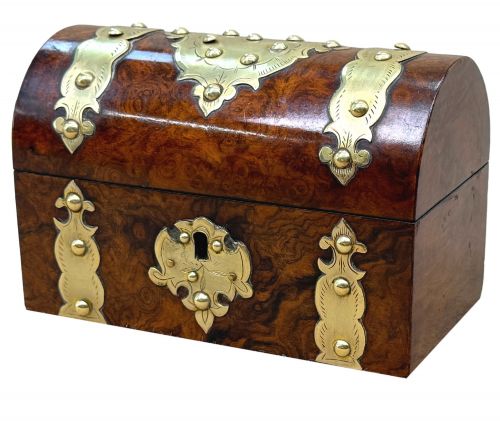
An antique brass strap box refers to wooden chests, trunks, and smaller caskets heavily secured with metal bands, corners, and mounts. While the search phrase points strictly to banded vessels, the pieces on this page span several categories including large merchants' trunks, stationery boxes, campaign chests, and cellarettes.
Buyers most frequently encounter 19th-century Victorian examples, alongside Georgian pieces and occasional 18th-century Scandinavian or Danish dome-top coffers. Woods vary from native oak, mahogany, and elm to exotic teak, camphor wood, burr walnut, and coromandel.
Stylistic influences range from British military campaign furniture and Victorian Gothic Revival to Anglo-Indian and Chinese export work. These objects were built to endure arduous journeys across empires or to withstand heavy daily use in country houses and offices.
Materials and construction methods
Makers built these boxes using dense timbers such as teak, oak, and mahogany, frequently applying veneers of burr walnut, coromandel, or rosewood on finer domestic pieces. Timber selection depended on the intended destination, with camphor wood and teak favoured for overseas travel due to their natural resistance to moisture and insects.
Structural integrity relied on heavy brass or iron straps, corner brackets, and flush-fitting hardware screwed or riveted directly into the wood. This metalwork absorbed the impacts of transit, protecting the structural joints of the trunk or box from splitting under stress.
Sir Randolph Isham Routh KCB, Waterloo Commissary General, once owned a walnut iron-bound trunk listed here.
Distinctions in craftsmanship and materials
Quality separates pieces by the precision of the metalwork integration and the choice of secondary woods. Superior boxes feature hand-beaten or cast brass mounts countersunk flush into the timber, whereas simpler examples rely on surface-mounted iron bands.
Finer items incorporate elaborate internal fittings such as secret compartments, fitted writing slopes, or pietra dura inlays, contrasting with plain utility chests designed purely for cargo transport.
C.G. Hope Hastings
The Antique Brass Strap Box Glossary
- Campaign chest
- A modular chest of drawers or trunk designed to separate into sections for military transport. These pieces typically feature recessed brass handles and corner brackets to prevent snagging.
- Cellarette
- A wine cooler or storage chest designed to hold bottles securely. Examples often feature lead linings or internal wooden dividers.
- Strapwork
- Decorative or reinforcing metal bands applied across the exterior of a box or chest. This technique provides structural strength while creating a distinct geometric visual pattern.
- Writing slope
- A portable slant-topped box that opens to reveal a slanted writing surface, inkwells, and storage compartments for stationery.
- Pietra dura
- An artistic technique involving the inlay of cut and fitted polished coloured stones to create pictorial designs. This ornamentation appears on the lids of luxury Victorian stationery boxes.
Antique Brass Strap Box: Frequently Asked Questions
What were brass strap boxes used for?
These boxes served multiple functions ranging from military transport and merchant shipping to domestic storage for stationery, valuables, and spirits. Officers, travellers, and merchants relied on them to protect contents from rough handling and moisture during transit.
In domestic settings, smaller iterations sat on desks or tables to organise correspondence, cigars, or writing materials. Larger chests remained in hallways or bedrooms for blankets and silver.
How do I date an antique box?
Dating relies on timber choices, construction techniques, and stylistic markers recorded in the period evidence. Georgian pieces often display straightforward mahogany or oak joinery, whereas Victorian examples introduce exotic veneers like coromandel and burr walnut alongside Gothic Revival motifs.
Hardware also provides clues, as machine-made screws and recessed brass fittings became more prevalent through the nineteenth century. Inscribed plaques and original lock mechanisms further narrow down the decade of production.
Are camphor wood trunks safe for modern homes?
Camphor wood trunks function exceptionally well in contemporary interiors for storing blankets, woollens, and linens. The natural aromatic oil within the timber repels insects and imparts a distinct fragrance.
These pieces integrate easily as coffee tables or end-of-bed storage units. Their robust brass banding ensures they withstand everyday domestic use while maintaining their historical character.
What is the difference between campaign and civilian boxes?
Campaign boxes feature specialised adaptations for travel, such as flush-fitting recessed handles, brass corner protectors, and sectional construction designed for dismantling. Civilian counterparts focus on decorative presentation rather than portability.
Domestic stationery boxes and cellarettes prioritise fine veneers like burr walnut or coromandel and decorative brass mounts. Military pieces emphasise rugged utility, utilising teak or mahogany secured with heavy iron or brass strapping.