

Antique Brass Mounts Chest
These pieces of antique brass mounts chest form a varied group of storage furniture and boxes, selected for their practical utility and period metalwork.
Antique Brass Mounts Chest
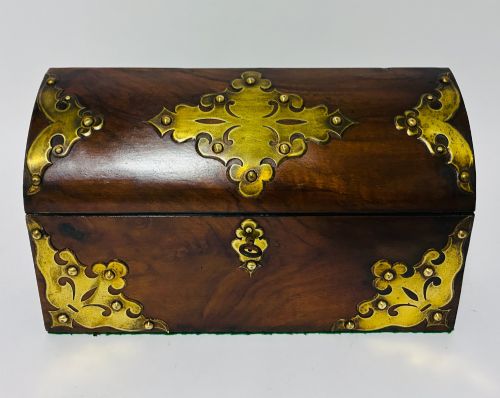
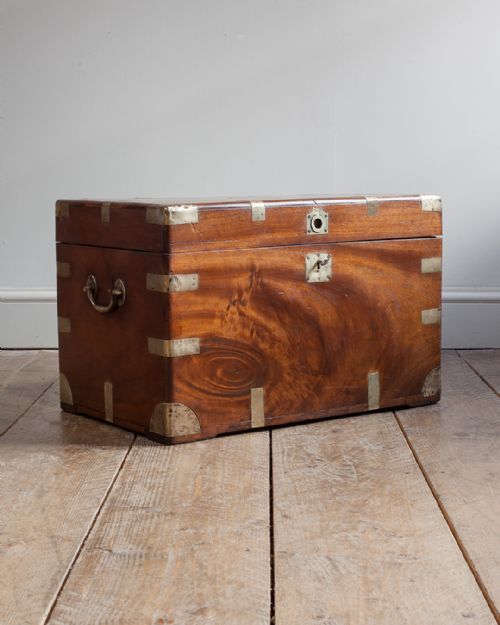
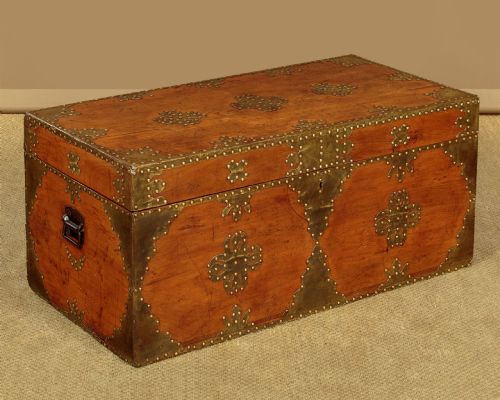
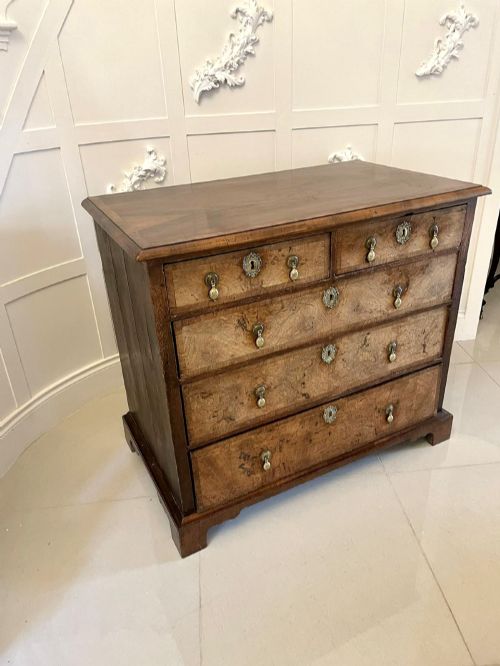
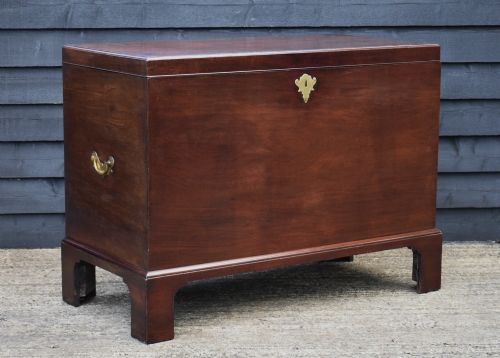
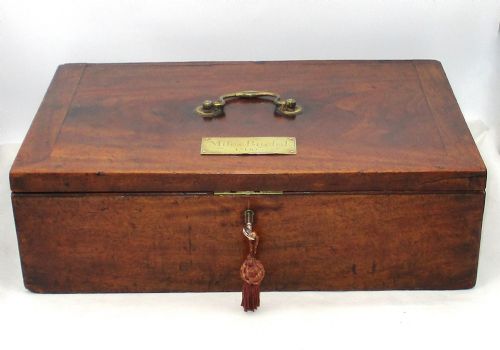
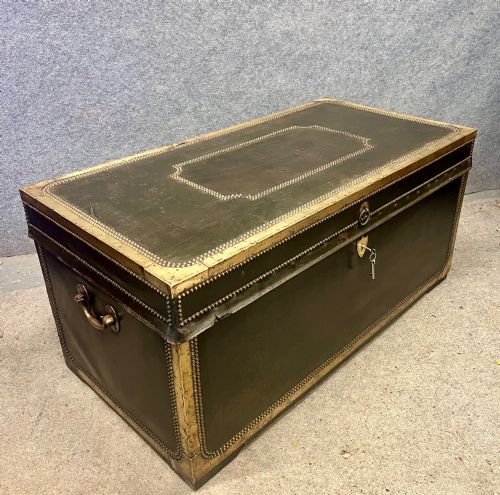
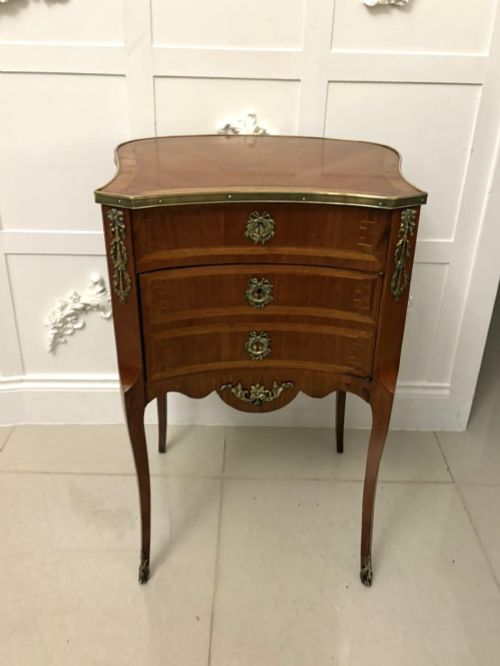
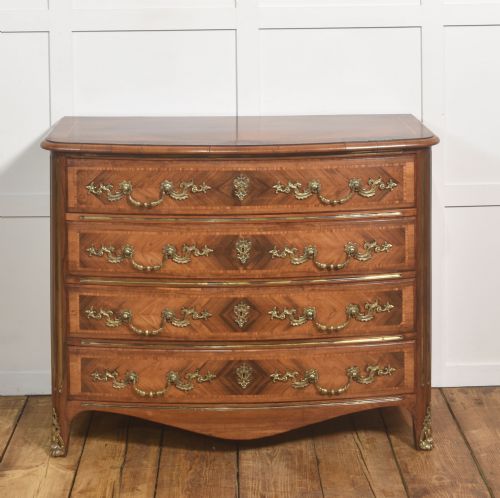
An antique brass mounts chest brings together case pieces and storage containers designed to hold documents, garments, or valuables. These items range across the seventeenth, eighteenth, and nineteenth centuries, taking the form of campaign trunks, blanket boxes, commodes, and tabletop caskets.
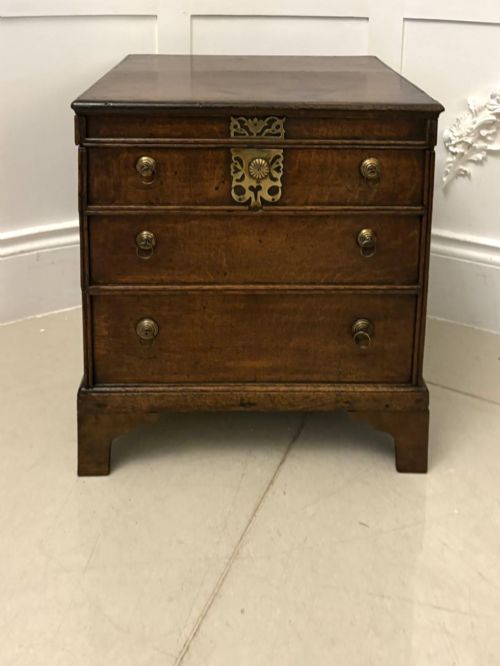
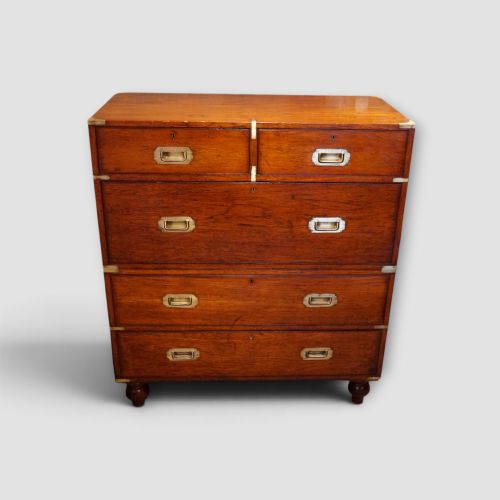
The versions most commonly met in this selection include mahogany and oak chests of drawers, camphor wood campaign trunks, and leather or lacquer travelling boxes. Pieces span English, French, Dutch Colonial, and Asian origins, reflecting international trade and regional cabinet-making traditions from the 17th Century to the Victorian era.
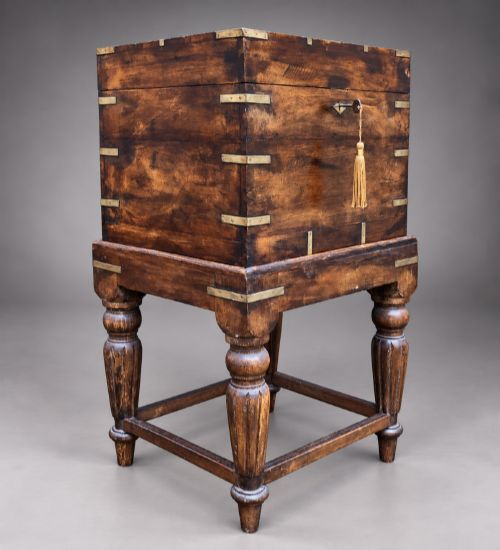
Form follows function closely in these objects, whether intended for military travel, colonial transport, or domestic country house storage. Heavy metal fittings serve to protect corners, reinforce panel joints, and provide secure locking mechanisms for transport.
Materials and Technique
Cabinet makers utilised dense timbers such as mahogany, walnut, padouk, oak, and camphor wood to construct carcasses that would withstand long journeys and heavy daily use. These primary woods are frequently paired with contrasting veneers, marquetry, or surface treatments including lacquer and leather.
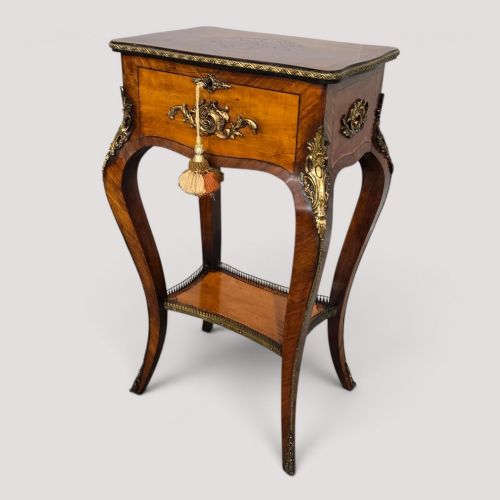
Brass provides the defining structural and decorative element, shaped into robust corner brackets, flush carrying handles, escutcheons, and strapping. Ormolu mounts appear on finer French commodes and cabinets, adding cast decorative detail to serpentine and bombe profiles.
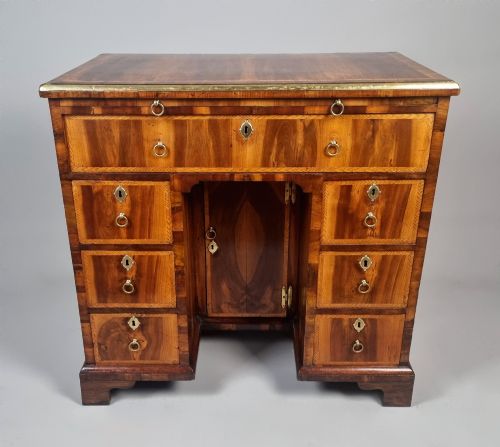
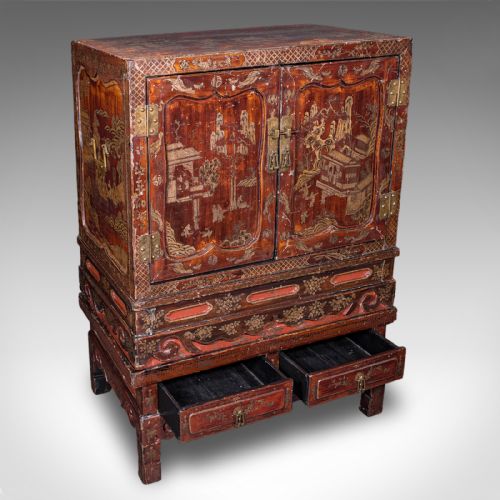
Construction methods combine dovetail joints for drawer boxes with heavy iron or brass fastenings to secure corners and lids. Surface decoration ranges from plain polished timber grains to elaborate Chinoiserie scenes and parquetry patterns.
Materials span native oak and walnut alongside imported camphor wood, padouk, and ebony fitted with brass and ormolu.
Standard and Execution
Quality in these pieces rests upon the precision of the cabinet work and the weight and casting of the metal fittings. Heavy, well-fitted brass hardware that sits flush to the timber indicates a higher grade of manufacture than thin, stamped replacement elements.
The choice of primary wood and secondary framing timber dictates the solidity of the piece. Dense exotic hardwoods like padouk, mahogany, and satinwood command attention for their durability and grain pattern, while finer commodes demonstrate advanced skill through curved serpentine or bombe shaping and detailed marquetry.
The Antique Brass Mounts Chest Glossary
- Ormolu
- Gilt bronze mounted or applied as decoration on furniture, created through a process of mercury gilding on cast bronze. It adds bright metallic highlights to French style commodes and cabinets.
- Campaign
- Furniture designed to dismantle or fold for military transport, typically fitted with recessed brass handles and reinforced corners. These pieces were built for officers on active service.
- Bombe
- A swelling, outward-curved commode or chest profile associated with continental cabinet-making. This curved form requires advanced skill in veneer matching and timber shaping.
- Padouk
- A heavy, durable tropical hardwood with a reddish hue used extensively in colonial furniture and campaign chests. It resists moisture and insects effectively.
- Escutcheon
- A protective plate surrounding a keyhole, usually made of brass or bronze on these chests. It prevents the surrounding wood from wearing down through repeated use of the key.
Antique Brass Mounts Chest: Frequently Asked Questions
What is an antique campaign chest?
A campaign chest is a modular set of drawers designed to separate into distinct sections for easy transport by military officers on active service.
These pieces feature recessed brass handles and protective corner brackets to prevent damage during travel.
How do I clean brass mounts?
Brass mounts benefit from gentle dusting with a dry cloth to maintain their natural appearance over time.
Harsh chemical polishes should be avoided to preserve the original patina built up over the centuries.
Where were colonial chests made?
Colonial chests were produced in regions such as the Dutch East Indies, India, and Portugal using local timbers like camphor, padouk, and rosewood.
These workshops combined European furniture forms with native materials and robust brass hardware suited to maritime trade.
Are these chests suitable for daily use?
Many of these sturdy wooden chests and drawers provide practical storage solutions for modern homes.
Their solid construction and durable metal fittings make them well-suited for holding linens, documents, or household items.