

Antique Brass Mount Table
An antique brass mount table brings together rich timber and chased metalwork to anchor a room with enduring French and English elegance.
Antique Brass Mount Table
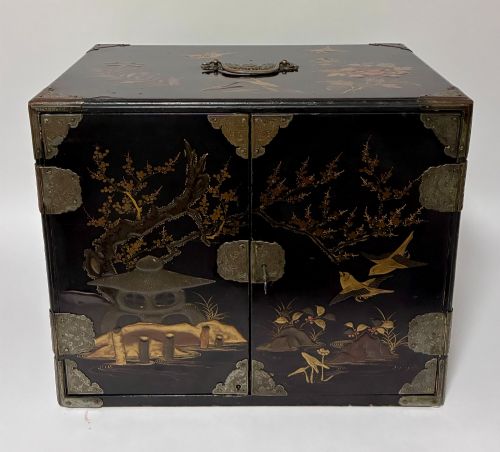
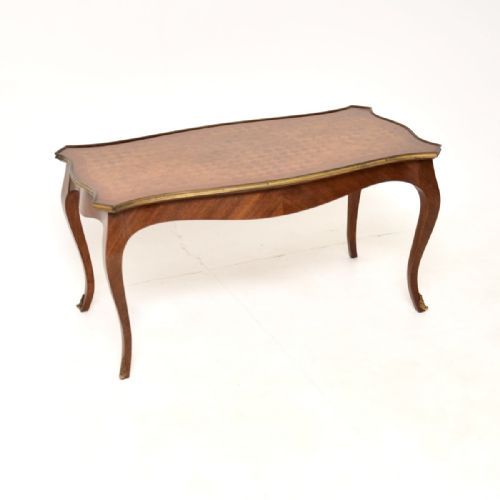
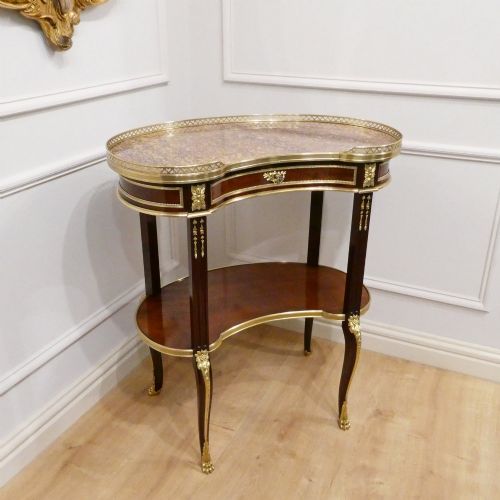
When searching for an antique brass mount table, collectors encounter functional surfaces enhanced by metal enrichment, ranging from side tables and desks to card tables and coffee tables. These pieces span the Regency, Victorian, and Edwardian eras, alongside French influences like the Louis XV and Louis XVI styles.
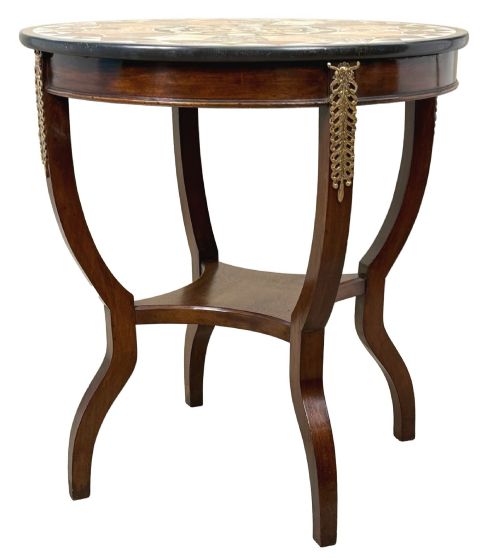
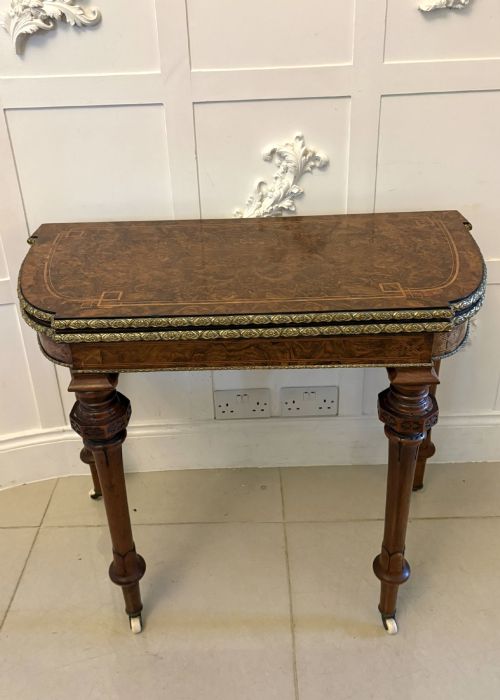
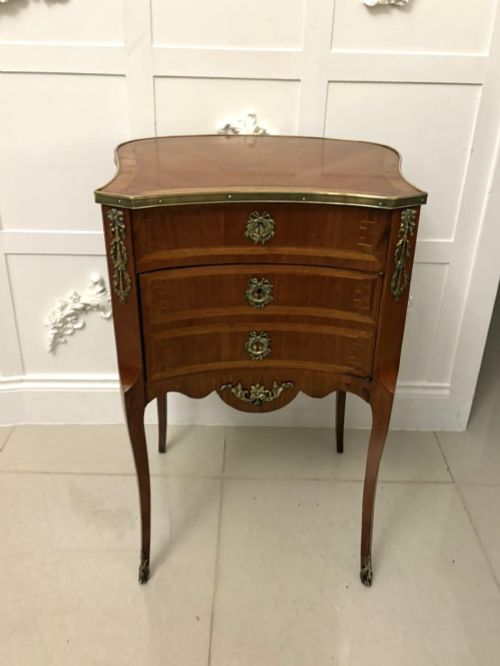
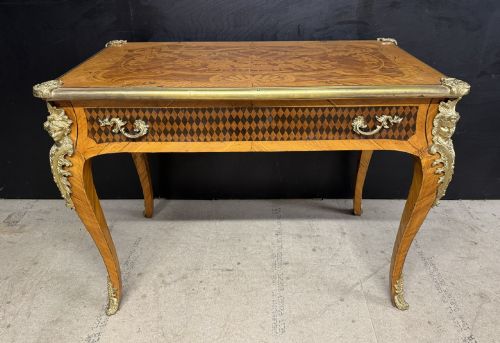
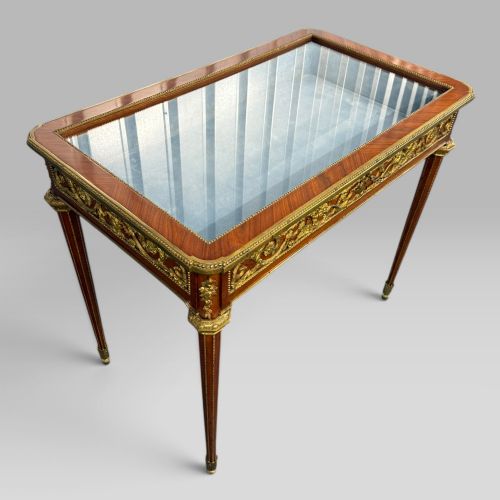
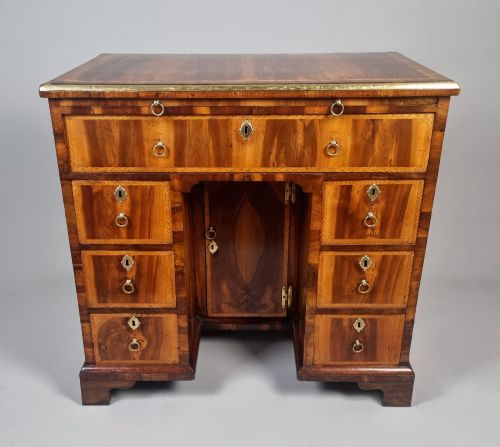
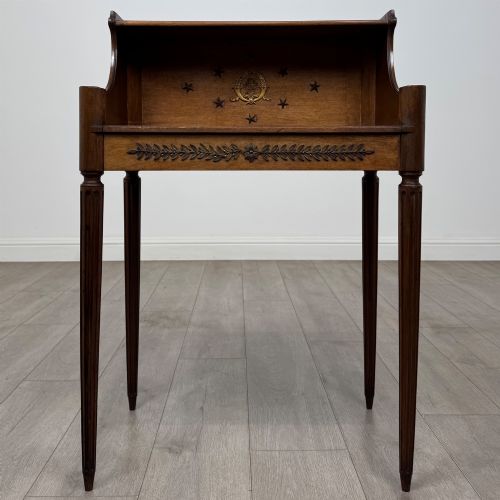
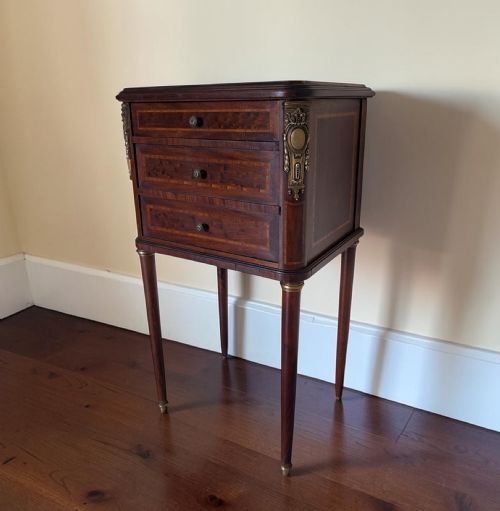
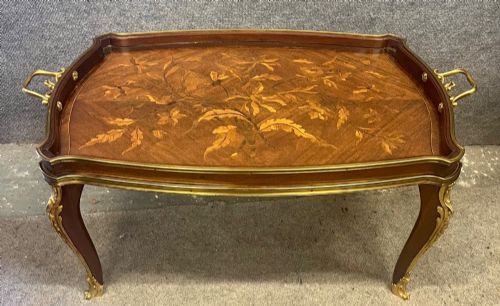
The versions met most frequently on this page include mahogany, rosewood, and kingwood side tables or writing desks featuring cast or gilded brass mounts, alongside occasional tables displaying parquetry and marquetry inlays.
Originating predominantly from English workshops and French cabinet-makers, these tables combine robust structural timbers with decorative metalwork designed to highlight the geometry of the piece.
How they were made
Makers utilised dense cabinet timbers such as mahogany, walnut, rosewood, and kingwood, often laid as veneers over sturdy sub-woods to create complex parquetry and marquetry patterns.
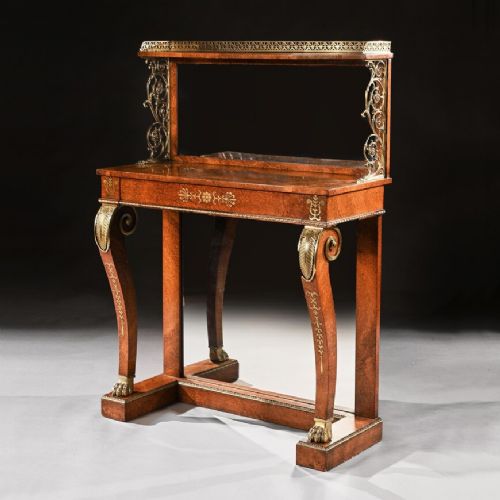
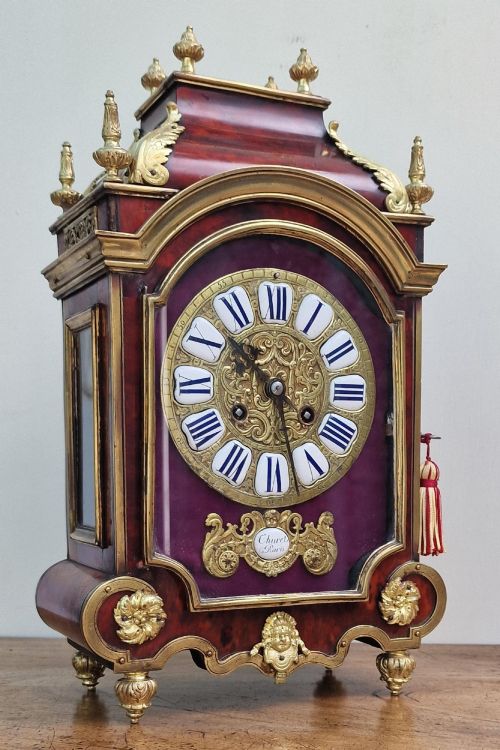
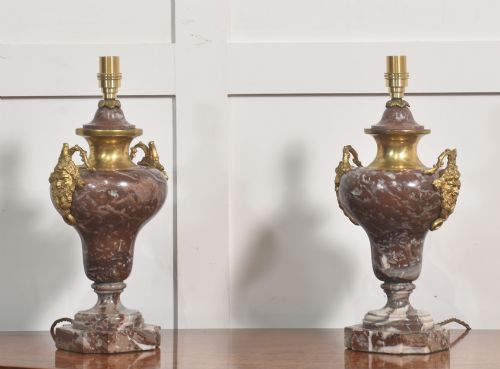
Cast brass, ormolu, and gilded bronze mounts were meticulously hand-chased and secured to the timber carcasses, accentuating corners, aprons, and legs with reflective metallic detail.
Some tables double as secret writing desks with hidden drawers for love letters.
What varies in quality
The finesse of the cast metalwork separates standard work from exceptional pieces, where crisp chasing in the brass and ormolu reveals sharper detail and deeper relief.
The precision of the timber veneers and the integration of the mounts into the structure dictate the overall harmony and balance of the furniture.
Maison Millet·Thuret Paris·Edwards and Roberts·Antoine Lampre
The Antique Brass Mount Table Glossary
- Ormolu
- A gilded bronze or brass application used for decorative mounts on furniture. It provides a bright, durable metallic finish that contrasts with dark cabinet timbers.
- Marquetry
- The art of applying pieces of veneer to a structure to form decorative patterns and pictures. It frequently employs exotic woods to create floral or geometric scenes.
- Parquetry
- A geometric mosaic of wood pieces used for floors and furniture surfaces. It creates repeatable patterns like chequers or cubes across tabletops.
- Boulle work
- A type of marquetry consisting of tortoiseshell and brass inlaid together. It was perfected in France and adds an opulent metallic sheen to cabinets and desks.
- Bijouterie
- A small display table with glass panels designed to showcase precious items and curiosities. These tables often feature extensive brass mounts along the legs and frame.
Antique Brass Mount Table: Frequently Asked Questions
What periods do these tables come from?
The listings span several distinct eras, notably the Regency period, the Victorian era, and the Edwardian period, alongside specific French revival movements.
Cabinet-makers throughout the nineteenth and early twentieth centuries continuously reinterpreted earlier Louis XV and Louis XVI aesthetics.
How do I care for the timber and brass?
Maintain the wood surfaces using traditional wax polishes applied sparingly and buffed with a soft cloth to preserve the grain and patina.
Keep brass and ormolu mounts free of dust using a dry brush, avoiding harsh metal cleaners that can strip the original gilding.
Where were these tables placed originally?
These tables served various domestic functions in drawing rooms, studies, and boudoirs as writing desks, card tables, or display surfaces.
Their decorative mounts allowed them to sit centrally within a room or against panelled walls as focal points.
How do I distinguish French and English styles?
French examples often feature pronounced cabriole legs, extensive ormolu mounts, and intricate floral marquetry or Boulle work.
English pieces typically exhibit more restrained rectilinear forms, relying on figured mahogany or rosewood alongside understated brass stringing or corner brackets.