
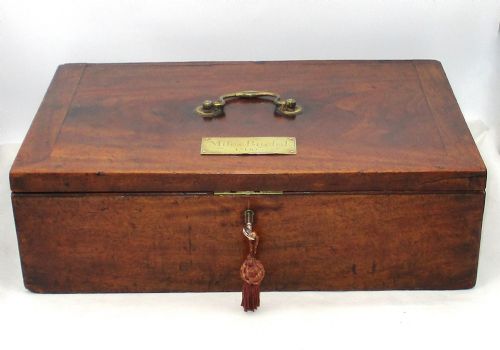
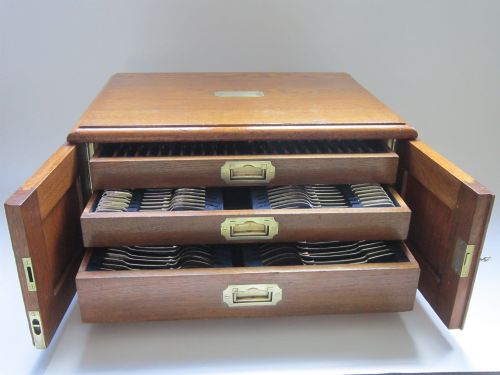
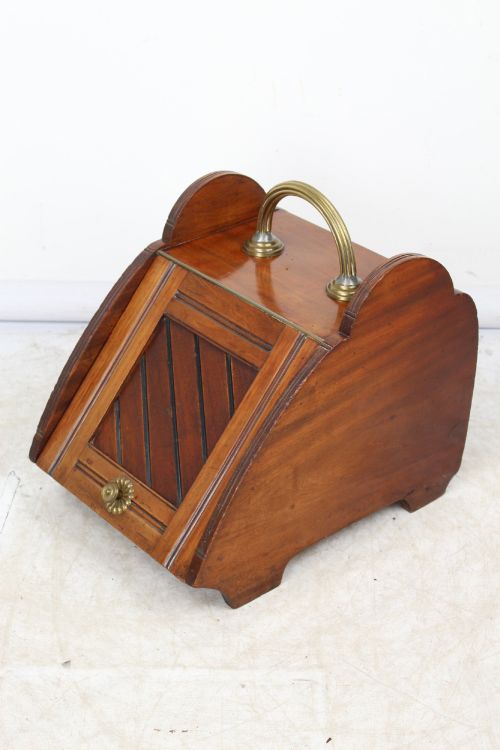
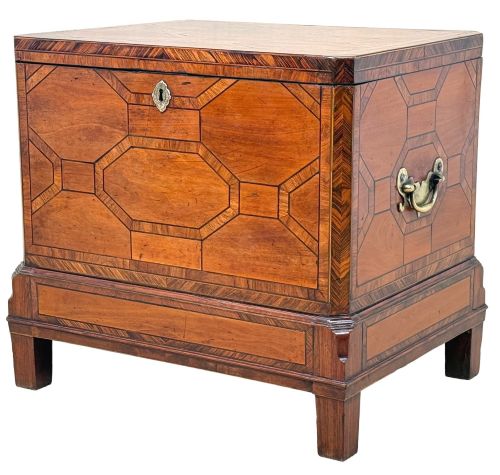
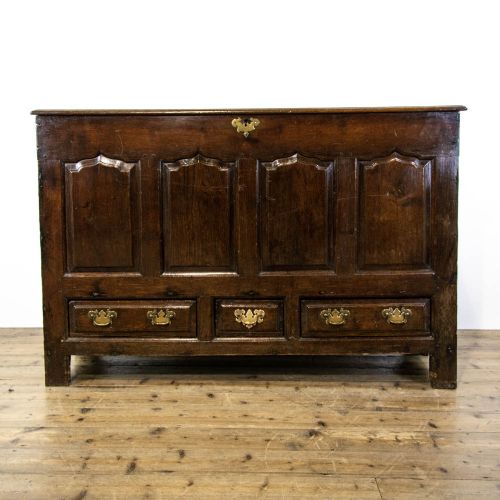
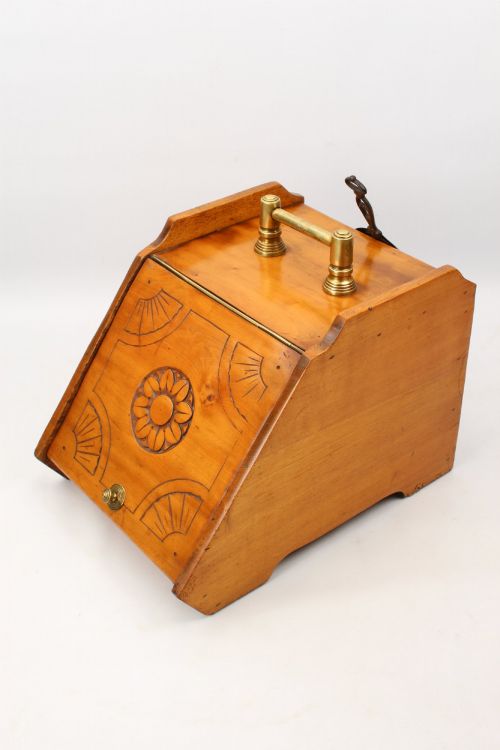
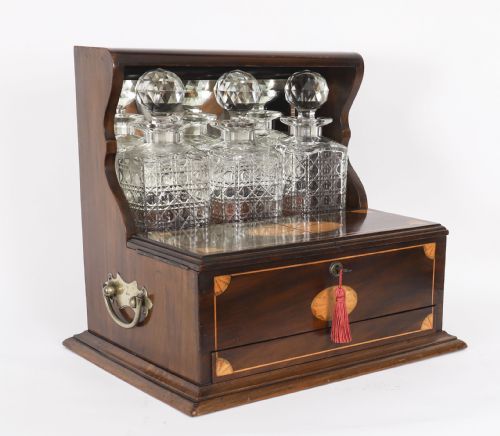
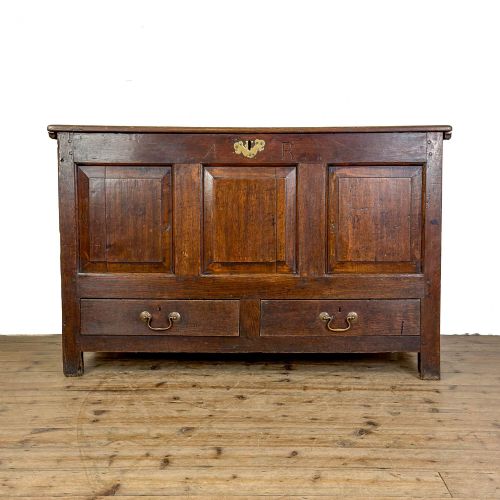
Antique Brass Handled Box
These heavy, portable containers fitted with metal grips served travellers and householders alike, uniting practicality with enduring timber construction.
Antique Brass Handled Box
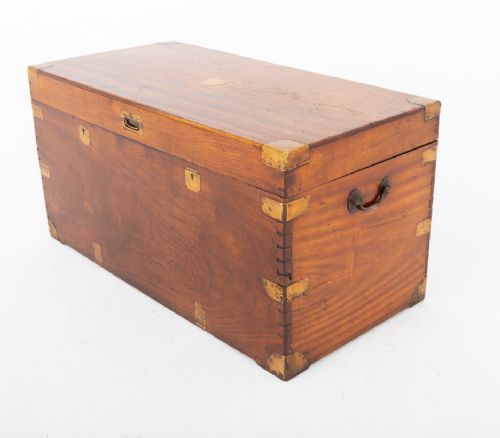
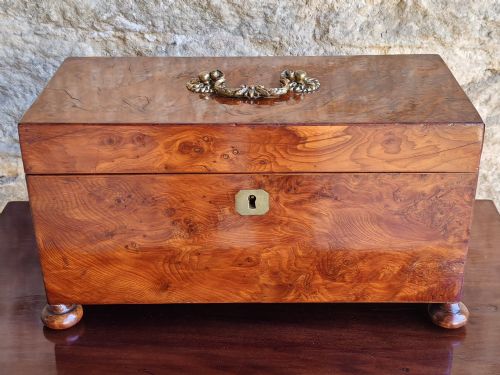
When you search for an antique brass handled box, you encounter items designed for storage, writing, or transport across the Georgian, Victorian, and nineteenth-century periods. These objects take the form of tea caddies, correspondence boxes, document cases, and campaign trunks intended for regular movement.
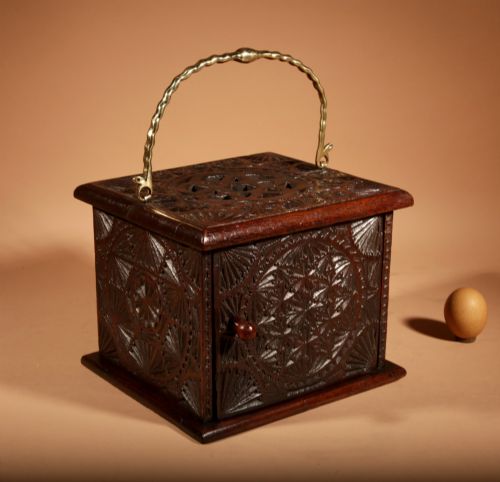
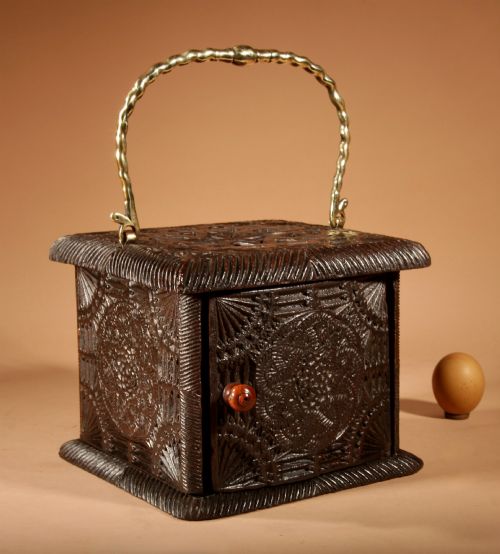
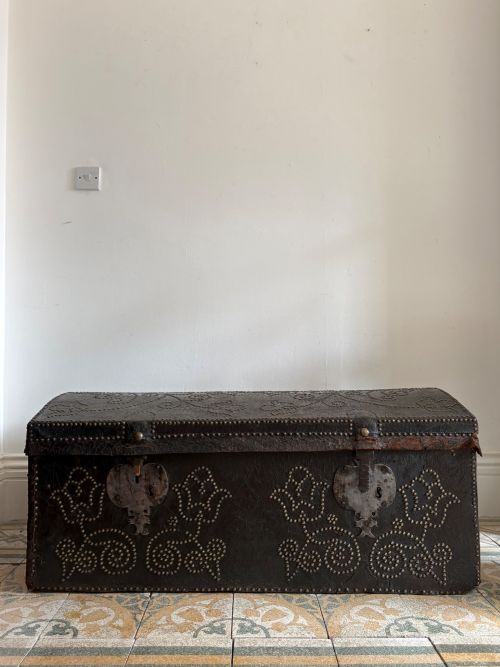
The specimens on this page rely primarily on timber bodies such as mahogany, oak, camphor wood, and rosewood, paired with durable carrying grips cast from brass. Regional variants like Frisian chip-carved foot stoves and Dutch leather-studded trunks demonstrate the diverse utility of these lidded containers.
Domestic writing boxes and tea caddies often feature internal compartments, secret drawers, and fitted interiors alongside their exterior metal mounts. Larger examples function as sea chests or travel trunks built to withstand the rigours of transit.
Materials and construction
Cabinet makers utilised dense hardwoods including mahogany, oak, and camphor wood to construct the rigid carcase of each container. These timbers provided the structural strength necessary to protect contents during long journeys.
Brass fittings, drop handles, and escutcheons were secured to the exterior using matching screws or rivets, offering both lifting points and reinforcement for corners and lids. Leather, iron, and ebony occasionally augmented the primary wood construction for specialised campaign or decorative pieces.
Distinguishing quality and execution
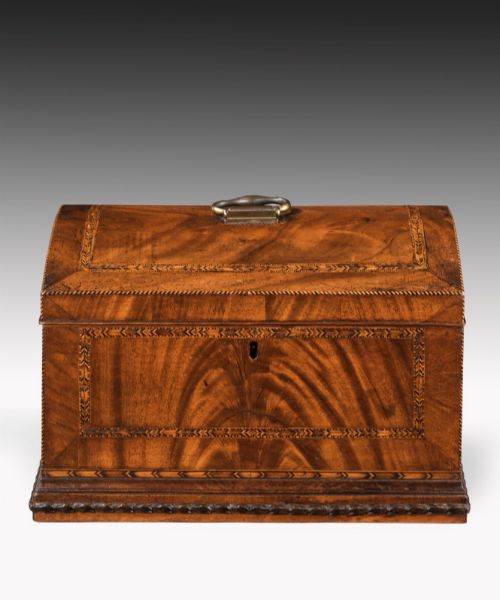
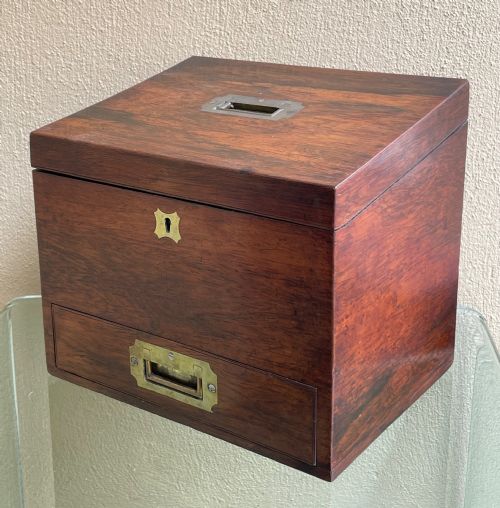
Superior examples display precise joinery, such as well-cut dovetails joining the box corners and tightly fitted interior dividers that operate smoothly without binding. The selection of figured timber veneers, like flame mahogany or rosewood, indicates a higher tier of workshop production.
The weight, casting quality, and original retention of the brass handles and locking mechanisms distinguish finer pieces from utilitarian versions. Original interior fittings, such as glass mixing bowls in tea caddies or complete writing slopes, elevate the integrity of the piece.
The Antique Brass Handled Box Glossary
- Campaign
- A descriptor for portable furniture and boxes made for military officers or travellers, typically featuring recessed brass carrying handles and reinforced corners to endure transit.
- Tea caddy
- A lidded container built to store tea leaves safely away from light and moisture, frequently partitioned inside and fitted with a small lock.
- Cellarette
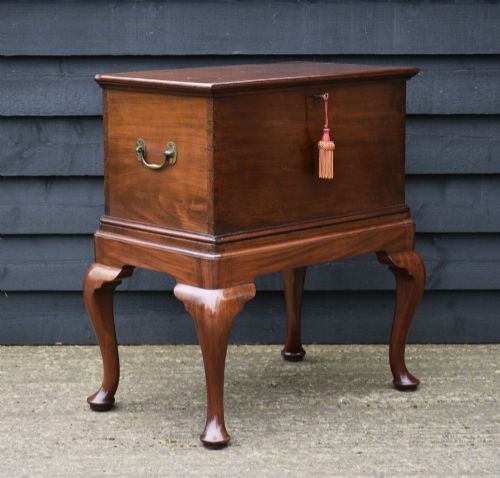
- A lockable container originally designed to hold bottles of wine or spirits, often lined and fitted with robust metal handles for lifting.
- Escutcheon
- A protective metal plate surrounding a keyhole, usually fashioned from brass to match the carrying handles on the box exterior.
- Sarcophagus
- A box form featuring a convex or domed lid tapering toward the base, popular for tea caddies and decorative caskets during the Regency and Victorian eras.
Antique Brass Handled Box: Frequently Asked Questions
What were brass handled boxes used for?
These lidded containers stored valuable personal possessions, correspondence, tea, or writing equipment while remaining portable enough for travel.
Officers and wealthy travellers utilised robust trunks and campaign chests fitted with side grips to move belongings across land and sea.
How do I date an antique box?
Dating relies on identifying the primary timber, construction methods like dovetailing, and stylistic details typical of periods such as the Georgian era or the Victorian reign.
Hardware design, including the shape of the brass handles and the presence of handmade screws, provides further chronological evidence.
Are these boxes waterproof?
While dense timbers like teak and camphor wood resist moisture and insects naturally, these containers were not manufactured to be entirely waterproof.
They kept contents dry during ordinary handling and indoor storage rather than submersion or severe weather exposure.
How should I care for timber boxes?
Maintain these pieces by keeping them away from direct heat sources and sudden humidity shifts that cause wood to warp or split.
Apply a traditional wax polish sparingly to nourish the timber surface without building up excessive residue on the brass mounts.