



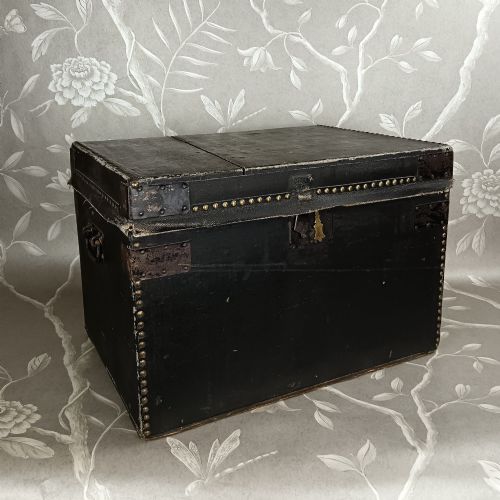
Antique Brass Campaign Chest
When evaluating an antique brass campaign chest, you are holding a piece of military history designed for travel, utility, and enduring strength.
Antique Brass Campaign Chest
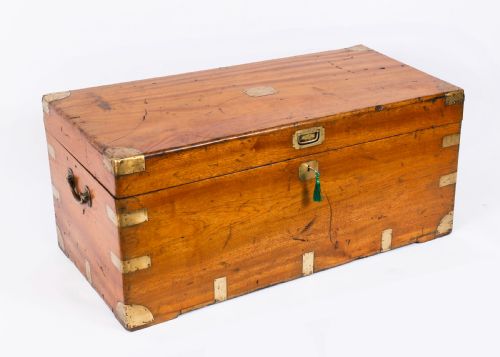
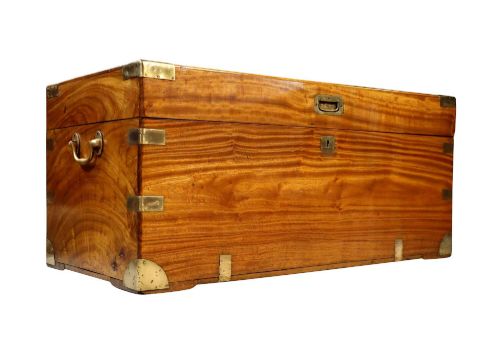
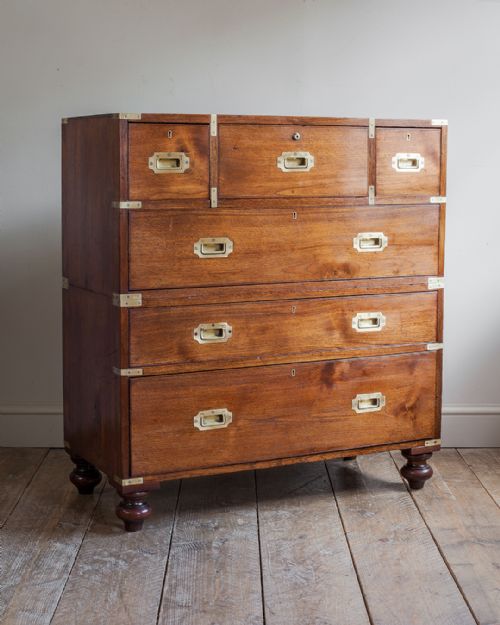
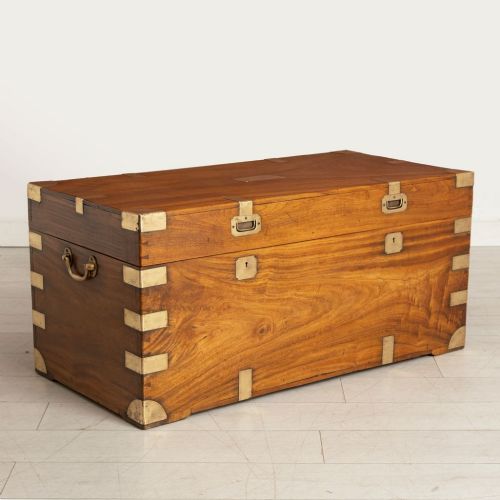
An antique brass campaign chest is a portable piece of furniture built for officers on the move during the Georgian and Victorian eras. These chests divide into sections for transport and feature inset brass handles and reinforced corners to withstand rough journeys.
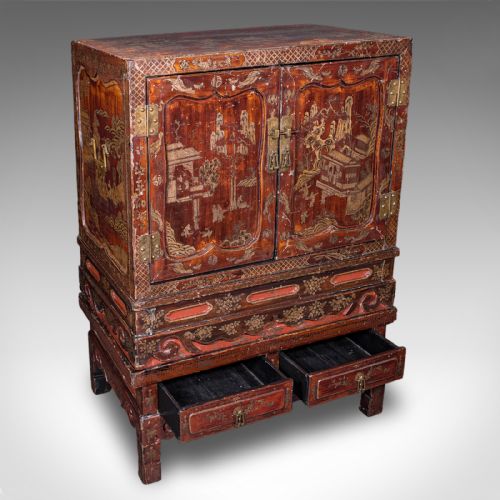
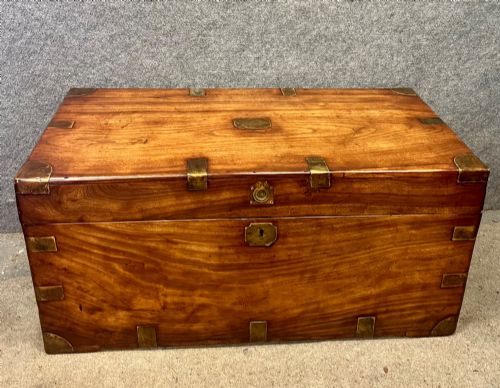
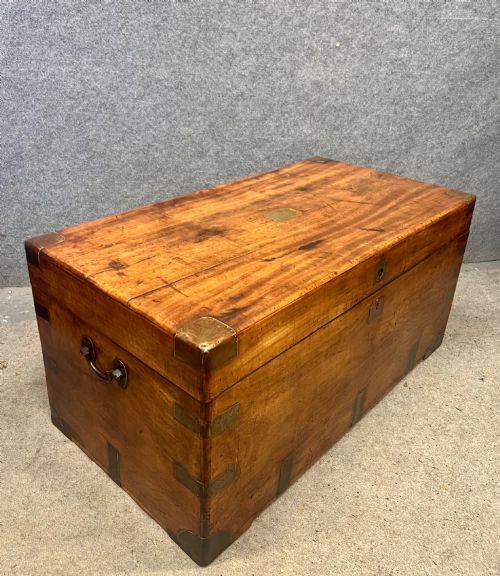
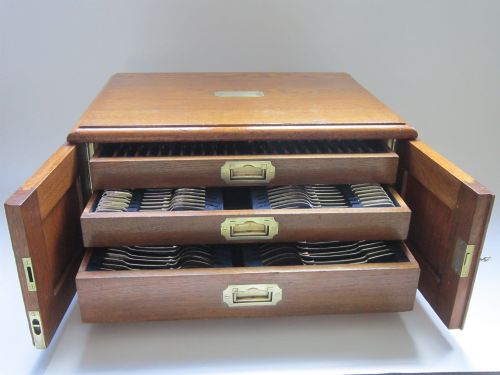
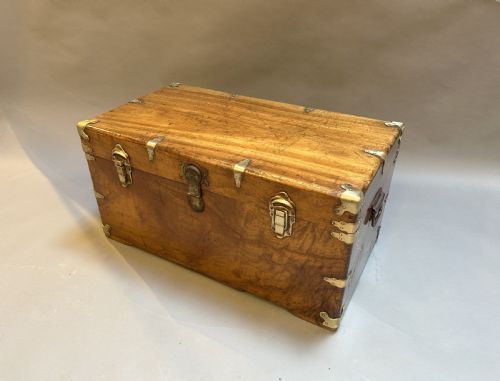
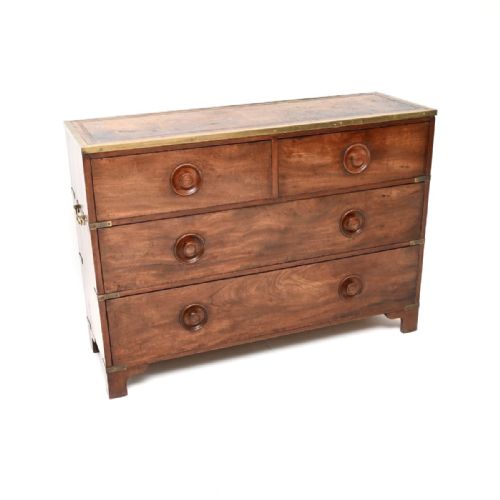
The most common forms on this page include mahogany and teak chests of drawers, alongside camphor wood trunks fitted with secure brass bindings. These pieces combine practical storage with robust framing intended to survive long sea voyages and overland marches.
Makers constructed these items to be dismantled quickly into modular parts, often featuring recessed hardware to prevent snags during loading. The resulting forms range from two-part drawer units to heavy trunks lined with cedar or camphor.
How they were made
Craftsmen built these chests using dense timbers such as mahogany, teak, and camphor wood, which resisted warping in tropical climates. The wood was frequently paired with durable secondary timbers like oak for internal drawer linings.
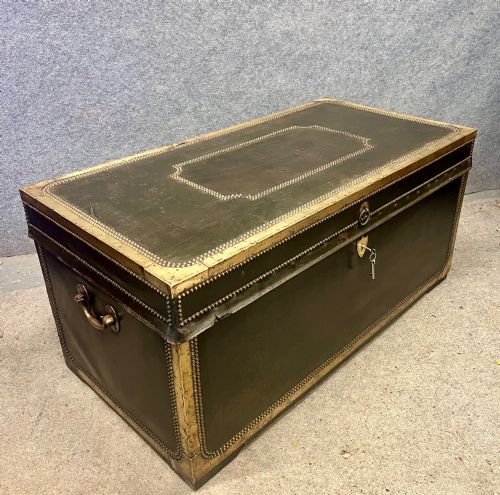
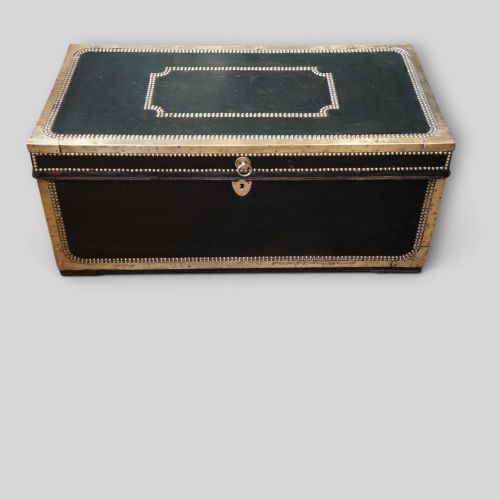
Heavy brass binding and flush-fitting hardware protected the vulnerable corners and edges from heavy handling. Iron and leather elements were also utilised for specific trunk bindings and straps alongside the primary brass work.
Some trunks carried the heavy responsibilities of Waterloo commissariat officers and colonial commanders across distant seas.
What varies in quality
Quality separates pieces by the precision of the joinery and the integrity of the original brass fittings. Superior examples retain their matching locks, flush handles, and undivided structural timber across all modular sections.
The choice of primary wood dictates the tier of the piece, with finely figured walnut or dense mahogany sitting alongside utilitarian pine or pitch pine versions. The presence of maker stamps or original brass-lined securing brackets further elevates the standing of a trunk.
Samuel Pratt·Wm Insall of Bristol·Army & Navy CSL·Graves and Sons of Devonport
The Antique Brass Campaign Chest Glossary
- Campaign chest
- A modular chest of drawers or trunk built in two or more sections with recessed brass hardware for military transport.
- Flush handle
- A pull handle set into a recess so it does not project beyond the surface of the wood during transit.
- Camphor wood
- An aromatic timber widely used for trunks and campaign chests because its natural scent repels insects.
- Brass bound
- Furniture edged and reinforced with strips of brass fixed by screws or pins to protect corners from impact.
- Secretaire chest
- A chest featuring a fitted pull-out drawer with a drop-front writing surface and small internal compartments.
Antique Brass Campaign Chest: Frequently Asked Questions
Why are campaign chests split in two?
These chests were made in two separate modular sections so that officers could pack and transport their belongings easily on mules, wagons, and ships.
Each stackable half locked securely into place with specialised metal brackets, combining the large capacity of a stationary wardrobe with the portability required for military campaigns.
How do I tell teak from mahogany?
Teak generally presents an oily texture with a medium to dark brown hue, often showing visible grain lines and a natural resistance to moisture.
Mahogany typically exhibits a tighter, smoother reddish-brown grain that takes a high polish and tends to darken richly with age.
Are camphor wood chests safe for clothes?
Camphor wood is traditionally prized for storing garments because its strong natural aroma acts as a deterrent against moths and other pests.
While the scent is potent when the lid is first opened, it helps protect delicate textiles without requiring chemical mothballs.
How should I clean brass binding?
Brass fittings can be gently wiped with a soft, dry cloth to remove dust and maintain the aged patina accumulated over the centuries.
Avoid harsh chemical polishes that strip away the historical darkening, ensuring the metal retains its authentic character alongside the timber.